A blind is easy to treat as an afterthought, settled once the size and position of the window are fixed. Yet the room the window serves is the best guide to whether a blind earns its place. On our roof window installation page we start from the roof and the room together; this answer covers the part that happens after the glass is in: how much light you want to keep, and how much you want to be able to shut out.
A roof window, a skylight in everyday speech and a rooflight in the trade, sits in the slope and faces the sky. If the naming is confusing, our answer on whether a roof window is the same as a skylight untangles it. Facing the sky is why it gives so much more daylight than a wall window of the same size, and it is also why the question of shading is different from the curtains you would hang on a vertical window.
When a blind makes a real difference
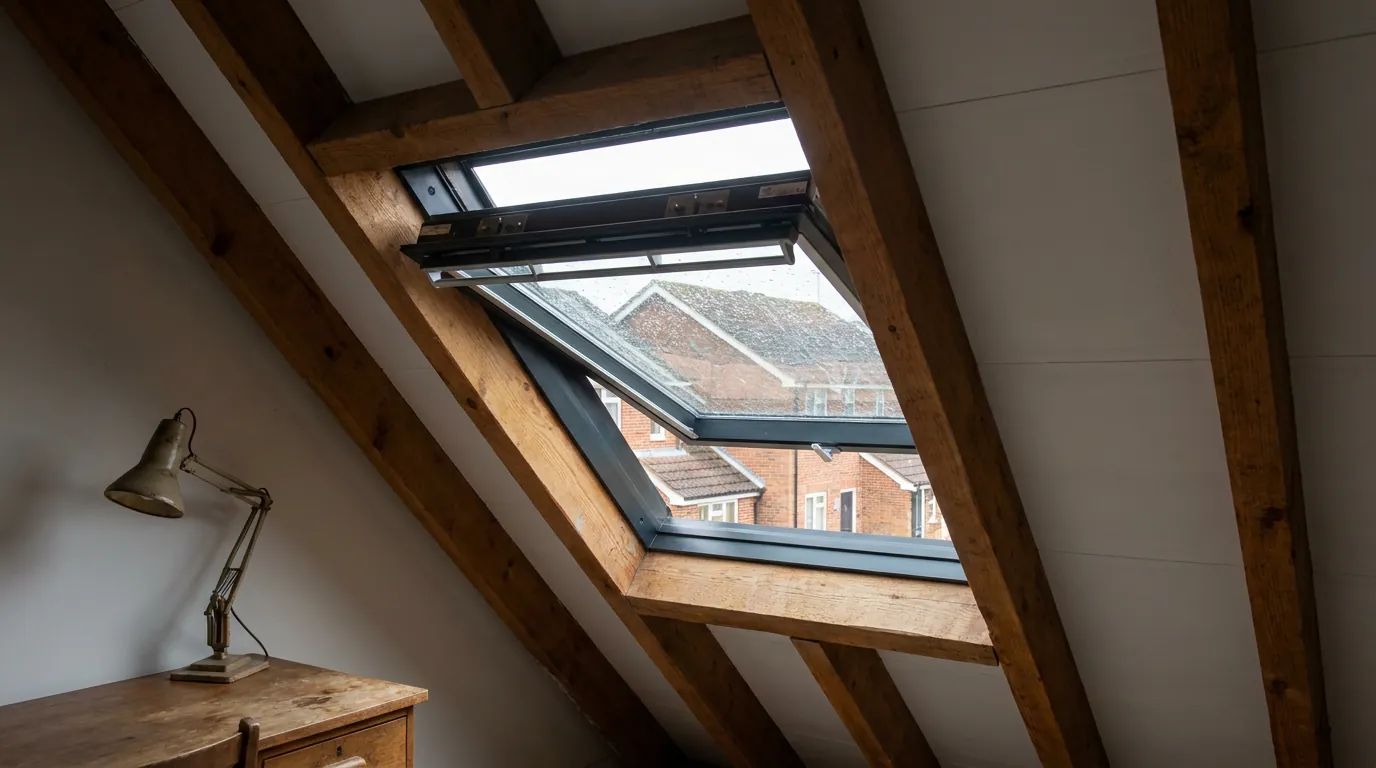
Light from a sloping window arrives at a higher angle and for longer in the day than light through a wall. In a room you sleep in, that means early summer mornings are bright. In a room you work in, low winter sun can sit across a screen. On a slope that faces south or west, a room under the tiles can also warm up through the glass on a clear afternoon.
| Room | Is a blind worth it? | Type to consider |
|---|---|---|
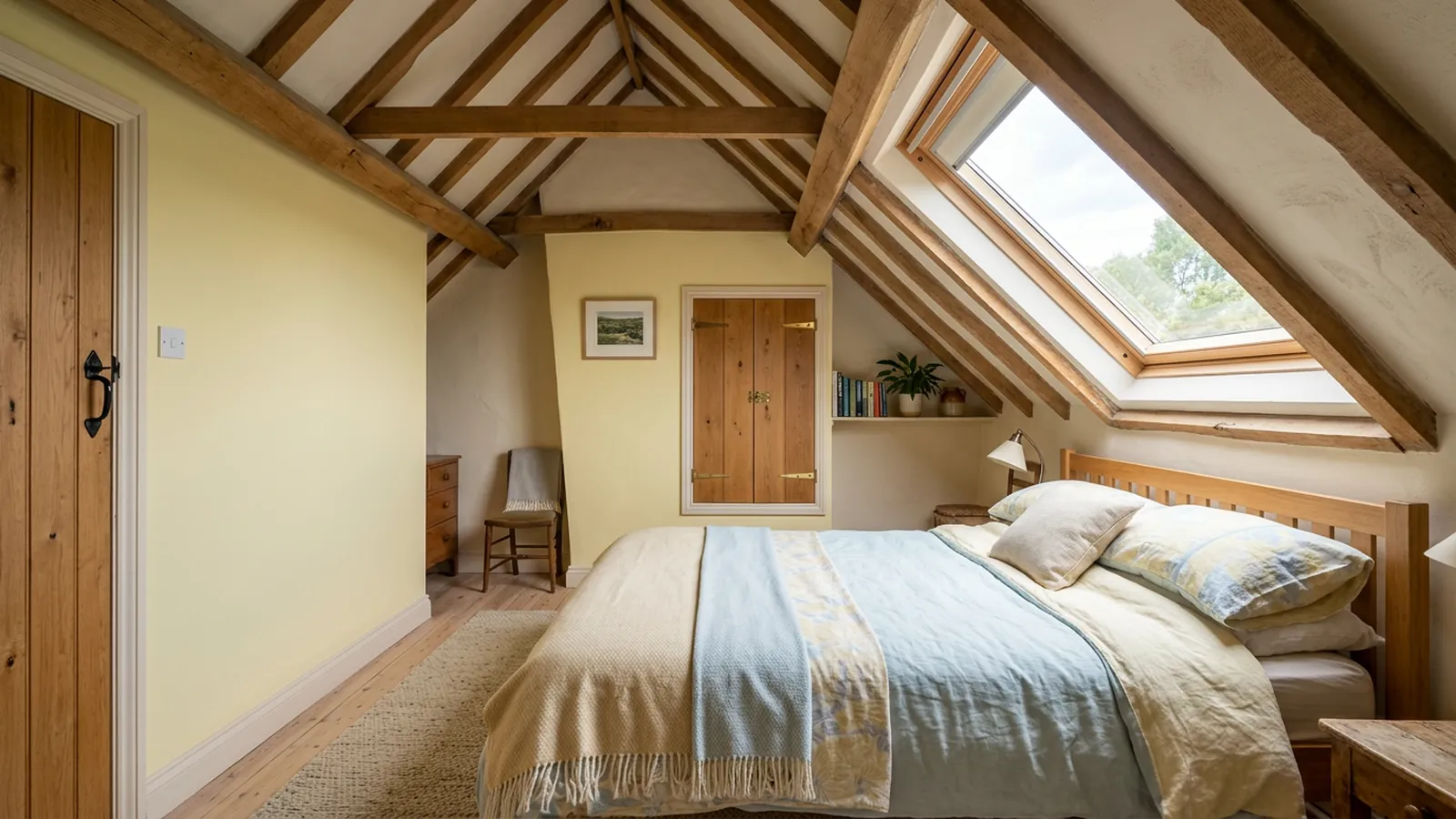
| Loft bedroom | Yes, for sleep in summer | Blackout, or a duo blind with blackout and a light filtering layer |
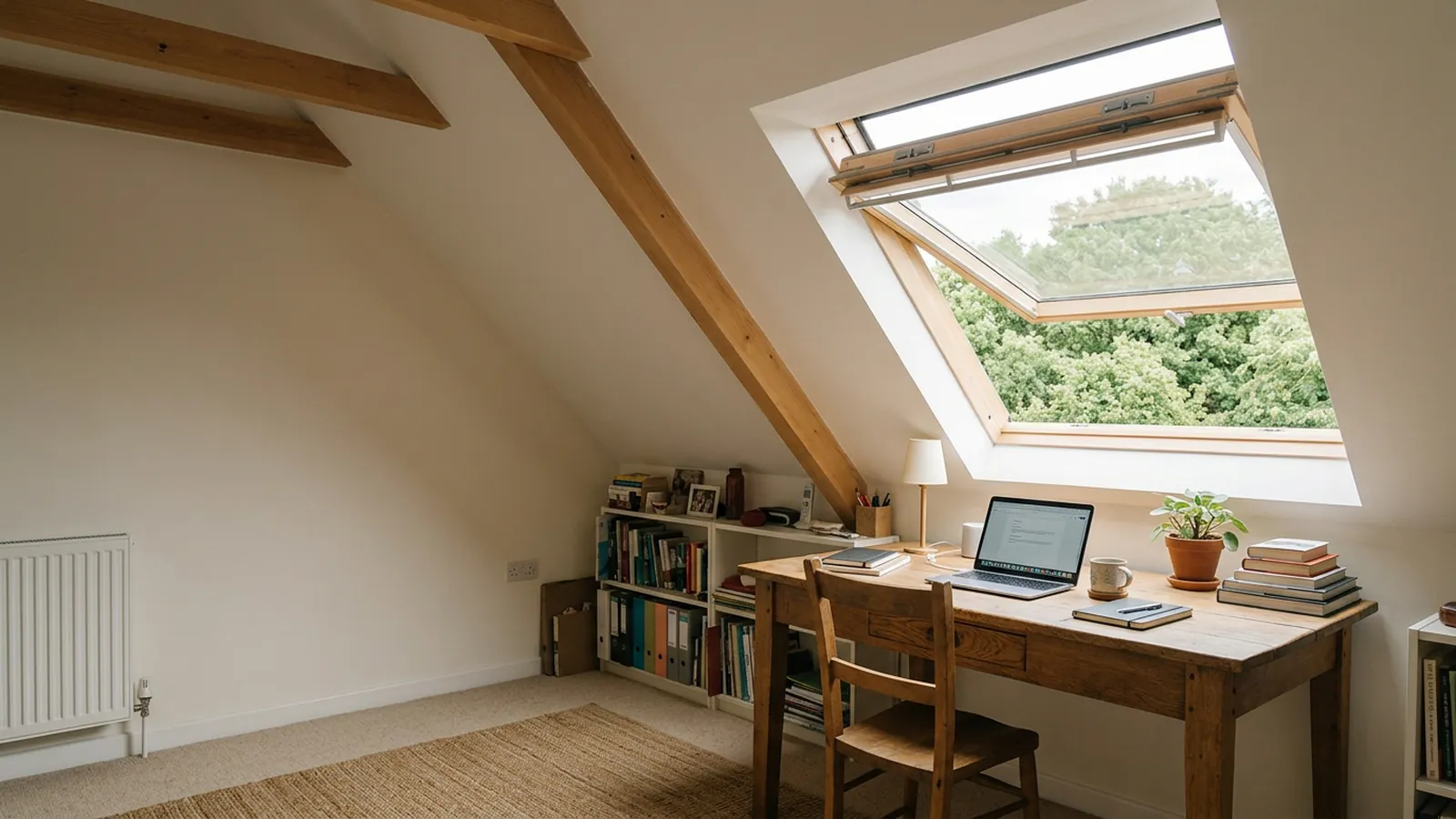
| Loft office or study | Usually, for glare on screens | Roller or pleated blind that softens light without darkening the room |
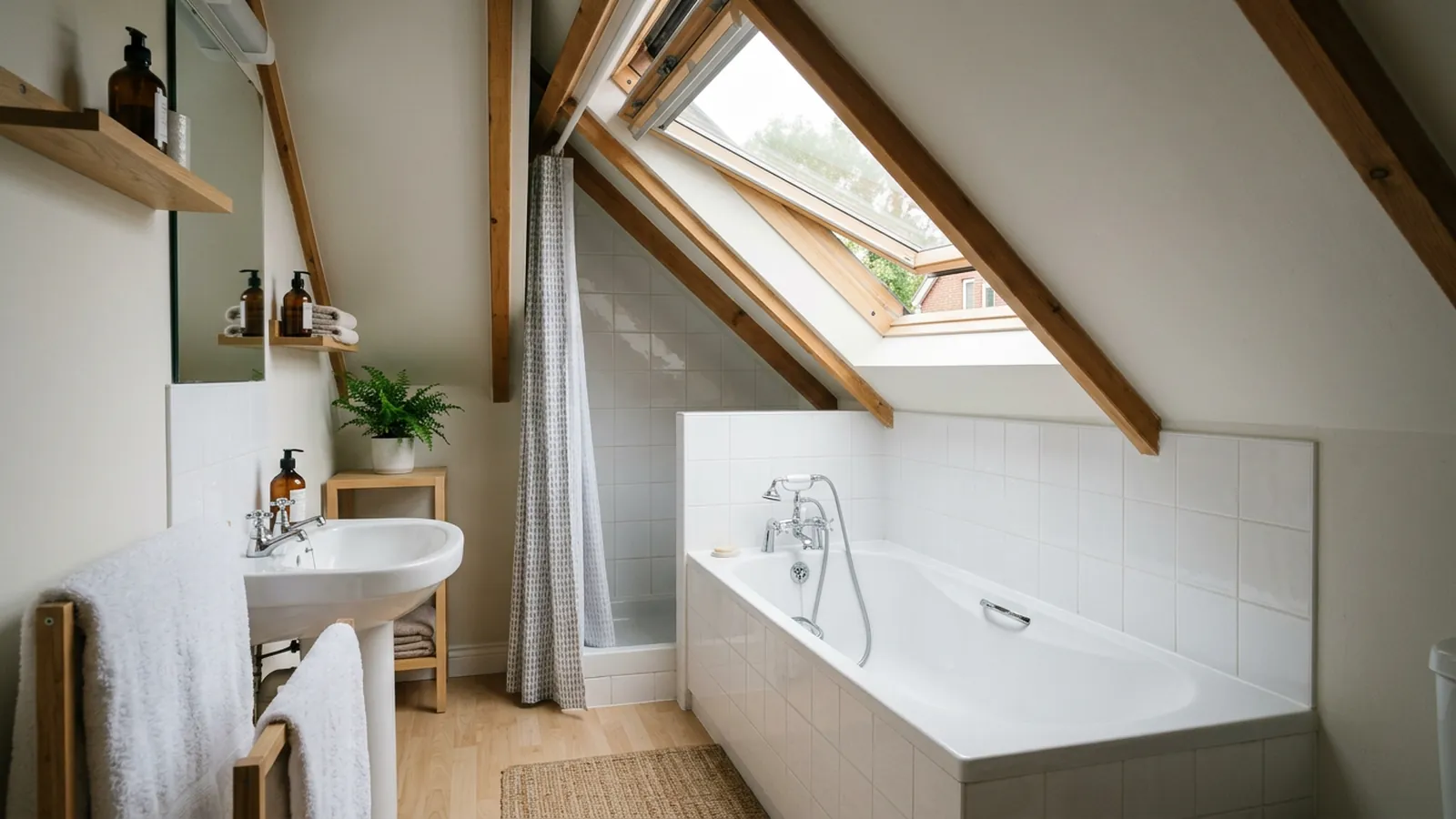
| Bathroom or en suite | Sometimes, for privacy when overlooked | A moisture tolerant blind, or obscured glazing chosen with the window |
| Landing, hallway or stairwell | Often not needed | None, unless the window faces strong afternoon sun |
| Room on a south or west slope | Worth thinking about for summer heat | An external awning blind or shutter that stops heat before the glass |
On a landing lit by one window between two trusses, the whole point is daylight in a space that had none, so there a blind is usually an extra you can leave out.
Sizing a roof window to the truss bays
- Fink trussed rafter, factory made and designed to work as one whole frame
- W-shaped webs, joined at every node by pressed metal nail plates
- Tile covering on battens over the underlay
- Roof window set in the slope, fitted between trusses so the frame is untouched
- Narrow roof window sitting in the bay between two trusses
- Trusses at even 600mm centres along the roof
- No truss cut: the trusses either side of the window stay whole
- A wider window crosses a truss, so the cut needs designed trimming from an engineer or the truss maker
Inside blinds and outside blinds do different jobs
A blind fitted inside the frame controls light and privacy. A blackout blind runs in side channels so light cannot creep round the edges, which is what makes a loft bedroom properly dark. Roller, pleated and Venetian styles trim glare and let you choose how bright the room feels.
An internal blind does little against summer warmth, because by the time the sun reaches it the heat has already come through the glass. For that, the shading goes on the outside: an awning blind of mesh fabric, or a roller shutter that covers the whole pane. These clip to the outer frame of the window and block the sun before it reaches the glazing. A shutter also gives the darkest room of all and softens the sound of heavy rain.
The rule: choose inside blinds for darkness and privacy, outside shading for heat. The exception is a room where you want both, where an external awning with an internal blackout blind behind it covers the two needs together.
Why the blind is chosen with the window
Roof window blinds are not cut from a roll to suit. Each one is made for a particular window size from a particular maker, and it fits into brackets or grooves in the sash so it moves with the window when you open it. That keeps it tight against the glass at any angle, which a loose blind hung on a slope could never manage.
So the blind belongs to the window you pick. If you settle the width and height first, based on the room and the space between the trusses, the matching blind follows from the size code on the frame. Our answer on what size roof window you need covers the sizing side. The finish around the opening matters too: the angle and depth of the lining affects how much light the room receives with the blind open, which our guide to roof window linings and reveals explains.
Reaching a blind you cannot touch
A roof window set low in a loft room, at a comfortable height for the view, puts the blind within easy reach. One set high on a stairwell slope or over a bath does not. There are three ways to operate a blind:
- By hand. A handle bar or pull on the blind itself, fine where you can reach the top of the window from the floor.
- By pole. A rod that hooks into the handle, for a window just out of reach.
- By motor. A solar or mains powered blind worked from a wall switch or remote, for windows that are high, awkward or in a run of several.
Where the window itself is motorised, an electric blind can share the same controls. The window types that make that possible sit under our electric and opening rooflight service. If you are still deciding how the sash should open, our guide to how roof windows open sets out centre pivot, top hung and fixed windows, and how each one works with a blind.
Adding a blind later
You do not have to decide on the day. Because the blind clips to the frame, it can go on to an existing roof window afterwards, provided a matching blind is still made for that window size. Once you have lived with a room through a summer, it is easy to see whether the mornings are too bright or the afternoons too warm, and order the right thing then.
The one case where waiting costs you something is an older window from a range that has since changed. A newer blind may not suit its frame. If your existing roof window has a misted pane or a tired seal as well, replacing the whole unit and ordering a blind for the new frame is often the neater answer; see our page on misted and failed rooflight replacement.
Bathrooms, privacy and overlooking
A roof window in a bathroom faces the sky, so on a detached house it is rarely overlooked. On a terrace or a close set estate where a neighbouring upstairs window looks across, privacy matters more, and so does a blind that copes with steam. Our answer on whether a roof window can go in a bathroom covers the ventilation and glazing side of that room.
What to decide before the survey
Know which room the window serves and when you use it: bedtime, working hours or just passing through. Note which way the slope faces. That is enough for us to suggest whether a blind is worth ordering with the window, and which kind. We survey the roof before quoting, and any blind you want is listed on the written quote beside the window. To talk it through on your own roof, arrange a survey.