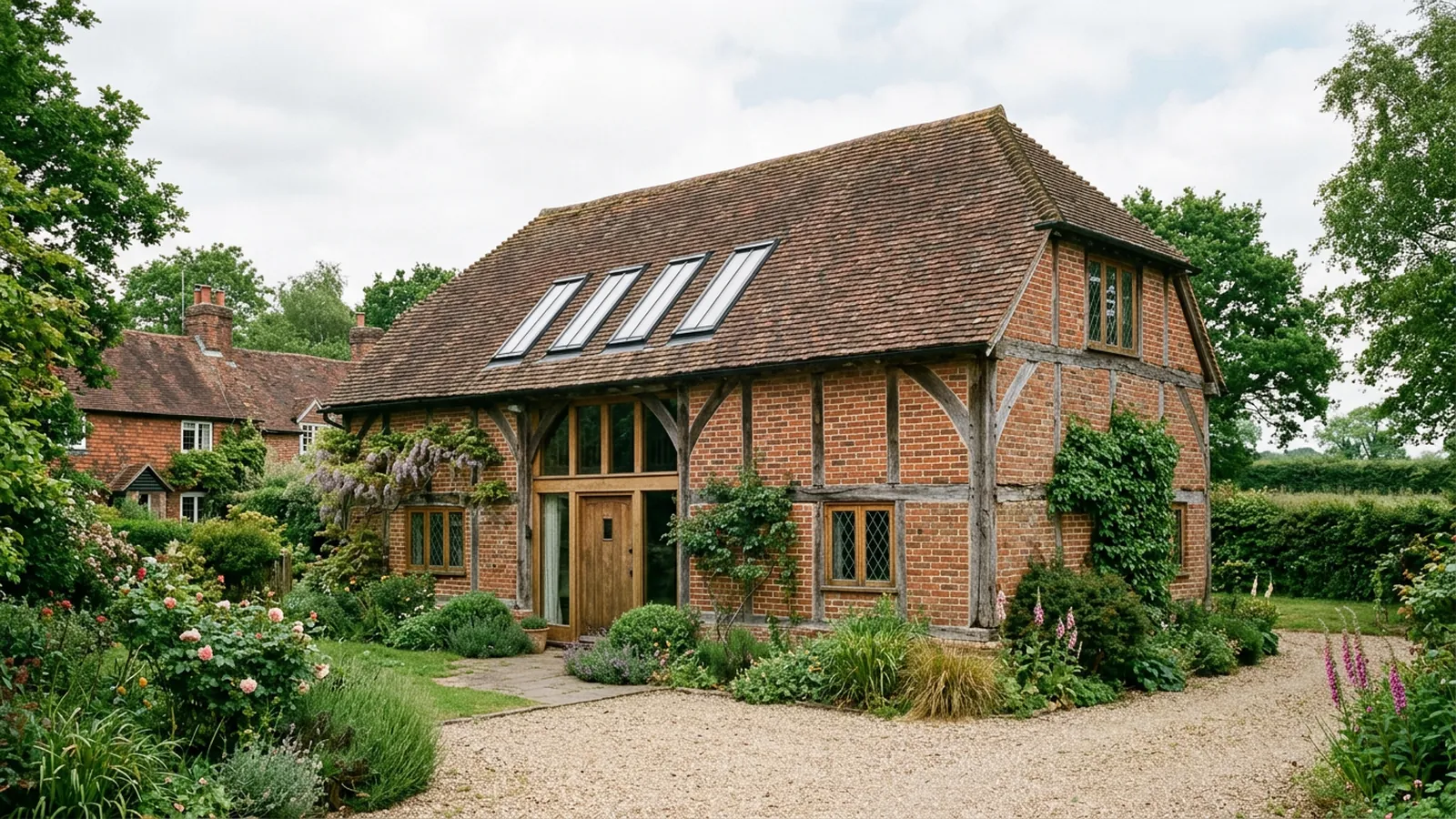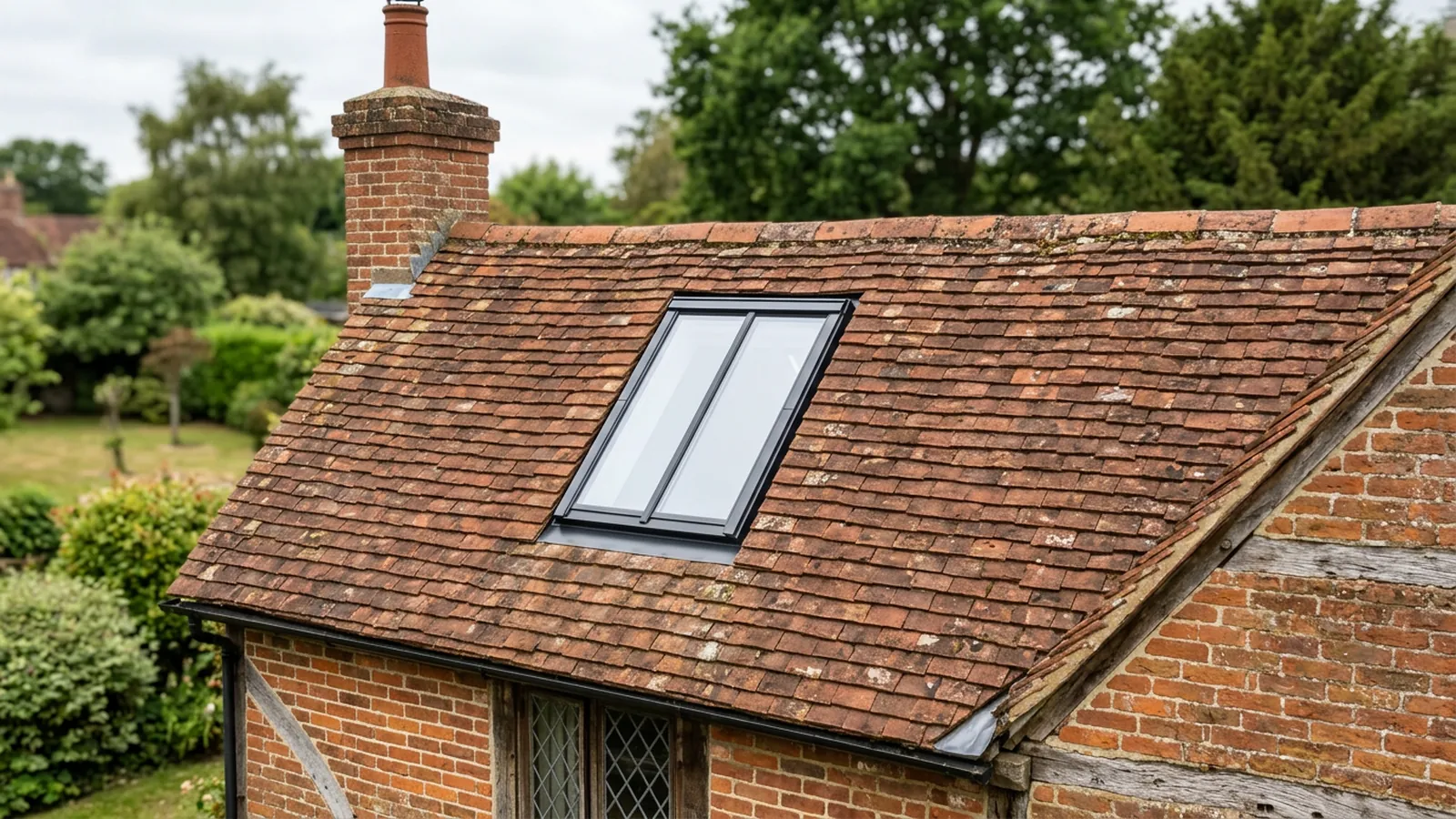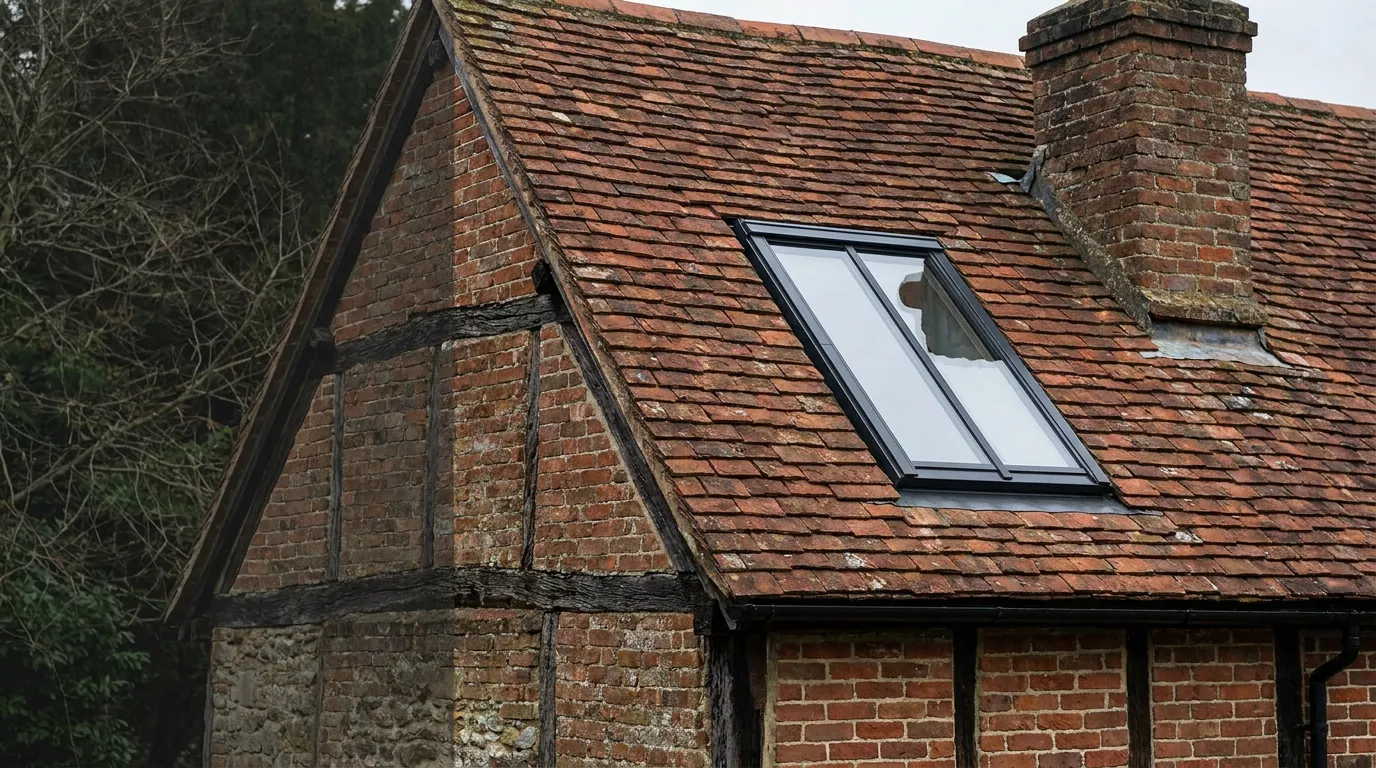
The word "conservation" can suggest a sealed pane, a flat sheet of glass laid into the tiles for looks. That is not how these units work. The originals these units copy, the Victorian cast iron rooflights over sculleries, attics and stairwells, were very often hinged and propped open on a notched bar. Our conservation rooflight service page covers the wider job; this answer deals only with the opening question: which ways the sash can move, how you work it, and when a fixed pane is the better call.
How the sash opens
There are two hinge positions to choose between, and each suits a different room.
| Style | How it moves | Where it tends to suit |
|---|---|---|
| Top hung | Hinged along the upper edge; the lower edge lifts outward and is held by a stay or winder | Ventilation in a bathroom, attic bedroom or landing, where rain shelter under the raised sash helps |
| Side hung | Hinged down one vertical edge and swings fully clear of the opening | Rooms that need a clear way out onto the roof or a larger free opening |
| Fixed | Does not open; the glazed panel is sealed into the frame | Out-of-reach positions over a stairwell or a high ceiling where only daylight is wanted |
Top hung is the traditional pattern and the one that reads most like the old cast iron rooflights from the street. Side hung has a practical job of its own, set out in our answer on whether a conservation rooflight can be an escape window. Both types close down into the same flush, low-profile frame, so the choice rarely changes how the roof looks once the sash is shut.
How rooflights and roof windows open
- Centre-pivot sash, turns so the lower edge tips out and the top swings in, handy for cleaning from inside
- Pivot point, the hinge line across the middle of the sash
- Top-hung sash, swings outward clear of the opening for a wider view
- Top hinge, where the sash is hung from the head of the frame
- Fixed rooflight, glazing sealed to the upstand with no moving parts
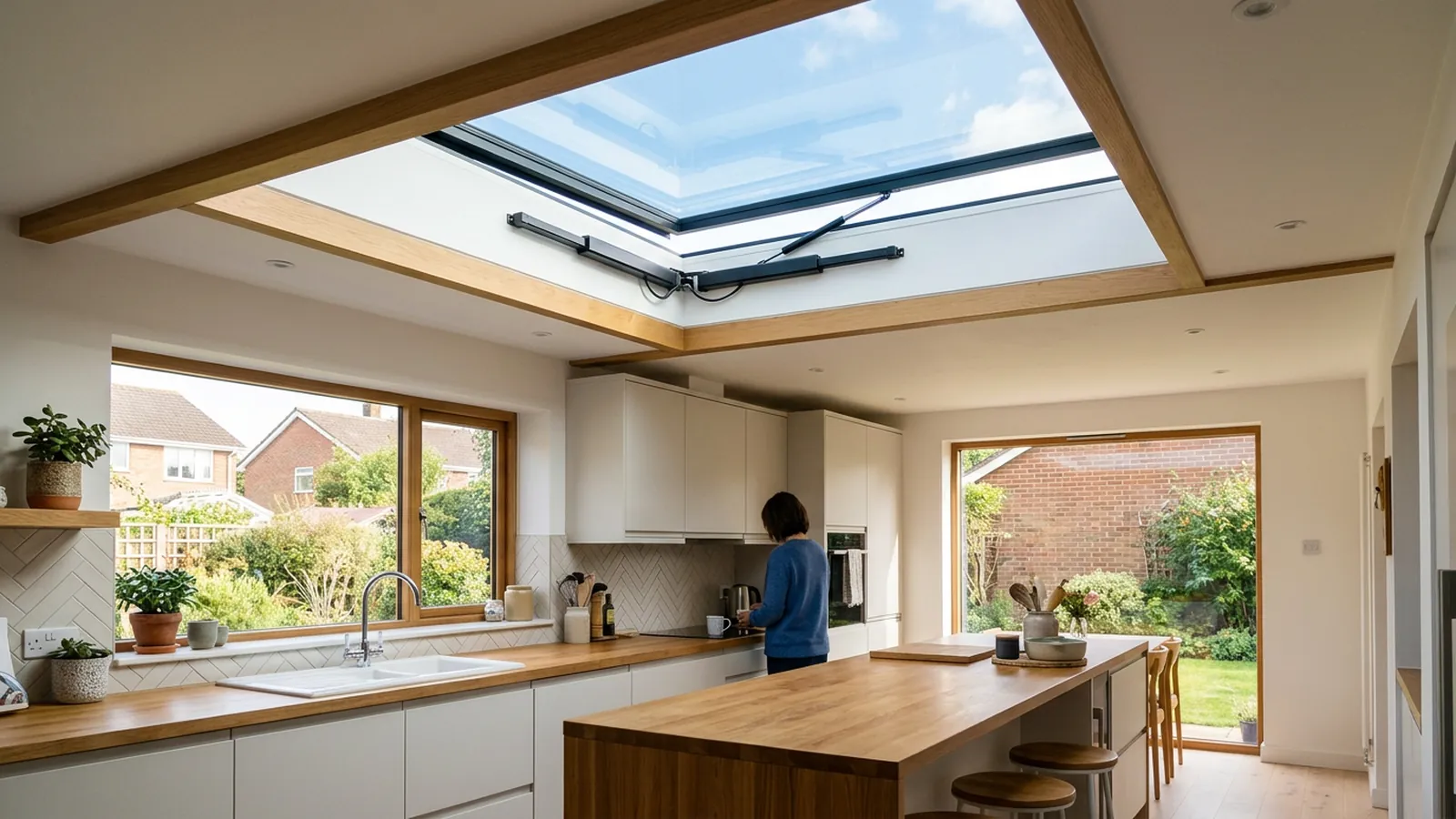
- Electric opening rooflight, the glazed lid lifts from one edge for ventilation
- Motorised chain actuator, pushes the lid open and draws it closed
- Rain sensor, closes the rooflight automatically when it starts to rain
Working it by hand
Manual opening is the simplest arrangement and the closest to how these rooflights were used a century ago. Within reach, you push the sash up and set it on a stay with a few fixed positions. Where the glass sits higher on the slope, a winding handle or a crank rod turns a mechanism that raises the sash smoothly and holds it wherever you stop. In a steep cottage roof in Old Basing or Kingsclere, a window that sits well above head height inside is still easy to open with a pole-operated winder.
The rule: put an opening conservation skylight where you can reach it, or plan the pole or motor at the start. The exception is a pane placed purely for light over a void, where a fixed unit is the tidier answer and saves paying for hinges nobody can use.
Opening it with a motor
An electric actuator lets you open the sash from a switch or a remote, and many can be linked to a rain sensor that closes the window when the weather turns. It is the obvious choice over a double-height hall, in a vaulted barn conversion, or where the owner simply does not want to climb. The motor sits inside the frame line and does not change the outside profile, which is what a planning officer looks at. How the wiring is run and what it asks of the roof is covered in our answer on whether a conservation rooflight can be electric.
Does opening affect the planning look?
With the sash closed, an opening unit and a fixed one look the same from outside: slim frame, flush with the tiles or slates, a central glazing bar if the design includes one. That is the view the council considers, whether it is Basingstoke and Deane, Hart or West Berkshire. When a top hung sash is raised it stands proud of the slope for the time it is open, much as the original cast iron lights did.
What keeps the closed profile so flat is the way the frame sits down into the roof, and our guide to flush fitting and the low profile a conservation rooflight needs explains how that is done in clay tile and slate. The glazing bar question has its own guide on the central glazing bar and why planners ask for it. Neither detail stops the rooflight opening.
Blinds, seals and living with an opening sash
An opening sash brings a few practical points worth settling before the order goes in:
- Blinds. A blackout or shading blind fitted to the inner frame travels with the sash, so it still works when the window is propped. Our answer on whether a conservation rooflight can have a blind covers the options.
- Seals and weathering. The opening casement closes onto a gasket inside an outer frame that is flashed into the roof covering, so it sheds rain the same way a fixed unit does.
- Security and restrictors. Stays with locking positions let you leave the sash open a little for night air in a child's room without it swinging wide.
- Condensation. Rooms under a roof collect moist air, and an opening rooflight in a bathroom or a loft bedroom lets it out where a fixed pane cannot.
Choosing between fixed and opening
Ask what the room needs from the glass. A loft bedroom, shower room or kitchen under a pitched roof wants air as well as light, so the opening version earns its place. A tall hallway where the rooflight exists to light the stairs can take a fixed pane. If you are converting an attic in Overton or a cottage roof in Hartley Wintney, think about who will open it and how often, then choose the hinge, the handle and whether a motor is worth adding.
The survey settles the rest: the pitch, the space between the rafters, the covering, and how far the sash can swing without meeting a chimney or a dormer cheek. If you would like a plain answer for your own roof, arrange a survey visit and we can talk through fixed, top hung and side hung options with the room in front of us.