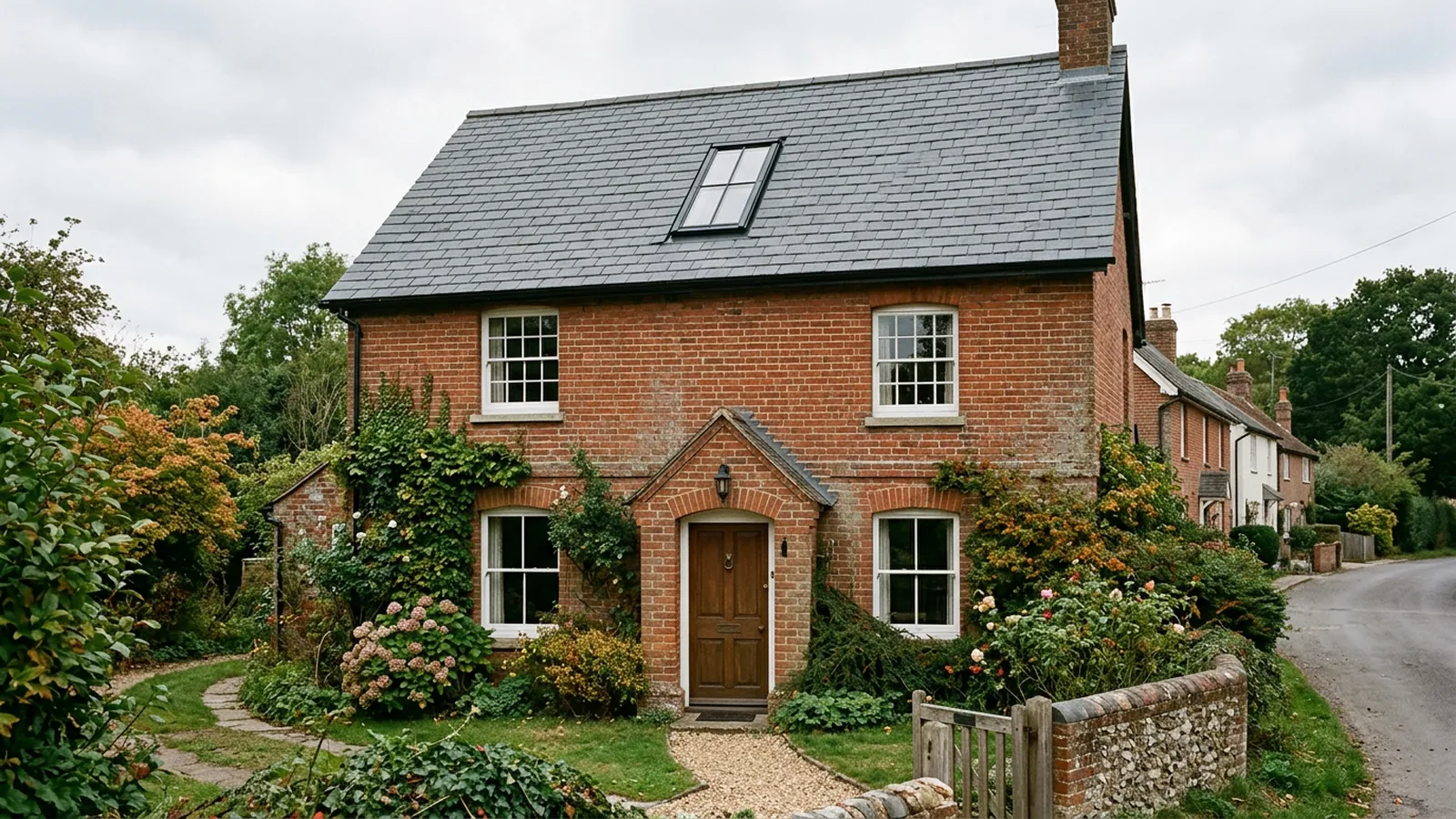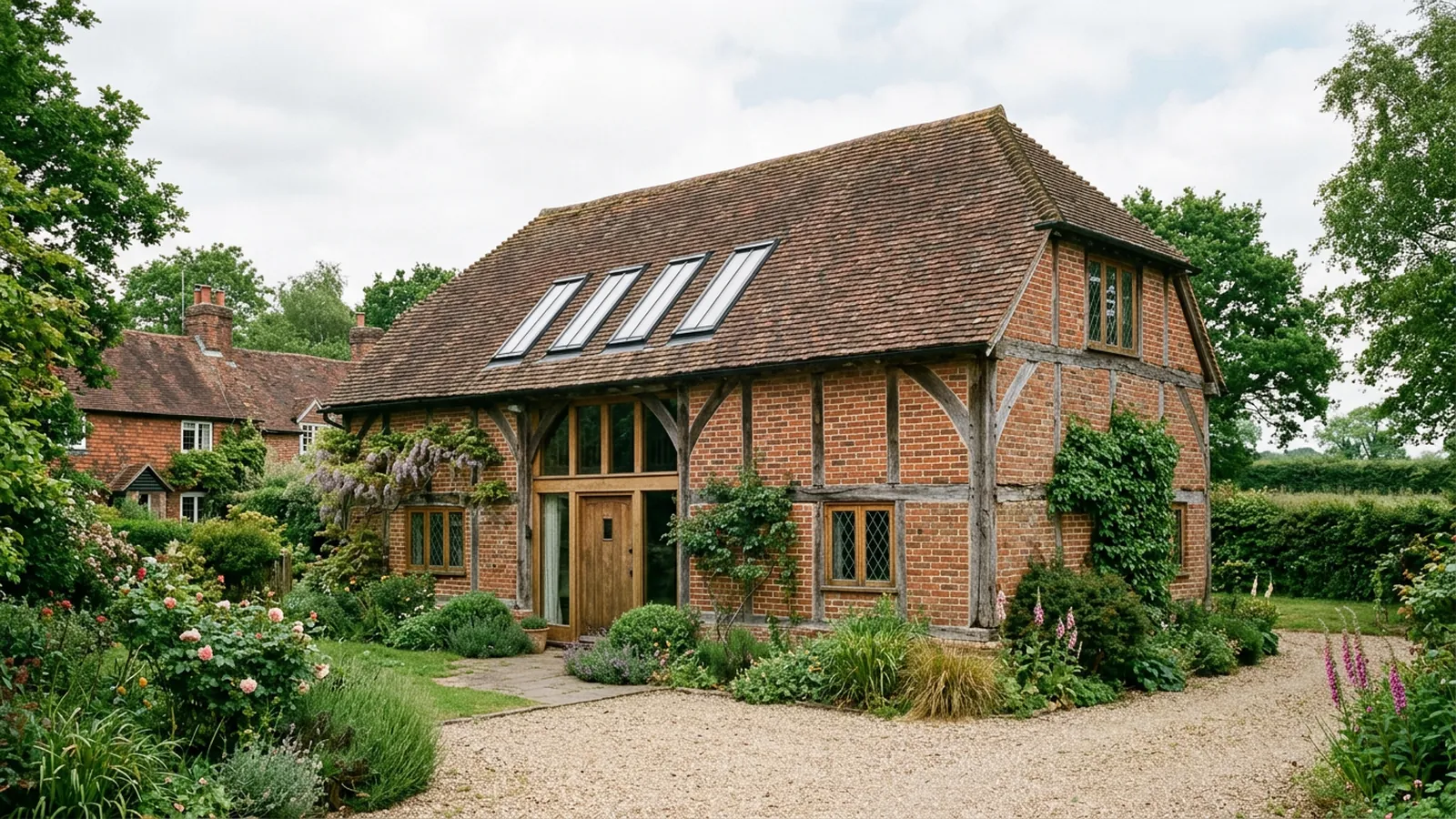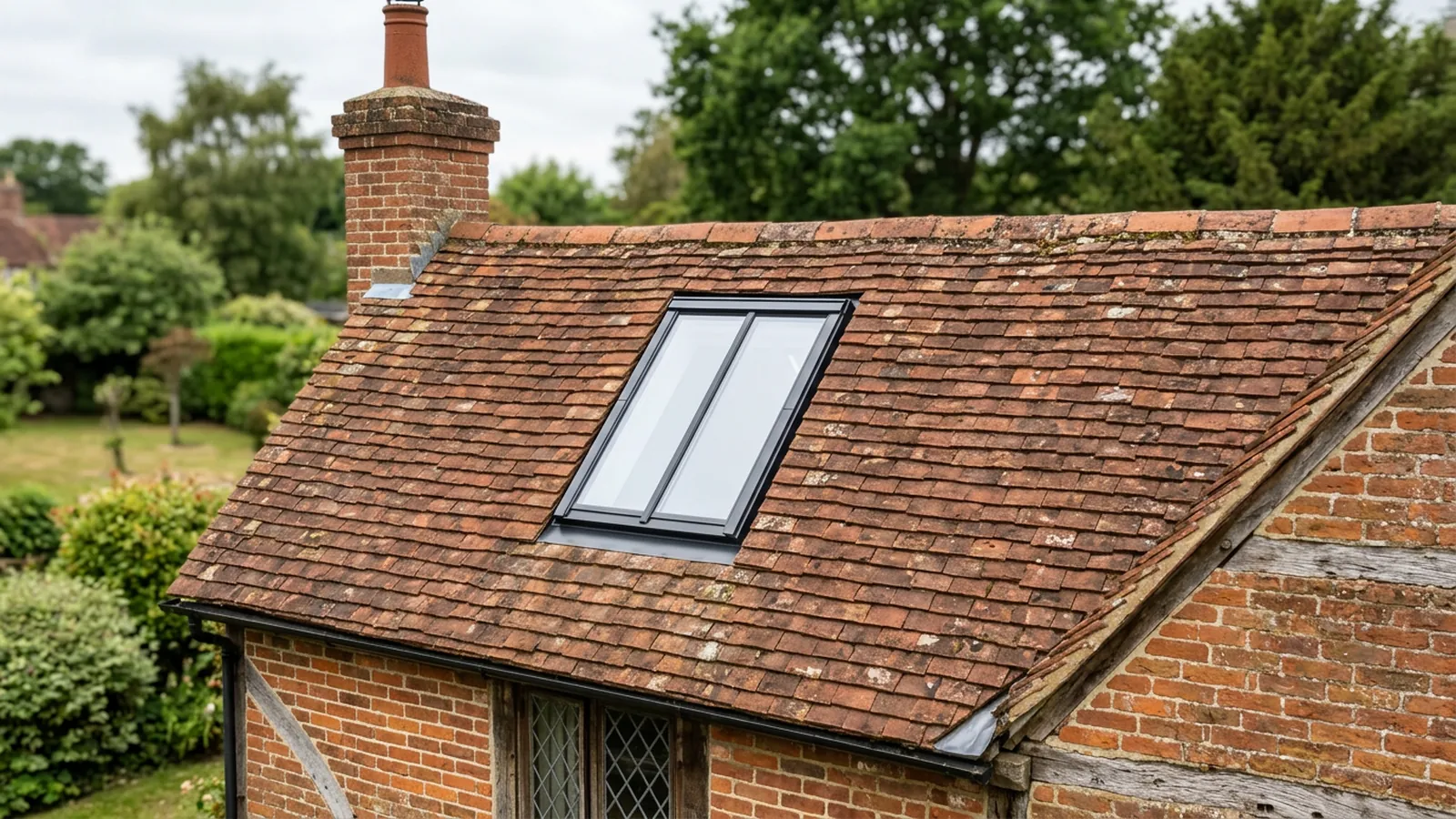
People ask this because the originals were single glazed. A Victorian cast iron skylight on a cottage in Old Basing or a coach house in Odiham was a frame with one sheet of glass, cold to stand under and prone to dripping on a winter morning. The rooflights sold for conservation areas today copy that silhouette but carry modern glass, and our conservation rooflight installation page explains how they are chosen and fitted on the older roofs around Basingstoke.
Why the glass changed but the look did not
A planning officer judging a rooflight in a conservation area is looking at the roof from the street and from neighbouring gardens. What reads from there is the frame: how far it stands above the tiles or slates, how thin its sight lines are, whether it has a vertical bar dividing the glass, and its dark finish. The number of panes inside the frame is invisible at that distance.
Building Regulations, on the other hand, care a great deal about the glass. A new or replacement rooflight in a heated room is controlled work for its thermal performance, and single glazing falls well short of that. So the makers solved both problems together: a double glazed sealed unit held in a slender metal frame that sits low in the roof plane. The heritage character stays on the outside; the comfort stays on the inside.
The rule: expect double glazing in any conservation rooflight you buy new. The exception is a listed building where the conservation officer asks to keep an original frame or to match historic glazing, and there Building Control and the council settle the balance between heat and appearance before anything is ordered.
How a sealed rooflight unit works and fails
- Outer and inner glass panes, with the outer pane facing the weather
- Low-emissivity coating on one inner face, reflecting heat back into the room
- Warm-edge spacer bar holding the panes apart, filled with desiccant to soak up trace moisture
- Primary seal against each pane, backed by the secondary seal around the edge
- Dry sealed cavity, the insulating layer between the panes
- Broken edge seal: moist air gets in and the desiccant becomes saturated
- Mist and droplets trapped between the panes; they cannot be wiped off and the sealed unit needs replacing
- Inset: condensation on the room-side face of the glass is a ventilation or humidity issue, not a failed unit
What the glazing unit usually contains
Specifications vary by maker and by model, so the survey and the product data sheet decide the details for your roof. The table sets out the usual components and why each one is there.
| Part | What it is | Why it matters |
|---|---|---|
| Outer pane | Toughened glass facing the weather | Takes rain, hail and temperature swings on the roof slope |
| Inner pane | Often laminated glass on the room side | Holds together if broken, so glass does not fall into the room below |
| Cavity | A sealed gap, often gas filled, with a low emissivity coating on one pane | Slows heat loss and cuts the cold feeling of standing under the glass |
| Edge seal | The spacer and seal bonding the two panes | Keeps the cavity dry; when it fails, the unit mists between the panes |
| Glazing bar | A slim vertical bar, structural or applied | Recreates the divided look of a Victorian skylight |
Where the bar sits, and why officers so often ask for one, is covered in our guide to the central glazing bar.
Double or triple glazing on a period roof
Triple glazing adds a third pane and a second cavity, which improves heat retention but makes the unit thicker and heavier. In a slim conservation frame that extra depth has to go somewhere, and on a steep clay tile or slate roof the aim is to keep the rooflight close to flush. Some models absorb the depth within the frame; others sit a little higher. Whether that matters depends on the roof, the view from the street and what the officer is looking for.
For most attic bedrooms and landings in the villages, double glazing with a low emissivity coating meets the regulations comfortably. Triple glazing earns its place over a room that is used all day, or where a north-facing slope makes the glass the coldest surface in the room. How warm each option feels in practice is the subject of our answer on whether conservation rooflights are warm enough.
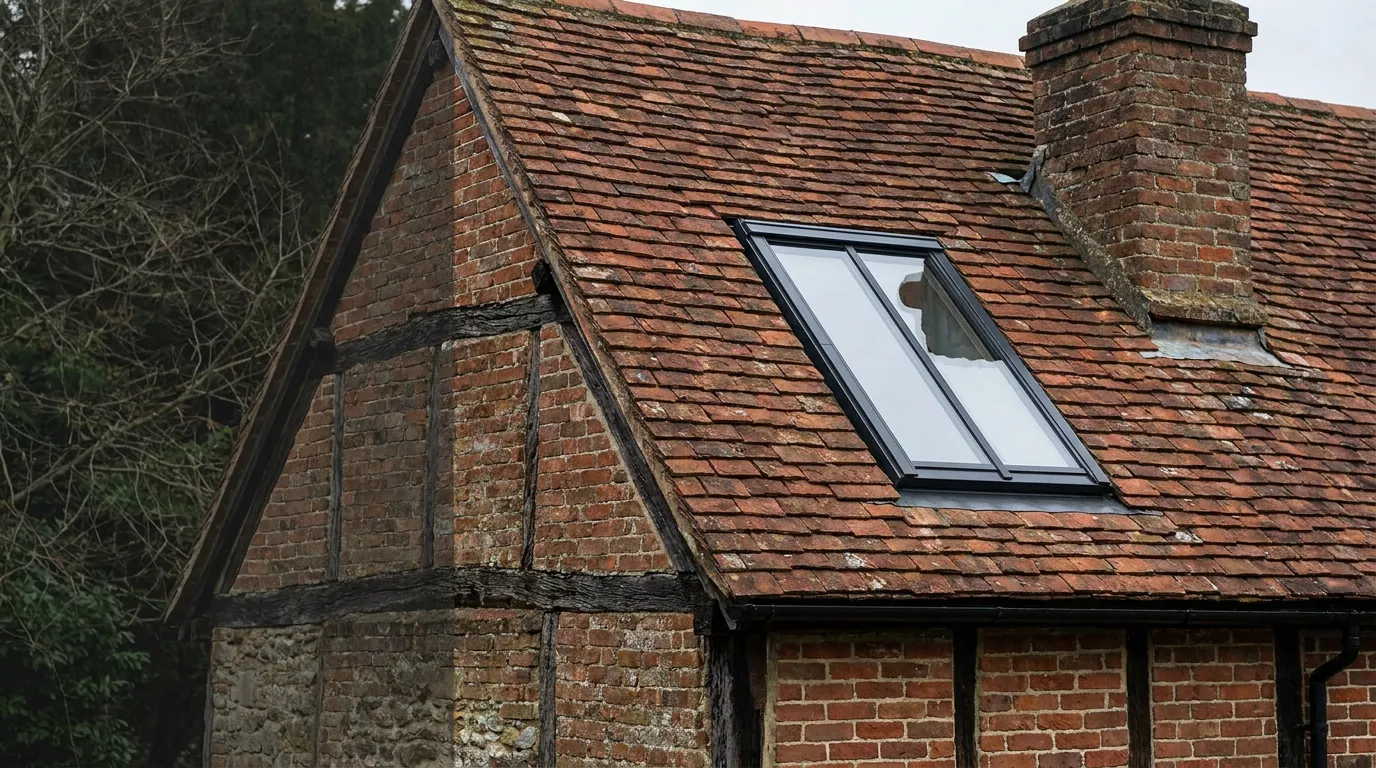
Replacing a single glazed original
If your house still has an old cast iron skylight with one pane, replacing it brings the room up to the glazing standard of a modern rooflight while keeping the same form on the roof. Outside a listed building, a like-for-like conservation replacement is normally the straightforward route. On a listed building the decision starts with the council, because the original frame may be part of what is protected.
- Look at the roof. We record the existing frame, its size, its height above the covering and the rafters around it.
- Check the status. Conservation area, listed building or Article 4 direction: each asks something different of the new unit.
- Match the form. We choose a double glazed model close to the original in size, bar layout and profile.
- Notify Building Control. A replacement rooflight is notifiable for its thermal performance, and the paperwork is ours to submit.
- Fit and finish. The new rooflight is dressed into the tile or slate with its flashing, and the lining inside is made good.
The planning side of swapping an original is answered in can an old cast iron rooflight be replaced like for like?, and the extra step for listed homes is set out in does a listed building rooflight need Building Control as well as consent?
Condensation, misting and what glazing cannot fix
Double glazing sharply reduces condensation on the inner pane, but it does not remove the cause. Attic rooms under cut rafter roofs are often tight on ventilation, and moist air from a shower room or bedroom will still find the coolest surface. A trickle vent in the frame, or an opening rooflight used for a few minutes each morning, does more for a damp window than a third pane.
Misting between the panes is a different matter: it means the edge seal of the sealed unit has failed and moisture has reached the cavity. On a conservation rooflight the answer is usually a new unit or a new rooflight, depending on the frame. Our misted rooflight replacement service covers that decision.
Frame material and the glass it can carry
Steel frames are the traditional choice and give the thinnest sight lines; aluminium is lighter and resists corrosion. Both carry a double glazed unit. The choice affects weight, finish and the profile on the roof more than the glass itself, and our guide to steel or aluminium conservation rooflights compares them properly.
Whichever frame suits your roof, the fitting comes with our 10-year workmanship guarantee, which is a promise on our work and is not insurance backed. If you have an old single glazed skylight, or a plan for a new rooflight on a period house in Kingsclere, Overton or Hartley Wintney, arrange a survey of the roof and we will specify the glazing with the frame and the planning position in view. For newer homes in the town itself, our rooflight installation in Basingstoke covers the wider range.