Two conservation rooflights can look almost identical in a catalogue picture and still be built from different metals. One has a frame of steel, the direct heir to the cast iron lights that went onto Victorian stables, chapels and terraces. The other is aluminium, lighter and newer to the job. On a clay tile slope in Old Basing or a slate roof in Overton, the difference is hard to spot from the pavement. Close up, inside the room and over the decades, it starts to show.
This guide sets the two side by side: how each frame is made, how slim it can be, how it copes with rain and cold, what a conservation officer is really looking at, and how the choice changes the work on the roof. It does not crown a winner. The right metal depends on the building, its history and what the planning conversation needs to see, so the question belongs near the start of a project, before anything is ordered.
Why the frame metal matters at all
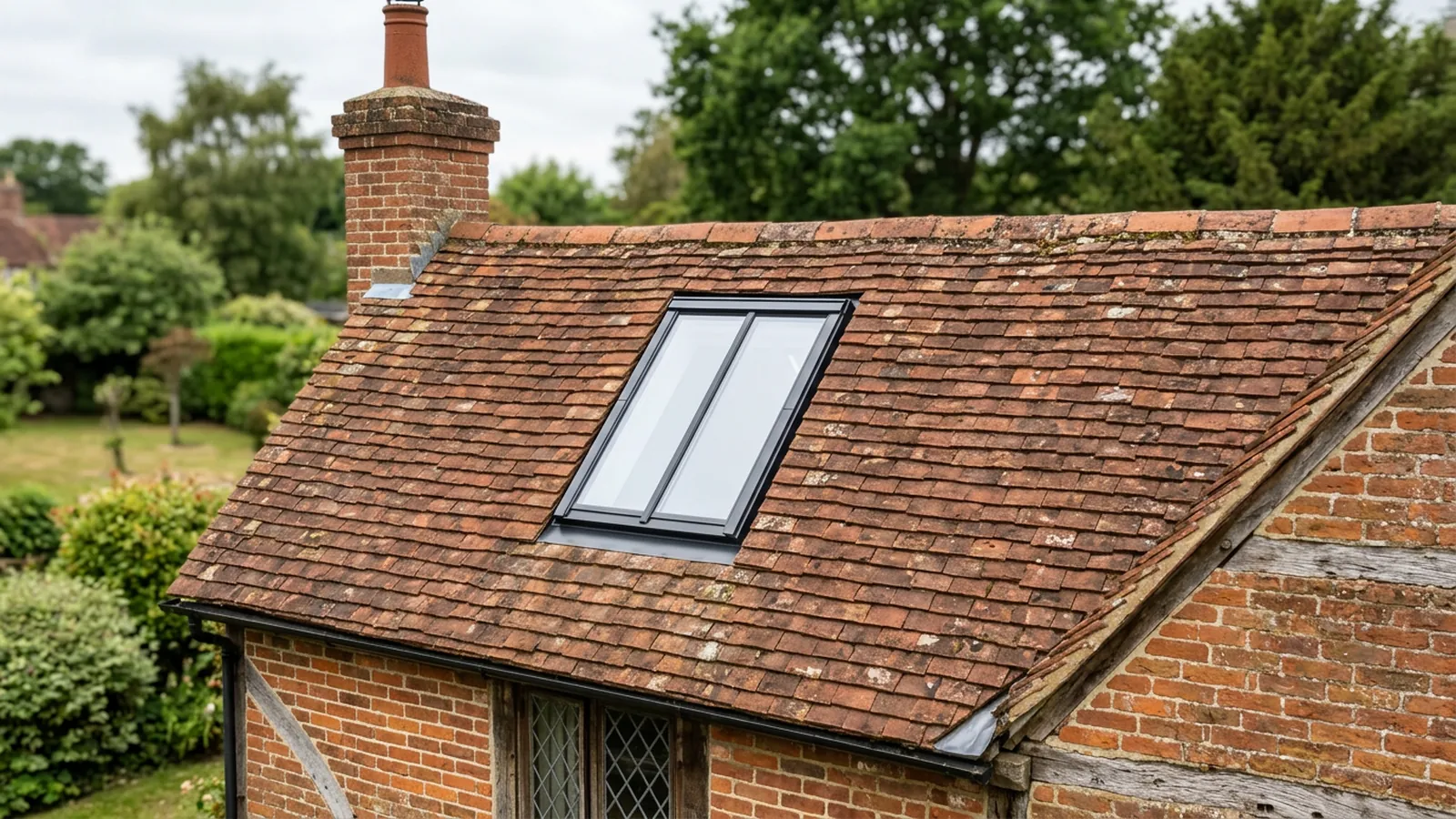
The rooflights that planners in historic places are measuring new work against were cast iron: a single heavy frame, one pane or two either side of a thin bar, lying almost flat among the tiles. A modern conservation rooflight exists to give that same quiet look with sealed double glazing, proper seals and an opening that works. Our guide to what makes a rooflight a conservation rooflight covers the full description; here the interest is one ingredient of it.
The metal matters because the whole appearance rests on a thin frame. A frame has to hold a heavy glazed unit, resist wind lifting the sash, and stay square for decades. The stiffer the material, the less of it you need, and the less of it you need, the finer the lines on the roof. That is the heart of the steel or aluminium question. Everything else (weight, corrosion, warmth, finish) follows from which metal carries the load.
Conservation rooflight compared with a standard roof window
- Low profile: the glass sits close to flush with the roof covering
- Slim dark metal frame, closer to a traditional cast iron rooflight
- Central vertical glazing bar dividing the glass
- Roof covering of slate or clay tile laid on battens
- Flashing dressed into the covering around the frame
- Standard roof window: frame, sash and flashing stand proud of the roof line (roof line shown dashed in both sections)
The two metals compared
Before looking at each in turn, here is the plain comparison. It describes the materials in general terms; individual products vary, so the details of a particular unit are checked against its own specification at the survey.
| What to weigh up | Steel frame | Aluminium frame |
|---|---|---|
| Stiffness for its size | Higher, so thin sections can carry heavy glazing | Lower, so sections are usually a little deeper or wider for the same job |
| Sightlines from outside | Very fine, the closest match to old cast iron | Slim, shaped by the extrusion; the gap to steel depends on the product |
| Weight | Heavier to lift, handle and open | Lighter, easier on the roof and on a hand-opened sash |
| Corrosion | Relies on galvanising and a protective coat | Forms its own oxide layer and does not rust |
| How it is made | Cut, pressed and welded sections | Extruded profiles, with seal grooves and channels shaped in |
| Cold bridging | Managed by the lining, an inner frame or the product's own detailing | Often handled with a thermal break built into the profile |
| Finish | Paint or powder coat over a galvanised base | Powder coat, often in dark grey or black |
Read the table as a set of trade-offs, not a scorecard. A difference that decides one roof can be irrelevant on the next.
Steel: the nearest thing to the old ironwork
A steel conservation rooflight is built from sections of steel that are cut, formed and welded into the frame and the opening sash. Because steel is stiff for its size, a maker can keep the visible border narrow and still hold a double glazed unit firmly, even on a larger light. That is why steel is the usual reference point when someone describes a rooflight as a faithful replacement for Victorian cast iron: the proportions come out close to the originals.
The price of that stiffness is weight and a need for protection. Steel left bare rusts, so the frame is normally hot-dip galvanised, which bonds a zinc layer to the metal, and then painted or powder coated in the chosen colour. Galvanising gives a second line of defence if the top coat is ever scratched. The weight shows up in two places: getting the unit onto the roof, where it is a two-person lift on anything but the smallest sizes, and in the sash, which feels solid in the hand and benefits from a good stay or a winding handle on bigger units.
Steel suits buildings where the look of the old ironwork is the point: a listed cottage whose original light has failed, a chapel or a converted farm building with a tradition of plain iron rooflights, or any roof where the slimmest possible frame will make the case to the council most clearly.
Aluminium: lighter, and rust is off the table
Aluminium frames are made by pushing heated metal through a shaped die, which produces a long profile with every groove, channel and lip already formed. That makes it straightforward to build in drainage paths, seal housings and a break between the outer and inner metal to slow heat loss. The metal protects itself with a thin oxide skin, so there is no rust to guard against, and the powder coat is there for colour and a hard surface rather than to hold back corrosion.
The trade is stiffness. To match what a steel section can carry, an aluminium one is generally made a touch deeper or wider, and on some products the frame reads slightly heavier from outside. Good designs keep that difference small, and at roof height across a street it can vanish. Where it matters is on a roof being judged closely against historic ironwork, where every millimetre of border is noticed.
What aluminium gives back is lightness. The unit is easier to carry up a scaffold and set into the opening, and a hand-opened sash moves with less effort. On a house in a conservation area that has no cast iron history of its own, such as a later cottage or a sympathetic modern infill, an aluminium conservation-style rooflight can meet the brief comfortably.
Sightlines, a flush finish and the glazing bar
From the street, nobody reads the metal. They read the outline: how wide the border is, how far the light stands proud of the tiles or slates, and whether a thin vertical bar splits the glass the way the old lights did. Those three things decide how a rooflight sits in a historic roofscape far more than steel or aluminium on its own. Our guides on flush fitting and a low profile and on the central glazing bar explain why officers ask for them.
Worth asking: a glazing bar can be a true structural member dividing two sealed units, or a slim bar applied over one larger unit. Either metal can be made either way. The answer changes how the glass reads from outside and what a future glass replacement involves, so ask which it is before choosing, not after the rooflight arrives.
A steel frame gives the designer the most room to keep all three elements fine at once. An aluminium frame can get close, and the gap between the two is a question for the specific product rather than a rule. That is why the survey looks at the actual units under consideration against your roof, not at the metal in the abstract.
Rain, rust and the long view
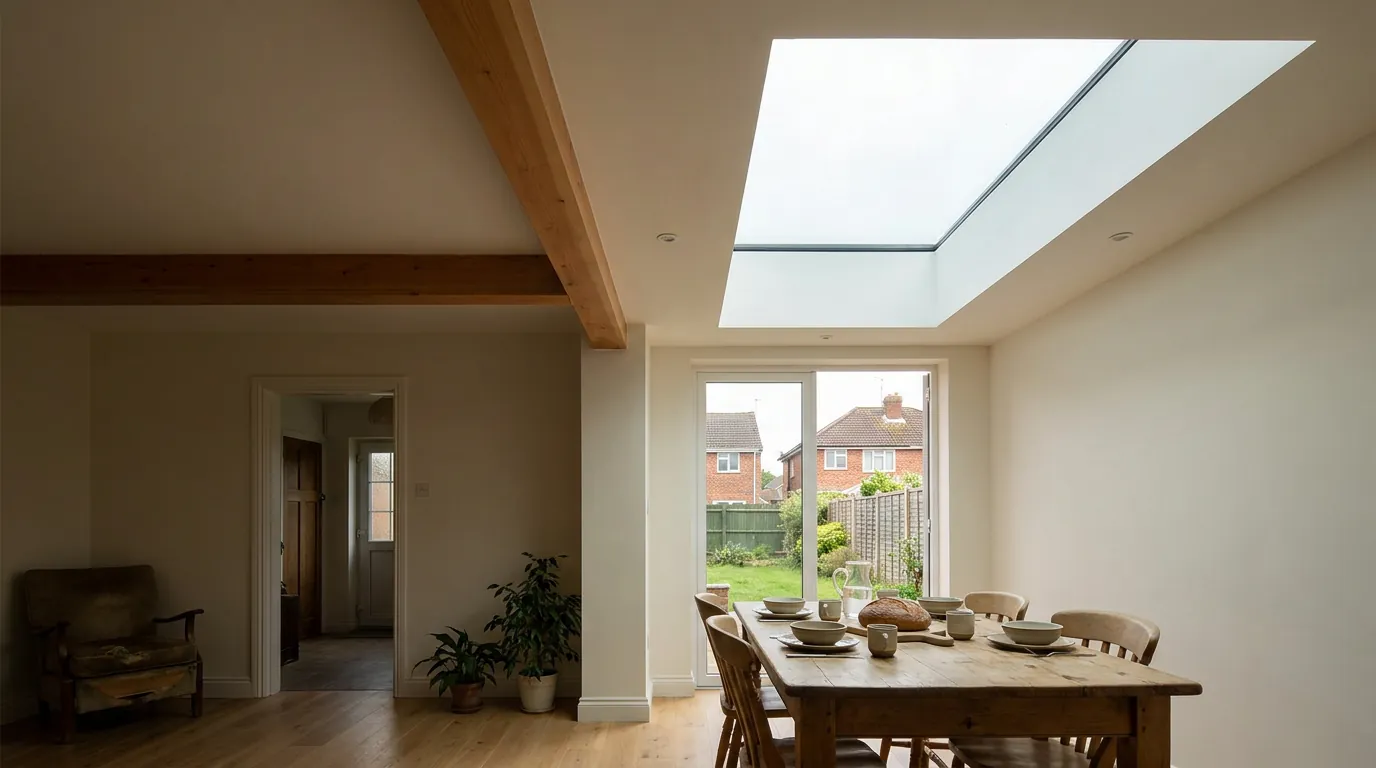
Both metals will outlast a lot of the roof around them if they are made and fitted properly. What differs is where their care lies. With steel, everything depends on the coating staying whole. A scrape through the paint during fitting is touched in there and then, and a light that has spent many winters on a north slope is worth a look at its finish from time to time, especially along the lower edge where water runs off. Galvanising means a small blemish does not turn into structural rust, but it is still better caught early.
With aluminium, rust is not a concern, so the watch point is the powder coat's colour and gloss over time and the seals, which on any rooflight are the parts that age first. On either metal, the flashing that ties the frame into the tiles or slates does the real work of keeping water out, and that is shaped to the roof covering rather than chosen by frame material.
The metal decides how fine the frame can be; the fitting decides whether it stays dry.
Warmth and condensation inside the room
Metal conducts heat, and a thin metal frame between a warm room and a cold roof is where condensation shows first on a winter morning. The glass itself is not the issue here, since a conservation rooflight carries a sealed double glazed unit like any modern window; our answer on whether conservation rooflights are double glazed covers that. The frame is the weak link, and each metal deals with it differently.
Aluminium profiles are often made with a thermal break, a strip of low-conducting material that separates the outer metal from the inner. Steel frames tend to rely on the design of the frame, an insulated lining around the opening, or a timber inner frame so that the room side never touches cold steel. None of these makes a metal frame perform like the insulation around it, and a few drops on the frame on the coldest days can still happen with either. Good ventilation in the room helps as much as the frame choice.
If warmth is the deciding concern, read are conservation rooflights warm enough? and, for glazing and frame performance across all types, the energy efficient rooflights service.
What the planning conversation is really about
Where a skylight needs planning permission or listed building consent, the officer is judging how the finished work affects the character of the building and the area: size, position on the slope, how flush it sits, the bar, the colour of the frame. Frame metal comes into it indirectly, through the sightlines it allows, and directly on some historic buildings, where authenticity of material is part of what is being protected. Each application is weighed on its own facts, and no rooflight choice can promise a decision.
The rule of thumb: choose the metal by the outline it gives on your roof, then check the product against what the council is likely to want to see. The exception: on a listed building, or where an original iron light is being replaced, the material itself may carry weight, and steel is the natural starting point for that discussion.
If an old light is failing and you want its successor to match, can an old cast iron rooflight be replaced like for like? deals with that case, and what colour are conservation rooflights? covers the finish question that sits alongside it.
How the choice changes the work on the roof
The installation itself follows the same broad path for both metals, but a few steps shift with the frame. In outline:
- Look at the roof first. We measure the rafter gaps, note the covering and its condition, and check the loft for anything that affects the opening, before any quote is written.
- Compare real products. The steel and aluminium options that fit the gap are set against each other on sightline, weight and finish, with the planning position in mind, using the same approach set out for every conservation rooflight job we take on.
- Settle consent before ordering. Where permission or listed building consent is needed, the chosen unit goes into the drawings, and nothing is ordered until the route is clear.
- Plan the lift. A heavier steel unit is planned for with the right access and hands on the day; aluminium is simpler to handle but is still set with care to protect the coating.
- Form the opening and set the frame. The opening is trimmed to the design, the frame is fixed low to keep the profile, and any mark in a steel finish is touched in before the flashing goes on.
- Weather it in and line it. The flashing is dressed to the tile or slate, and the inside is lined and finished, with Building Control notified where the work requires it.
The workmanship on both is covered by our 10-year guarantee, which is a promise from us rather than an insured policy.
Matching the metal to the house
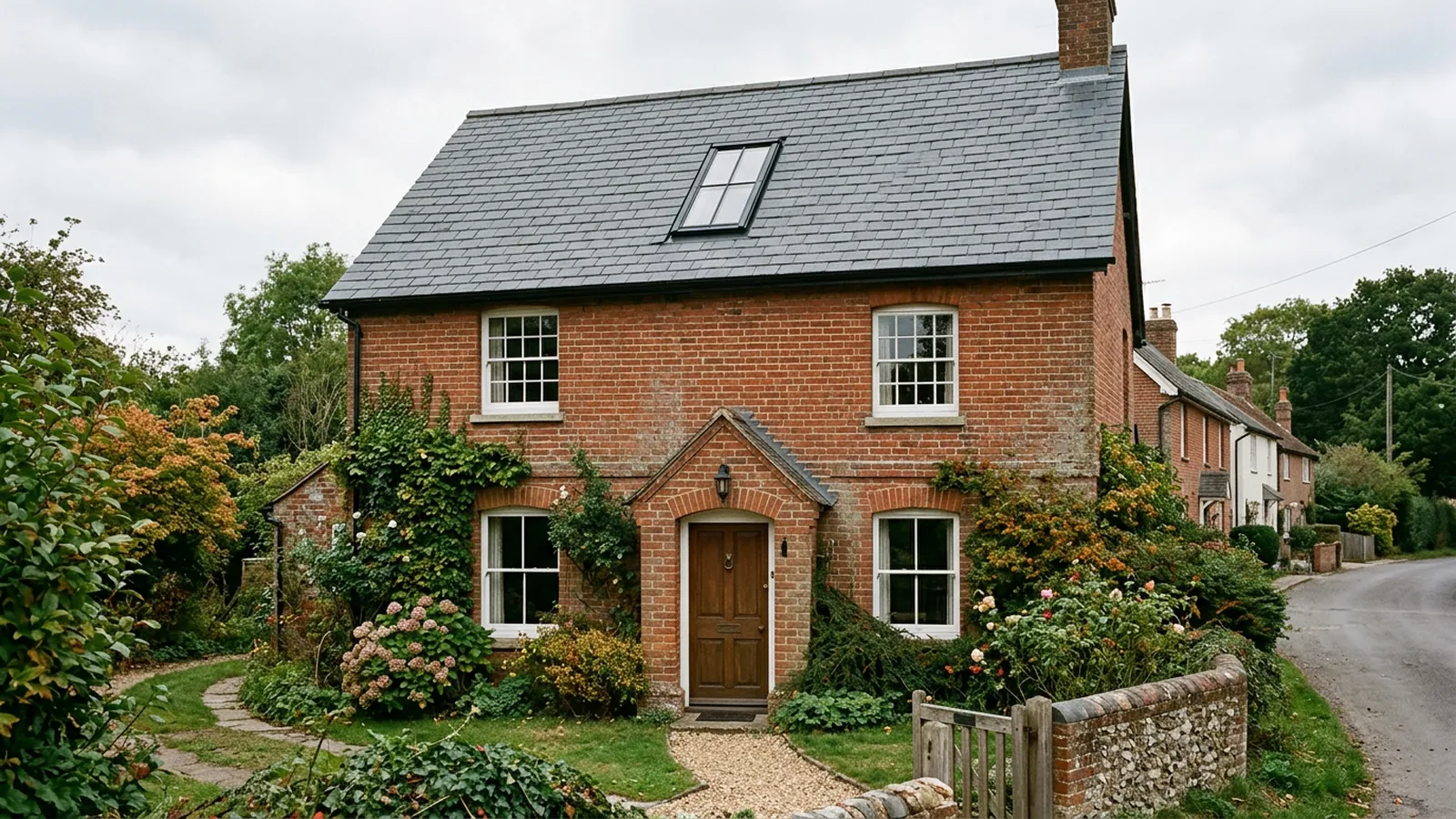
The village and market town roofs around Basingstoke give a fair spread of cases. A cut rafter cottage in a conservation area at Kingsclere, inside the North Wessex Downs National Landscape, raises a different set of priorities from a Victorian villa in Caversham or a converted cart shed on the edge of Hartley Wintney. Some rough guidance, always subject to the roof itself:
Where steel tends to lead
Listed buildings, roofs that once carried iron rooflights, and prominent front or street-facing slopes where the finest outline gives the strongest case. Here the extra weight and the need to look after the coating are small costs for the closest match to the original.
Where aluminium makes good sense
Rear slopes out of public view, later houses within a conservation area, outbuildings and garden rooms, and anywhere a lighter sash or a warmer frame edge matters more than the last millimetre of border. It also suits owners who would rather not think about coating care at all.
Where either can work
Between those two sit the in-between roofs. On them, the deciding points are the specific product's outline, the colour, the opening you want and how it all reads against your particular tiles or slates.
Choosing with the roof in front of you
Steel and aluminium conservation rooflights are both honest ways to bring daylight into an old roof without breaking its lines. Steel gives the finest frame and the truest echo of Victorian ironwork, at the cost of weight and a coating to look after. Aluminium gives lightness, freedom from rust and easy thermal detailing, with a frame that can be a fraction broader. Neither choice is right in the abstract.
For the whole process, from the first loft visit to the flashing and the finished lining, the conservation rooflight installation page sets out how we work, and our wider rooflight and skylight installation around Basingstoke covers every other kind of roof. If you want the two metals weighed against your own slope, rafters and planning position, book a roof survey; we will come and look, and the quote follows the survey, not the other way round.