Whether your roof sits inside a boundary line decides how a new rooflight is approached, so it is worth settling before anyone talks about sizes or glazing. Our conservation rooflight service begins from that answer, and this page shows you how to get it yourself, in about the time it takes to make a cup of tea.
Start with the council that covers your address
Conservation areas are designated by the district or borough council (or, inside a national park, by the park authority), not by the county. Around Basingstoke that means Basingstoke and Deane for places such as Old Basing, Overton, Kingsclere and Whitchurch; Hart for Odiham, Hartley Wintney and Crondall; West Berkshire for Aldermaston, Hungerford and Newbury; and the South Downs National Park Authority for Selborne. If you live near a boundary between two councils, check which one handles planning for your postcode before you go looking for maps.
On the council website, search for "conservation areas". You will usually find a list of every designated area, a boundary map for each one, and often a written appraisal describing what makes the area special. Some councils also show the boundaries as a layer on an interactive planning map, where you can zoom to your own roof.
Conservation rooflight compared with a standard roof window
- Low profile: the glass sits close to flush with the roof covering
- Slim dark metal frame, closer to a traditional cast iron rooflight
- Central vertical glazing bar dividing the glass
- Roof covering of slate or clay tile laid on battens
- Flashing dressed into the covering around the frame
- Standard roof window: frame, sash and flashing stand proud of the roof line (roof line shown dashed in both sections)
Five places the answer can come from
| Source | What it shows | Worth knowing |
|---|---|---|
| Council boundary map | The drawn edge of each designated area | Zoom in: a line can run along a garden wall or down the middle of a lane |
| Conservation area appraisal | The character the council wants kept, often with roofscape notes | Read the roofs section; it hints at what a rooflight will be judged against |
| Interactive planning map | Conservation areas, listed buildings and sometimes Article 4 areas as layers | Turn on every heritage layer, not just one |
| Your purchase searches | The local authority search from when you bought the house | A snapshot on that date; designations can be added or extended later |
| A direct question to planning | A written reply for your exact address | The most certain answer, and the one to keep on file |
For listed status specifically, the National Heritage List for England, kept by Historic England, can be searched by address or by map. A house can be listed without being in a conservation area, and the other way round, so check both.
Three designations people mix up
A conservation area covers a whole place: its streets, its roofline, its trees. Listing covers a single building, inside and out. An Article 4 direction is a separate order that removes some permitted development rights in a defined area, and it can reach roof alterations that would otherwise need no application. Any one of the three changes the conversation about a new rooflight, and they stack.
The rule: being inside a conservation area does not, by itself, mean every rooflight needs planning permission. The exception is where a rooflight would face a road, sit on a principal elevation, stand proud of the slope, or where an Article 4 direction or listing applies. The council can confirm which applies to your roof.
How those rights change on a roof slope is set out in our answer on whether conservation rooflights need planning permission, and the order itself is explained in the guide to Article 4 directions and roof alterations.
Signs on the ground are clues, not proof
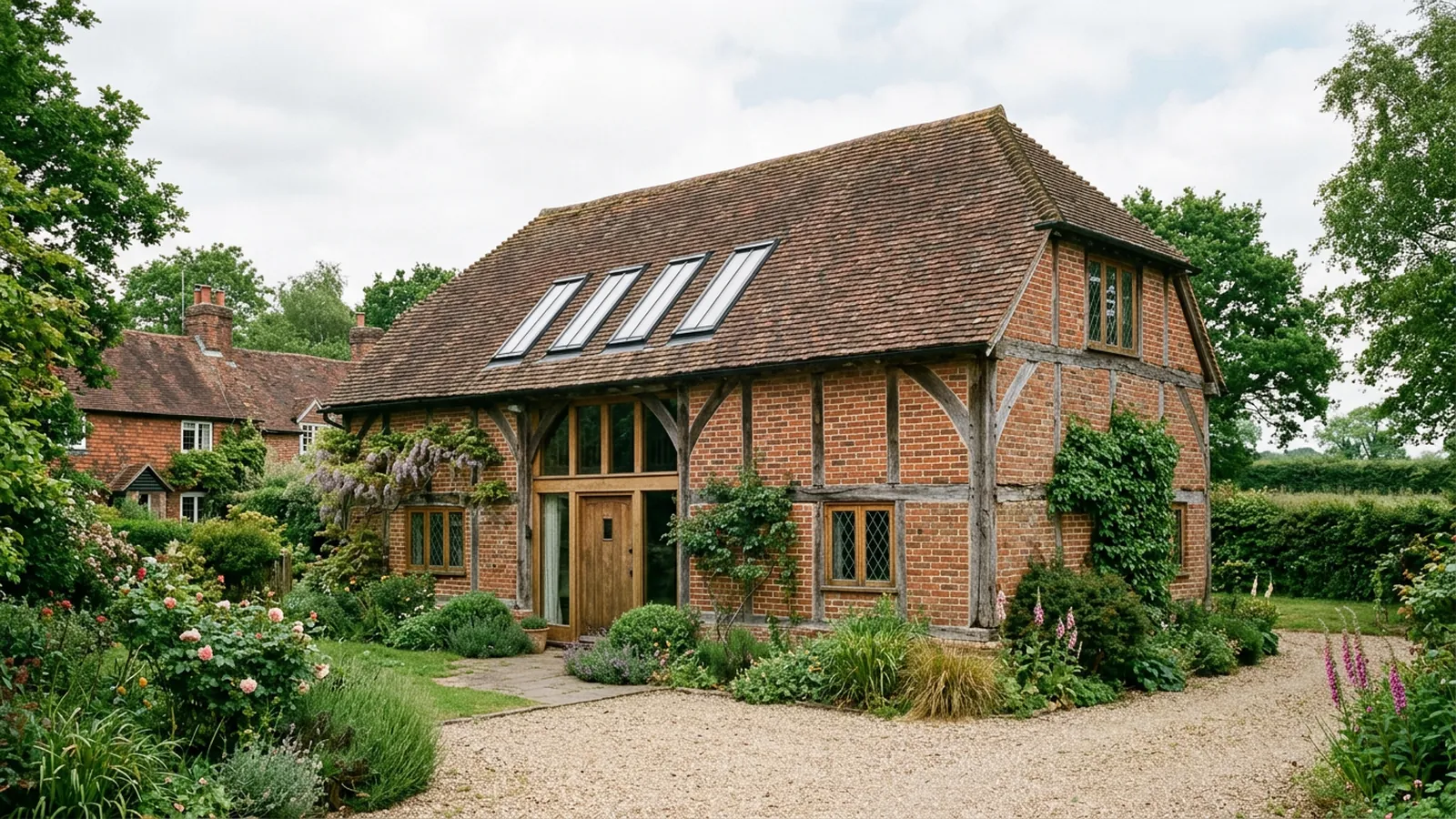
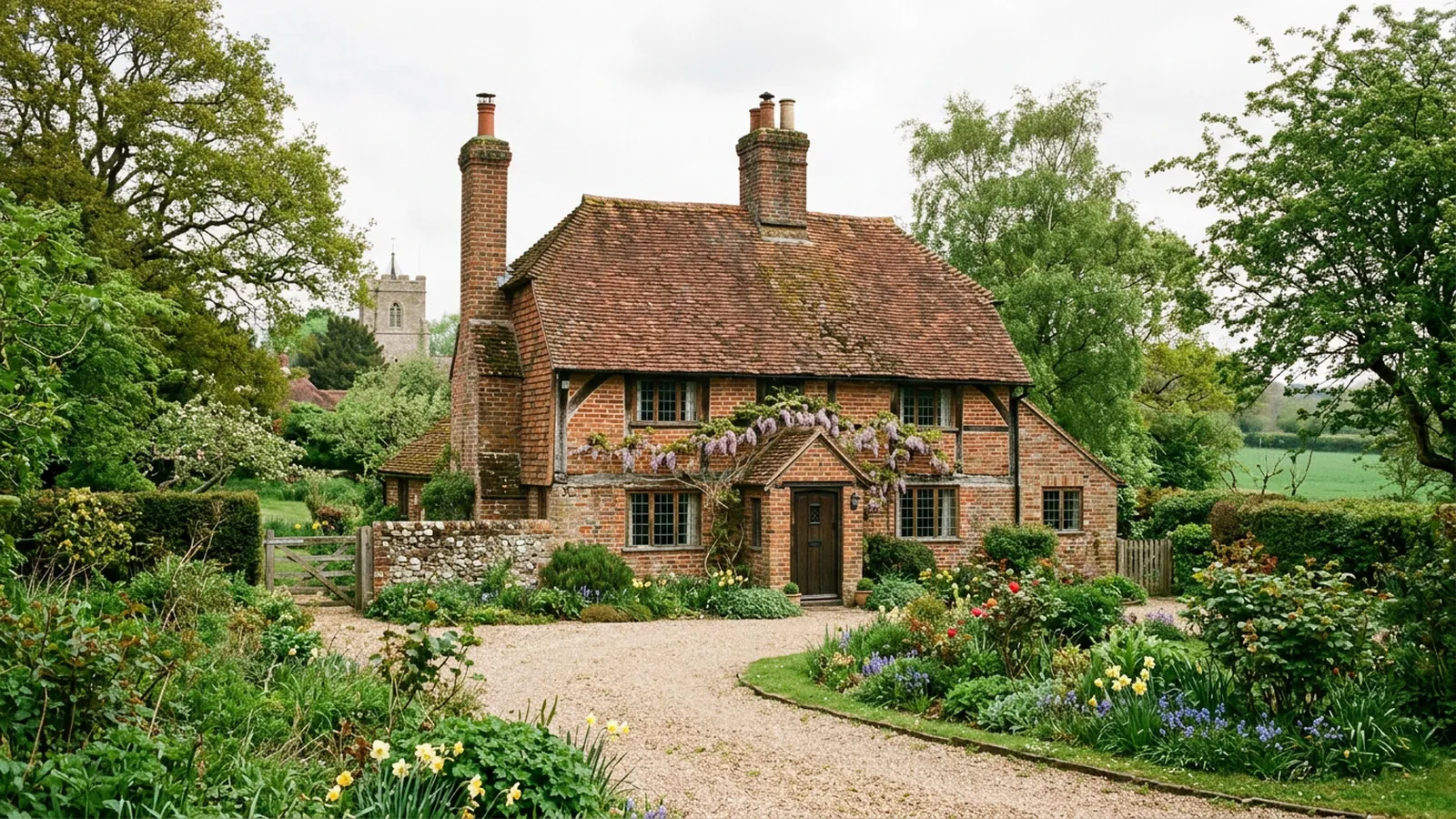
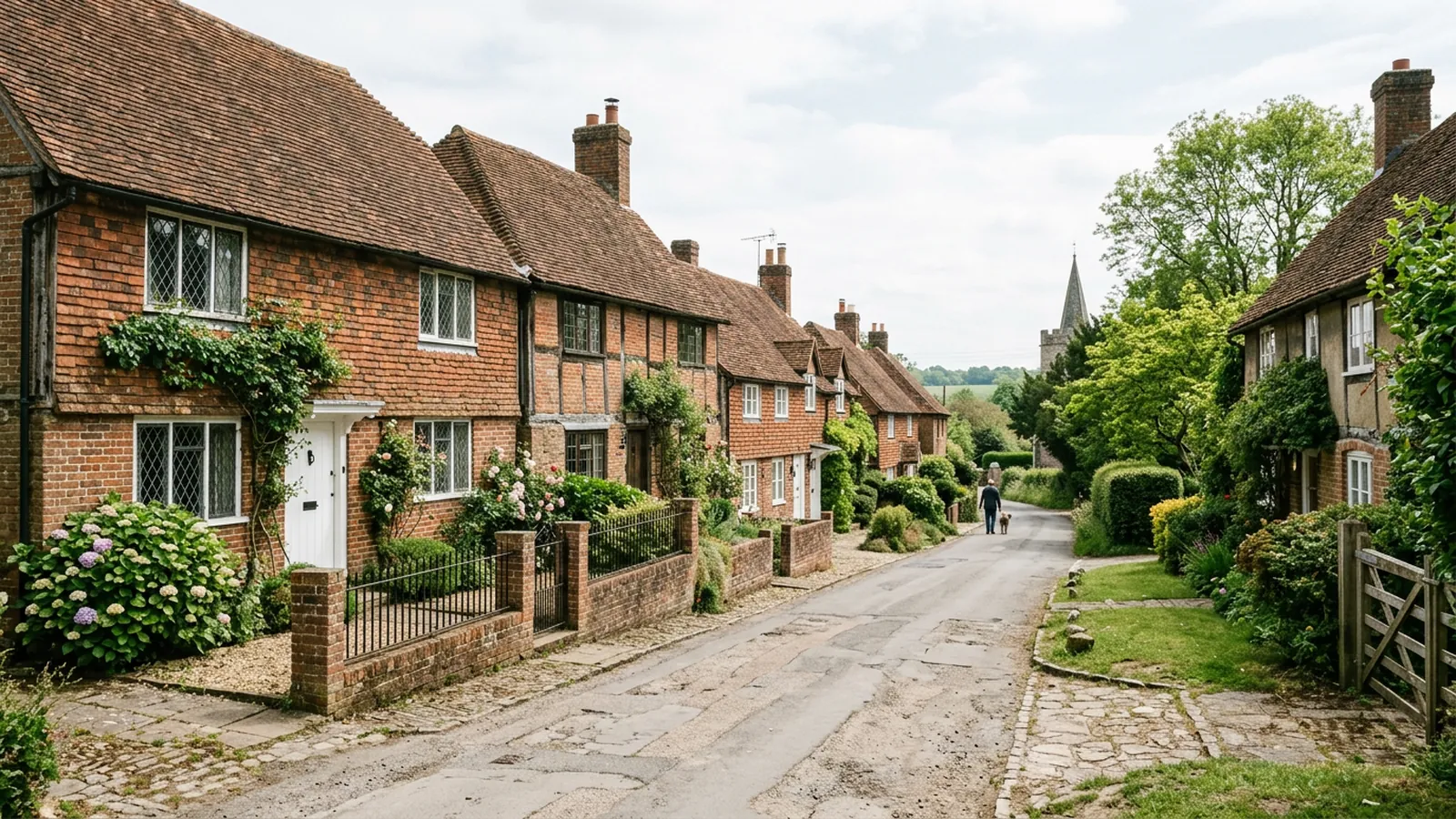
You can often guess before you look it up. Old village cores with handmade clay tile or natural slate, a church and a green, timber-framed or brick houses with steep roofs and narrow lanes: these are the places councils tend to protect. A market town centre with later estates around it can put one side of a road inside the boundary and the other outside.
The guess can mislead in both directions. A 1970s infill house in the middle of a village may sit inside the line, because the boundary follows the historic settlement rather than the age of each building. A period cottage on the edge of a village may sit outside it. Only the map, or the council's written reply, settles it.
Kingsclere and Hungerford also lie within the North Wessex Downs National Landscape, and Selborne within the South Downs National Park. Protected countryside of that kind is not the same thing as a conservation area, but a planning officer weighs it too, so note it alongside your answer.
What to ask the planning team
If the map is unclear, a short email saves guesswork. Keep it to one address and a few questions the officer can answer quickly.
- Your full address and postcode. Add the title plan or a screenshot of the map if the boundary looks close.
- Is the property in a conservation area? Ask which one, so you can read its appraisal.
- Is it listed, or within the curtilage of a listed building? Outbuildings can be caught this way.
- Is there an Article 4 direction? Ask whether it covers roof alterations.
- Does the council offer pre-application advice? Useful if you already know you want a rooflight on a visible slope.
Keep the reply. It is useful for your own records, for any application, and for whoever fits the rooflight.
Once you know, what changes for the skylight
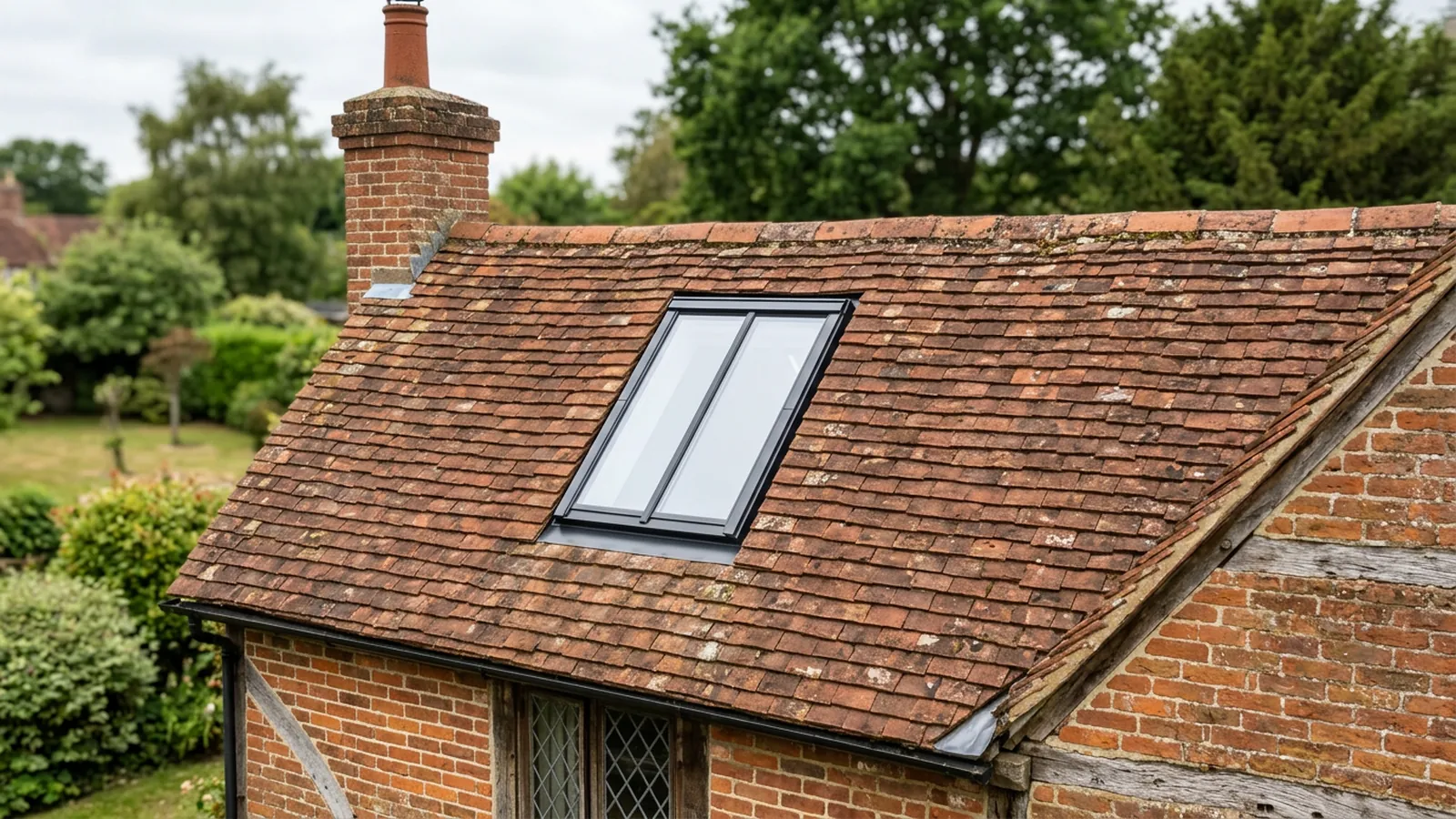
If the house is outside every designation, a standard roof window may be the right answer, sized to the rafters or trusses you have. If it is inside a conservation area, the usual expectation is a low-profile conservation rooflight that sits flush with the tiles or slates, with a slim frame and often a central glazing bar. What councils look for on a roof slope is covered in the guide to conservation areas and what they ask of a rooflight, and the common question about branded roof windows is answered in can you fit a VELUX in a conservation area?
If an application is needed, the timetable matters for planning the rest of the work; our answer on how long planning takes for a rooflight in a conservation area walks through it. The council decides each case on its own details, so nobody can promise you a result in advance.
When we come out, we look at the slope, the covering and the timbers before any quote is written, and we bring the designation question into that visit so the specification matches it. If you have found your answer and want to talk through the roof, arrange a survey here, or see how we approach rooflight installation around Basingstoke more widely.