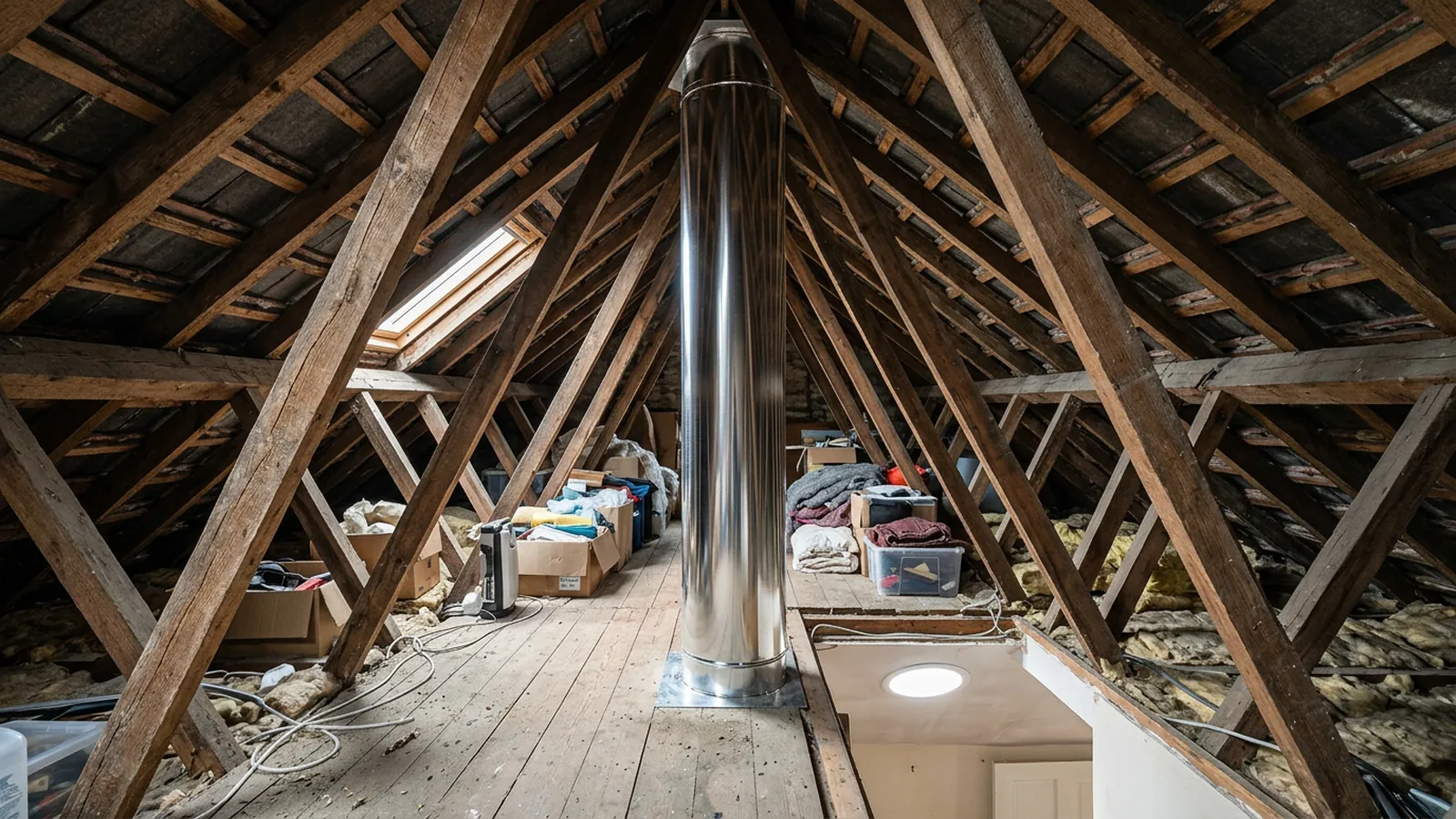
On a cold winter morning the air in an estate loft is not far off the air outside, while the landing below it is heated and lived in. A sun tunnel is a sealed metal tube that joins those two places. Whether it stays dry and keeps the warmth downstairs depends almost entirely on the short length of tube that crosses the loft, and on how the insulation is put back around it. That length is what this guide is about.
It covers why the loft section behaves the way it does, what the insulating sleeve does and does not do, the junction at the ceiling where most of the trouble starts, and the few houses where the rules change. For the whole job from roof to ceiling, the sun tunnel installation page sets out the survey and the fitting in order.
Two temperatures, one tube
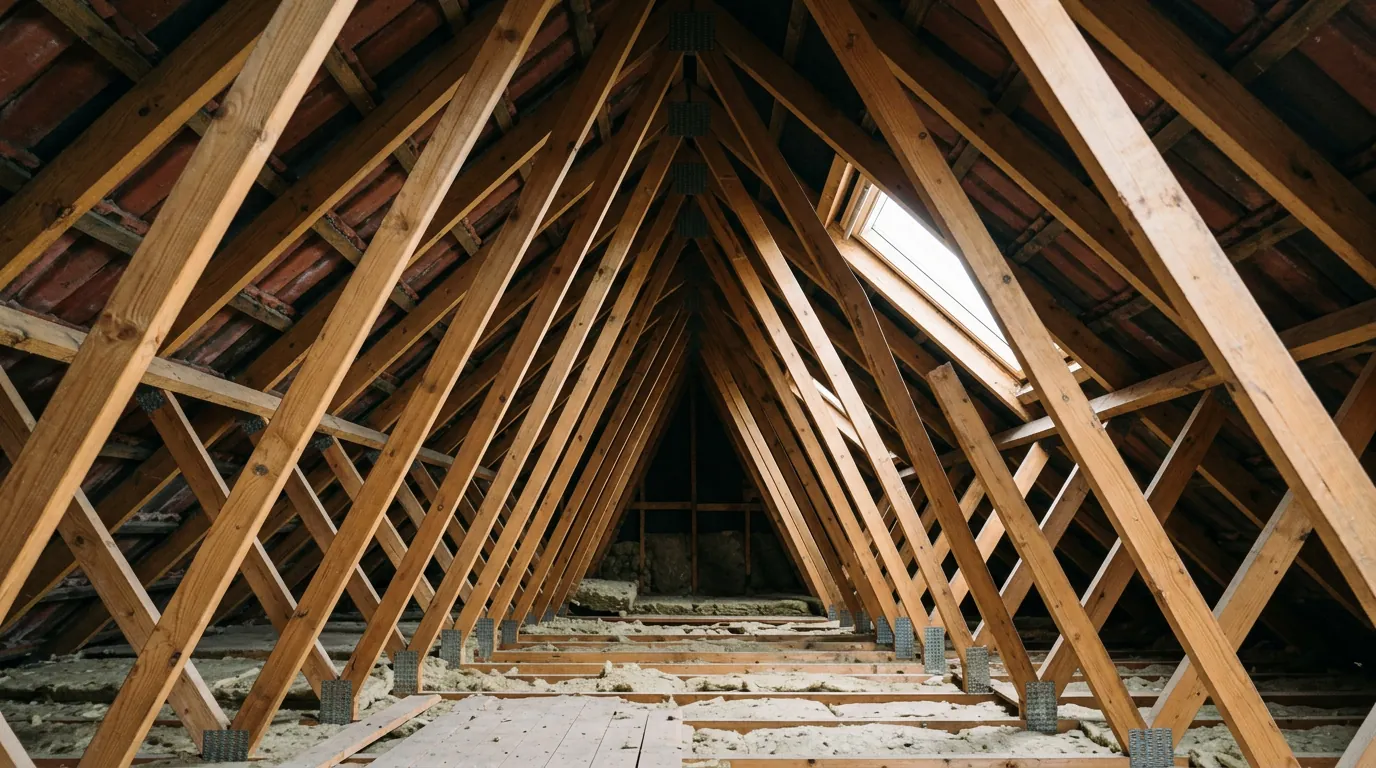
Most houses built around Basingstoke since the 1960s have what the trade calls a cold roof. The insulation lies on the ceiling, between and over the ceiling ties, and the loft above it is deliberately ventilated through the eaves so it stays close to the outside temperature. That keeps the roof timbers dry. It also means anything that passes from the rooms into the loft is passing from warm to cold.
A sun tunnel does exactly that. The diffuser sits flush in the ceiling of a heated room, the dome sits on the roof, and between them the tube runs through the coldest part of the house. The reflective lining that carries the daylight is a thin, polished metal surface, and metal takes on the temperature of whatever surrounds it very quickly. Left bare in a cold loft, the tube wall ends up nearly as cold as the loft air.
Warm room air holds more moisture than cold air. When it meets a surface below its dew point, the moisture comes out as water droplets. That is the whole story of condensation in a sun tunnel, and it is why the insulation around the loft section matters more than the length, diameter or brand of the tube.
How a sun tunnel brings daylight down
- Clear dome on the roof slope, catching daylight from the sky
- Flashing, weathered into the tiles so rain runs round the dome
- Daylight reflecting off the mirror-finish lining all the way down
- Reflective tube, here a rigid straight run through the loft
- Loft insulation laid up to the tube, with an insulated sleeve round it to limit condensation
- Ceiling diffuser, spreading the light across the landing below
- Shown faint: angled elbows let the tube step round a truss or purlin, at some loss of light
What the insulation around the tube is for
The sleeve has two jobs, and it helps to keep them apart. The first is keeping the inner face of the tube closer to room temperature, so the humid air that reaches it from below does not condense. The second is stopping the tube acting as a cold bridge: a path that leads heat out of the room, through a gap in the loft quilt, and into the roof void.
Neither job is about the light. An uninsulated tube carries daylight just as well on a dry day; the difference shows on the cold, still mornings when the loft is at its coldest and the house has been warm all night. The question of how much heat a tube can let out in the first place is answered on do sun tunnels let heat out?, which compares the small opening with a window. This guide stays with the detail that keeps that loss small.
The light comes from the roof, but whether the tube stays dry is decided in the loft.
Where each part of the run sits
A sun tunnel crosses three different zones on its way down, and each one asks for a different treatment. Reading the run as three parts makes it easier to see why a sleeve alone is not the whole answer.
| Part of the run | Conditions there | What the insulation detail does |
|---|---|---|
| Ceiling junction | Warm, moist room air below; the loft quilt around the tube; the ceiling board cut to take the diffuser ring | The diffuser is sealed to the ceiling so room air cannot drift up freely, and the loft quilt is made good tight to the tube with no ring of bare board |
| Loft void | Ventilated, close to outside temperature, crossed by ceiling ties, webs, binders and services | A continuous sleeve along the whole length of tube, taped at its joins and ends, with no bare stretches where it passes webs or bracing |
| Roof end | The underside of the roof covering, the felt or membrane, and the flashing collar above | The sleeve runs up to the underside of the roof and is finished neatly so it does not block eaves ventilation or hold water against the tube |
Where the tube passes through the loft decides how long the sleeve needs to be and how many joins it has. The way a run is planned between trusses, webs and water tanks is covered in routing a sun tunnel through a trussed roof void. A shorter, straighter run is easier to wrap well, which is one more reason to plan the route before anything is cut.
The sleeve itself
The makers of sun tunnel kits supply insulation sleeves designed for their own tube diameters. On a rigid tube the sleeve is slid or wrapped over the sections as they are joined, then taped along its length and at each end. On a flexible tube it is drawn over the concertina lining so it follows the curves without bunching. The difference between the two tube types, and why one route suits one better than the other, is explained in rigid or flexible sun tunnel tubes.
What matters in the loft is continuity. A sleeve that stops short of the ceiling quilt leaves a cold ring right where the warm air arrives. A sleeve that has slipped at a joint, or been pulled back to get past a web, leaves a bare stretch that will be the coldest part of the tube and the first place moisture settles. The aim is a single unbroken wrap from the loft insulation to the underside of the roof.
The sleeve also needs to be left alone afterwards. Boxes dragged across a boarded area, a new cable run, or someone reaching past the tube to a tank can pull it out of place. It is worth a glance whenever you are in the loft for another reason.
The ceiling junction, where most of it happens
The junction between the tube, the ceiling board and the loft quilt is small and easy to overlook, and it does more to decide how the tube behaves than any other part. Two things happen there.
First, air. A diffuser that is sealed to the ceiling keeps warm, humid room air from rising freely into the tube. If the ring is left loose, or the ceiling board around it is cut oversize and not made good, room air moves up into the tube and meets the cold part of the run. Sealing that ring is part of fitting the diffuser, and it is covered alongside finish and appearance in diffusers and what a sun tunnel looks like from the ceiling.
Second, the quilt. Cutting the ceiling means lifting the loft insulation around the opening. When it goes back, it has to be laid tight against the sleeved tube on every side, at full depth. A gap of bare board around the tube is a small cold spot on the ceiling below, and cold spots on a ceiling collect moisture and, in time, marks.
The rule: the loft quilt goes back around the tube at the depth it was before, butted against the sleeve with no ring of bare ceiling board. The exception: where the tube passes close to a downlighter, a flue or anything else that has its own clearance requirement, that clearance comes first and the insulation is arranged around it.
Deep quilt and topped-up lofts
Where an estate loft has had its original insulation topped up with further layers laid across the ceiling ties, that is good for the house, and it changes the sun tunnel detail a little. The tube passes through a thicker blanket before it reaches the open loft, so the cut in the quilt is deeper and there is more to lift and relay neatly.
Two points follow. The sleeve needs to start below the top of the quilt so there is no bare tube between the two, and the relaid layers should sit snugly around the sleeve rather than being pushed back into a mound to one side. Where a loft has had a boarded storage area laid over raised legs, the boards are lifted, the tube and quilt are dealt with underneath, and the boards go back so the tube is not pinched or crushed.
If a loft has never been topped up, the survey notes the depth that is there. Deciding whether to add more at the same time is your choice; the tube detail works either way as long as the quilt is laid back tight.
How the loft run is insulated, in order
On the day, the insulation work is folded into the fit rather than done at the end. The sequence below is the one that keeps each part of the run covered.
- Record the loft first. The survey notes where the insulation is (on the ceiling or at the rafters), its depth, any boarding, and where tanks, pipes and cables sit relative to the planned route.
- Lift and fold back. The quilt is folded back from the diffuser position and the route, not torn out, so it can be relaid at the same depth.
- Cut and fix the ceiling ring. The ceiling is cut to the diffuser size and the ring is fixed, ready to be sealed.
- Build the tube with the sleeve. Sections are joined and the sleeve goes on as the tube goes up, so no joint is left bare behind a web or binder.
- Finish at the roof. The top of the sleeve is finished at the underside of the roof covering, clear of the eaves ventilation path.
- Relay the quilt. The insulation goes back tight around the sleeve at full depth, and any lifted boarding is put back without crushing the tube.
- Seal and fit the diffuser. The diffuser goes on from the room below and is sealed to the ceiling.
Bathrooms, kitchens and other damp rooms
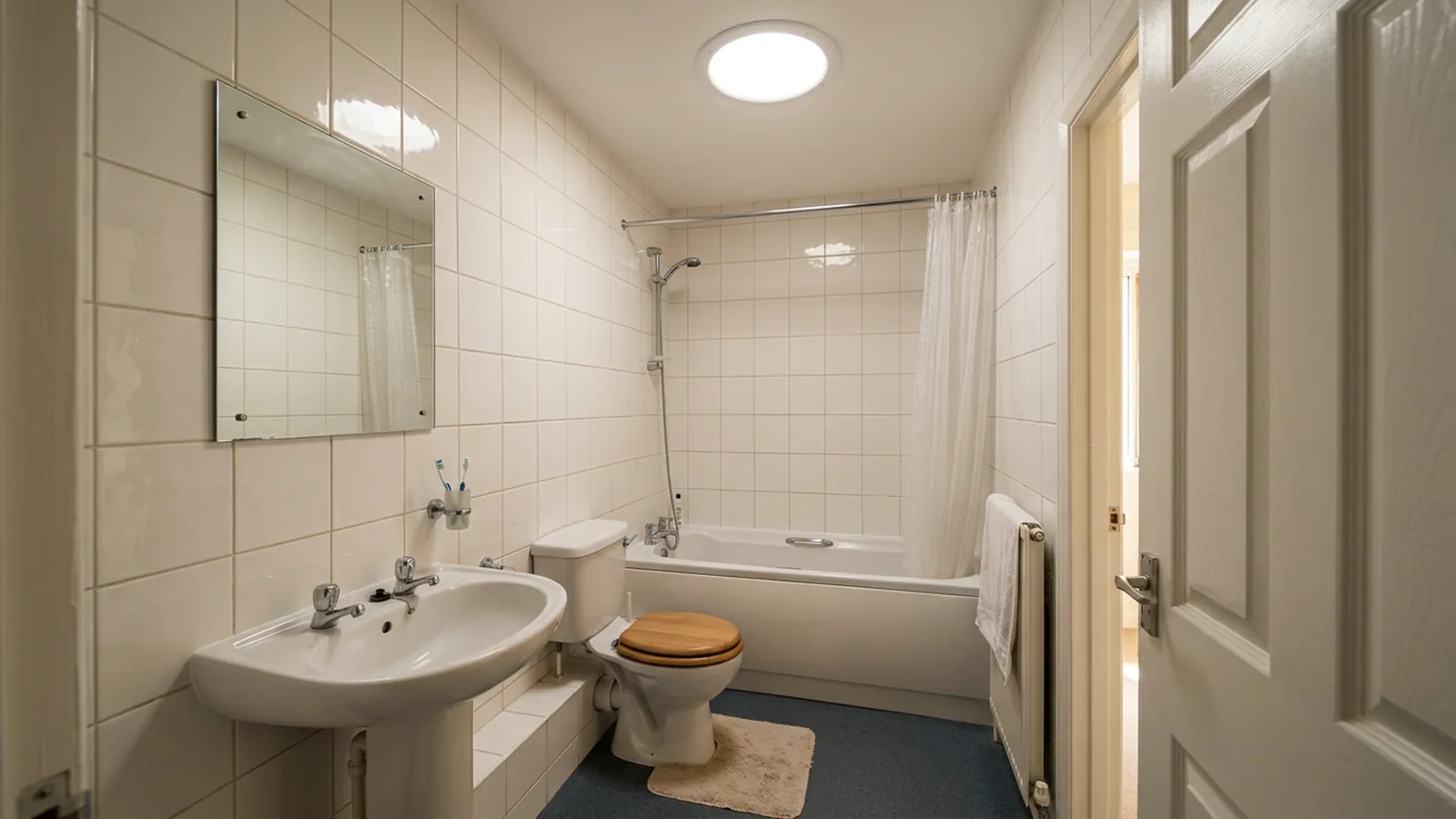
A sun tunnel over a bathroom or en suite sees far more moisture than one over a landing, because a shower sends warm, saturated air straight to the ceiling. The same principles apply, with less margin. The sealed diffuser, a continuous sleeve and a tight quilt all matter more, and the room still needs its own extraction. A sun tunnel is not a substitute for an extractor fan.
Some kits offer a ventilation option built into the diffuser, which is a separate decision covered in sun tunnels with ventilation or night light kits. The bathroom case as a whole, including where to place the diffuser relative to the shower, is in a sun tunnel for a windowless bathroom or en suite. If you want the short explanation of where condensation forms and why the sealed, insulated tube keeps it away, read do sun tunnels get condensation?
When the loft is not cold
Everything above assumes a cold loft, with the insulation on the ceiling. Not every house has one. If the loft has been converted, or the insulation has been moved up to the rafters to make a warm roof, the space the tube crosses is inside the heated envelope rather than outside it. The tube then passes through a warm or semi-warm void and the detail changes: the critical point moves up to where the tube passes through the insulated roof slope, and the sleeve length and sealing follow from that.
A tube that passes through a room above, such as a cupboard or a converted loft, is a different arrangement again, boxed in and finished inside that room. Whether that is possible, and what it involves, is answered on can a sun tunnel pass through a room above? The survey records which of these situations the house is in before any kit is chosen, because it changes the sleeve, the fixings and the order of work.
Regulations, energy and the rest of the roof
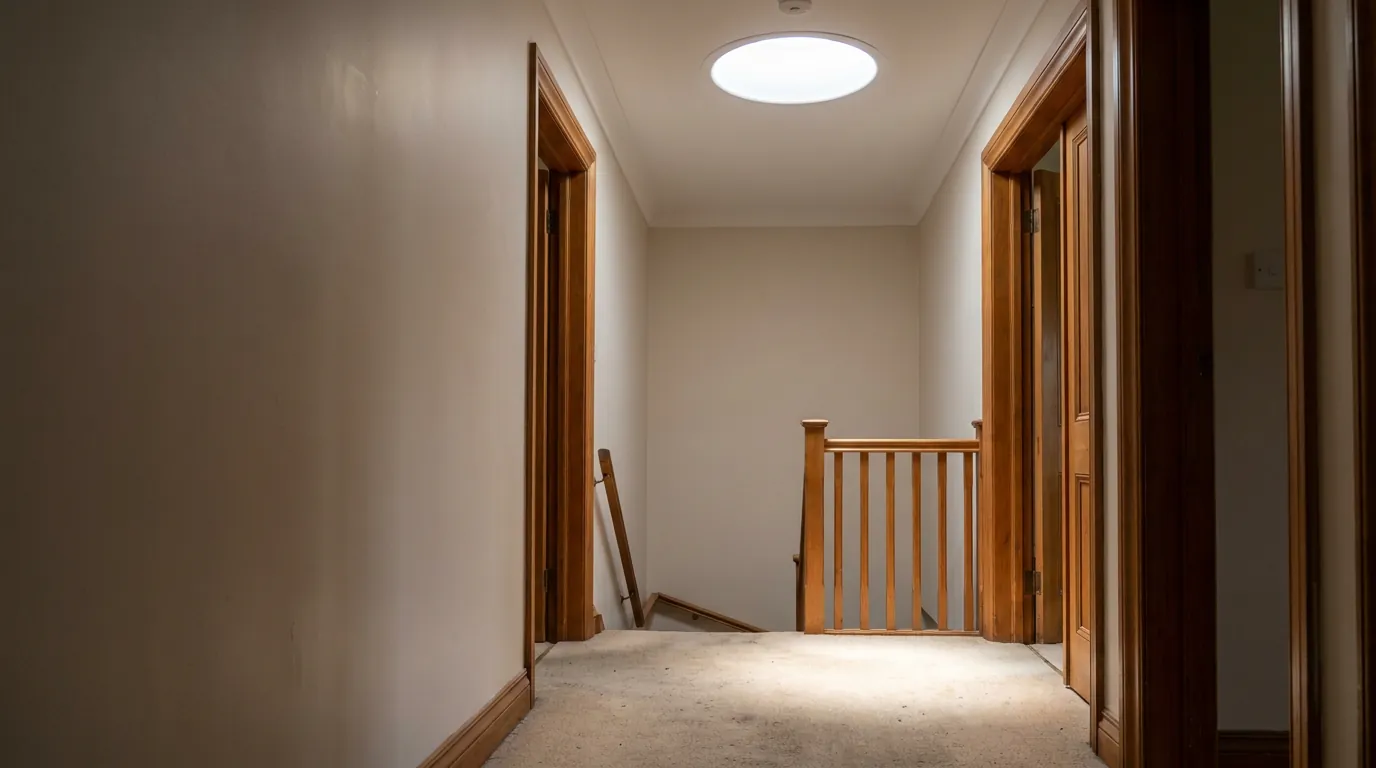
Because a sun tunnel crosses the thermal line of the house, the insulation around it is part of doing the job properly, not an optional extra. Whether the work itself is notifiable depends on what is being altered; the position is set out on do sun tunnels need Building Regulations approval? Where a notification is needed, it is ours to submit, and the insulation detail described here is the one we fit.
If the bigger aim is a warmer house with more daylight overall, a sun tunnel sits alongside other options. A rooflight or roof window over a loft room is a larger opening with its own thermal questions, and the sun tunnel or roof window guide compares the two by room. Wherever a new skylight or tube goes, the principle on this page is the same: keep the cold side cold, the warm side warm, and no bare gap between them.
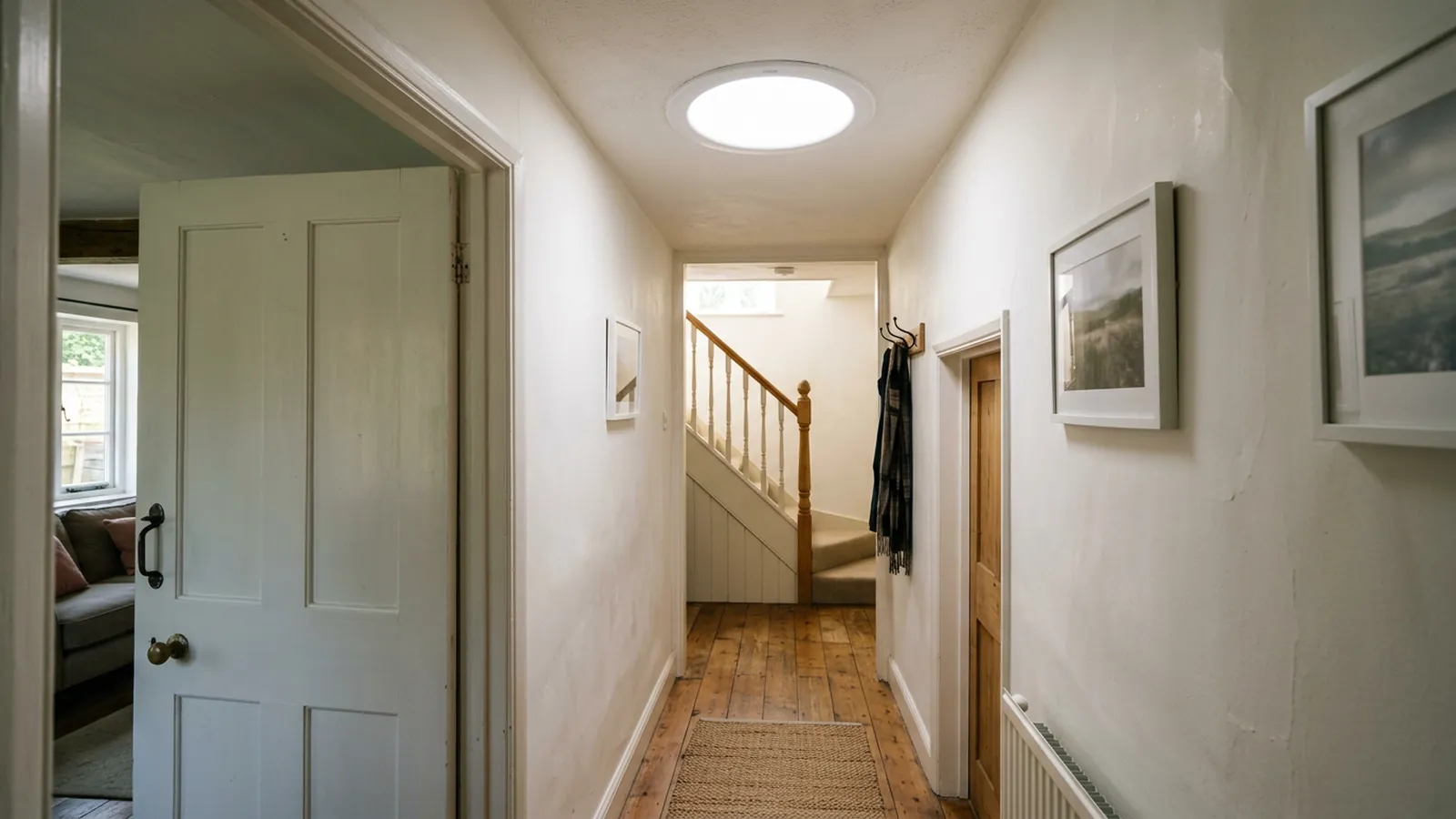
Getting the loft section right on your house
A well insulated loft run is invisible once it is done. You notice it only because the diffuser stays dry through the winter and the ceiling around it looks like the rest of the ceiling. That result comes from the survey noting the loft as it really is, the sleeve going on as the tube goes up, and the quilt going back tight at the end.
Our work on sun tunnels, like every rooflight we fit around Basingstoke, is covered by a 10-year workmanship guarantee (not insurance backed). The full sun tunnel service shows how the survey, route and finish fit together, and our skylight installation in Basingstoke covers every other kind of rooflight. If your loft is ready to be looked at, arrange a survey of the loft and roof and we will check the insulation, the route and the room together.