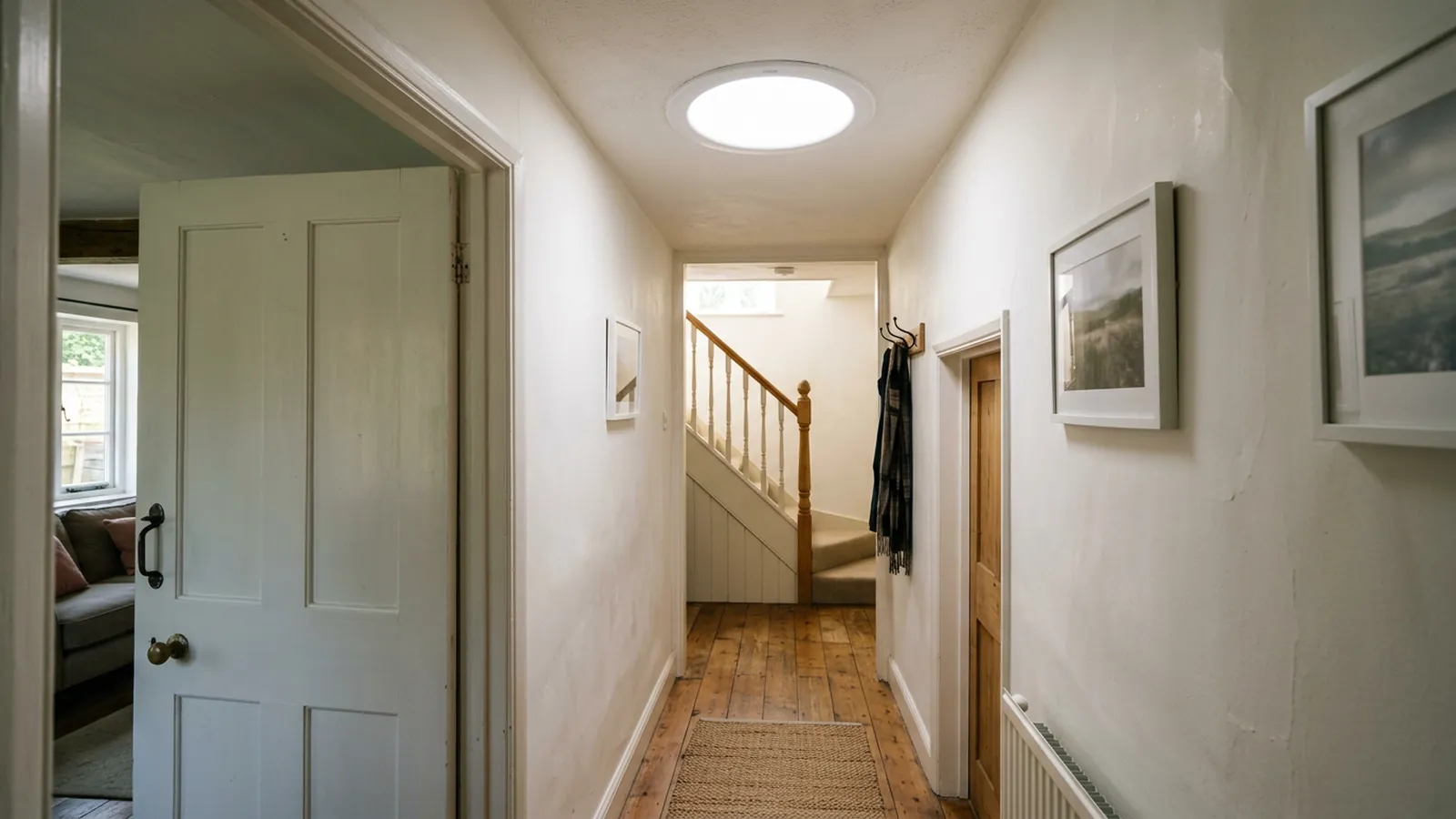
Moisture on a tube is a physics problem with a known answer, and it is settled at the fitting stage rather than afterwards. Our sun tunnel installation service treats the loft crossing as the part of the job that decides whether the tube stays clear, because the dome and the diffuser are made to cope and the tube in between is where warm air and cold air meet.
A sun tunnel is really a small rooflight on the roof joined to a mirrored pipe that carries daylight down to the ceiling. Unlike a skylight set into a heated room, it passes through a space held at close to outdoor temperature, and that single fact explains every drop of water you might see in one.
Where the droplets form, and why
Warm air holds more water vapour than cold air. When air from a room below drifts up into the tube and touches a surface cold enough, some of that vapour turns back into water, the same way a glass of iced water beads on a summer afternoon. In a sun tunnel there are three places where that can happen.
| Place | Why it gets cold | What keeps it dry |
|---|---|---|
| Underside of the roof dome | It sits outside, exposed to winter air and clear night skies | Keeping room air out of the tube, so there is little moisture left to settle there |
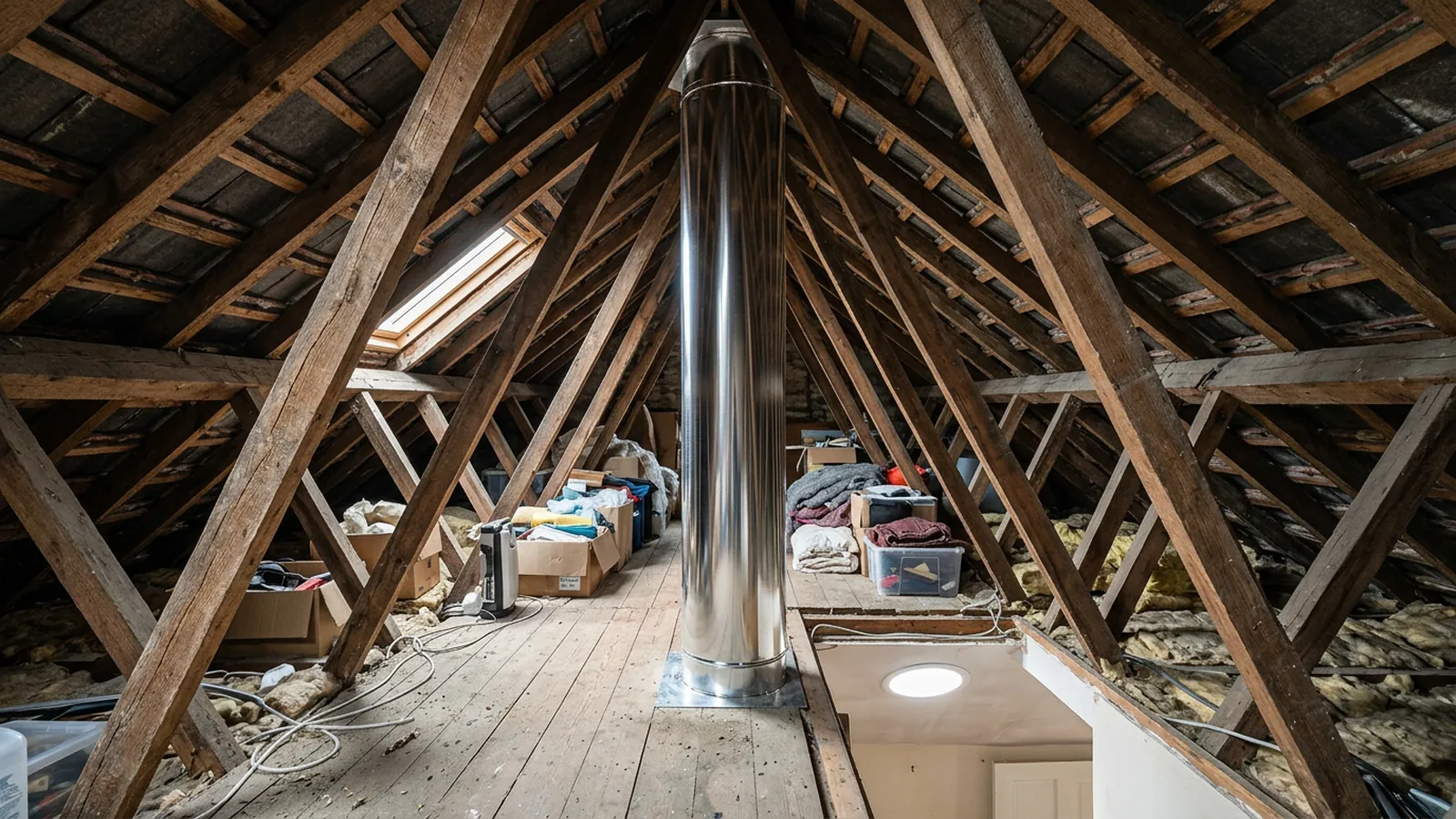
| Tube walls in the loft | The loft above an insulated ceiling runs close to outdoor temperature | Taped joints and an insulated sleeve around the tube for its whole loft run |
| Ceiling diffuser | Cold air inside the tube chills the diffuser from above | A twin-layer diffuser that holds a still air gap between the tube and the room |
Notice that none of those fixes involves the roof covering. Water from condensation comes from inside the house, so the answer lies in the ceiling seal and the loft, not in the flashing.
How a sun tunnel brings daylight down
- Clear dome on the roof slope, catching daylight from the sky
- Flashing, weathered into the tiles so rain runs round the dome
- Daylight reflecting off the mirror-finish lining all the way down
- Reflective tube, here a rigid straight run through the loft
- Loft insulation laid up to the tube, with an insulated sleeve round it to limit condensation
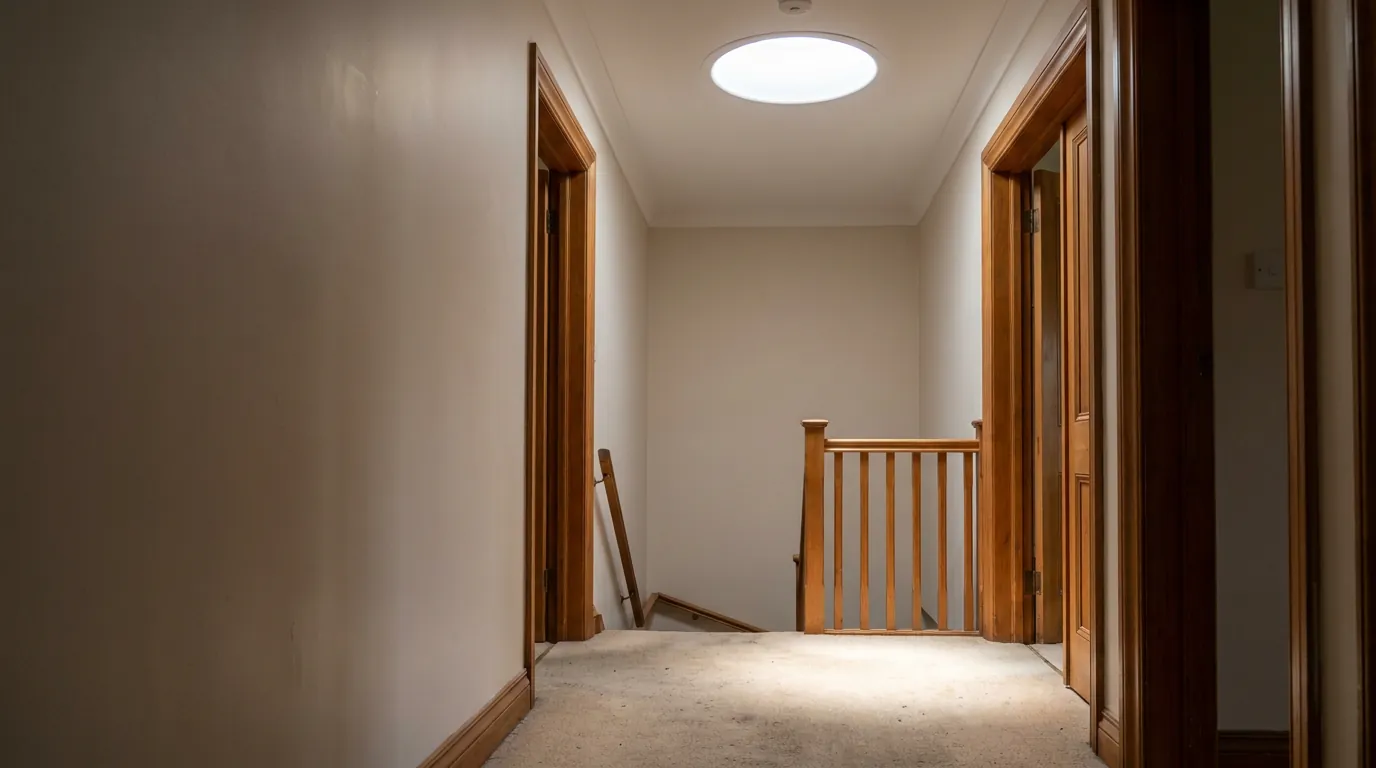
- Ceiling diffuser, spreading the light across the landing below
- Shown faint: angled elbows let the tube step round a truss or purlin, at some loss of light
Why the estate loft matters
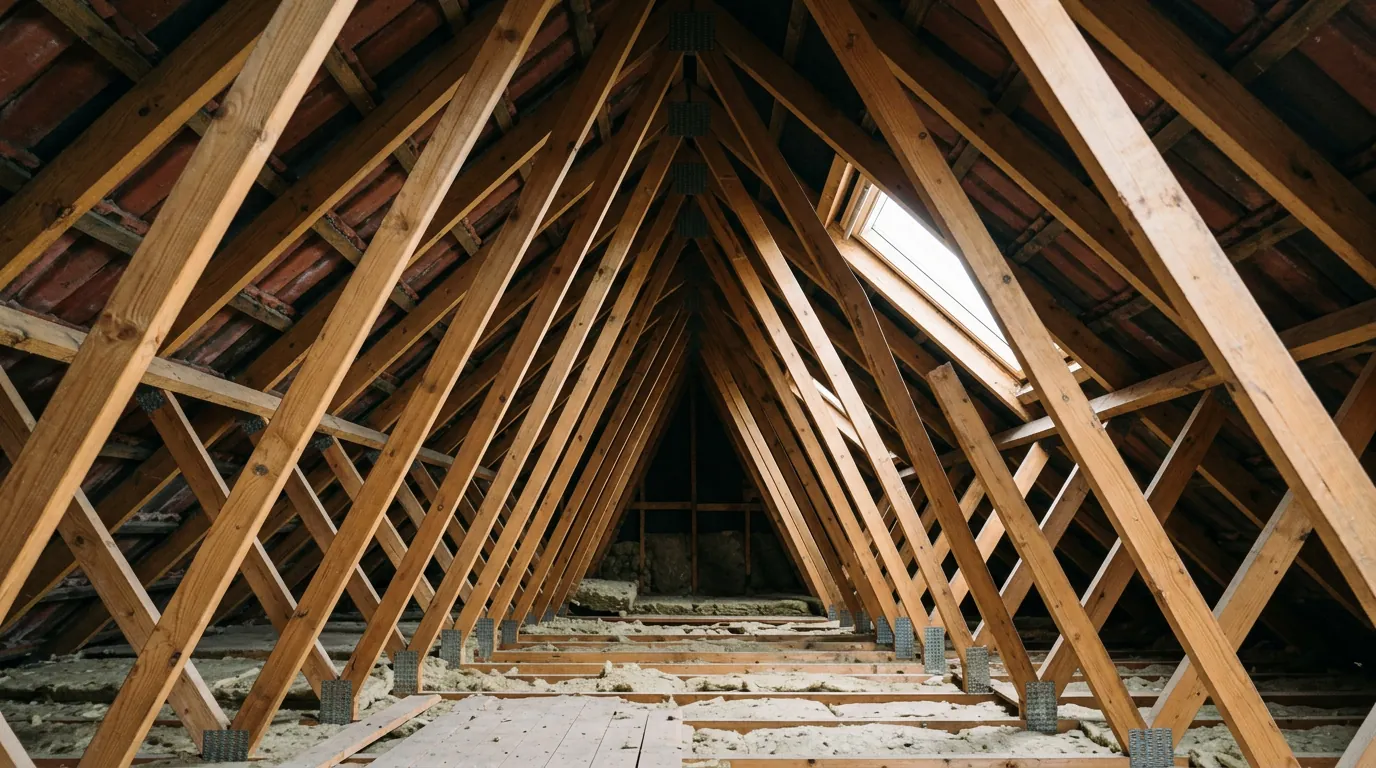
On the trussed estate houses around Basingstoke, from the 1970s semis in Brighton Hill to the newer homes in Beggarwood, the loft is a cold loft: insulation lies across the ceiling joists and the roof space above is ventilated at the eaves. That is exactly how it should be for the roof, and it means a tube crossing that void runs through air near the outside temperature for its full length.
A short, straight tube from a low roof slope has little cold surface to worry about. A longer run, or one with bends to clear a water tank or truss bracing, has more. Length and bends are fixed early by where the dome can sit, so the loft route and the insulation are planned together. How far a tube can reasonably run is answered in how long can a sun tunnel be?
Bathrooms, kitchens and damp air
The rooms that suit a sun tunnel best are often the dampest ones: an internal en suite, a windowless shower room, a landing outside a family bathroom. Steam from a shower carries far more moisture than the air in a hallway, so these rooms test the ceiling seal hardest.
Two things help here. The diffuser must be sealed to the ceiling so shower steam cannot rise into the tube at all, and the room needs its own extract fan to clear moisture at source, since the tube is a daylight fitting, not a vent. Some kits combine the two, with a fan built into the ceiling ring, which is worth asking about at survey. The bathroom case as a whole is set out in a sun tunnel for a windowless bathroom or en suite.
How the fitting keeps the tube dry
Stopping condensation is mostly about sequence and care at each joint. On a typical pitched roof installation, the moisture control goes in like this.
- Seal the ceiling ring. The ring that holds the diffuser is bedded to the plasterboard so room air cannot slip past it into the loft or the tube.
- Tape every tube joint. Each section and each adjustable elbow is taped along its seam, closing the gaps where damp air could find a cold wall.
- Sleeve the loft run. An insulated sleeve wraps the tube from the ceiling to the underside of the roof, with no bare lengths left where it meets the loft insulation.
- Fit a twin-layer diffuser. The inner and outer lenses trap a layer of still air, which acts as a thermal break at the ceiling.
- Close the insulation back up. The loft insulation is lifted back around the sleeve so the ceiling stays as warm as it was before the hole was cut.
Why each of those layers matters, and what the sleeve is made from, is the subject of our guide to insulating a sun tunnel through a cold loft. The same layers also stop warmth escaping into the loft, which our answer on whether sun tunnels let heat out looks at from the heating side.
Condensation or rain getting in?
Moisture seen on a diffuser can come from two directions, and the pattern tells you which. Condensation follows the weather inside the house: it turns up on cold mornings, after showers or cooking, and dries off as the day warms. Water from outside follows the weather outdoors: it appears during or after rain, whatever the room is doing.
The rule: droplets that come and go with cold nights and steamy rooms point to room air reaching a cold surface, so look at the ceiling seal and the loft sleeve. The exception: water that only shows during rain points to the roof end, and that calls for the roof dome and its flashing to be checked instead.
What we look at before quoting
We survey the roof before we quote, and for a tube the survey spends as long in the loft as on the roof. We note the loft temperature conditions and ventilation, the depth of the existing insulation, what the tube must pass on its way down, and how damp the room below is likely to be. That tells us the length, the number of bends and whether a room needs its own extract fan alongside the tube. If a straight route is blocked, our answer on whether a sun tunnel can bend around obstacles explains the trade-offs.
If a daylight tube is one of several options for a dark space in your home, the wider picture of rooflight and skylight installation around Basingstoke may help you compare. To have the loft route and the ceiling seal planned for your own house, arrange a survey and we will walk the run with you.