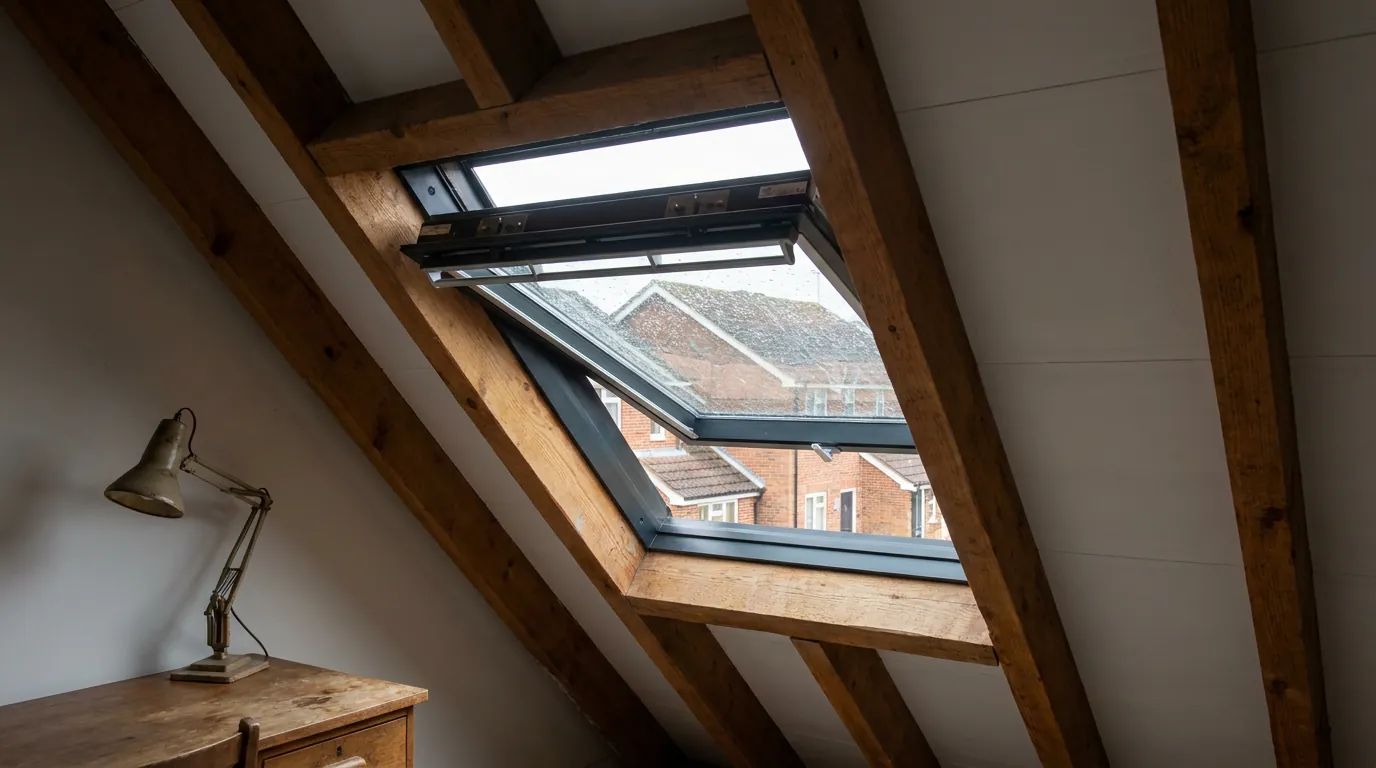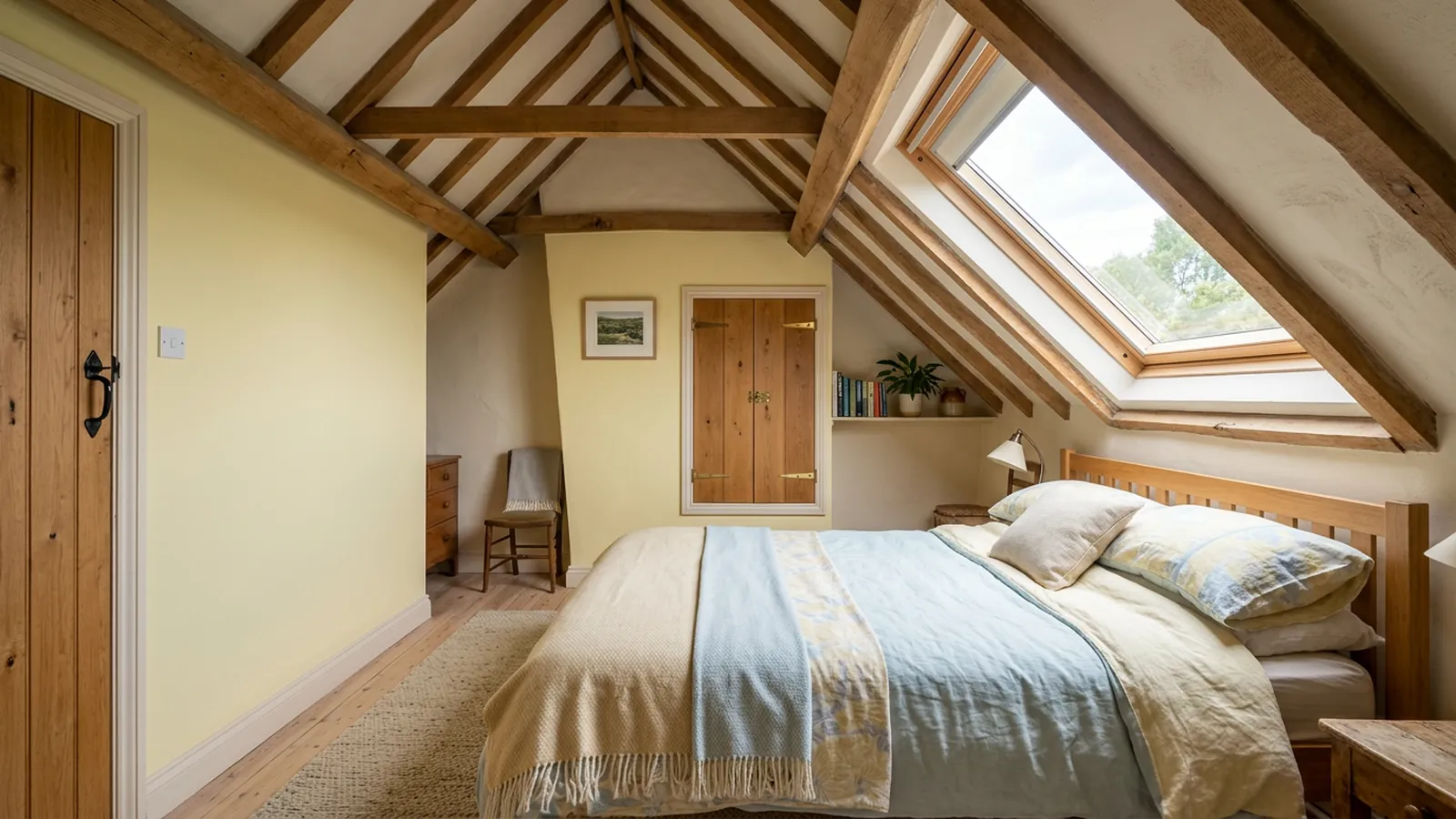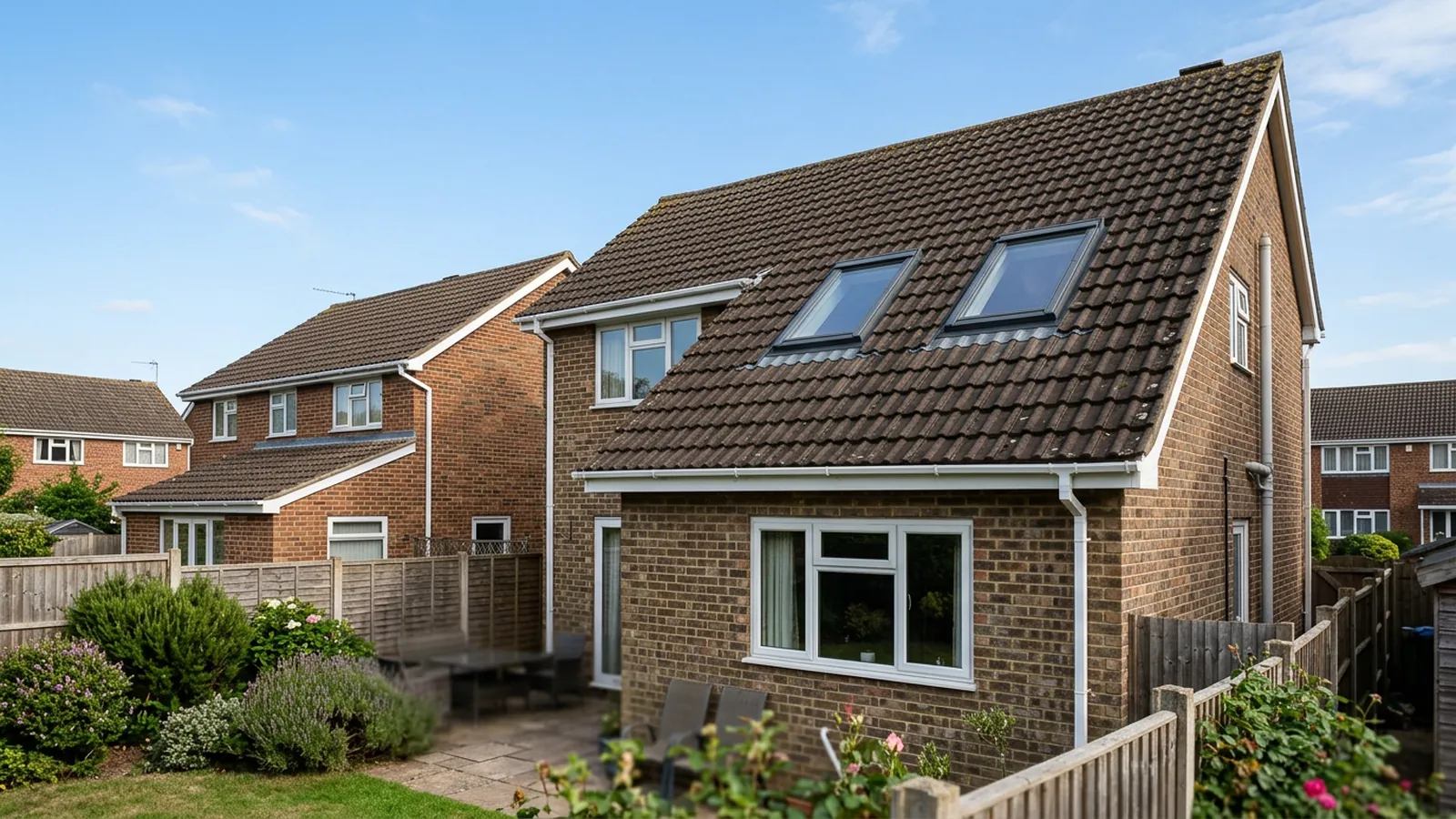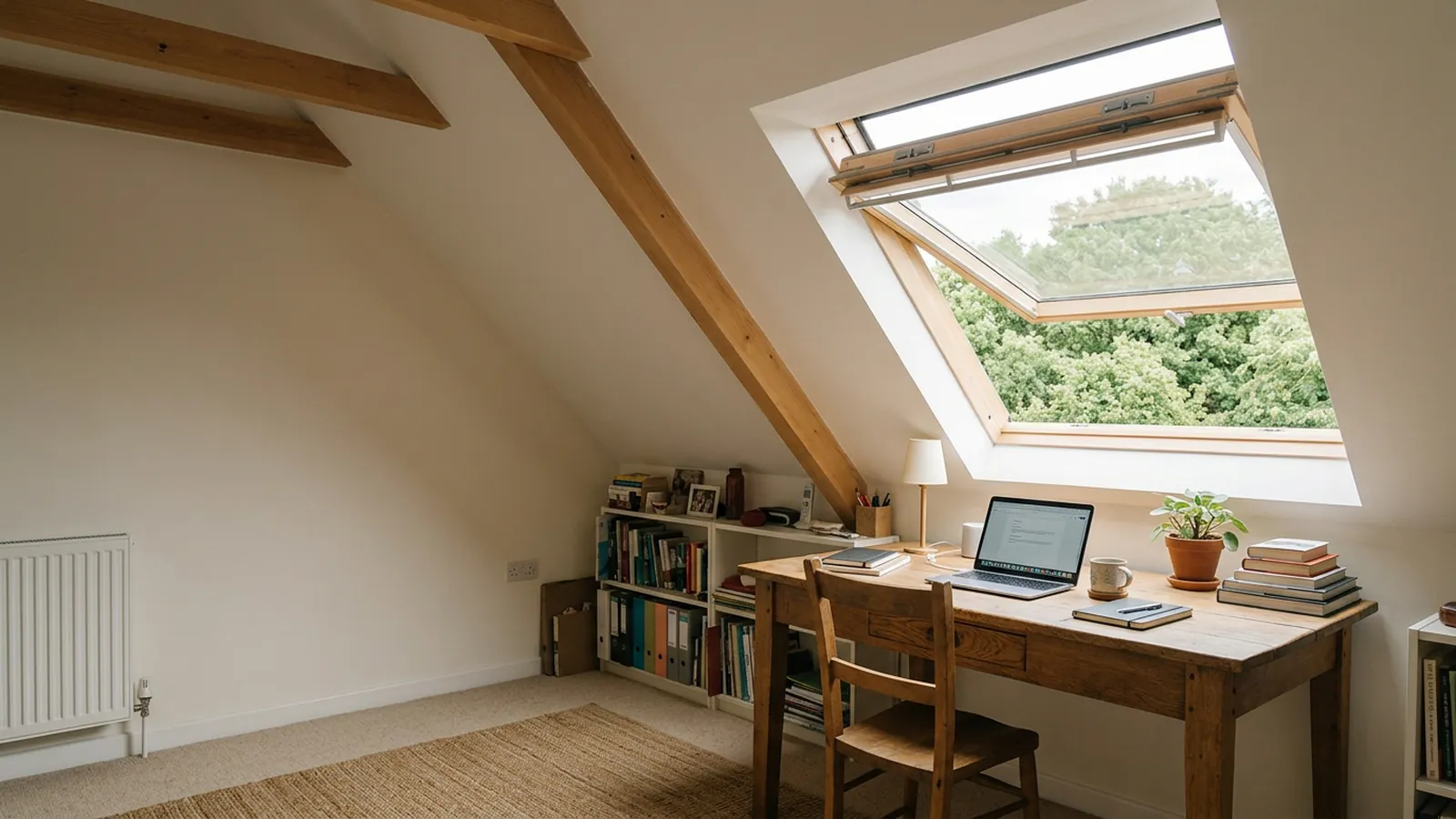
A loft room, landing or bedroom around Basingstoke feels darkest from November to February, which is exactly when adding daylight starts to look urgent. Our roof window installation page covers the whole job from survey to finish; this answer deals only with the season, and with what a cold, wet or frosty week actually means for a roof that is about to be opened.
Why the season matters less than the forecast
A roof window is not like a new roof or an extension, where timber and walls sit exposed for weeks. The tiles or slates are lifted over one small area, the opening is formed between the timbers, the frame is fixed, and the underlay collar and flashing go on the same visit. The period in which the house is genuinely open to the sky is short, and it is controlled: a sheet is kept ready to cover the hole if a shower arrives earlier than expected.
So the useful question is not whether it is December but what the next few days hold. A dry, still, cold day is a good fitting day. A mild day with driving rain or gusting wind across an exposed ridge is not, whatever the month. That is why a winter job is booked with some flexibility built in, and why a date can move by a day or two when a front comes through. How the day itself runs, and how long the roof is open, is set out in our answer on how long it takes to fit a roof window.
Sizing a roof window to the truss bays
- Fink trussed rafter, factory made and designed to work as one whole frame
- W-shaped webs, joined at every node by pressed metal nail plates
- Tile covering on battens over the underlay
- Roof window set in the slope, fitted between trusses so the frame is untouched
- Narrow roof window sitting in the bay between two trusses
- Trusses at even 600mm centres along the roof
- No truss cut: the trusses either side of the window stay whole
- A wider window crosses a truss, so the cut needs designed trimming from an engineer or the truss maker
What cold weather does to the job
Low temperatures on their own do not stop a skylight going in. They do change a few details, and a careful fitter works around each of them.
| Condition | Why it matters | How the day adapts |
|---|---|---|
| Rain | The opening must not be left exposed to water getting into the ceiling below | The date follows the forecast, with a cover sheet on hand throughout |
| Frost and ice | A frozen slope is slippery, and cold clay tiles and slates are more brittle to lift | Work starts once the surface has cleared, and tiles are eased out rather than forced |
| Strong wind | Handling a glazed sash and loose tiles on a slope is unsafe in gusts | The job waits for a calmer day, especially on high or exposed roofs |
| Short daylight | The roof has to be closed and weathered before dark | An early start, with outside work front-loaded and linings done later indoors |
| Cold materials | Self-adhesive flashing strips and sealing tapes bond best on a dry, clean surface | Surfaces are dried off and products are used within their maker's stated conditions |
Tiles, slates and frosty mornings
Around the town the covering decides how much the cold matters. The concrete interlocking tiles on estate homes in Popley, Brighton Hill or Chineham are tough and lift out cleanly in most conditions. Handmade clay tiles and natural slate, found on older houses in villages such as Old Basing or Overton, are less forgiving when frozen: they can crack if prised out cold, and a replacement that matches an old handmade tile is not always easy to find. On those roofs a winter fitting starts a little later in the morning, once any frost has gone from the slope.
The flashing kit is matched to the covering whatever the season. Which kit suits a profiled tile, a plain tile or a slate is covered in our guide to roof window flashings for tiles and slate; in winter the only extra care is making sure every surface it sits on is dry.
Keeping the house warm and dry while the roof is open
Two concerns are natural in cold weather: heat escaping from the house, and dust or damp in a lived-in room. In practice the loft side is the only part open to the air, and only for part of the day. The room below is protected with dust sheets, the loft hatch or any room door is kept closed where possible, and the heating can stay on elsewhere in the house.
The rule: the roof is never left open overnight. Once the frame is in, the underlay collar, flashing and sash make the rooflight weathertight before the fitters leave. The exception is the finishing inside: plastering or boarding the reveals can follow on a later visit, and cold, damp weather simply means wet plaster takes longer to dry.
Whether some or all of the work can be done from within the room, which suits a short winter day, is answered in can a roof window be fitted from inside? For the finish around the window once the weather work is done, see our guide to linings and reveals.
Is a winter-fitted window any less weathertight?
No. A roof window fitted on a dry winter day with the correct flashing and underlay collar performs the same as one fitted in summer. The first proper downpour after fitting is a fair test in any season, and a winter install gets that test early, which is no bad thing. What keeps water out over the years is the order of the layers and the flashing, both explained in our answer to do roof windows let water in?
The paperwork does not change with the season either. Where the work is notifiable, the Building Control notification is submitted by us whatever the month, and the same 10-year workmanship guarantee (not insurance backed) applies to a January job as to a June one.
Infographic
How a rooflight job runs, from survey to guarantee
Roof survey
We look at the structure, the covering and the room below before anything is priced.
Specification
A size, type and position that fits your roof, and whether the work is notifiable.
Paperwork
Building Control notified where the work needs it, and planning checked where it applies.
Installation
Opening formed, frame fixed, flashed or dressed in, then lined and finished inside.
Sign-off and guarantee
Completion paperwork where needed and a 10-year workmanship guarantee.
Planning a winter installation
- Survey first. We look at the roof, the covering and the timbers before we quote, which can happen in any weather because it is mostly done from the loft and the ground.
- Order the window. The chosen size, flashing kit and any blind are ordered, so nothing is waiting once a good day comes.
- Pick a window of dates. Rather than one fixed day, a short spread of possible dates lets us move with the forecast.
- Confirm the day before. We check the forecast and confirm, or move the visit by a day or two if rain or wind is due.
- Fit and weather in. The outside work is done in the daylight hours, and the inside finish follows.
Choosing the window before winter sets in is a sensible use of the dark months: the loft room or landing you are putting up with now is the best guide to where the light is needed. If you would like to get the size and position settled in time for a dry spell, arrange a survey and we will plan the fitting around the weather.