The number is decided in two places at once: the room below, which sets where daylight is wanted, and the loft above, which sets where a tube can actually travel. Our sun tunnel installation page covers the whole job from dome to diffuser; this answer deals only with the count, and how to reach it without guessing.
Start with what the room is for. A cloakroom that only needs to stop feeling like a cupboard is a different brief from a kitchen where someone chops vegetables at the far end of a worktop. The count follows the task, then the shape, then the roof.
Where one tube is enough
A single diffuser throws light outward in a broad pool, brightest under the ceiling fitting and softer towards the walls. In a compact, roughly square space, that pool reaches every corner that matters. So the typical single-tube rooms are:
- a windowless bathroom or en suite, lit from a diffuser over the middle of the floor;
- a downstairs toilet or utility cupboard;
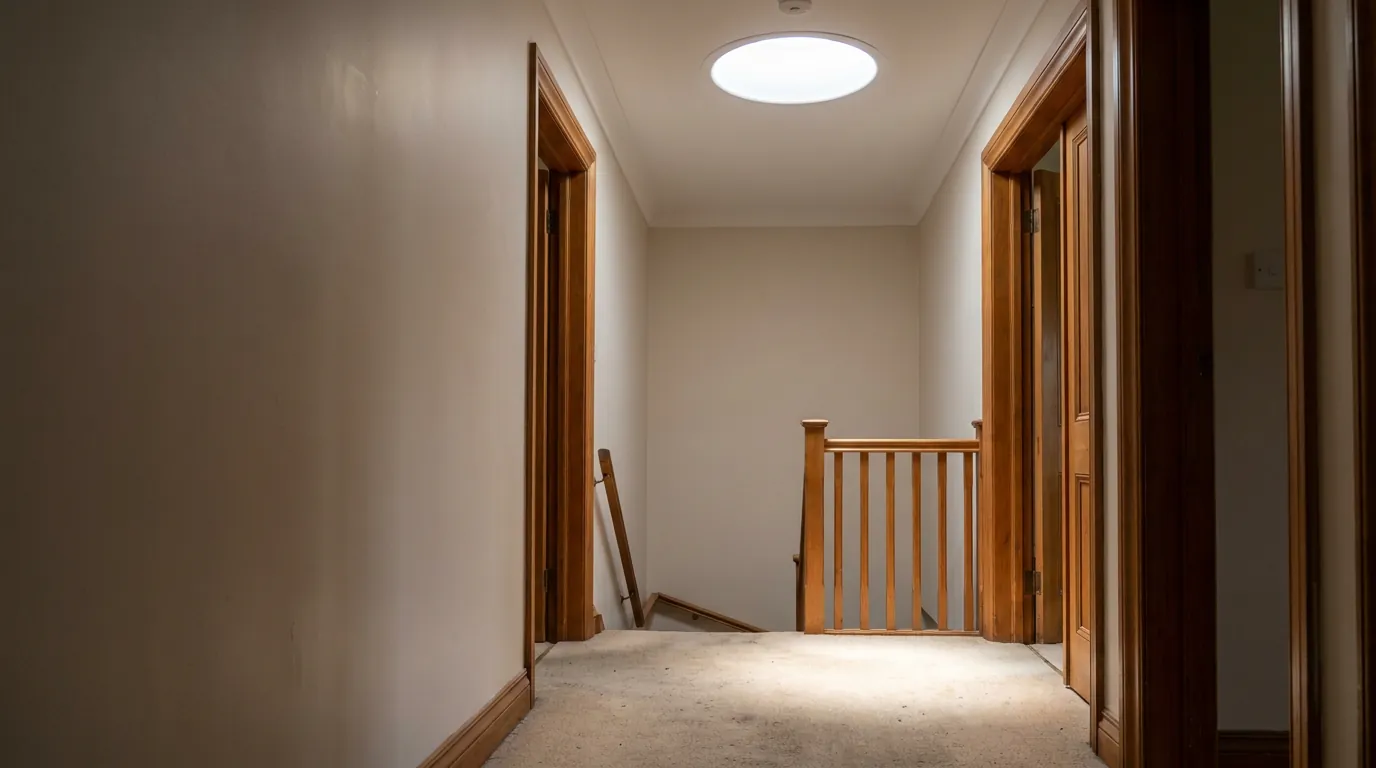
- the landing at the top of the stairs in a two-storey estate semi;
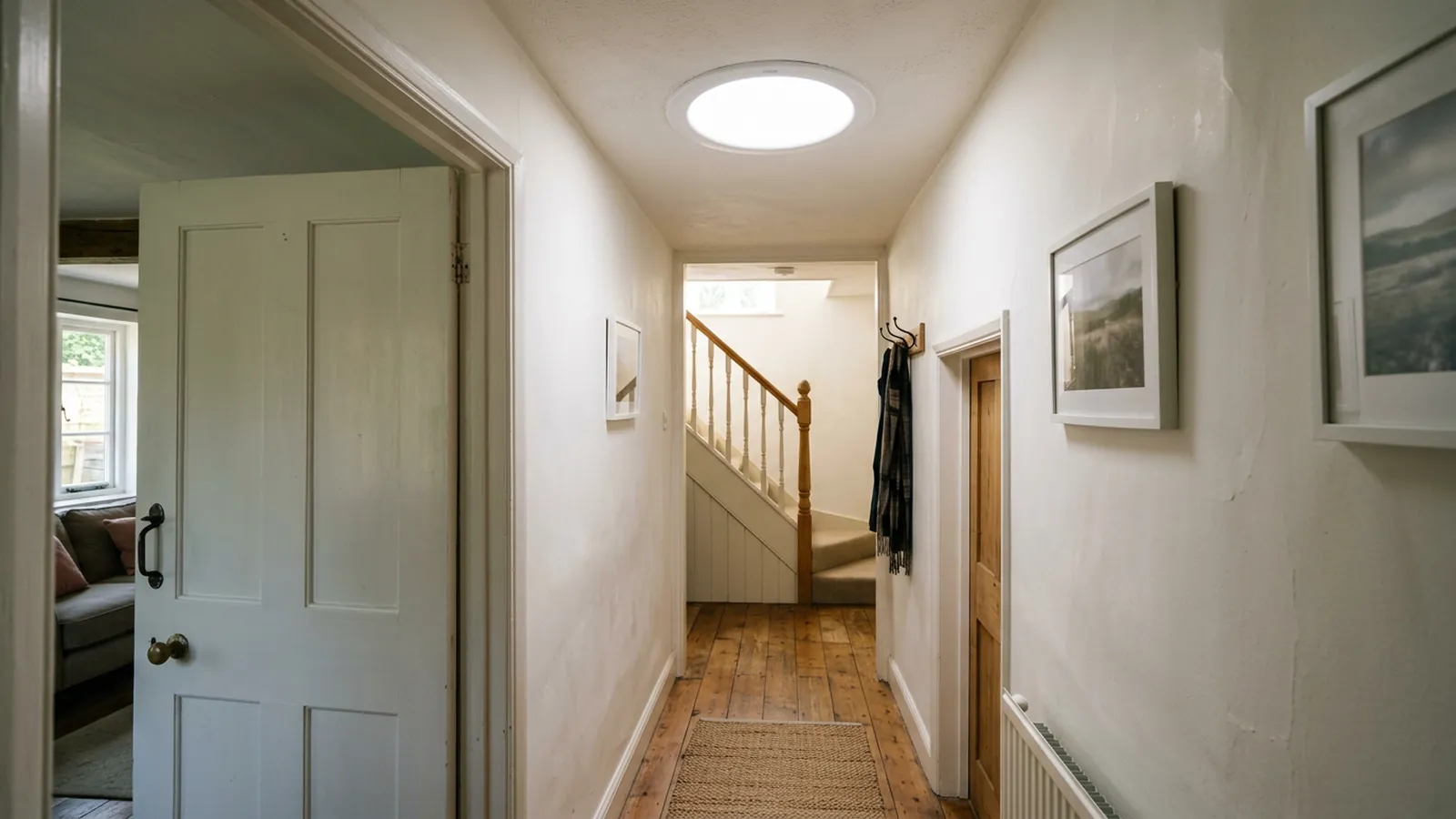
- a short entrance hall where the only glass is in the front door.
In each case one well-placed diffuser outperforms two small ones, because a single wider tube loses less light on its way down than a pair of narrow ones. The reason is in the physics of reflection, explained in our guide to tube diameter, length and how much light arrives.
How a sun tunnel brings daylight down
- Clear dome on the roof slope, catching daylight from the sky
- Flashing, weathered into the tiles so rain runs round the dome
- Daylight reflecting off the mirror-finish lining all the way down
- Reflective tube, here a rigid straight run through the loft
- Loft insulation laid up to the tube, with an insulated sleeve round it to limit condensation
- Ceiling diffuser, spreading the light across the landing below
- Shown faint: angled elbows let the tube step round a truss or purlin, at some loss of light
When a room wants two or more
Daylight from a diffuser falls away with distance, so a room that is much longer than it is wide ends up bright in the middle and dim at both ends. That is the signal for a second tube. The same goes for a room with a change of direction: an L-shaped kitchen diner, a hallway that turns at the foot of the stairs, or an open-plan space where a downstand beam cuts the ceiling in two and blocks the spread.
| Room | Usual count | What changes it |
|---|---|---|
| Bathroom, en suite or cloakroom | One | A bath and shower at opposite ends of a long room |
| Landing | One | A landing that runs the depth of the house with doors along both sides |
| Long hallway | One or two | A turn in the passage, or a front door with no glass at all |
| Kitchen | One or two | Worktops on two walls, or an island away from the window |
| Deep plan bungalow room | Two or more | How far the back of the room sits from the nearest window |
A kitchen is the case that most often tips from one to two, and can a sun tunnel light a kitchen? goes through that room on its own terms.
What the trusses above decide
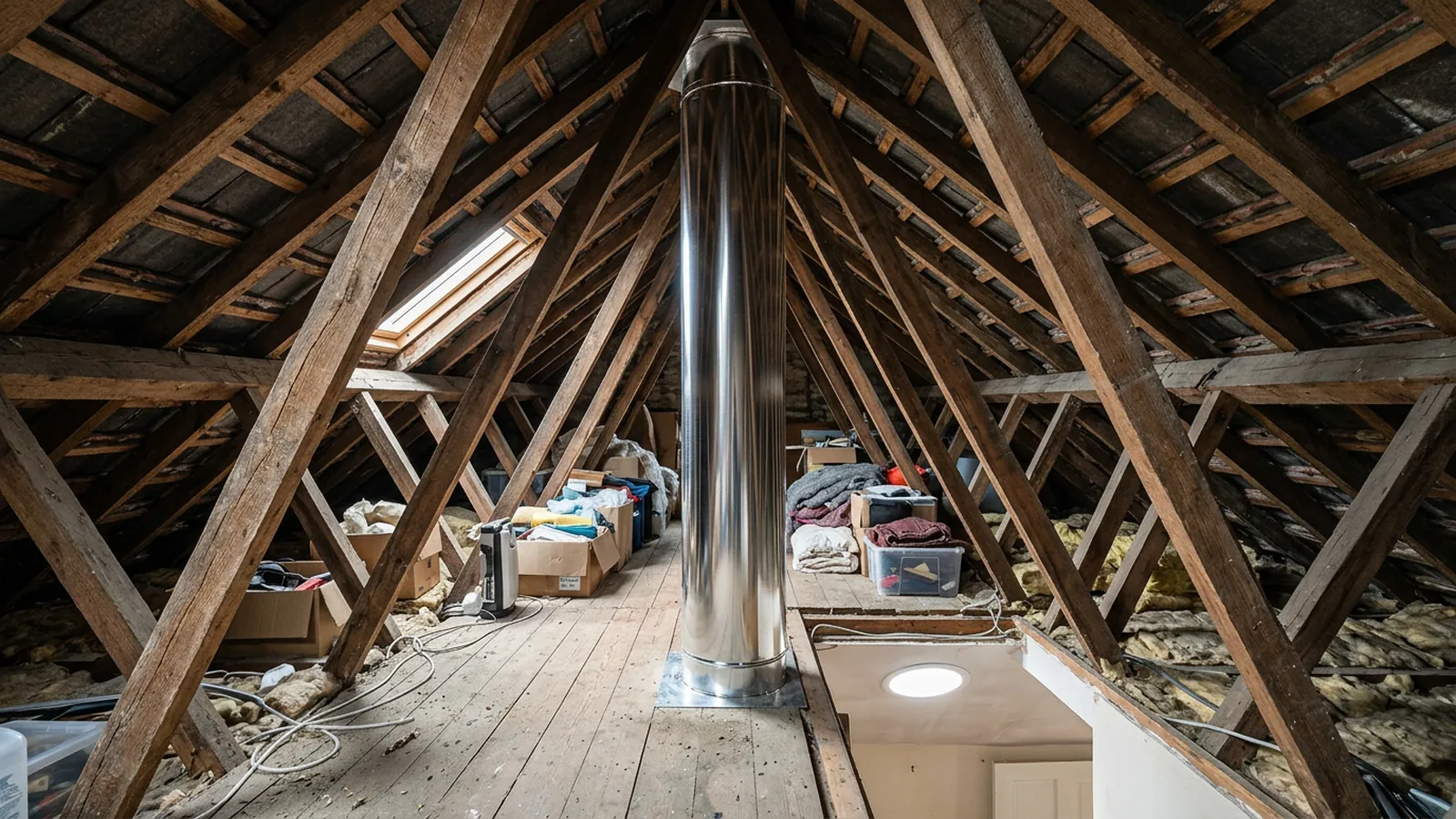
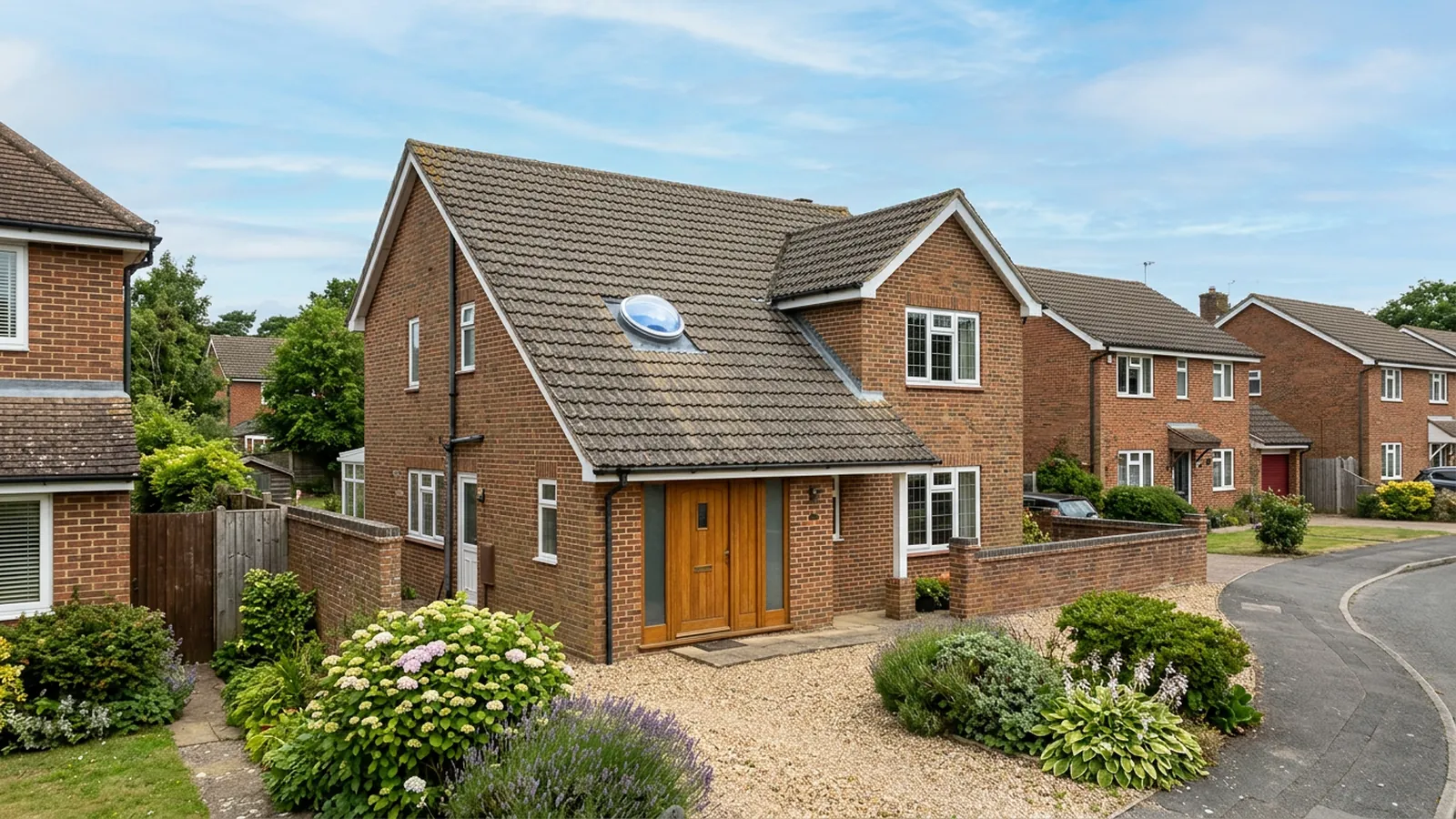
On the estates around Basingstoke the loft is usually a trussed rafter roof, with factory trusses at 600mm centres and diagonal webs between them. The tube has to enter the roof slope in the gap between two trusses and drop through the ceiling in a gap between the ceiling ties. The truss is never cut to make room for it.
That sets an upper limit on tube width for any single route, and it is why the count sometimes goes up for reasons that have nothing to do with the room. If the brief calls for more light than a tube that fits the bay can give, the answer is two tubes in neighbouring bays rather than one oversized tube forced through the structure. A roof window or skylight follows the same logic on a trussed roof, sized to sit between the trusses where it can. Planning a route around webs, bracing and water tanks is covered in routing a sun tunnel through a trussed roof void.
The rule: choose the widest tube the bay will take, then add a second only if the room still needs it. The exception is a very long straight run: there, two shorter tubes from nearer points on the roof can deliver more between them than one long one.
One big tube or two small ones
Two smaller tubes are not simply a larger one cut in half. Each extra tube means another dome on the roof, another opening in the covering, another diffuser in the ceiling and another route through the loft to insulate. On the plus side, two diffusers spread the light more evenly, which suits a long space. A single larger tube gives a stronger pool from one point, which suits a square one.
How bright each option will look depends on the tube size, the length of the drop and the direction the roof faces, and our answer on how much light a sun tunnel gives explains how those three trade off. Manufacturers publish the floor area each of their diameters is designed to serve, and those figures are the honest starting point for any count.
Signs you are counting too high
It is tempting to picture a ceiling dotted with diffusers, but a room over-lit by tubes looks odd on a bright day and cluttered on a dull one. Three checks keep the count honest:
- Stand in the room at midday. Note exactly where the gloom sits. Light is only needed there, not everywhere.
- Look at the existing windows. A tube placed near a window adds little; one placed at the far side of the room does the real work.
- Ask whether a rooflight would do it better. If the room sits directly under the roof slope, a single roof window may out-light several tubes and give a view as well. The comparison is laid out in our guide to sun tunnel or roof window.
How the survey settles the number
We look at the room and the loft on the same visit before we quote. In the room we mark where the diffusers would sit and check for downstand beams, recessed lights and anything else in the ceiling. In the loft we measure the truss spacing, trace the routes from each point on the roof slope, and note the tiles, the pitch and the direction the slope faces. The quote then states how many tubes, what size, and where each one runs, so you can see the reasoning rather than just a number.
If the count comes out at two and you would rather start with one, that is a fair choice: a second tube can be added later through a neighbouring bay without disturbing the first. The do sun tunnels really work? answer is worth a read if you are weighing the idea for the first time. When you want the count checked on your own roof, arrange a survey of the room and loft.