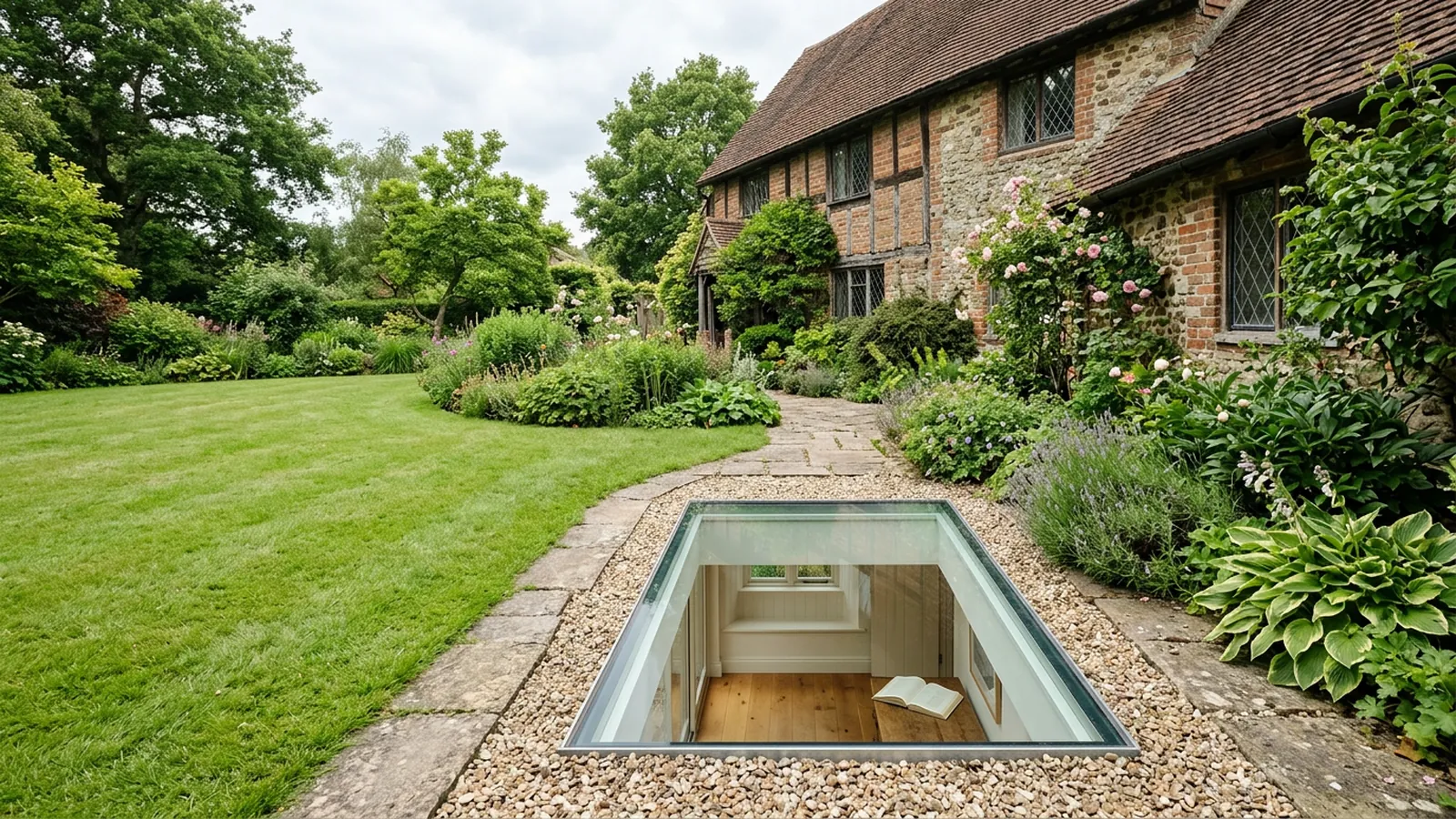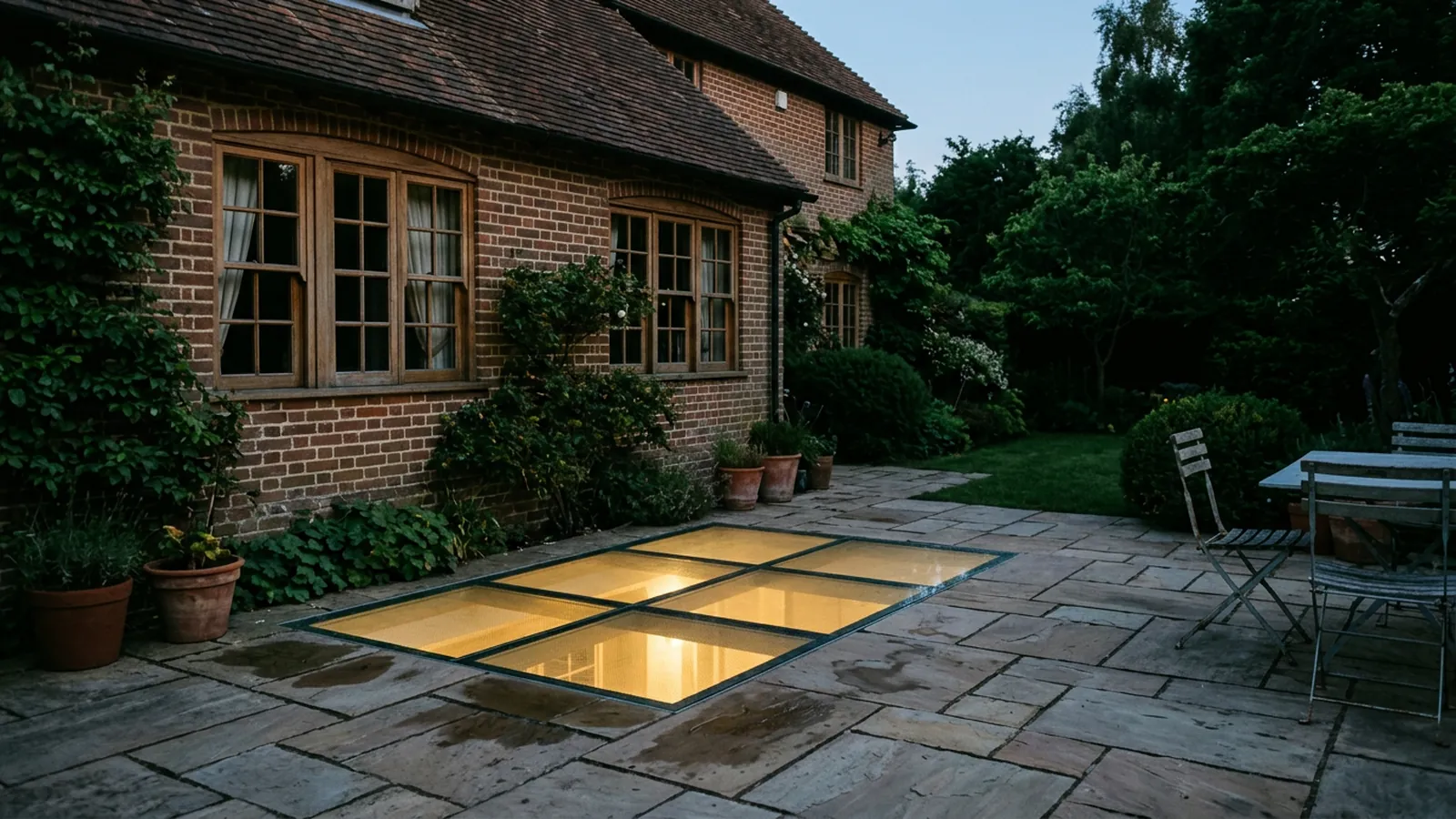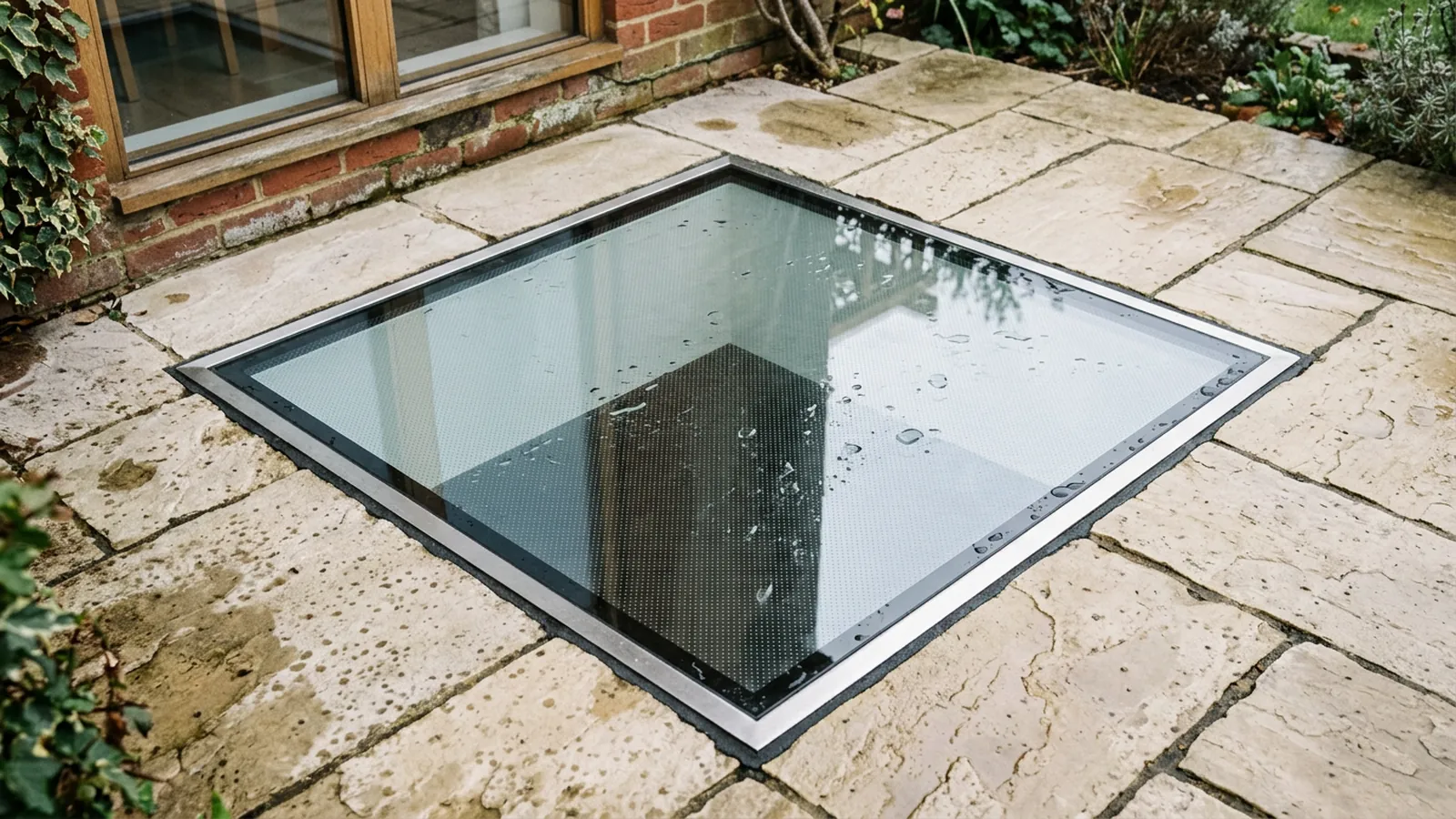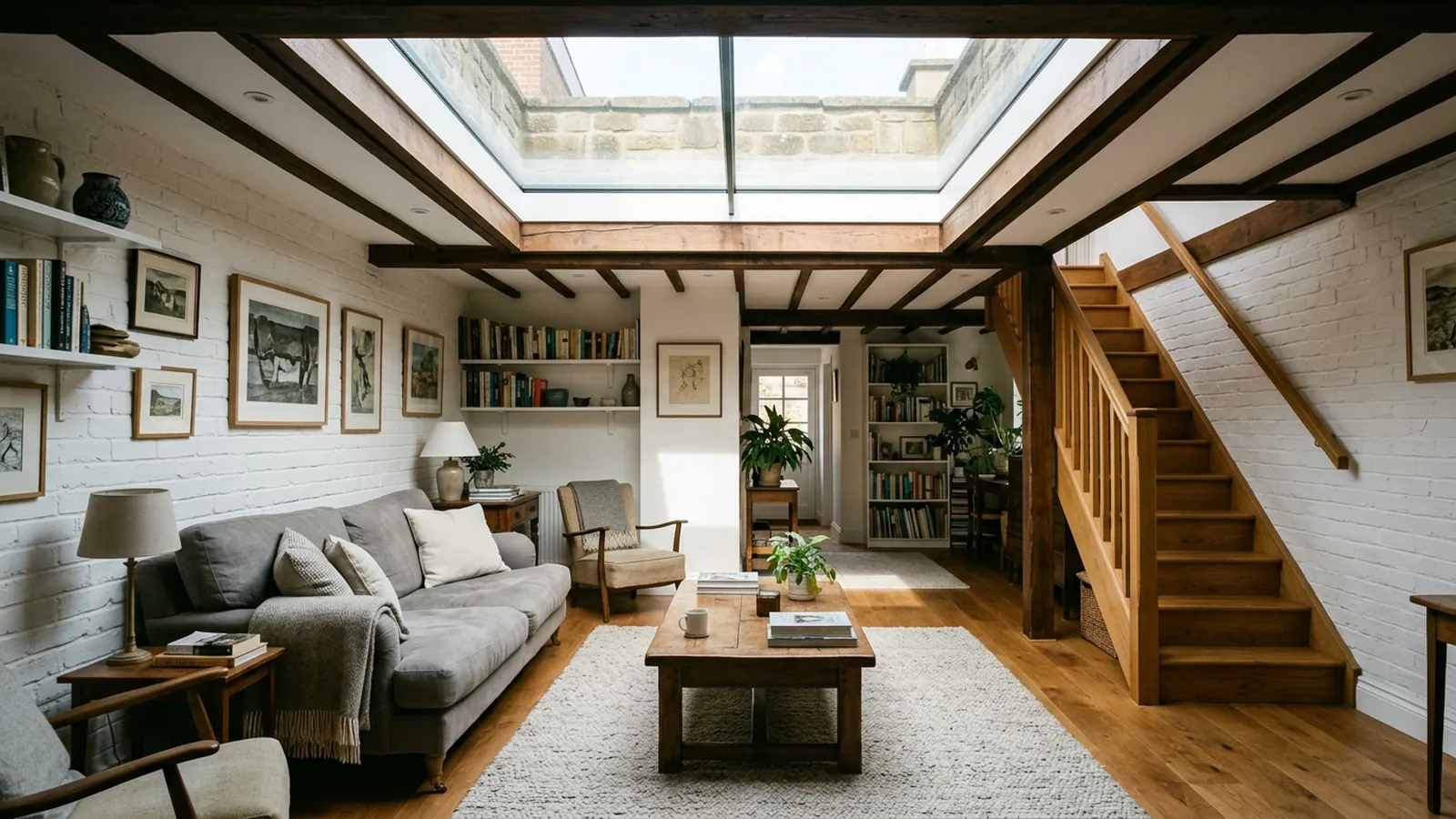
Parents tend to picture the pane giving way. That is the least likely thing to happen with a unit made for this job, so this page spends its time on the things that do matter in a family house. The full specification, from structure to finish, lives on our walk-on rooflight installation page; below is the view from a household with toddlers, teenagers, a cat or a large dog.
Will the glass take a child jumping on it?
A walk-on unit is made with a laminated top pane, built from layers of toughened glass bonded to an interlayer, and it carries a pedestrian load rating from its maker. Jumping puts more force through the glass than walking, and the rating is set to allow for people moving about on it rather than standing politely still. A child landing on it is well within what the product is designed for. So is an adult carrying that child.
What the rating cannot do is make up for a weak base. The frame has to bear on a kerb or joists built for the load, which is settled at survey. How the ratings are expressed, and which one suits a domestic terrace, is covered in the guide to walk-on rooflight load ratings.
The rule: only glass sold and fitted as walk-on is for standing on. The exception worth teaching children is that a flat roof can carry both kinds side by side, and a non walk-on skylight looks almost the same from above. If a roof has both, the family needs to know which is which.
How a walk-on rooflight sits in a terrace
- Anti-slip fritted top surface, so the glass is safe to walk on when wet
- Laminated glass: several layers bonded with interlayers, so it stays in place if a layer breaks
- Sealed cavity between the laminated glass and the inner pane
- Inner pane, completing the insulated unit
- Frame carrying the glass, sealed at the edges
- Kerb around the opening, bedded to the roof structure
- Waterproofing dressed up the kerb and under the frame
- Paving on pedestals, finished level with the glass
What happens if something heavy is dropped on it?
Children drop things: a scooter, a ceramic plant pot, a cricket ball from the neighbour's garden. On laminated walk-on glass a hard enough knock can crack the top layer, but the interlayer holds the broken glass together and the layers beneath keep carrying weight. Nobody falls through, and no loose shards land on the kitchen table below. The panel then needs replacing, which is a planned job rather than a crisis.
If you want to know what those layers are and why the thickness varies between units, how thick walk-on glass is answers that without the jargon.
Where the real danger to children sits
On a roof terrace the hazard for a small child is rarely the rooflight itself. It is the drop at the edge of the roof. A terrace that people use needs proper guarding at its open edges, and that guarding is part of the Building Regulations for the space, whatever glazing is set into the deck. Before a walk-on skylight goes into a roof you intend to use, the edge protection should be agreed at the same time, because it changes the layout of the whole terrace.
A rooflight with an upstand frame raises a second point: a raised kerb can be something a toddler trips over or a child climbs onto to see over the railing. A flush unit set level with the decking removes both. The trade-offs between the two finishes are laid out in flush or upstand walk-on rooflights.
- Edges first. Agree guarding to every open side of a usable roof before choosing the glass.
- Keep climbing aids away. Place the rooflight, planters and seating so none of them sits hard against the railing.
- Mark the non walk-on glass. Any ordinary rooflight or lantern on the same roof should be fenced off or clearly out of the walking area.
- Check the finish. Choose a textured top surface where small feet will run across it.
Pets on walk-on glass
A dog or a cat is a light, spread load compared with a person, so weight is not the question. Grip is. Smooth glass gives paws very little purchase, and a dog that skids on the first attempt may refuse to cross it afterwards. A slip-resistant surface, whether a fritted pattern or an etched finish on the top pane, helps animals as much as people. Whether that surface stays grippy once it rains is answered in is walk-on glass slippery when wet?
Claws are a fair worry. Glass is harder than a claw, so a dog walking across it will not score it the way it would a timber floor, but grit carried in on paws and dragged across the surface is a different matter. Sweeping the terrace keeps both people and animals from grinding it in.
Then there is sunshine. Cats in particular will find the warmest spot on any roof. Dark frames and clear glass can warm up noticeably on a still summer afternoon, and the answer on whether a walk-on rooflight gets hot underfoot explains what drives that and how glass choice changes it.
Small things that make the glass friendlier at home
| Concern | What helps | Decided when |
|---|---|---|
| Slipping | A textured or fritted top surface | At specification, before the glass is made |
| Tripping | A flush frame level with the deck | At survey, with the roof build-up |
| Climbing | Keeping the unit and furniture clear of the guarding | When the terrace is laid out |
| Being looked down on | Obscured or patterned glass over bedrooms and bathrooms | At specification |
| Warm glass | Solar control glass and a lighter frame colour | At specification |
Most of these cost nothing extra to think about early and are awkward to change later, because the top pane is made to order.
Getting it right for your roof
Around Basingstoke, walk-on rooflights tend to go into flat roofs over rear kitchen extensions, where the roof above doubles as a terrace off a bedroom, or into a lightwell beside a basement room. In both places children and pets are likely to be on it every day. We survey the roof first, look at who will use it and how, and put the glass surface, the frame type and the edge detail in the written quote. Where the work is notifiable, the Building Control side is dealt with as part of the job, and the installation comes with a 10-year workmanship guarantee (not insurance backed).
If you have a family roof in mind and want it checked with the children and the dog in the picture, arrange a survey here.