The word turns up on product sheets, architect drawings and quotes, and it is easy to read it as a loose way of saying "strong". It is narrower than that. Our walk-on rooflight installation page covers the whole job; this answer deals with one label and what it commits the glass, the frame and the roof beneath it to.
In short, a trafficable skylight is part of the walking surface. Everything that follows is about what that promise includes, what it leaves out, and how to check that the unit on your drawing actually carries it.
Three labels that sound alike
Rooflight makers and roofing specifiers use three terms that often get blurred together in conversation. They describe different things, and only one of them means you can use the glass as a floor.
| Label | What it is for | Can it be a floor? |
|---|---|---|
| Trafficable | Regular foot traffic as part of how the roof or terrace is used | Yes, within the load it was designed for |
| Non-trafficable | Letting daylight in; the roof around it is not a place people walk | No, keep off it |
| Non-fragile | Resisting a person falling onto it during work on the roof, so they do not go through | No, it is a safety classification, not a walking surface |
The last row is the one that catches people out. A non-fragile rooflight has been shown not to give way under a falling body, which matters for anyone working on a flat roof. Surviving one fall is a very different design case from carrying people every sunny afternoon for years, so non-fragile never stands in for trafficable.
How a walk-on rooflight sits in a terrace
- Anti-slip fritted top surface, so the glass is safe to walk on when wet
- Laminated glass: several layers bonded with interlayers, so it stays in place if a layer breaks
- Sealed cavity between the laminated glass and the inner pane
- Inner pane, completing the insulated unit
- Frame carrying the glass, sealed at the edges
- Kerb around the opening, bedded to the roof structure
- Waterproofing dressed up the kerb and under the frame
- Paving on pedestals, finished level with the glass
What sits behind the word
Calling a unit trafficable is a statement about the whole assembly, not just the thickness of the top pane. Walk-on glass is laminated, so the outer sheet can crack and the layers behind it still hold together and hold weight. The frame spreads load to its bearing, the bearing sits on a structure sized for it, and the top surface usually has a slip-resistant finish because a trafficable unit is by definition going to be stepped on when wet.
The rating that goes with it is expressed as a design load, and the maker states it for a given size of glass. Reading those figures, and seeing why a larger pane of the same product can carry less, is set out in our guide to walk-on rooflight load ratings. For this question the point is simpler: trafficable is a claim with a number and a size attached, and the claim stops at the edge of what the maker tested.
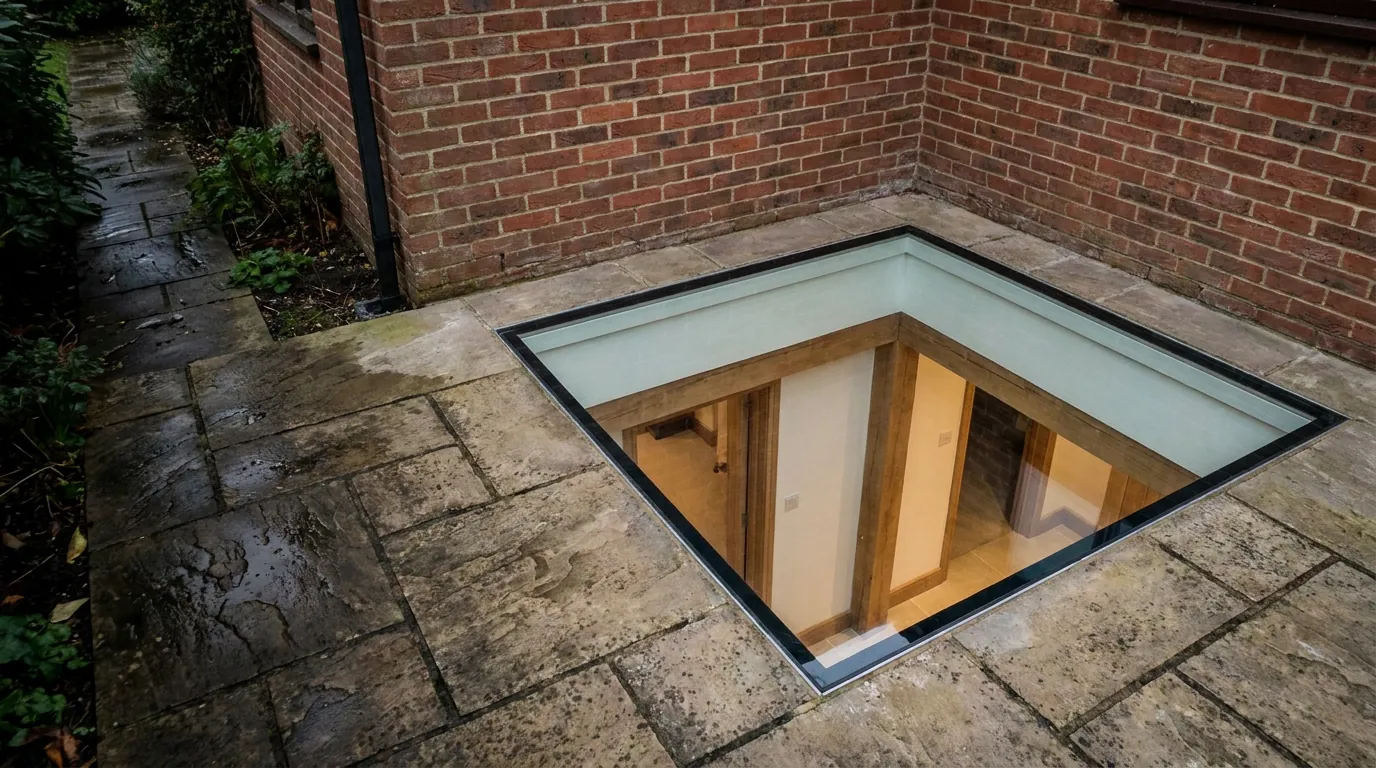
Where a trafficable rooflight earns its place
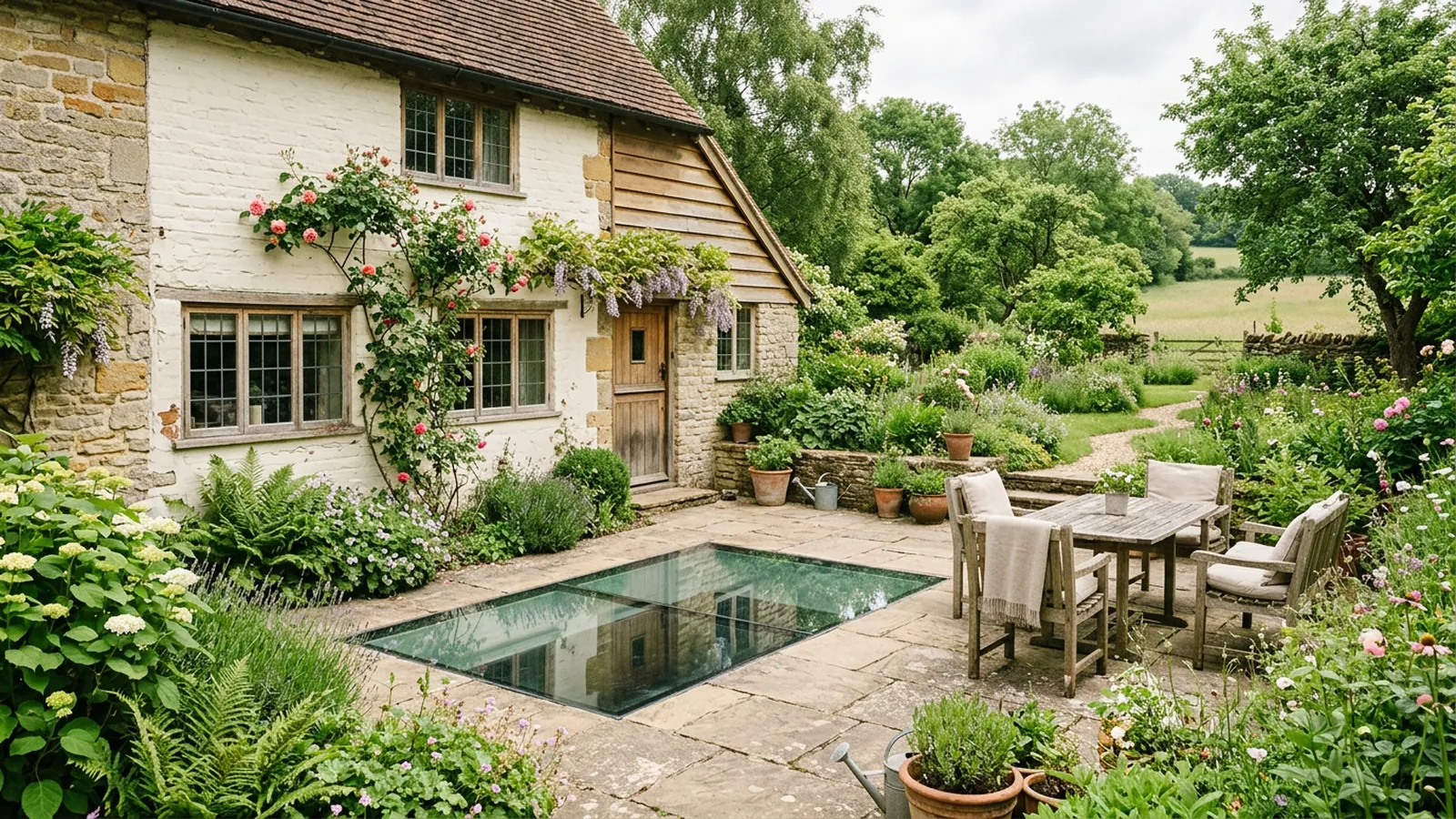
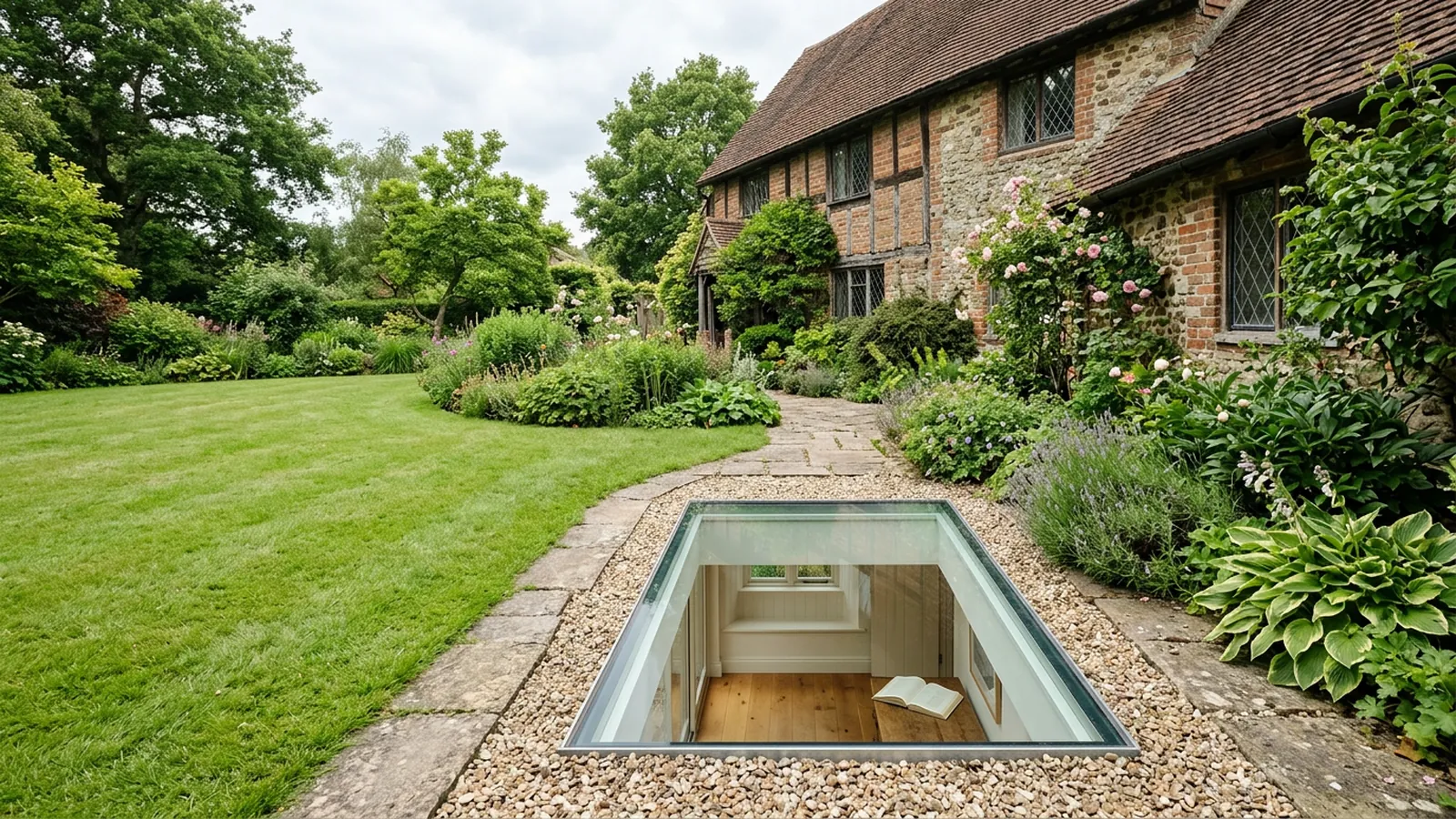
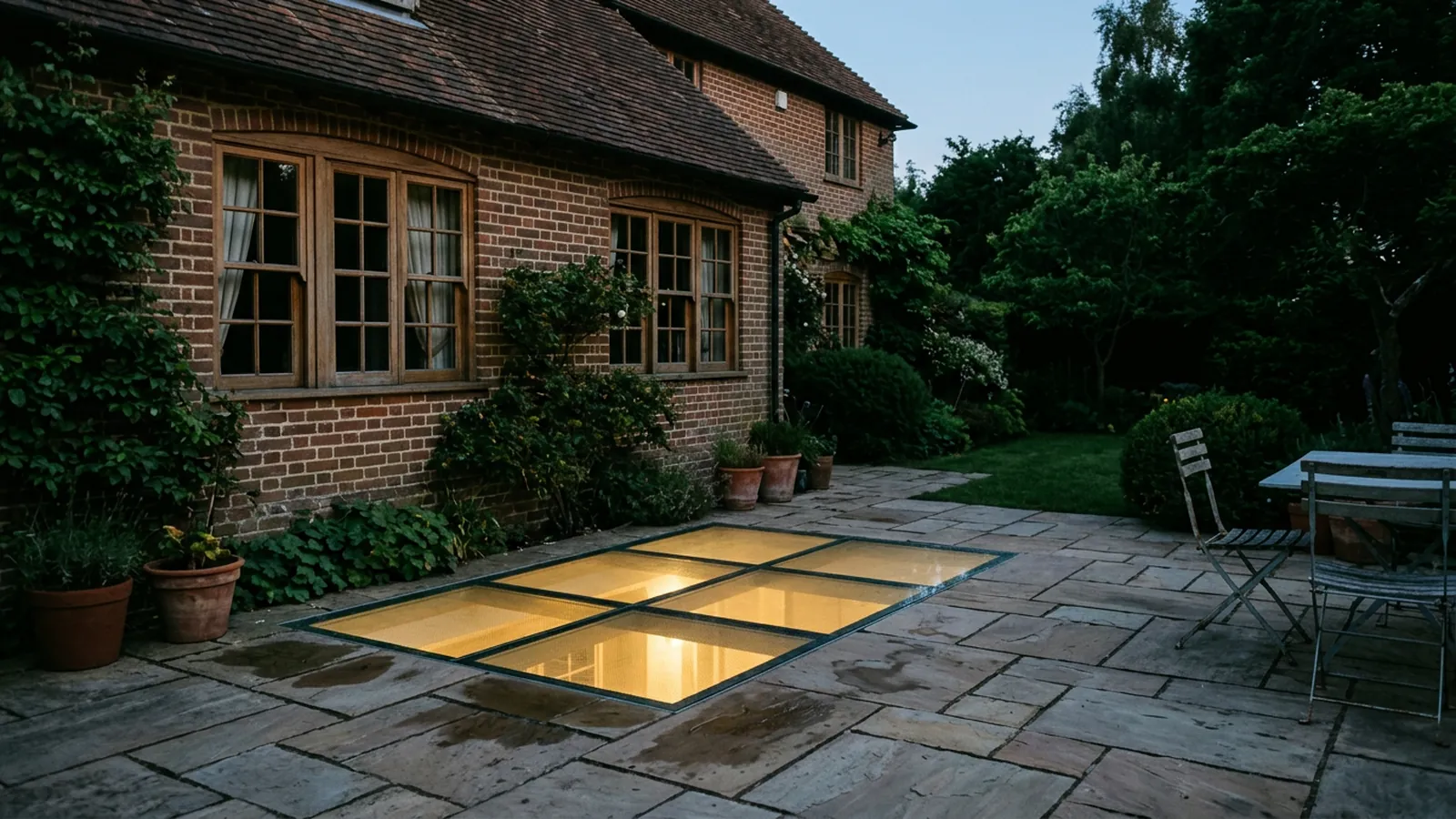
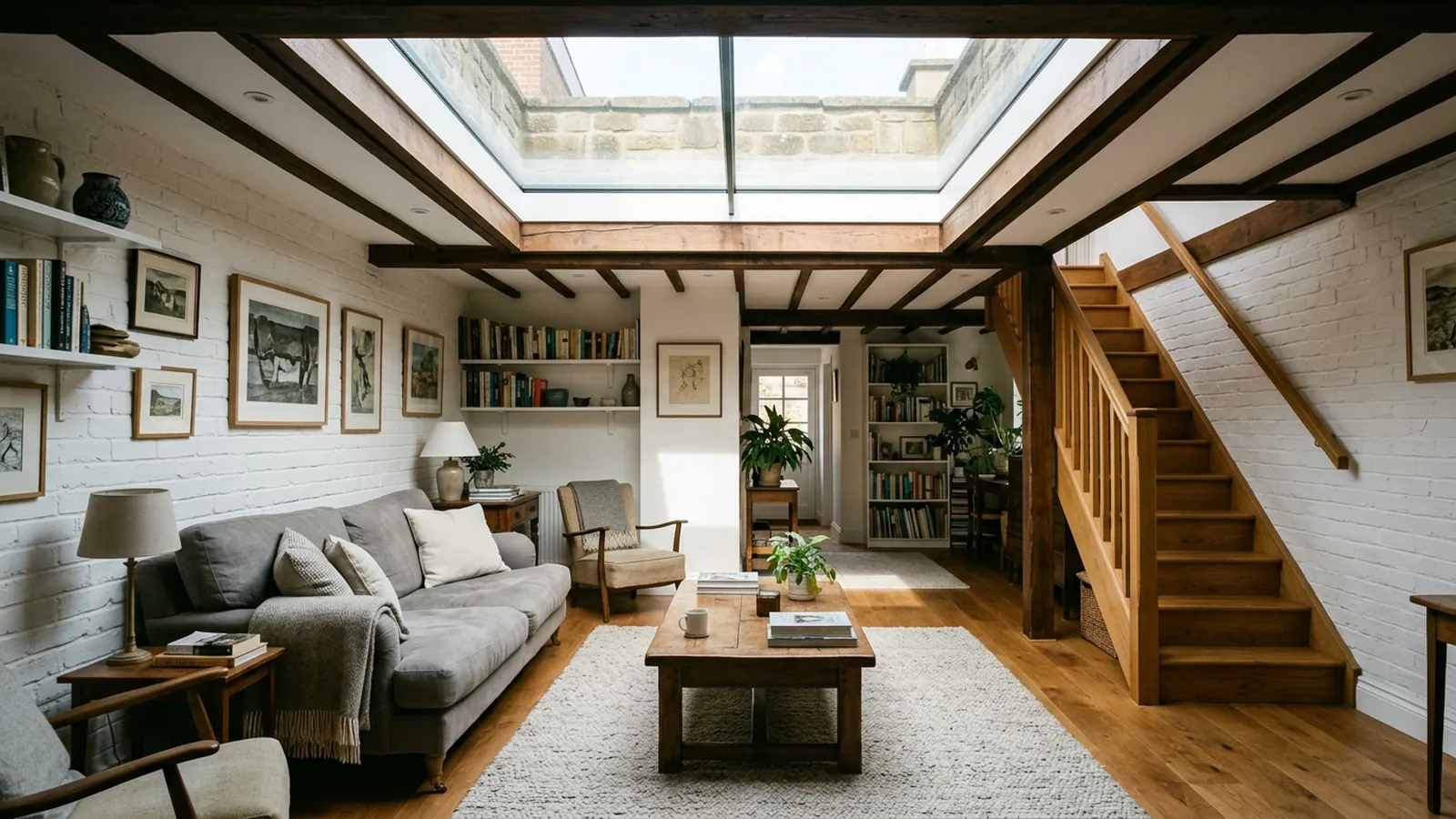
Around Basingstoke the rating matters in a handful of settings. A flat roof over a single storey kitchen extension that doubles as a terrace from a first floor bedroom. A roof terrace or balcony where the glass sits in the only route across. A lightwell by a front path, where passers-by and delivery drivers will step on it whether you like it or not. An internal glass floor panel letting daylight down a stairwell.
What decides it is access. If people can reach the glass in ordinary use, it should be trafficable. If the roof is only reached with a ladder for a gutter clean, a standard flat rooflight with a kerb is usually the better choice, and paying for walk-on glass buys little. The full reasoning is in our guide on when a roof actually needs walk-on glass.
The rule: if the glass sits where someone could walk in the normal run of the day, specify it as trafficable. The exception is a roof with no practical access at all, where a raised kerb and a non-trafficable unit keep people off it by design.
What trafficable does not promise
A trafficable unit is built for people on foot. It is not designed as a surface for dragging heavy planters, parking a hot tub or standing a stepladder on one leg. Point loads from narrow feet or castors behave differently from a person spread across two shoes, so whether a table or a sun lounger can go on the glass is a separate check, answered in can furniture sit on a walk-on rooflight?
Nor does the label say anything about grip in rain, frost or leaf fall. Slip resistance is a finish chosen alongside the rating; our answer on whether walk-on glass is slippery when wet covers that. And if the real worry is simply whether it feels safe to step out onto, can you really stand on a walk-on rooflight? answers it head on.
How to check a unit is really rated
- Read the product data. The maker's sheet should use the word trafficable or walk-on and state the design load for the size you are buying.
- Match the size. A rating given for a small pane does not carry over to a larger one; confirm it for your exact dimensions.
- Check the support. The rating assumes the frame bears fully on a structure built to the maker's detail, so the joists or upstand beneath matter as much as the glass.
- Look at the top surface. A trafficable unit in the open should have a slip-resistant finish specified, not left as an optional extra.
We survey the roof before quoting, and that visit is where the fourth question meets the third: what the terrace is for, and what the structure below will carry. Where the new opening alters the roof, Building Control is notified as part of our job, and the fitted rooflight carries a 10-year workmanship guarantee, which is not insurance backed.
Putting it in a sentence
When you see "trafficable" on a drawing, read it as "this glass is part of the floor, up to a stated load and size". If your plan involves people on the roof, that is the label you want, confirmed for your pane and your structure. If you are weighing it up for a terrace over a kitchen, a balcony or a lightwell, arrange a survey of the roof and we will show you what the rating means for the space you actually have.