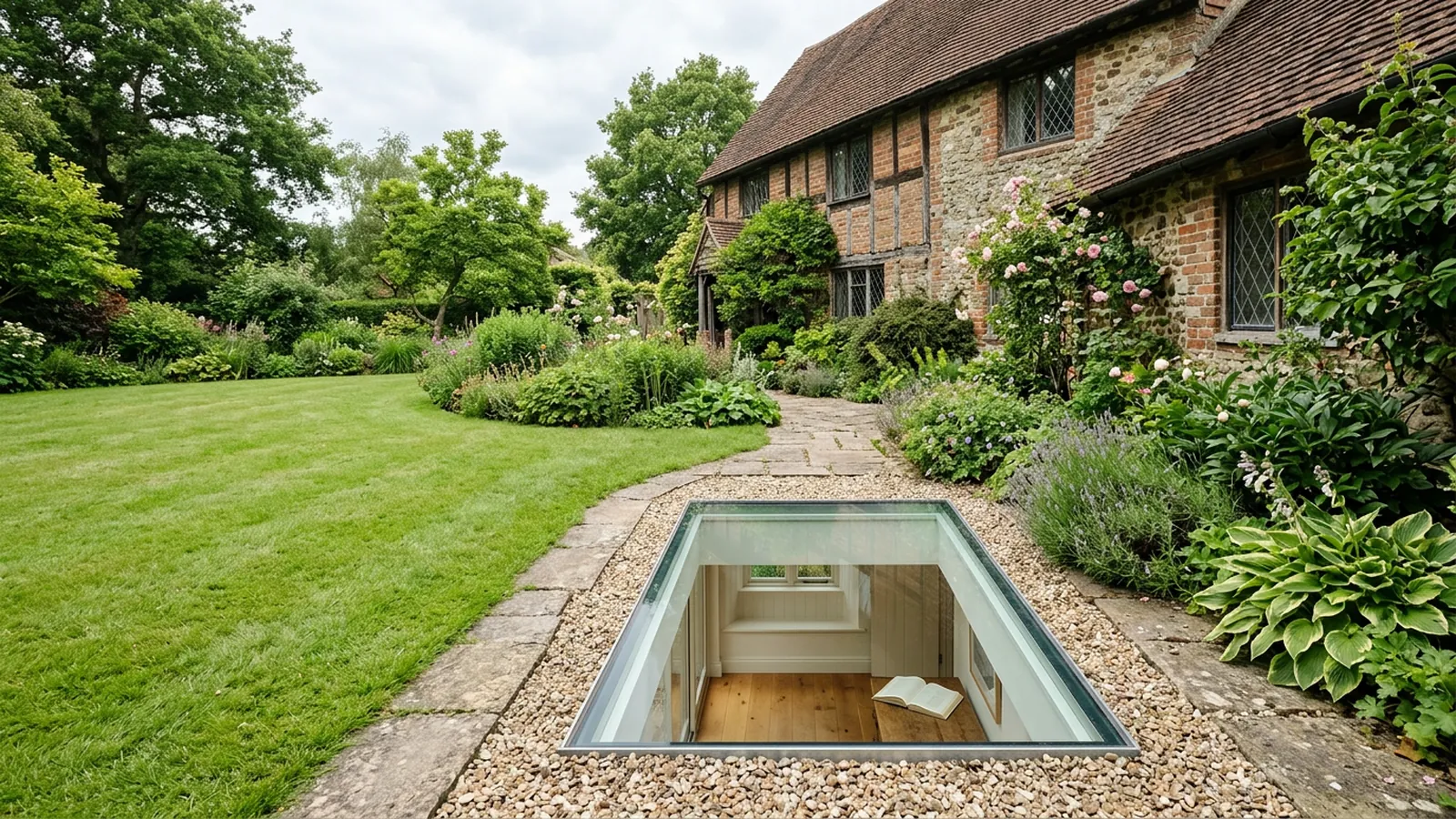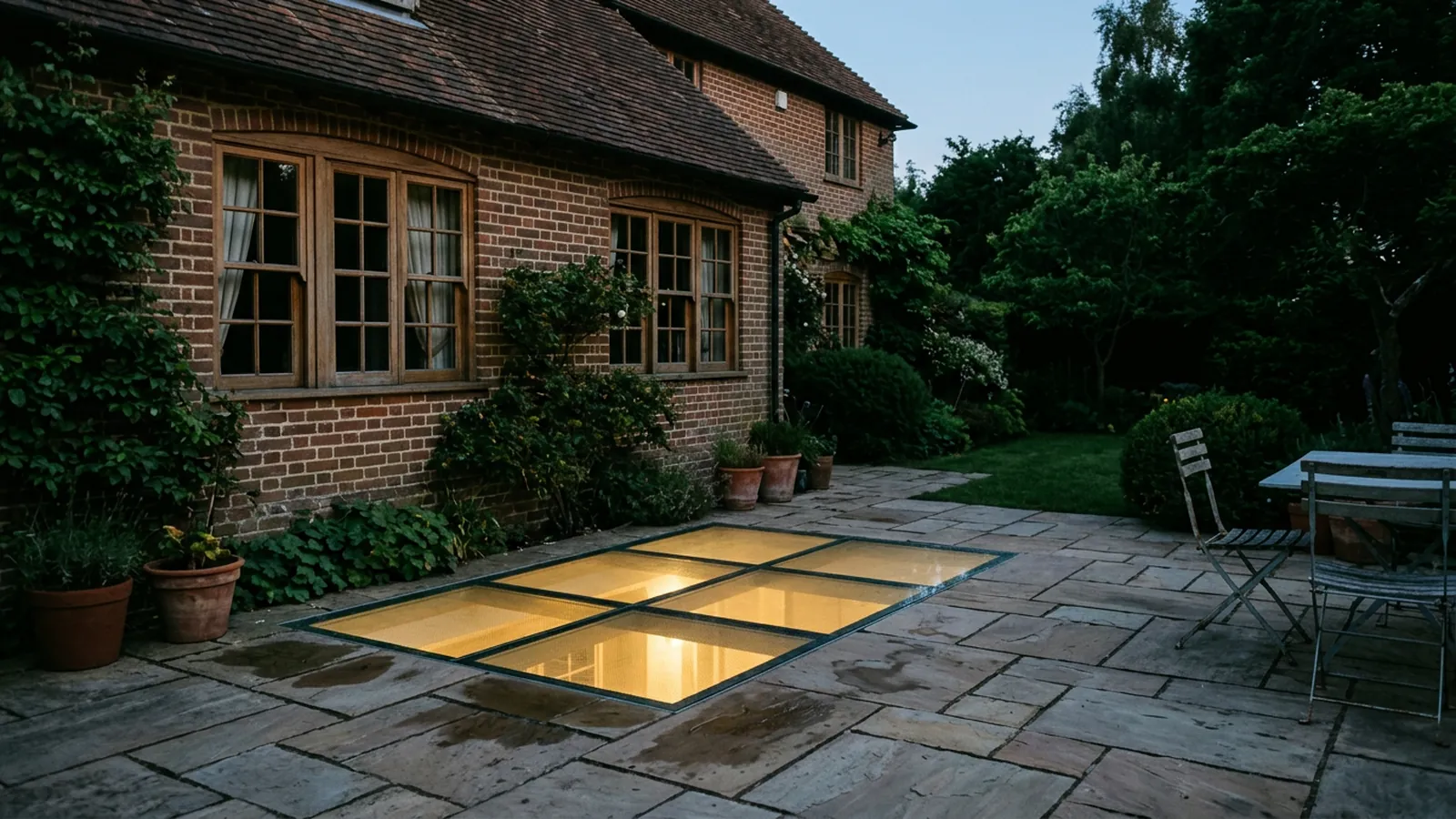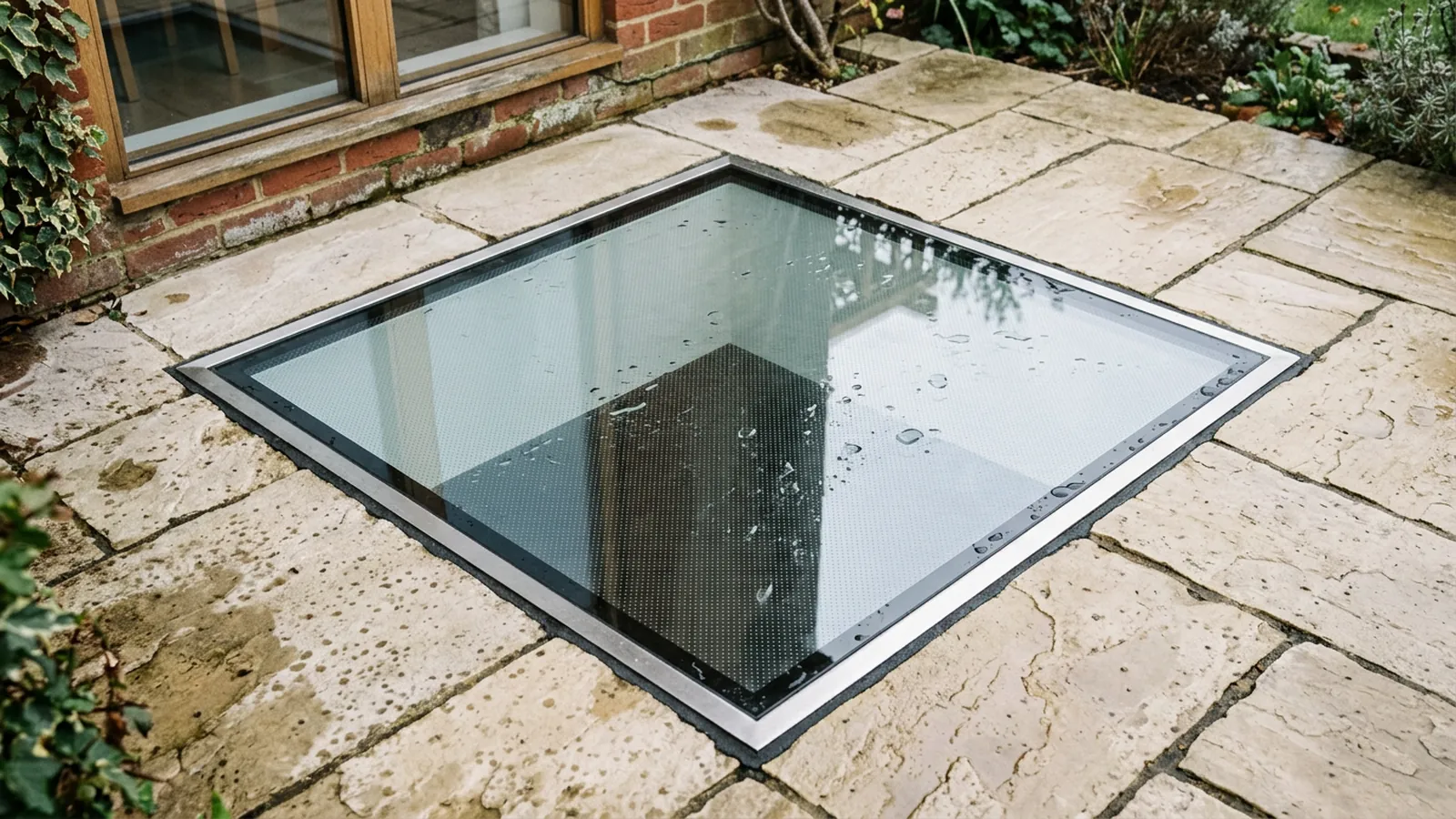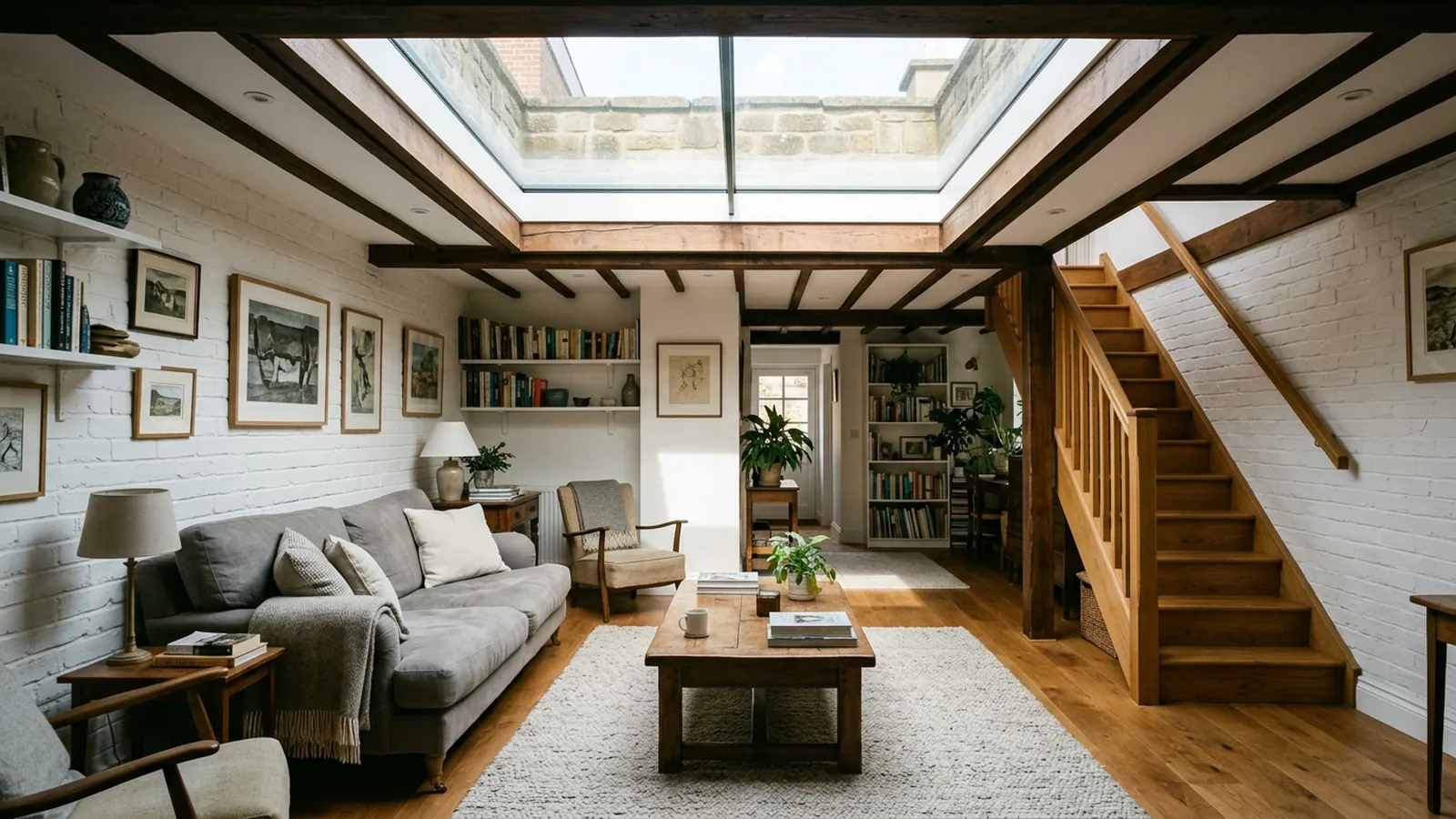
The doubt is understandable. Glass underfoot on a roof terrace or over a kitchen extension feels wrong the first time, and it helps to know what is actually holding you up. Our page on walk-on rooflight installation covers the whole job from survey to finish; this answer deals only with the moment you step onto the pane.
What makes the glass strong enough
A walk-on panel is not one thick sheet. The top of the unit is a laminated pane: several layers of toughened or heat-strengthened glass bonded together with a tough interlayer. If the top layer is ever cracked by a dropped object, the layers beneath and the interlayer keep the panel in one piece and still carrying weight until it is replaced. Below that sits the insulating part of the unit, sealed to the walking pane.
That layered build is what separates a walk-on skylight from an ordinary flat rooflight, where the outer pane is designed for weather, snow and a maintenance person kneeling on boards, not for daily footsteps. The data sheet, not the look of the pane, tells you which of the two you have.
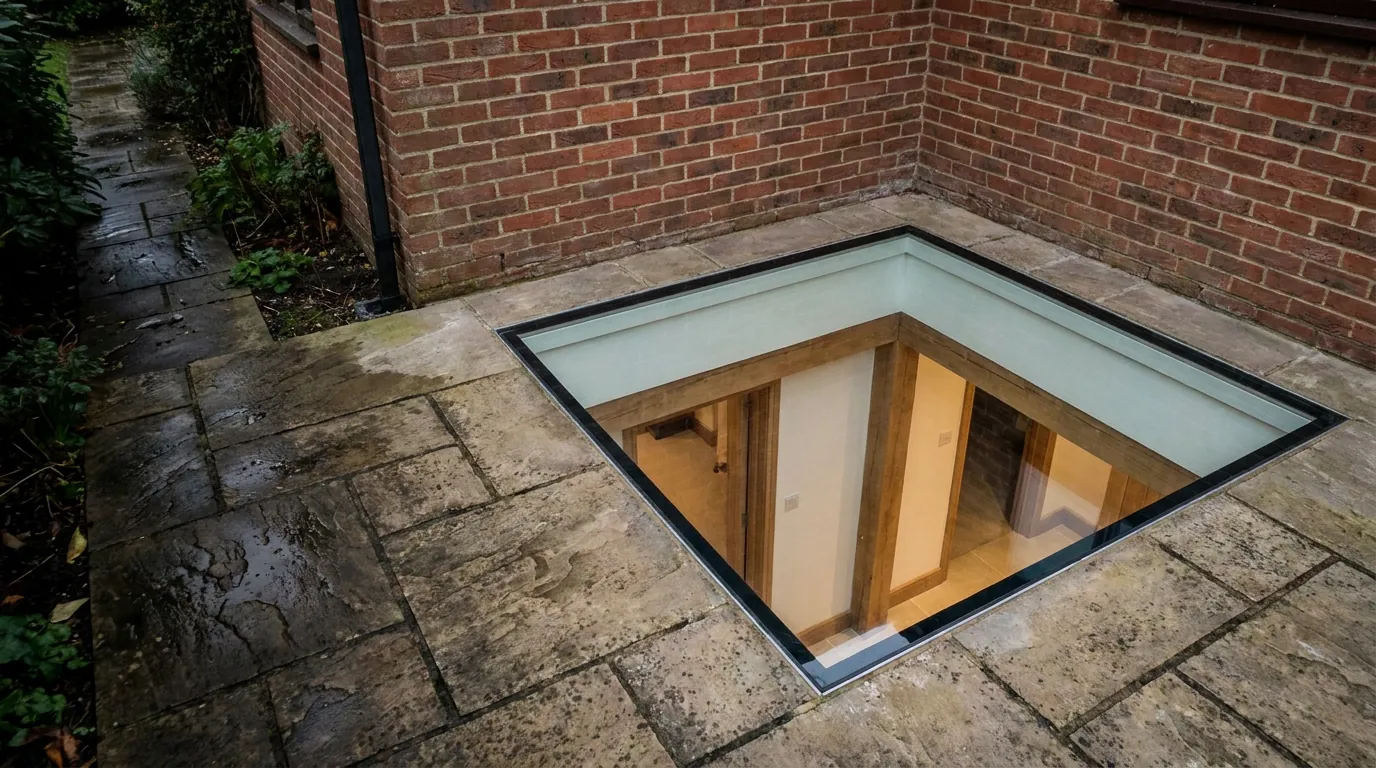
How a walk-on rooflight sits in a terrace
- Anti-slip fritted top surface, so the glass is safe to walk on when wet
- Laminated glass: several layers bonded with interlayers, so it stays in place if a layer breaks
- Sealed cavity between the laminated glass and the inner pane
- Inner pane, completing the insulated unit
- Frame carrying the glass, sealed at the edges
- Kerb around the opening, bedded to the roof structure
- Waterproofing dressed up the kerb and under the frame
- Paving on pedestals, finished level with the glass
The rating on the data sheet
Whether you can stand on a given unit is written down, not guessed. The maker states two figures: a spread load over the glass, in kilonewtons per square metre, and a point load on a small spot, in kilonewtons. The first covers people moving across the panel; the second covers a heel, a chair leg or a planter foot pressing in one place.
| Use | Figure that matters | What to check |
|---|---|---|
| Walking across it | Spread load | That the rating matches pedestrian use, not occasional access only |
| Standing still on it | Spread load and point load | That a single foot at the centre sits inside the point load |
| Chairs or a table on it | Point load | That each leg is inside the point figure; spreader pads help |
| Stepping on for window cleaning | Maintenance or pedestrian rating | Whether the unit is walk-on or only made for access with boards |
How to read those numbers properly, and why a strong spread figure alone is not enough, is the job of our guide to walk-on rooflight load ratings. The phrase you will also meet on data sheets is explained in what does trafficable mean for a rooflight?
What it feels like to stand on
A properly specified panel does not flex noticeably under one adult. It feels solid, a little like standing on a stone threshold. The two things people notice are grip and heat. Clear glass wet with rain is slicker than paving, which is why walk-on units usually come with a textured or fritted top surface; our answer on whether walk-on glass is slippery when wet goes through the finishes. In strong summer sun the surface warms, much as a dark stone slab does, so bare feet may find it warm at midday.
The other sensation is visual. Looking down through clear glass into the room below can feel odd for the first few steps, and a patterned or obscured top layer takes that away while still passing daylight.
Uses that sit outside the rating
Standing and walking are what the rating allows. Some things ask more of the glass than footsteps do:
- Jumping or dropping onto it. A jump concentrates far more force than a step, so treat the panel as floor, not a trampoline.
- Heavy planters and hot tubs. Anything with a large fixed weight belongs on the surrounding deck, not the glass.
- Ladders and scaffold feet. These press through tiny contact points; spread them on boards or keep them off.
- Grit and sharp objects. Stones under a shoe can mark the top surface over time, even though they will not weaken it.
Whether a garden table and chairs can stay on the panel is answered in can furniture sit on a walk-on rooflight?
How we confirm it for your roof
On a walk-on job the survey comes before the quote and before the product choice. We look at what the flat roof or terrace sits on, how the space will be used, and where the opening falls against the joists, then match a unit whose rating fits that use. Where the structure or the roof covering is changing, the Building Control notification is part of what we arrange, and the installation carries our 10-year workmanship guarantee. If you would like the glass and the structure checked on your own terrace, arrange a survey visit and we will tell you plainly what it can carry.