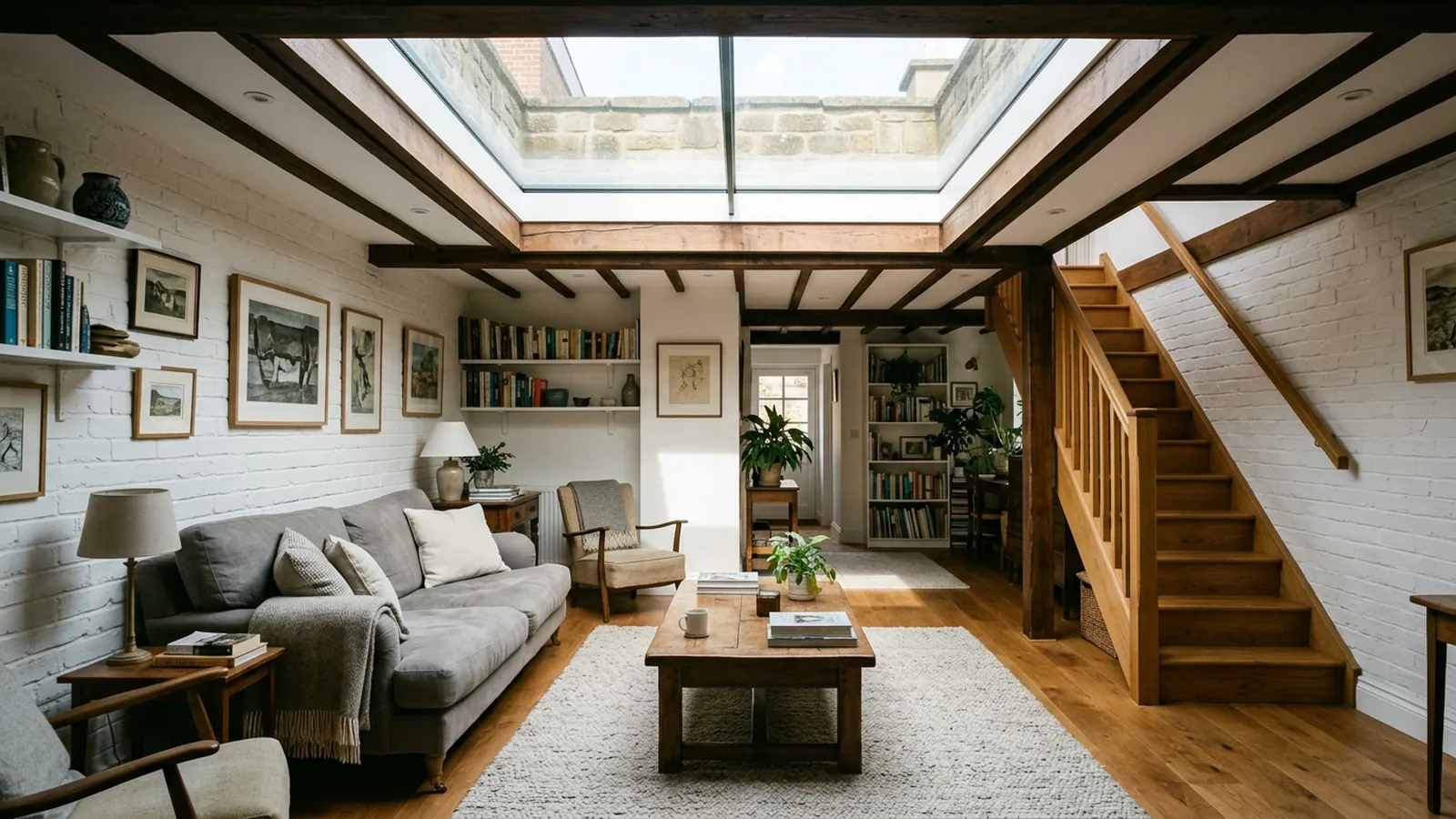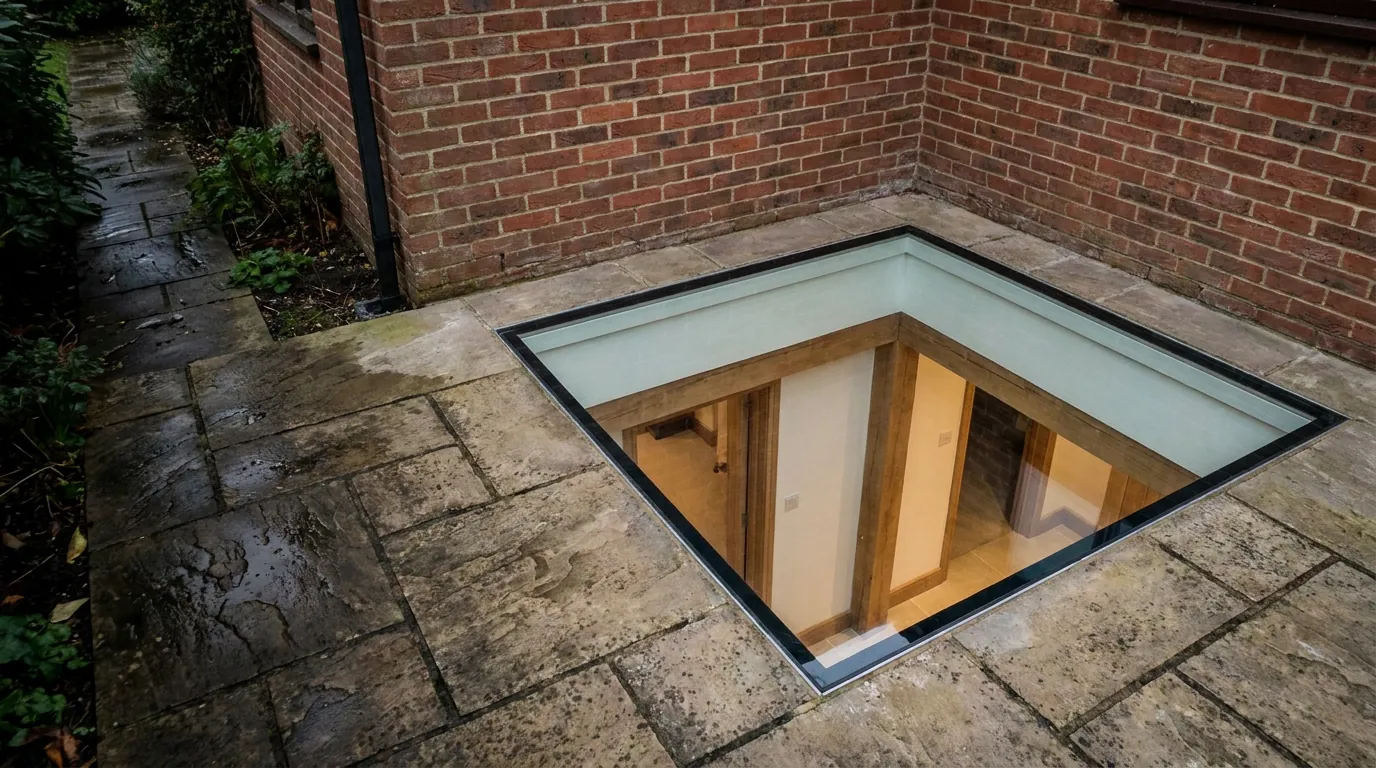
A clear walk-on panel over a basement, a kitchen extension or a lightwell is not always what a house wants. Sometimes the room below needs screening from the terrace above; sometimes the terrace simply needs a surface that feels safe in the rain. Frit is the usual way to get either, and our walk-on rooflight service specifies it as part of the glass, not as a finish added afterwards.
This page answers the pattern question. If your real concern is keeping the kitchen below out of view from a neighbour's window, the guide that goes into screening options in depth is privacy and obscured glass in walk-on rooflights.
What a frit actually is
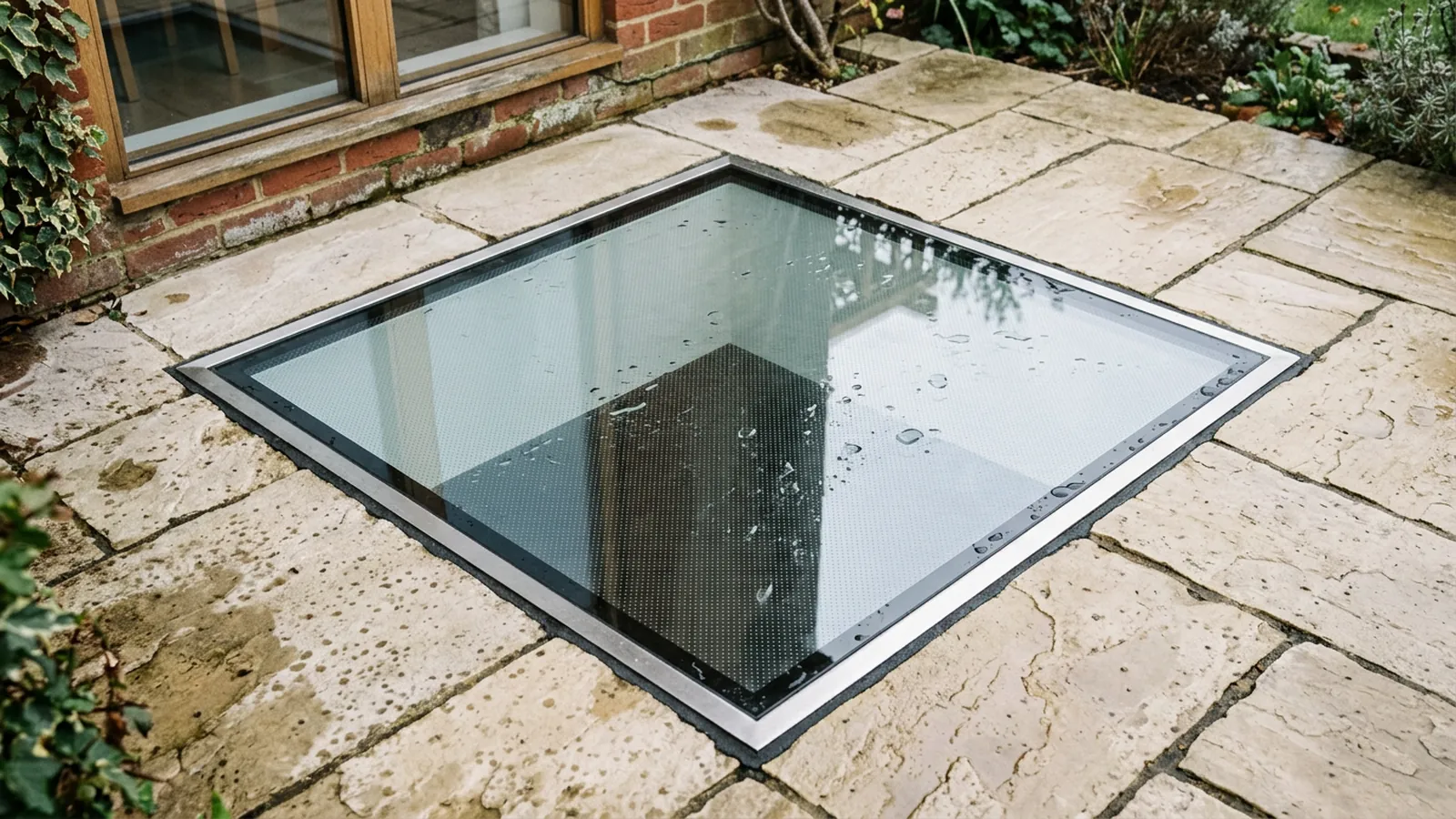
A frit is a layer of ceramic enamel, ground glass mixed with pigment, printed on to the glass and then fused into it in the toughening furnace. Once fired it is part of the pane. It does not peel like a film or wash off like a coating, and it takes foot traffic, weather and cleaning for the life of the unit.
It is applied either by screen printing, which suits repeating dots, stripes and grids, or by digital ceramic printing, which can lay down gradients, fine graphics and more elaborate artwork. Both happen at the glass processor before the pane is laminated into the finished walk-on unit, which is why a frit has to be decided when the glass is ordered. It cannot be added to a skylight that is already on the roof.
How a walk-on rooflight sits in a terrace
- Anti-slip fritted top surface, so the glass is safe to walk on when wet
- Laminated glass: several layers bonded with interlayers, so it stays in place if a layer breaks
- Sealed cavity between the laminated glass and the inner pane
- Inner pane, completing the insulated unit
- Frame carrying the glass, sealed at the edges
- Kerb around the opening, bedded to the roof structure
- Waterproofing dressed up the kerb and under the frame
- Paving on pedestals, finished level with the glass
Top face or inner face: two different jobs
A walk-on rooflight is a laminated build-up, with the pane you stand on sitting above the insulating layers. The same frit behaves quite differently depending on which surface it is printed on.
| Position | Main purpose | What to weigh up |
|---|---|---|
| Upper walking face | Anti-slip grip in wet weather, with the pattern visible from above | Textured frit holds more grime, so cleaning is a little more involved |
| Inner face of the top pane | Obscuring, a decorative pattern, or a gradient that softens sun | Protected from wear, but gives no extra grip on its own |
| Both faces | Grip on top with screening beneath | The greatest loss of light of the three |
The anti-slip frit is almost always a fine dot or a close texture, because its task is to break up the film of water under a shoe. How that finish is judged, and why an outdoor walk-on rooflight should have one, is covered in is walk-on glass slippery when wet?
Patterns that work, and what they give up
Any pattern the processor can print is possible, but a few earn their place on a flat roof more often than the rest.
- Dot matrix. Small evenly spaced dots. The classic anti-slip top surface, and on an inner face a gentle screen that still reads as glass.
- Lines or bands. Stripes across the panel, useful where you want to break up a view in one direction or line the pattern up with decking boards.
- Border band. A solid printed margin round the edge. It hides the edge seal and the kerb detail from inside, and the centre stays clear.
- Gradient. Dense at one side, fading to clear. It screens the part of the room you want private and keeps the rest open to the sky.
- Full cover. An even translucent frit across the whole pane. Maximum privacy, and the daylight arrives soft and diffuse instead of as a clear view up.
The trade-off is always light. The more of the pane the enamel covers, and the more opaque the colour, the less daylight reaches the room. A white or pale grey frit lets through far more than a dark one. If the whole reason for the rooflight is to brighten a basement, a light-coverage pattern on one face is usually the better balance. Our answer on how much daylight a walk-on rooflight gives the room below explains the other things that decide brightness.
The rule: choose the pattern for the room underneath, then check it still meets the grip you need on top. The exception: a panel inside the house, such as a glass floor between storeys, may not need an outdoor anti-slip face at all, so the frit there can be chosen purely for privacy or looks.
Other ways to pattern or obscure the glass
Frit is not the only route. Acid etching and sandblasting roughen the glass itself to give a frosted look, and an etched top face can also add grip. A translucent or coloured interlayer inside the laminate screens the view while leaving both outer surfaces smooth. Each has its own look and cleaning behaviour, and they can be combined with a frit in one build-up. The guide to slip resistance on walk-on glass compares the grip finishes side by side.
Living with a fritted panel
An inner-face frit asks nothing extra of you: it sits behind a smooth top pane and cleans like any other glass. A textured top frit gathers a little more dirt in its surface, so a soft brush with plain water does more good than a squeegee. Fired enamel is hard wearing, though grit dragged underfoot marks any glass surface over time, printed or not; does walk-on glass scratch? covers what to watch for.
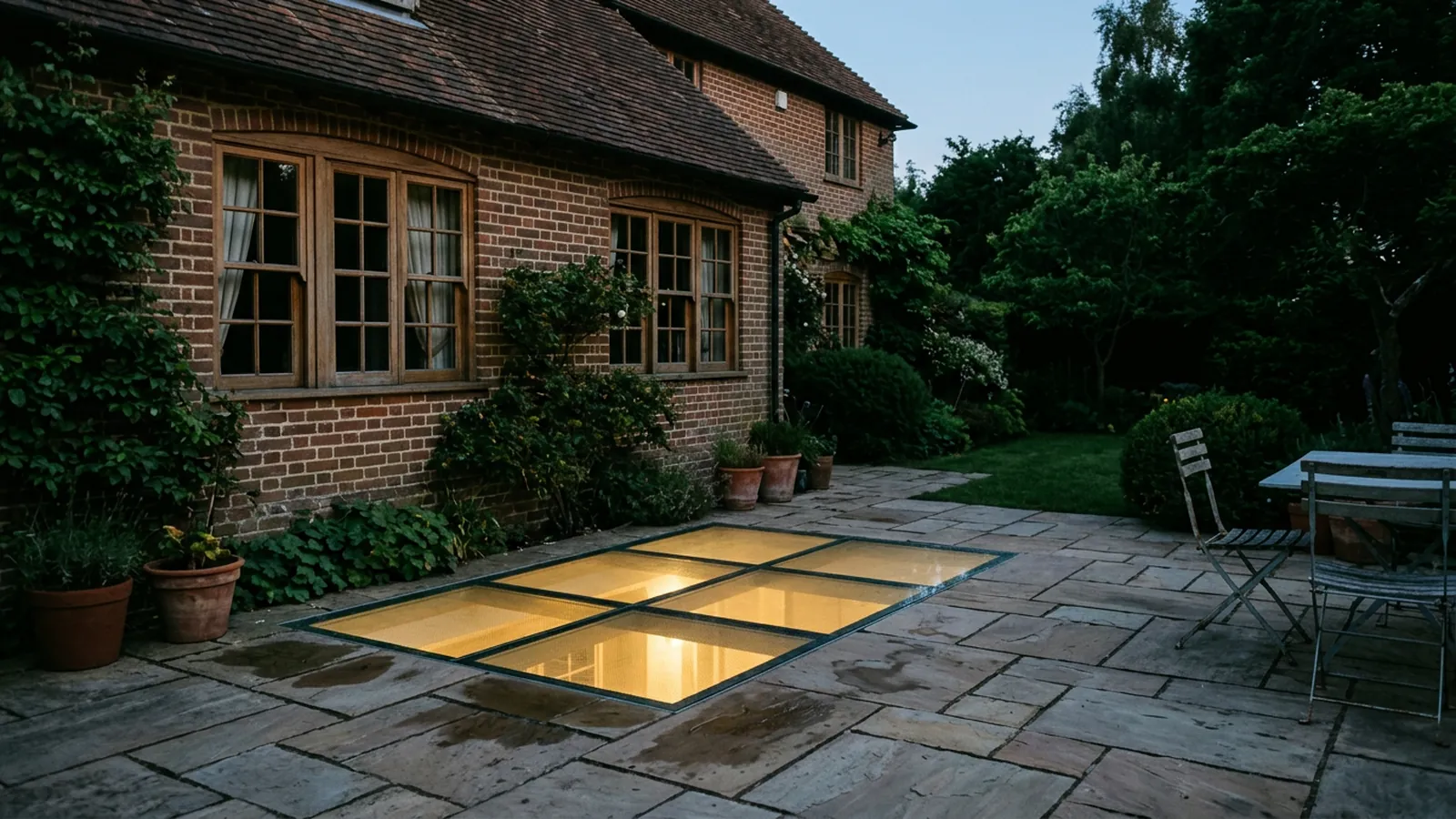
The pattern also changes how the rooflight looks from outside at night. With the lights on below, a fritted panel reads as a lit, textured surface from the terrace, and a clear one shows the room. That can decide the choice as much as the daytime view.
Choosing it for your roof
The frit is fixed when the glass is made, so it belongs in the specification alongside the size, the load rating and the build-up. At the survey we look at who can see down into the room, how much light the space below needs and whether the panel will be walked on in the wet, then set out the pattern options in the written quote. Our 10-year workmanship guarantee covers the fitting whichever glass you pick, and if you want to talk through a pattern for your own terrace, arrange a survey and bring the question with you.