That is the honest position for anyone weighing up a glass panel they plan to walk across every day. It is also why the choice of top surface, the way the terrace is used and the way the glass is cleaned all belong in the conversation about a walk-on rooflight for a terrace or flat roof, not as an afterthought once the unit is in.
Why glass resists most everyday marks
Glass sits high on the hardness scale compared with the things people usually bring onto a terrace. A rubber or leather sole, a plastic plant pot, a timber chair leg or a dropped phone will not cut into it. The walking surface of a trafficable skylight is also heat-treated, so it takes a far harder knock than ordinary window glass before anything happens at all.
Hardness is a different property from toughness, though. Toughening makes the pane resist breakage; it does not make the surface any harder to mark. A scratch happens when something at least as hard as glass is pressed and moved across it. That short list is what to plan around.
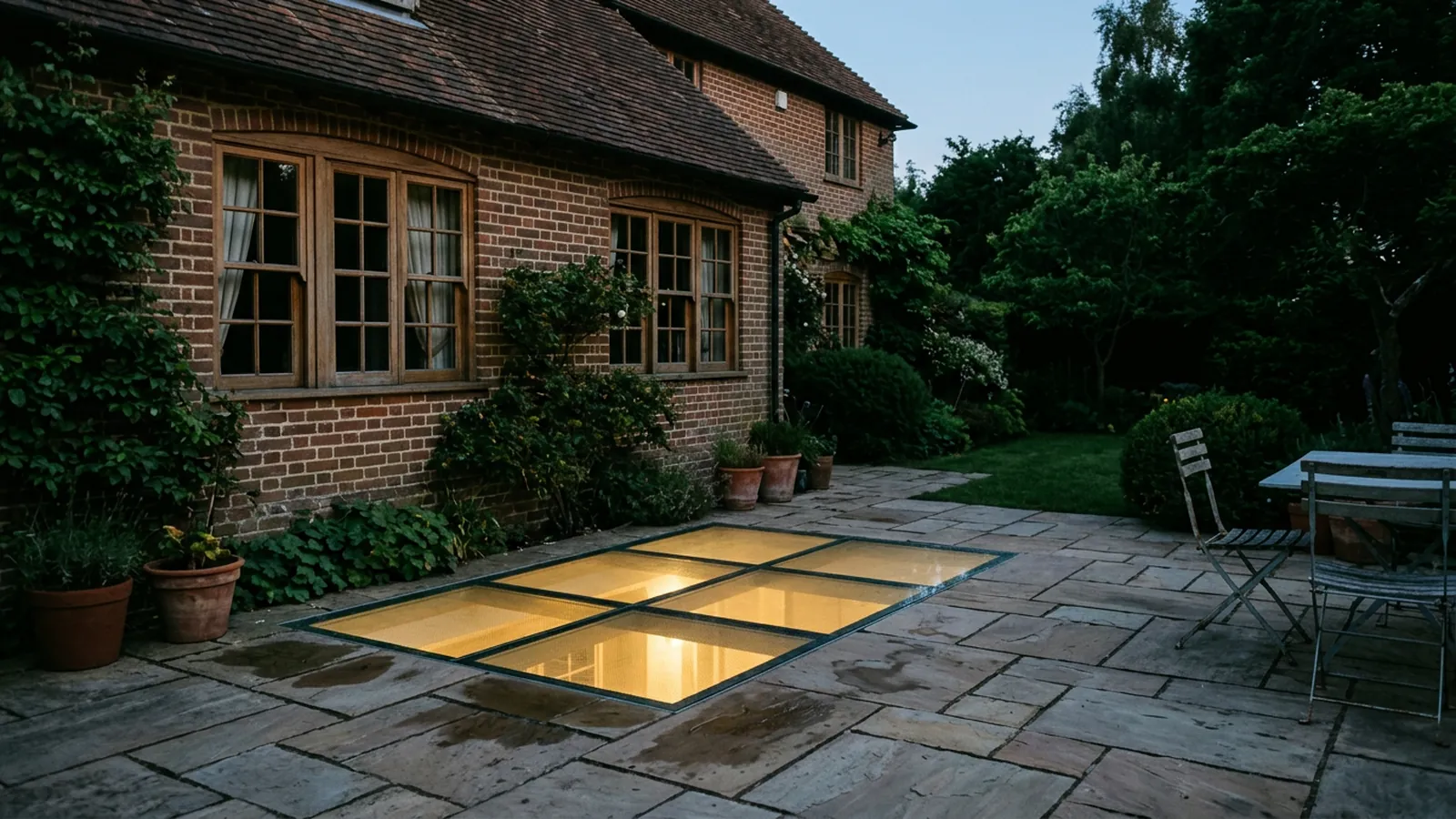
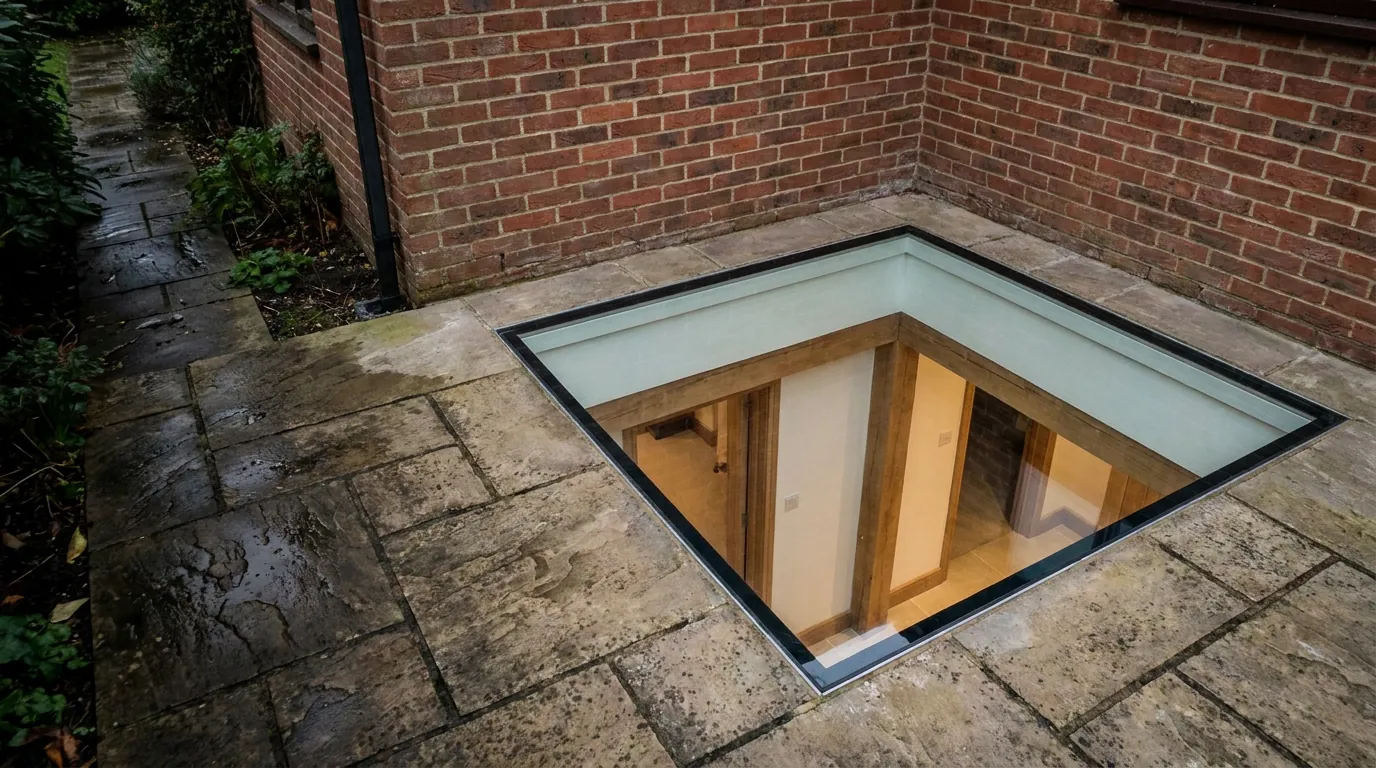
How a walk-on rooflight sits in a terrace
- Anti-slip fritted top surface, so the glass is safe to walk on when wet
- Laminated glass: several layers bonded with interlayers, so it stays in place if a layer breaks
- Sealed cavity between the laminated glass and the inner pane
- Inner pane, completing the insulated unit
- Frame carrying the glass, sealed at the edges
- Kerb around the opening, bedded to the roof structure
- Waterproofing dressed up the kerb and under the frame
- Paving on pedestals, finished level with the glass
What can actually leave a mark
| Source | Risk to the surface | What helps |
|---|---|---|
| Sand and fine grit on shoes | The main cause of fine lines, because quartz grains match or exceed the hardness of glass | Sweep or rinse the glass before it is walked on after gardening or building work |
| Gravel from a nearby border or ballast | A loose stone ground underfoot can gouge a short line | Keep loose stone clear of the panel edge and do not store it on the glass |
| Metal furniture feet | Low on its own; higher when grit is trapped under the foot and the chair is dragged | Soft pads on every foot, lifted rather than slid |
| Abrasive cleaners and scourers | Can dull a clear surface over time | Water, a mild detergent and a soft brush or cloth |
| Tools and ladders during other work | A point load plus dust is the classic way a panel gets marked | Cover the glass with boards and a soft layer while trades are on the roof |
Of all of these, building work is the one to watch. Render dust, cement and brick grit are all abrasive, and a terrace where scaffolding or a new balustrade is going up is the moment a panel is most exposed.
Does the surface finish make a difference?
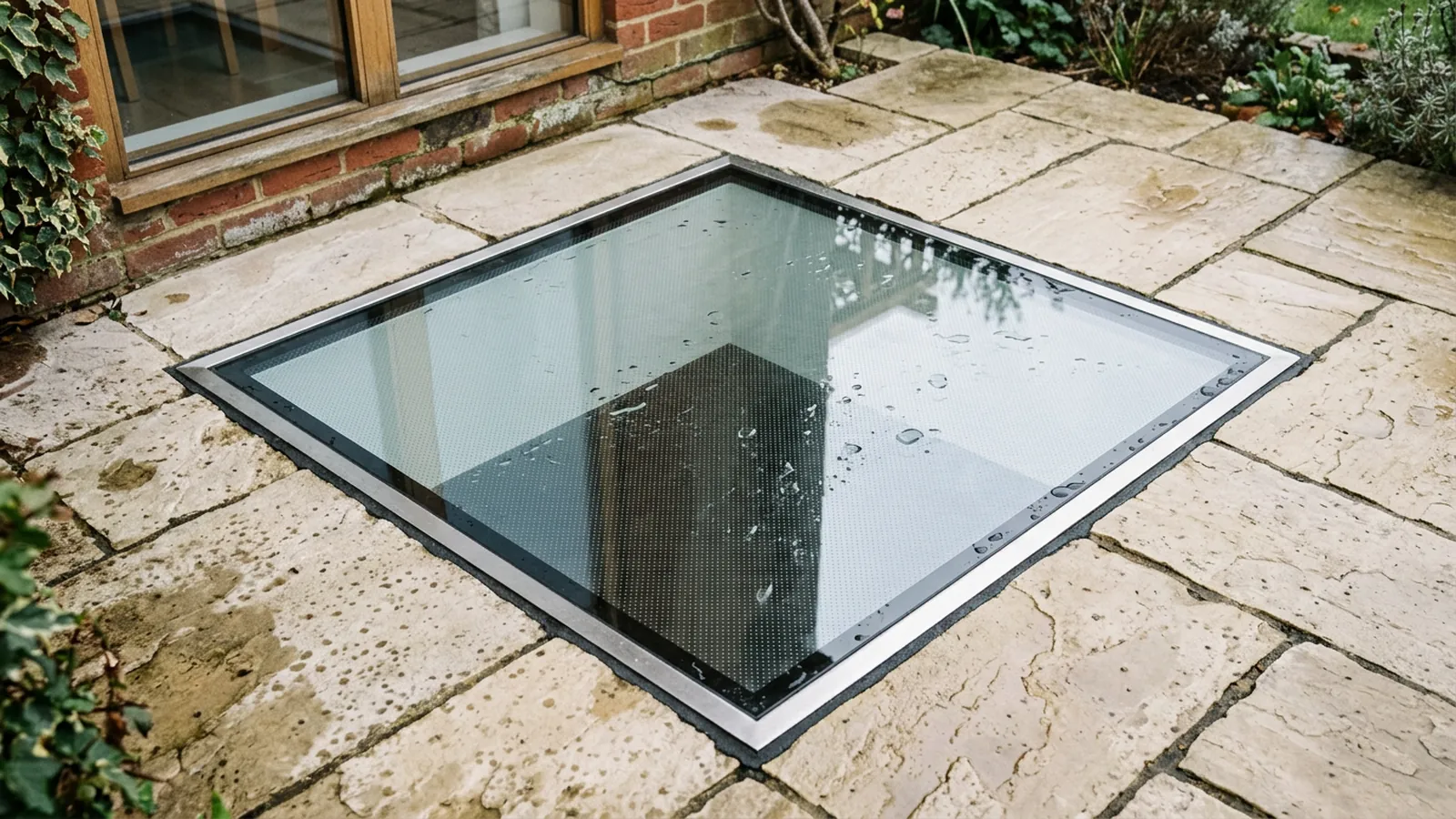
Yes, to how a mark looks. Clear, polished glass shows every fine line when low sun catches it. A walk-on unit usually carries a slip-resistant top, such as a fired ceramic frit, an etched pattern or a textured finish, and that texture tends to hide light surface wear far better than a mirror-smooth face does. The trade-off is that a textured face holds dirt a little more and asks for a brush rather than a cloth.
How those finishes are made and rated for grip is covered in the guide to slip resistance on walk-on glass, and the options for a pattern that also softens the view are set out in can walk-on glass be fritted or patterned? If you want a completely clear panel, say so at survey, because it changes how carefully the glass needs looking after.
A textured top hides wear; a clear top shows it.
Where the scratch sits in the glass
Any mark stays on the uppermost face. A walk-on rooflight is built as layers: a toughened walking pane, laminated to further panes with an interlayer, over a sealed unit that does the insulating. A surface line on the top face does not reach the laminate or weaken the structural panes beneath it, and the unit still carries the load it was rated for. What it affects is appearance.
The makeup of those layers, and why the top one is there to take the wear, is explained in the glass build-up in a walk-on rooflight. A chip or crack is a different matter from a scratch: that is a reason to have the unit looked at and, if the pane is damaged, replaced as a whole unit to the same specification.
Looking after it day to day
- Clear grit first. Before anyone walks across after a dry spell or after gardening, give the glass a sweep with a soft brush or a rinse with a hose.
- Pad the furniture. Felt or rubber pads on table and chair feet, and pieces lifted into place instead of pushed.
- Clean gently. Warm water and a little washing-up liquid, a soft brush for a textured top and a soft cloth or squeegee for clear glass. No scouring pads, powders or blades.
- Protect it during works. Lay boards over a soft layer on the panel whenever other trades use the roof.
The fuller routine, including what to use on a textured surface and how often, is in how do you keep walk-on glass clean? For heavier pieces such as planters or a table, can furniture sit on a walk-on rooflight? covers the load side as well as the feet.
Planning for it before the glass goes in
Scratching is easier to design out than to live with. Placing the panel away from the doorway where people step straight off a lawn, keeping planted borders and gravel clear of its edge, and choosing a textured top on a busy route all reduce wear from the first day. At survey we look at how the terrace will be used and where the traffic runs, then specify the top surface to suit. The 10-year workmanship guarantee covers how the unit is fitted; surface wear from grit and use is part of owning any glass floor, so it pays to plan the route well. If you are deciding between a clear and a textured top, arrange a survey and we will talk it through on the roof itself.