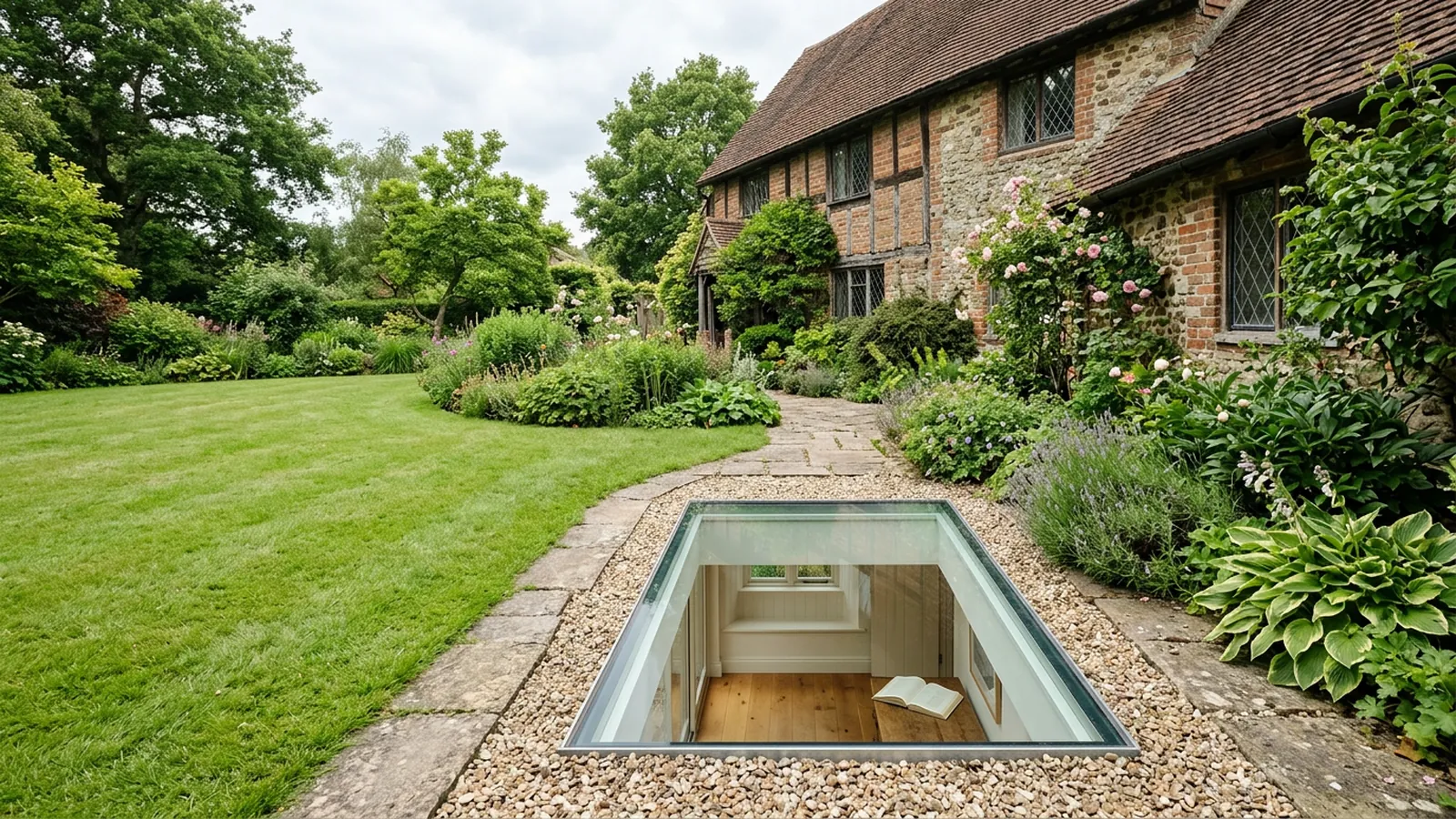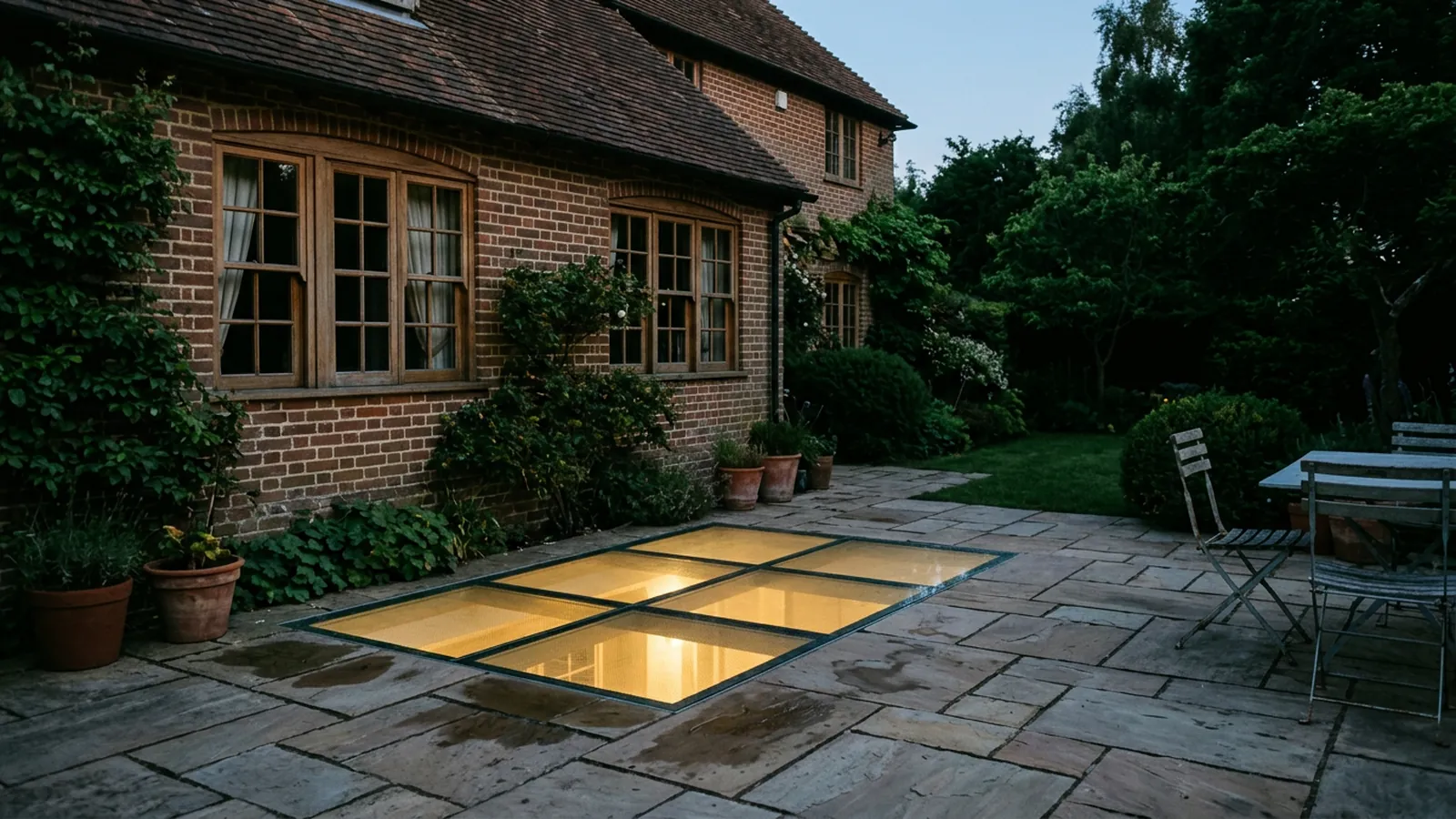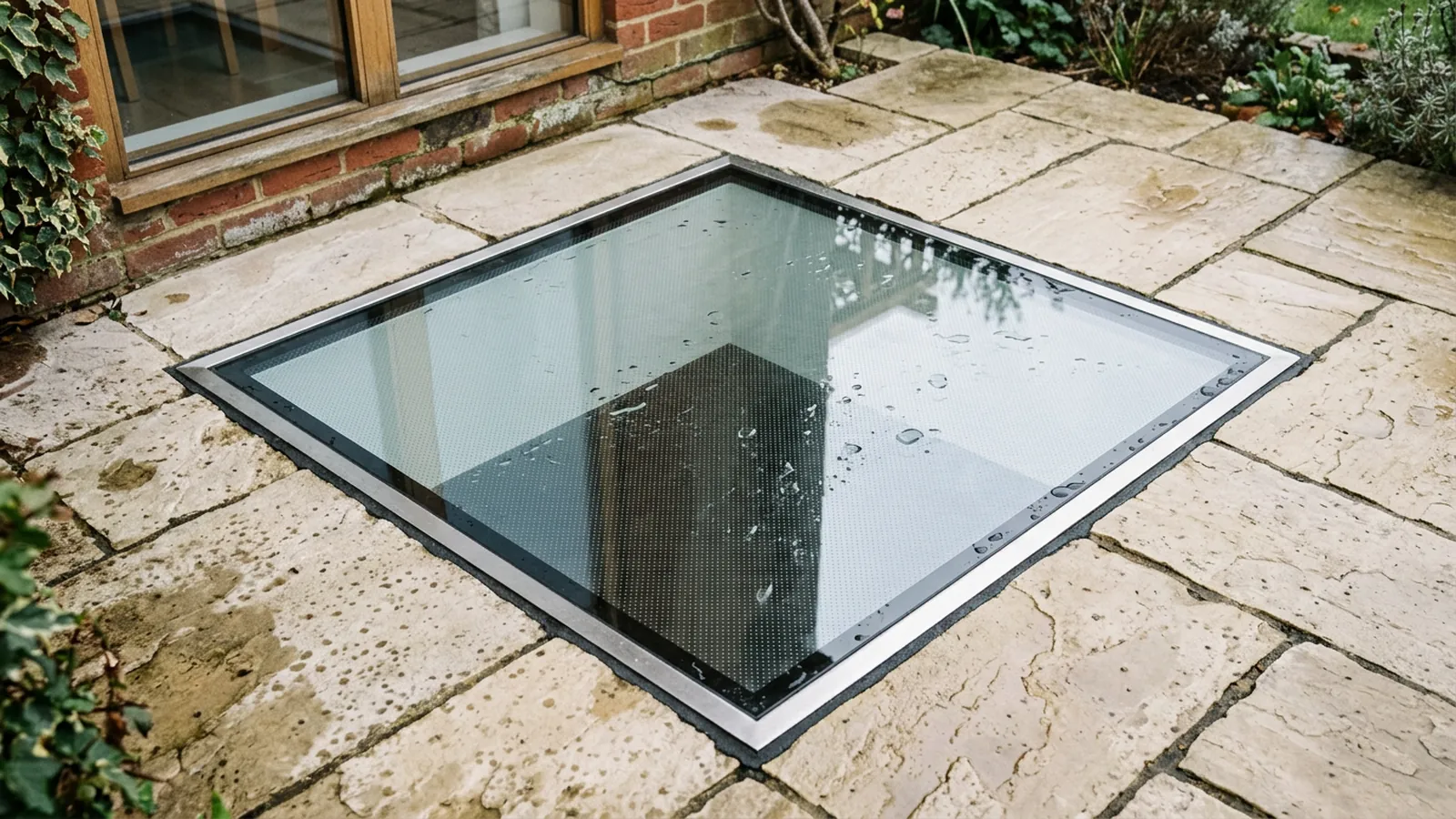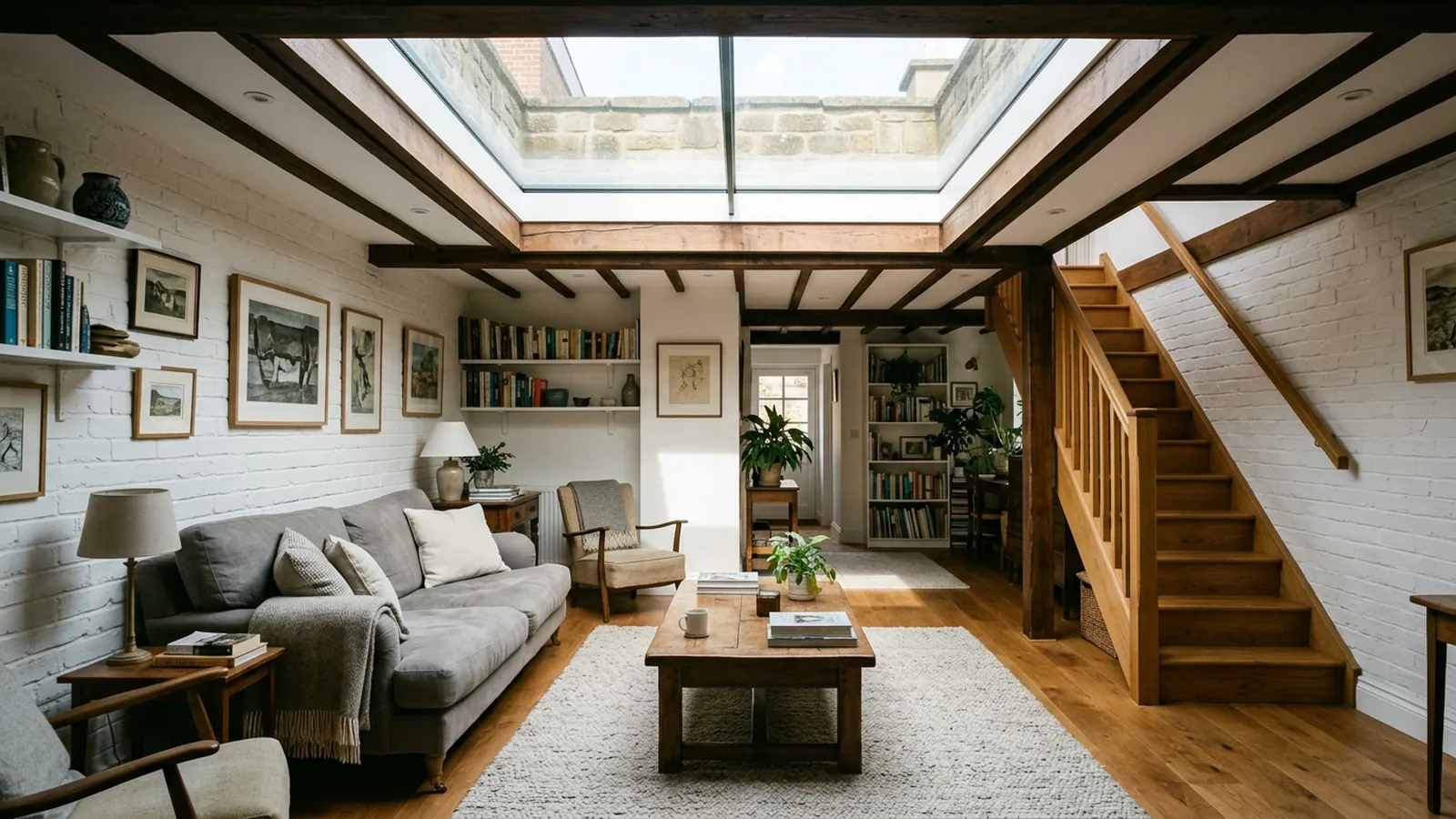
Snow on a flat roof is a question about load first and water second, and a walk-on unit answers the load part by design. The glass in a trafficable rooflight is laminated and sized for foot traffic, which is why our walk-on rooflight installation work starts from the loading the roof will see, snow included, before any glass is chosen.
Below is what happens when a winter fall settles on the glass over your extension or lightwell, what to watch, and what to leave alone.
Why the load side is already covered
Every roof in the UK is designed for snow. The structural codes set a snow load for the site, based on where the building stands and how high it sits, and a flat roof has to carry it along with everything else. A walk-on rooflight sits inside that roof and is rated for a heavier and more concentrated load: a person's weight arrives through the ball of a foot or the heel of a shoe, while snow spreads its weight evenly over the whole pane.
That difference matters. Glass copes far better with an even, spread load than with a point load, and walk-on glass is laminated so that if the top leaf were ever damaged the layers beneath still hold. The detail of how those ratings are written and tested sits in our guide to walk-on rooflight load ratings, and whether a given rooflight takes a standing adult is answered in can you really stand on a walk-on rooflight?
The rule: settled snow on a correctly rated walk-on skylight needs no action for the glass's sake. The exception is a deep drift piled against a wall or parapet beside the rooflight, which concentrates snow in one spot; that is a roof design question, checked when the rooflight is specified.
How a walk-on rooflight sits in a terrace
- Anti-slip fritted top surface, so the glass is safe to walk on when wet
- Laminated glass: several layers bonded with interlayers, so it stays in place if a layer breaks
- Sealed cavity between the laminated glass and the inner pane
- Inner pane, completing the insulated unit
- Frame carrying the glass, sealed at the edges
- Kerb around the opening, bedded to the roof structure
- Waterproofing dressed up the kerb and under the frame
- Paving on pedestals, finished level with the glass
Where snow actually collects
On an open flat roof, snow lies fairly evenly and blows off the edges. On the kind of roof where walk-on glass usually goes, it behaves differently. A terrace over a kitchen extension often has a house wall on one side and a parapet or balustrade on others, and wind drops snow against those upright faces. A lightwell at the front of a house is a small, sheltered pocket that fills and stays filled longer than the pavement around it.
| Where the rooflight sits | How snow settles | What to keep an eye on |
|---|---|---|
| Open flat roof, flush glass | An even layer across glass and membrane alike | Outlets and gutters staying clear as it thaws |
| Terrace against a house wall | Deeper along the wall and any parapet | Drifts banked over the glass edge nearest the wall |
| Lightwell or sunken courtyard | Fills the pocket and lingers in shade | The drain at the bottom of the well |
| Glass on a raised kerb | A cap on the pane, with snow piling round the kerb | Meltwater meeting the kerb flashing |
How the glass meets the roof changes the picture a little. Flush glass sits level with the finished surface, so snow on the pane and snow on the paving are one sheet. A unit on a kerb stands proud and can have snow gathered around its base. The two approaches are compared in flush or upstand walk-on rooflights.
The thaw is the part to plan for
A covering of snow is frozen water waiting to leave the roof. When it melts, particularly after a cold spell with the heating running below, that water has to reach an outlet. A walk-on rooflight is usually laid to the same gentle fall as the roof around it, so meltwater runs off the glass and across the finish to the drain. Where the outlet is blocked by leaves or packed ice, water can pond around the frame until the drain opens again.
The weatherproofing detail at the perimeter is built to stay sound under standing water, so ponding during a thaw is a nuisance rather than a threat. The simple habit is to keep the outlets clear going into winter. On a lightwell that means checking the gully at the bottom before the first frost, not after the snow has hidden it.
Clearing snow without marking the glass
You do not have to clear it. Snow will darken the room below while it lies there, because it blocks daylight far more than it adds weight, and that is usually the only reason to move it. If you want the light back, clear gently.
- Use something soft. A plastic shovel held flat, a soft broom or a rubber squeegee lifts snow off without scoring the top surface.
- Skip metal and grit. A metal blade or a scattering of grit dragged across the pane can leave fine scratches; the answer on whether walk-on glass scratches explains why.
- Leave the last film. A thin layer left behind melts on its own; chipping at ice stuck to the glass risks more than it gains.
- Clear the path to the drain. Push snow away from the outlet, not onto it, so the thaw has somewhere to go.
Take care underfoot while you do it. Walk-on glass usually carries a slip-resistant finish, but ice and compacted snow make any outdoor surface treacherous, the same as a patio in January.
What the room below notices
Snow on the glass turns the light in the room below soft and grey, then bright again as it slides off. The laminated, double glazed build-up keeps the cold of the snow on the outside, and a well-sealed unit stays clear on its inner face. If the room below is warm and humid, a very cold outer pane can encourage a little moisture on the inside surface; that has its own answer in do walk-on rooflights get condensation?
Checking it suits your roof
Snow is one of the loads we think about when we survey a roof for a walk-on rooflight, alongside people, planters and the structure underneath. We look at where drifts could form against walls or parapets, where the outlets are, and how the glass should meet the finish so a thaw drains away. The survey comes before the quote, and the install is covered by a 10-year workmanship guarantee.
If you are planning a terrace or lightwell and want the glass sized for every season, arrange a survey of the roof and we will go through the winter side with you on site.