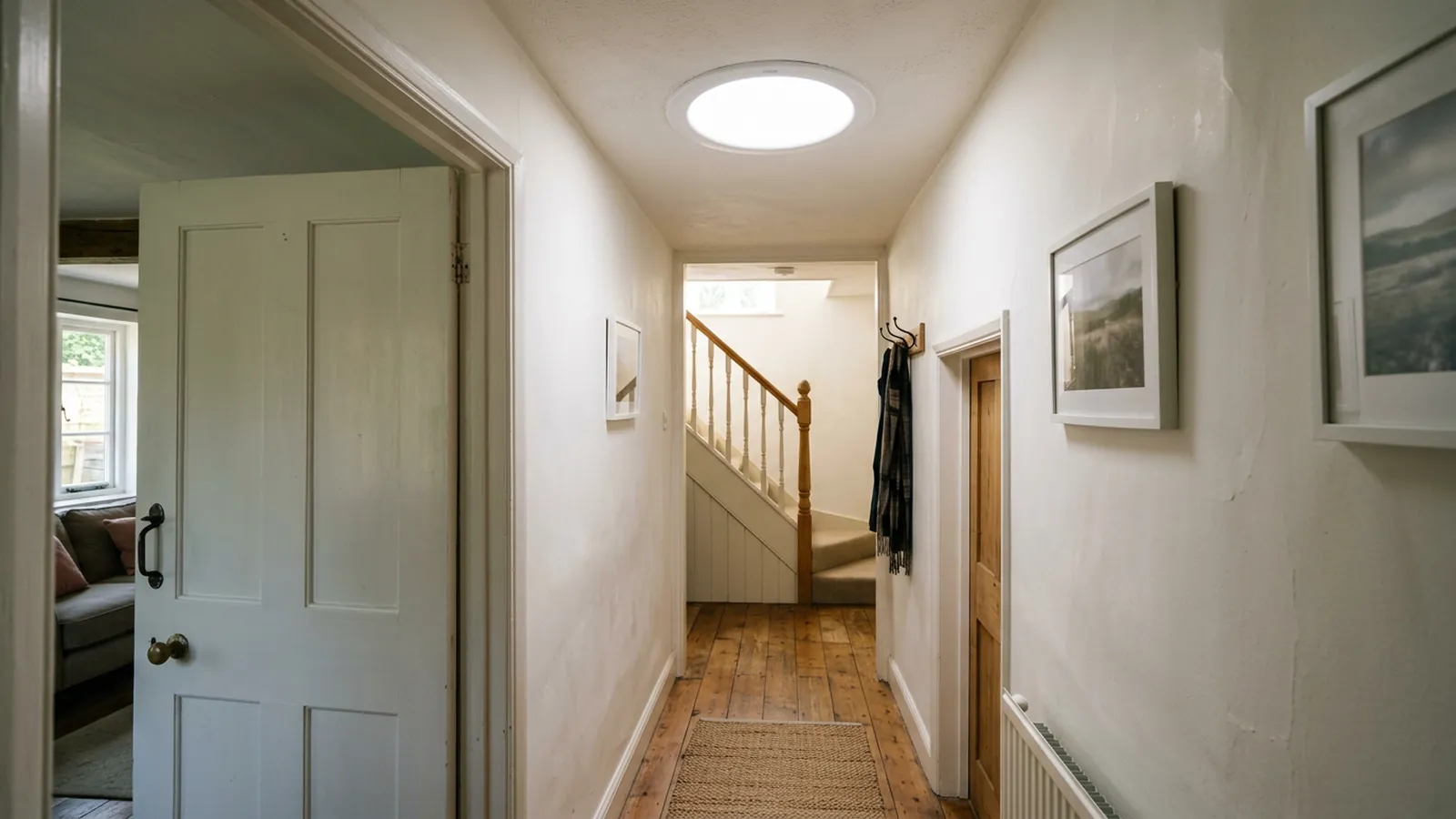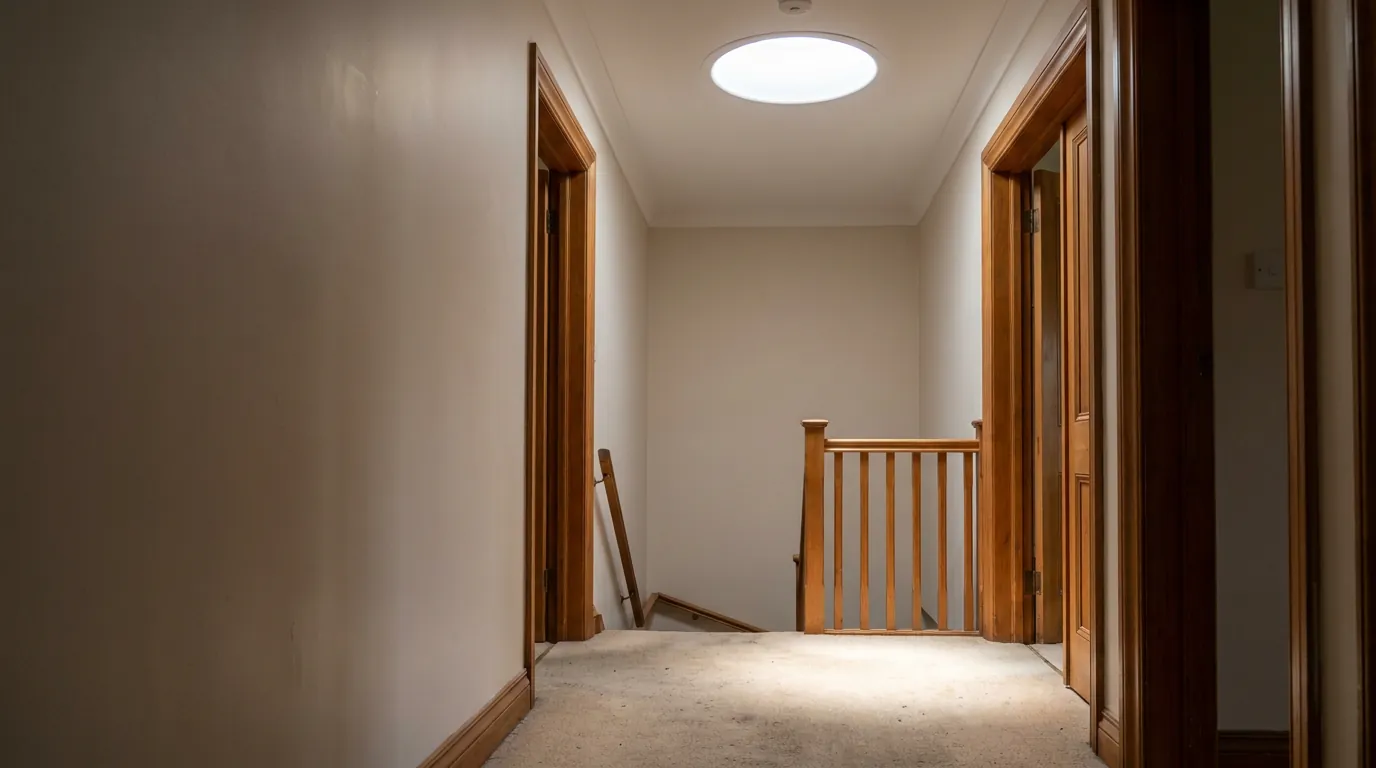
Stand under the ceiling diffuser of a sun tunnel on a grey afternoon and it looks like a lamp someone forgot to switch off. There is no bulb, no cable and no switch. What you are seeing is daylight that landed on your roof a moment ago and travelled down a mirrored pipe to reach you. Understanding how sun tunnels work is mostly a matter of following that light from the sky to the floor and noticing where it gains and where it loses on the way.
This guide walks the route in order: what the dome on the roof gathers, what happens inside the tube, how the route through the loft changes the result, and what the diffuser does at the end. It also covers the two things that travel alongside the light, heat and moisture, because they shape how a tubular skylight is put together. By the end you should be able to look at your own house and judge whether a tube would carry enough light to be worth it.
Three parts doing one job
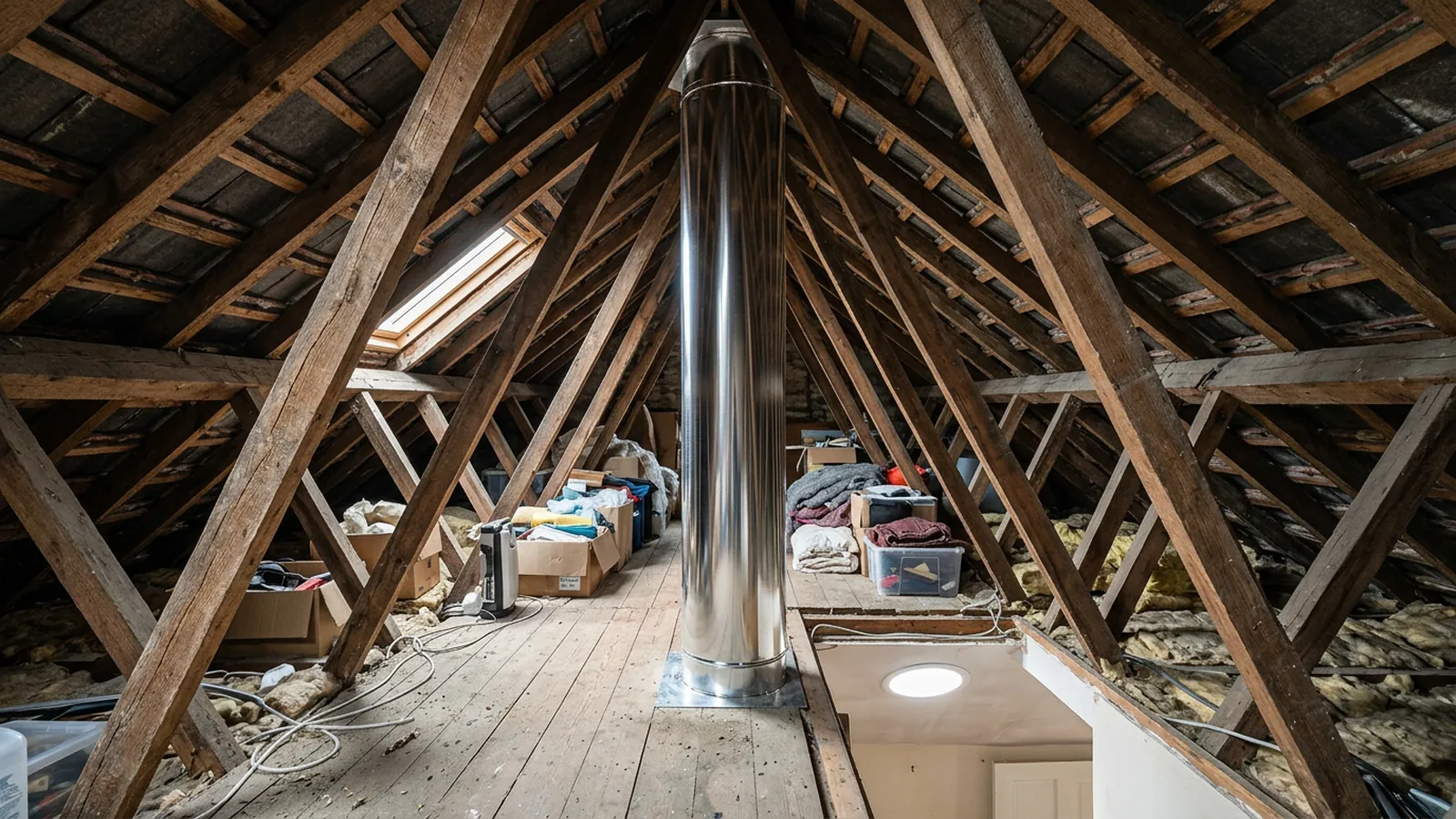
Every sun tunnel, whatever the maker calls it, is built from the same three pieces. A clear collector sits on the roof. A tube with a highly reflective inner face runs down from it through the roof void. A diffuser closes the tube at the ceiling of the room below. Some kits add an insulated sleeve, an angled elbow or two, and a flashing plate shaped to the roof covering, but those are supporting parts. The light only ever meets the collector, the tube wall and the diffuser.
That simplicity is the reason the product works at all. A roof window lights a room by being a hole in the roof with glass in it; a tubular rooflight lights a room that is too far from the roof for a hole to reach. The price of that reach is that light has to be moved rather than simply let in, and moving light always costs some of it. Everything a good installation does is about keeping that cost small.
How a sun tunnel brings daylight down
- Clear dome on the roof slope, catching daylight from the sky
- Flashing, weathered into the tiles so rain runs round the dome
- Daylight reflecting off the mirror-finish lining all the way down
- Reflective tube, here a rigid straight run through the loft
- Loft insulation laid up to the tube, with an insulated sleeve round it to limit condensation
- Ceiling diffuser, spreading the light across the landing below
- Shown faint: angled elbows let the tube step round a truss or purlin, at some loss of light
What the dome on the roof collects
The name suggests the tube needs sunshine. It does not. The collector gathers light from the whole visible sky, and on an overcast day the sky itself is the light source: a bright, even grey that lights the dome from every direction at once. Direct sun adds a strong beam on top of that when it is out, which is why the diffuser brightens and dims as clouds pass, just as a window does.
The dome is curved for two reasons. It sheds rain and snow from the roof without a flat surface for dirt to sit on, and its shape catches light arriving at shallow angles, early and late in the day and through the low winter months, when a flat pane on a sloping roof would reflect much of it away. Some collectors include a small internal reflector or a prismatic band to turn that low light down the tube. The details vary by manufacturer; the principle is the same.
Because the collector looks at the sky rather than at the sun, the slope it sits on matters less than people expect. A north-facing slope still sees the open sky above it, and the answer to can a sun tunnel go on a north-facing roof? explains the trade-off in a few paragraphs. The grey-sky question gets the same treatment in do sun tunnels work on cloudy days?
Inside the tube: light moves by bouncing
Once light passes the dome, very little of it travels straight down the middle of the tube. Most of it enters at an angle, strikes the wall, reflects, crosses to the opposite wall, reflects again, and zigzags its way to the bottom. The inner surface is a mirror finish chosen to return almost all of the light that hits it. Almost all is not all, though. Every reflection keeps back a small share, and those small shares add up over the length of the run.
That single behaviour explains nearly every rule of thumb in the trade. The table below sets out the factors that change how many times the light bounces, and what each one means when a tube is planned.
| Factor | Effect on the light | What it means in practice |
|---|---|---|
| Length of the run | More length means more reflections before the light reaches the ceiling | The dome goes as close above the room as the roof allows |
| Tube diameter | A wider bore gathers more light and each ray crosses fewer times over the same distance | Larger rooms and longer runs call for a larger diameter |
| Bends and elbows | Each change of direction forces extra, steeper reflections | A straight drop is the ideal; bends are kept few and gentle |
| Wall surface | A smooth mirror face reflects cleanly; a ribbed or creased face scatters light back up | Rigid sections for the main run, flexible only where a route demands it |
| Sky conditions | Bright sky and direct sun put more light into the top of the tube | Output follows the weather and the season, as a window does |
Two of those rows have guides of their own. Tube diameter, length and how much light arrives works through the balance between bore and run, and rigid or flexible sun tunnel tubes explains why the two kinds of tube behave so differently for the same length.
Why the route through the loft decides so much
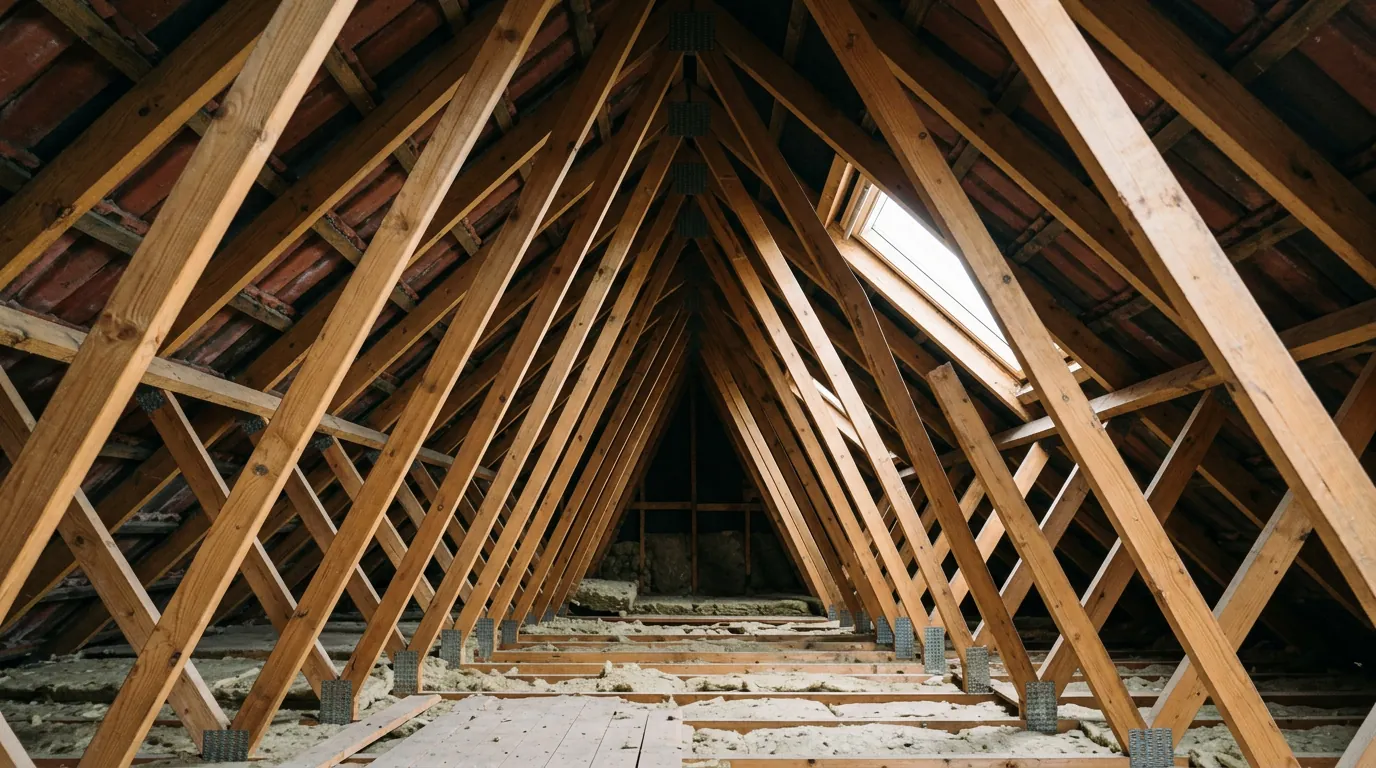
Between the dome and the ceiling sits the roof void, and in a house built on one of the post-war estates around Basingstoke that void is full of trussed rafters. The trusses are set at 600mm centres, and their webs, binders and bracing cross the space at angles. The tube has to find its way through all of that without any timber being cut, because each truss is part of an engineered whole.
The best route is the one that puts the dome directly above the diffuser, so the tube drops straight between two trusses with nothing in the way. When a web, a water tank or a binder sits in that line, the tube steps sideways with an adjustable elbow at the top or bottom, or the dome moves up or down the slope to a clearer bay. Each of those moves adds reflections, so they are weighed against the light they cost. Routing a sun tunnel through a trussed roof void covers the choices bay by bay, and can a sun tunnel bend around obstacles in the loft? gives the short answer.
The rule: the straightest route that stays clear of the truss members wins, even if the dome ends up somewhere slightly less tidy on the roof. The exception is a slope where the straight line would land the collector in a spot that cannot be weathered properly, such as tight against a valley or a soil vent, where a single gentle offset is the better trade.
At the ceiling: what the diffuser changes
If the tube simply ended in an open hole, the light would pour out as a concentrated pool on the floor directly beneath it, bright in one spot and weak everywhere else. The diffuser fixes that. It is a translucent lens, often with a prismatic or frosted pattern, that takes the beam arriving at the bottom of the tube and spreads it across the room at a wide angle. What you see from below is a softly glowing disc, and what you feel is a room lit evenly from above.
The diffuser also closes the system. It seals the bottom of the tube so warm room air does not rise into it, and it hides the reflective interior so the ceiling looks finished. Different diffuser styles trade a little brightness for a flatter look, or the reverse, and some can take a dimming insert. Diffusers and what a sun tunnel looks like from the ceiling goes through the options and how each one sits in a plastered ceiling.
A sun tunnel is less a window than a relay: the sky passes light to the dome, the dome to the tube, the tube to the room.
Heat and moisture travel the same route
A tube that runs from a warm room up into a cold loft and out through the roof is also a path for heat and for the moisture in the room air. That is why a well-made system is a sealed chain. The diffuser forms an airtight seal at the ceiling, the dome is sealed to its roof flashing, and the section of tube that crosses the cold loft is wrapped in insulation so its walls stay closer to room temperature.
Leave that sleeve off, or let the ceiling seal gap, and two things follow. Heat from the room leaks up the tube, and warm, damp air meets the cold tube wall and forms droplets inside the system, which dulls the mirror and can drip back onto the diffuser. In a bathroom, where the air carries the most moisture, the seals and the insulation earn their keep most of all. Insulating a sun tunnel through a cold loft explains how the sleeve is fitted, and the direct answer to do sun tunnels get condensation? sets out the causes and how the design keeps them away.
How much daylight reaches the room
Put the pieces together and the output of any given tube depends on the sky above it, the diameter, the length of the run, the number of bends and the diffuser at the bottom. A short straight tube of a generous bore under a bright sky gives a strong, clear light. A long tube with offsets gives noticeably less, even when every part is of good quality. The weather and the time of year sit on top of both, so the same tube will be brighter at midday in June than on a December afternoon.
What a sun tunnel will not do is match a window of the same area, because a window lets light in directly and a tube has to relay it. The fair comparison is with the room as it is now: a windowless en suite, an inner landing or a hallway lit only by a borrowed glow through a door. Against that, daylight from a tube is a real change. How much light does a sun tunnel give? puts the answer plainly, and sun tunnel or roof window: which suits the space helps when the room could take either.
Reading your own house for a tube
The physics above turns into a short list of things you can check yourself before anyone visits. None of it needs tools beyond a torch and a tape.
- Find the room. Pick the dark space and note where its ceiling meets the loft above; a tube needs a roof void, or at least a route, above it.
- Look straight up. From the loft hatch, locate the spot above that ceiling and see whether it falls in a clear bay between two trusses.
- Trace the line to the roof. Follow an imaginary vertical up to the underside of the tiles and note anything in the path: a web, a binder, a tank, a pipe.
- Judge the length. A bungalow or a room directly under the roof has a short run; a ground floor room below a bedroom needs the tube to pass through the storey above, which is a different job.
- Note the covering. Concrete tiles, clay tiles, slate or a flat roof each take a different flashing, so the collector suits the roof it sits on.
If that check shows a clear, short drop, a tube will carry good light. If it shows a long route with obstacles, the survey is where the trade-offs get weighed properly.
From the physics to your ceiling
Once the route is settled, the fitting itself is quick and tidy: an opening in the roof covering for the collector and its flashing, a neat circular cut in the ceiling for the diffuser, and the tube assembled and sealed between them. The sun tunnel installation page follows that work from start to finish, including Building Control, the guarantee and what decides the cost.
Before any of that, we come and look at the loft and the roof, so the route, the diameter and the collector position are picked for the light they deliver in your room rather than taken from a catalogue. If you have a dark landing or a bathroom you are tired of switching the light on in, arrange a survey of your roof and we will trace the route with you, bay by bay, before quoting. The rest of our guides to tubular skylights and sun tunnels are there if you want to read further first.