That is the honest range, and it is why the question has no single figure attached. A sun tunnel is a reflective pipe between a clear dome on the roof and a diffuser in the ceiling, so what reaches the room is whatever the dome collects, minus what the tube loses on the way down. Our sun tunnel installation page covers the whole job; this answer stays on the light itself and what changes it.
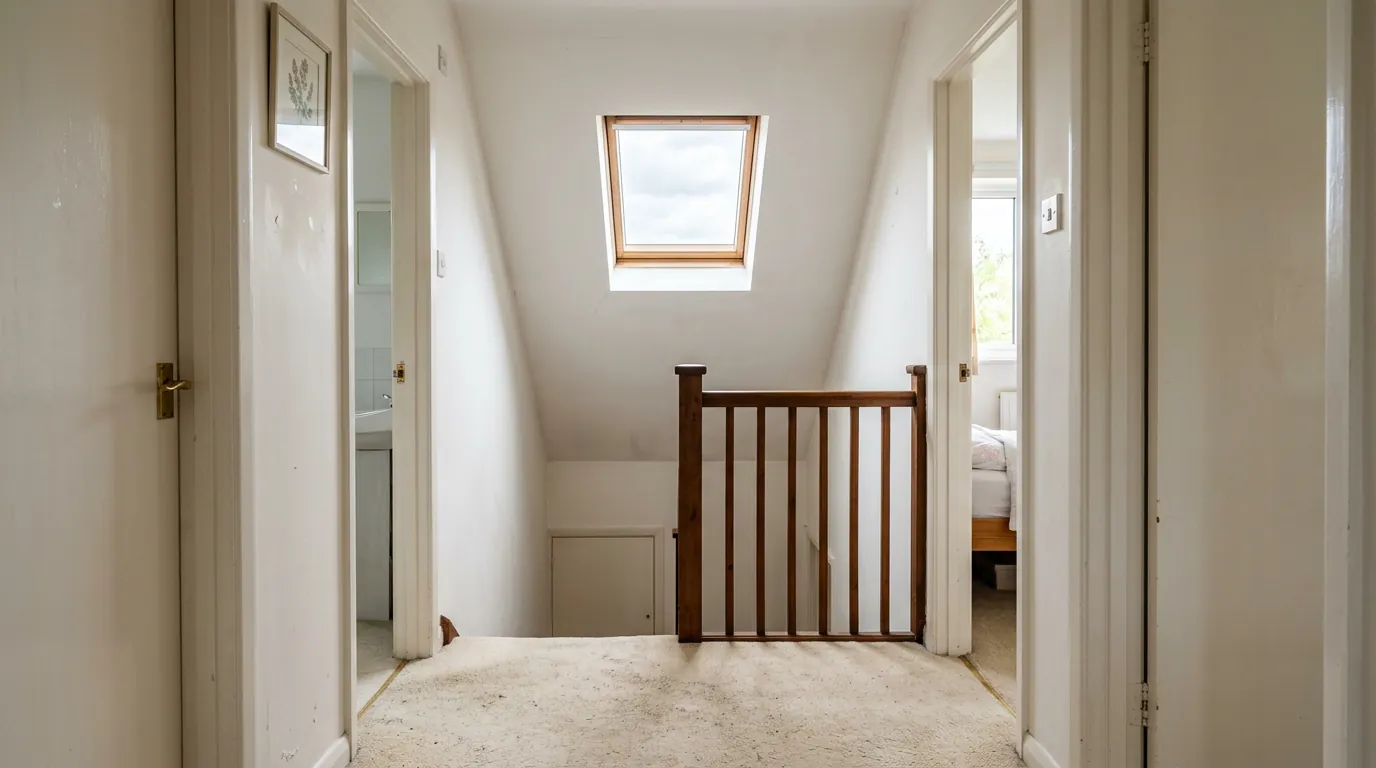
Think of the result as a daylit ceiling fitting rather than a window. It follows the day: bright at midday, dimmer in the late afternoon, gone after dark. In a narrow space like the upstairs landing of a 1970s Brighton Hill semi, that is usually all the space needs.
The five things that decide the output
Every sun tunnel works on the same principle, so the variation between one installation and the next comes down to a short list. Two of them are fixed by your house; the rest are choices made at survey.
| Factor | More light | Less light |
|---|---|---|
| Tube diameter | A wider tube with a larger dome | A narrow tube chosen only to squeeze between timbers |
| Run length | A short, direct drop from roof to ceiling | A long run through a deep loft void |
| Bends | A straight rigid tube | Several angled sections or a flexible tube |
| Roof position | An open slope with clear sky above | A dome shaded by a chimney, a taller neighbour or trees |
| Room below | A small room with pale walls | A large room with dark surfaces |
The pattern is simple: the tube is a light carrier, and every extra metre or bend costs a little of what the dome gathered. Pick the widest tube the roof allows and the straightest route to the ceiling, and the output follows.
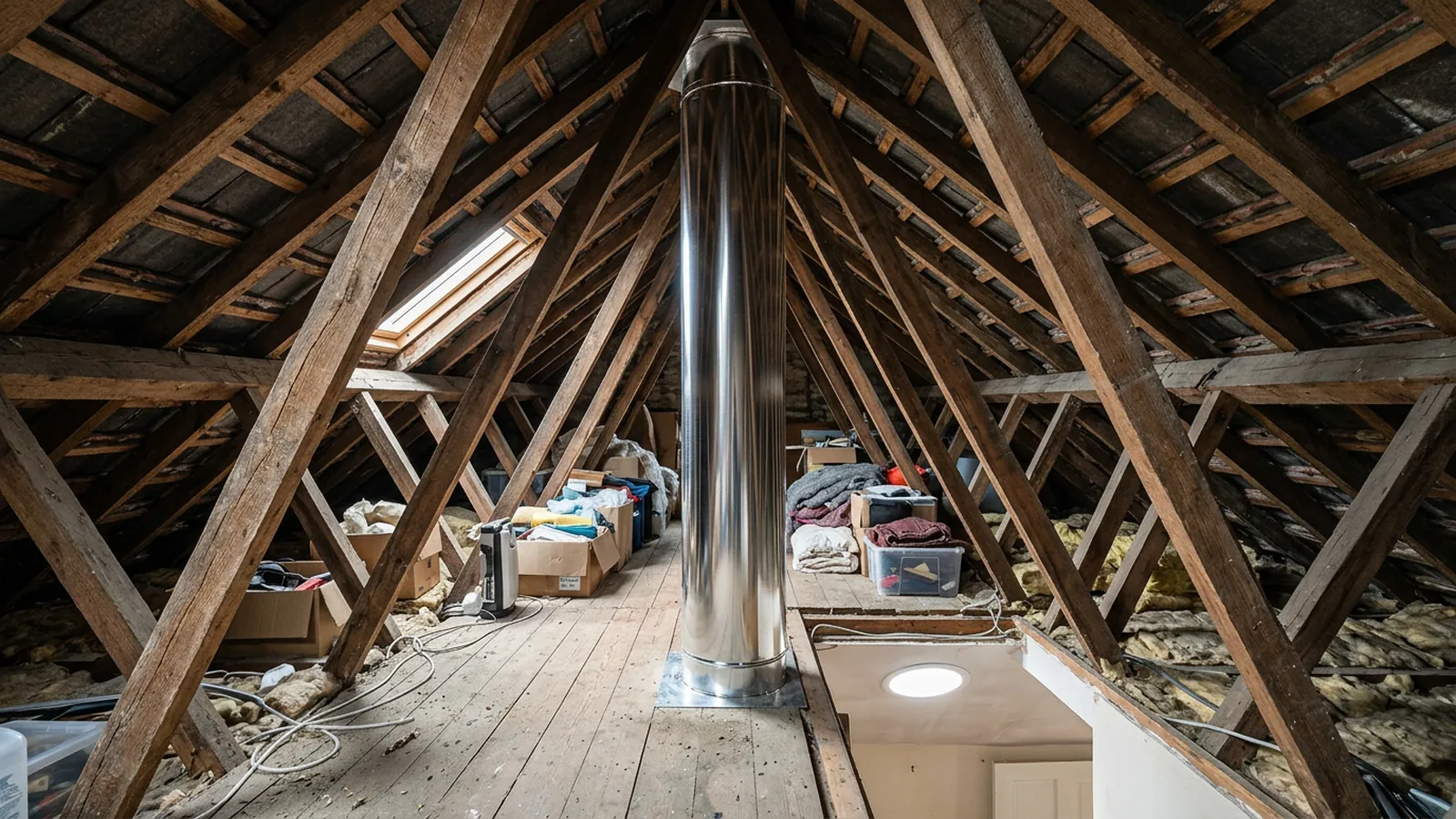
How a sun tunnel brings daylight down
- Clear dome on the roof slope, catching daylight from the sky
- Flashing, weathered into the tiles so rain runs round the dome
- Daylight reflecting off the mirror-finish lining all the way down
- Reflective tube, here a rigid straight run through the loft
- Loft insulation laid up to the tube, with an insulated sleeve round it to limit condensation
- Ceiling diffuser, spreading the light across the landing below
- Shown faint: angled elbows let the tube step round a truss or purlin, at some loss of light
Why diameter and length matter most
A wider tube has a bigger dome to collect sky and a bigger mouth to deliver it, so diameter is the single biggest lever. Length works the other way. Each reflection off the tube wall loses a small share of the light, and a longer or kinked run means more reflections before it reaches the diffuser.
On a trussed estate roof at 600mm centres, the widest tube that drops cleanly between two trusses is the natural choice, and a rigid tube keeps the most light. Flexible tubing is easier to route but gives a dimmer result over the same distance. The detailed trade-offs, including how diameter and run length combine, are set out in our guide to tube diameter, length and how much light arrives.
Sky, season and which way the roof faces
The dome collects diffuse daylight from the whole sky as well as direct sun, so the tube keeps working under cloud, just at a lower level. On a bright summer day the diffuser can glow almost as strongly as an electric fitting; on a grey December afternoon it gives a gentle background light that still beats a dark hall.
Orientation shapes the peaks more than the average. A south-facing slope catches more direct sun through the middle of the day, while a north-facing one gives a steadier, softer level. Neither rules a tube out. We cover the weather question in do sun tunnels work on cloudy days?, and the aspect question in can a sun tunnel go on a north-facing roof?
The rule: a sun tunnel follows the sky, so expect its brightness to rise and fall through the day and the year. The exception is a room lit mainly by artificial light already: there, even the dimmer winter output is a noticeable change in daytime.
What the light looks like in the room
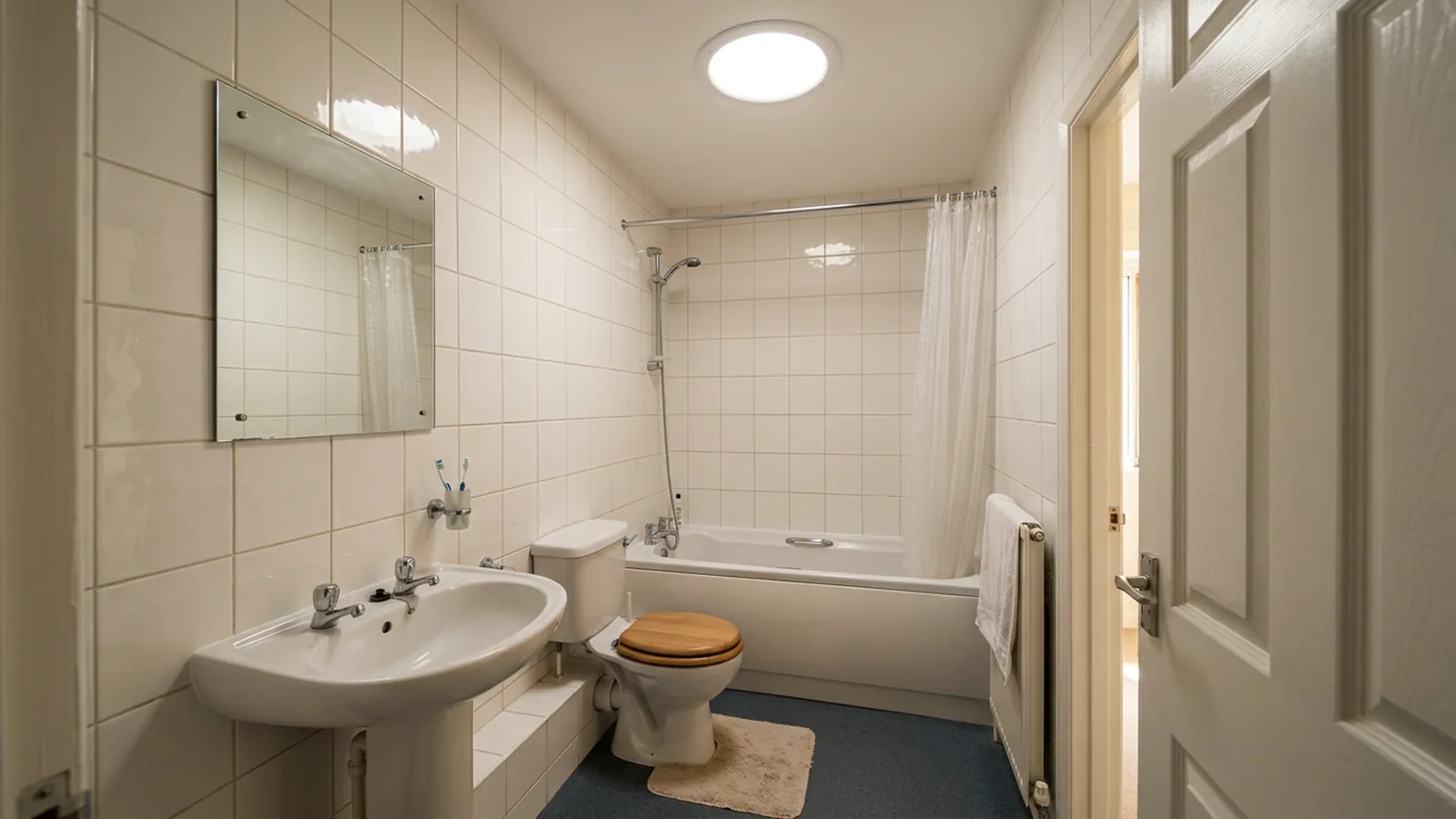
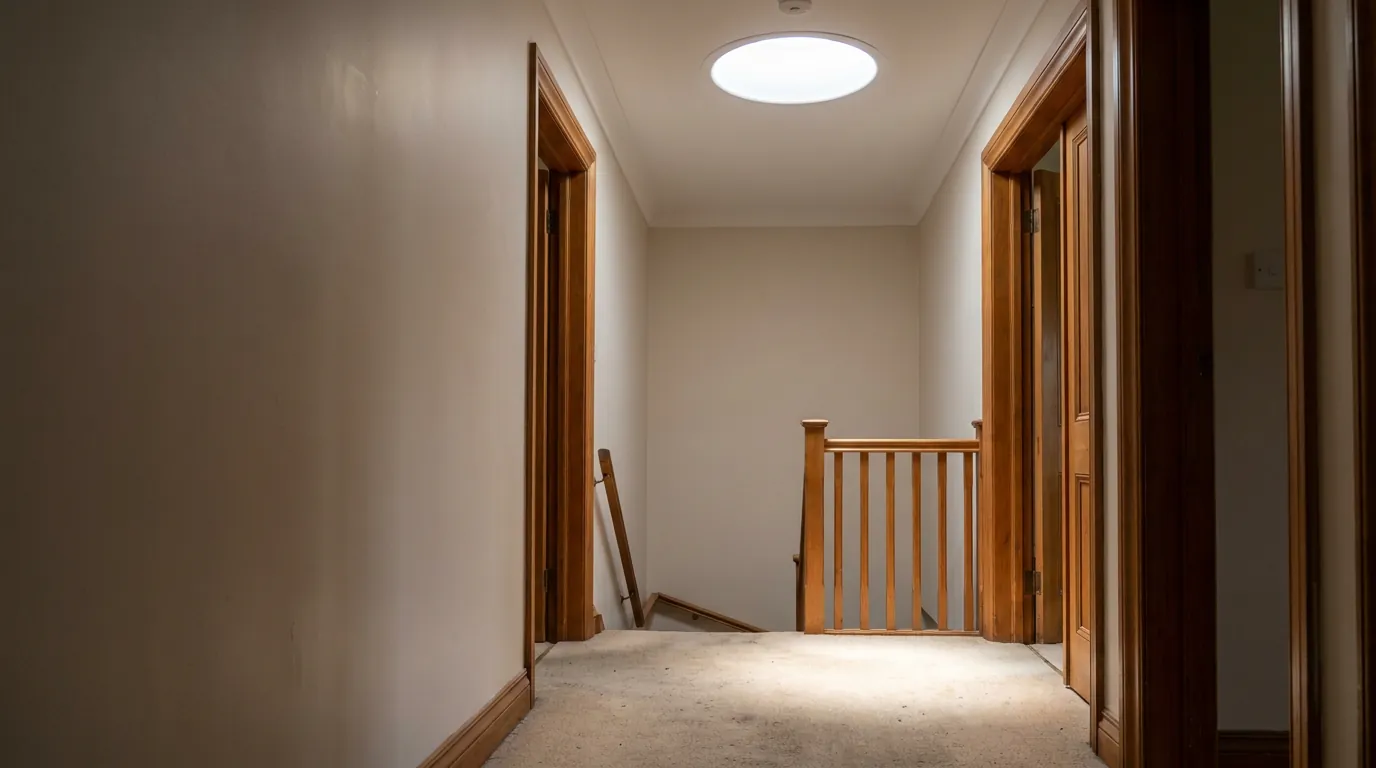
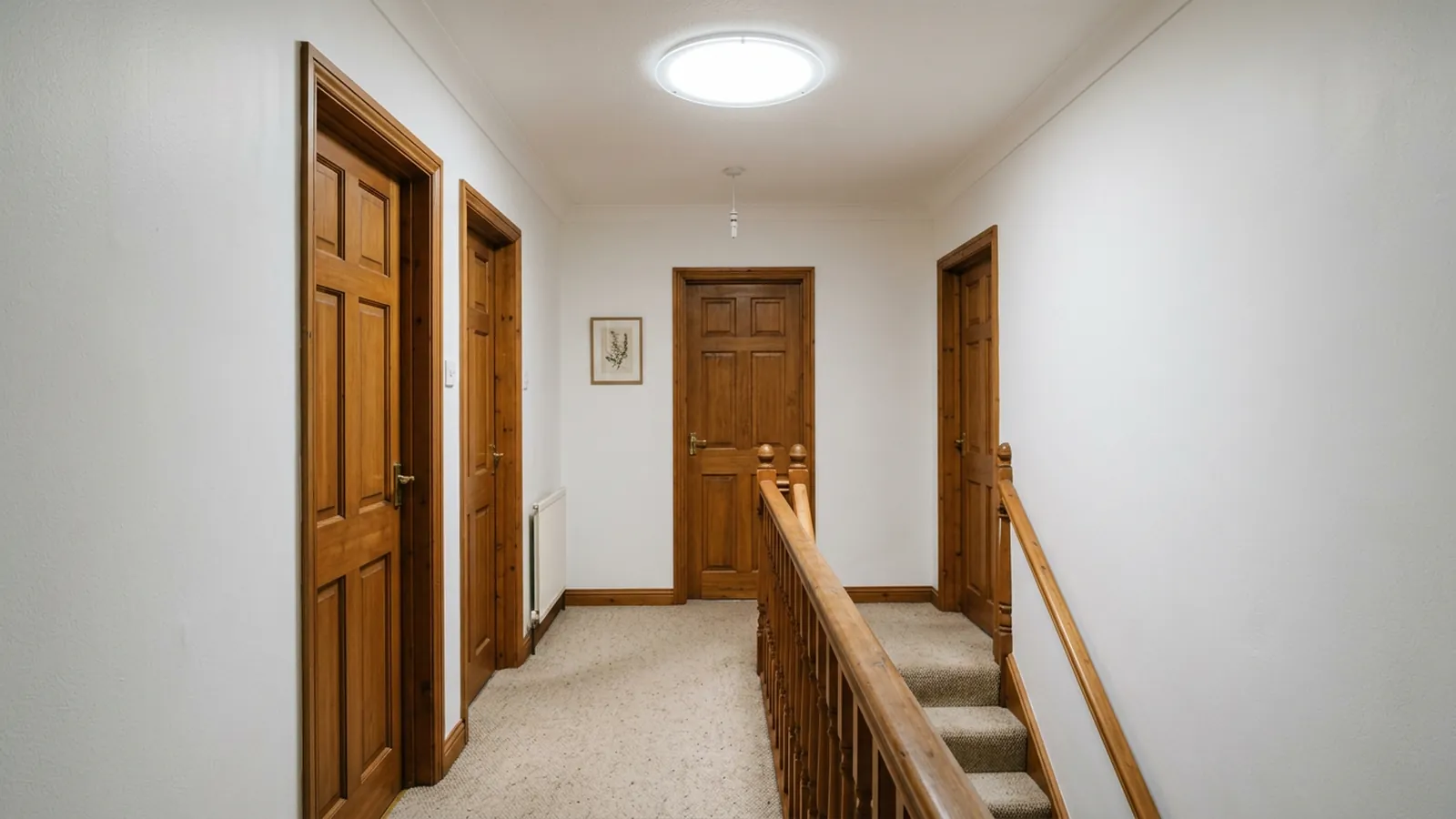
The diffuser spreads the light into an even, shadowless glow, brightest directly below and falling away towards the walls. It looks like a round ceiling light that happens to be powered by the sky. You will not see out through it, and there is no view of clouds or blue sky.
Because the pool of light is concentrated, a sun tunnel suits spaces that are small or long and narrow: a hallway, a landing, a stairwell, an en suite, a walk-in wardrobe. In a big open room, one tube lights a zone rather than the whole floor. If the space is larger, our answer on how many sun tunnels a room needs explains when a second tube makes sense.
Sun tunnel or rooflight for more light
If the aim is as much daylight as possible, a roof window or flat roof rooflight lets in far more than a tube of comparable size, because nothing stands between the glass and the room. The difference is that a skylight needs the ceiling to sit close under the roof, as it does in a loft room or a single-storey extension. A sun tunnel exists for the rooms a window cannot reach: a first-floor landing with a loft above it, or an internal bathroom in a bungalow.
So the choice is usually made by the room, not by the brightness. Our guide to sun tunnel or roof window works through which suits which space.
Getting a realistic picture before you commit
Manufacturers publish light figures measured under test conditions. They are useful for comparing one tube size with another, but your own result depends on the run through your loft and the sky over your roof. That is why we survey before we quote: we check the roof slope and anything shading it, measure the drop from roof to ceiling, look for a straight route past the trusses and any water tank, and tell you plainly how bright the result is likely to feel.
- Room. We look at the size of the space, its wall colours and where the light is wanted.
- Roof. We check the covering, the slope and whether anything overshadows the dome position.
- Route. We trace the straightest path through the loft and choose the widest tube it allows.
- Written quote. You get the tube size, route and any extras in writing, with the Building Control position noted where it applies.
The fitted tube carries a 10-year workmanship guarantee. If you would like to know what a tube would do for your own hall or bathroom, arrange a survey or call 01256 213206 and we will look at the roof and the room together.