North slopes worry people because the sun never shines straight onto them for long, and a tube that only lit the room on sunny afternoons would hardly be worth fitting. The reassurance sits in how the thing works. The dome on a sun tunnel installation is collecting daylight, which comes from the bright sky overhead as well as from the sun itself, so an open north slope still has plenty to catch.
Where the light comes from on a north slope
On any roof, daylight reaches the dome in two ways. There is direct sunlight, a strong beam from one direction that moves through the day, and there is diffuse light scattered across the whole sky by air and cloud. A north slope in southern England sees little of the first, especially between autumn and spring when the sun stays low in the south. It sees a great deal of the second, because the dome sits above the roof surface and looks up at a broad sweep of sky, not just at the view straight out from the slope.
That is why a north-facing sun tunnel still gives a usable, even light on an overcast morning, which is also the weather in which a south-facing tube loses most of its advantage. The reflective lining then carries whatever enters down to the diffuser; how it does that, and why the lining matters, is set out in how a sun tunnel carries daylight into a room.
A north slope loses the sunbeam, not the sky.
How a sun tunnel brings daylight down
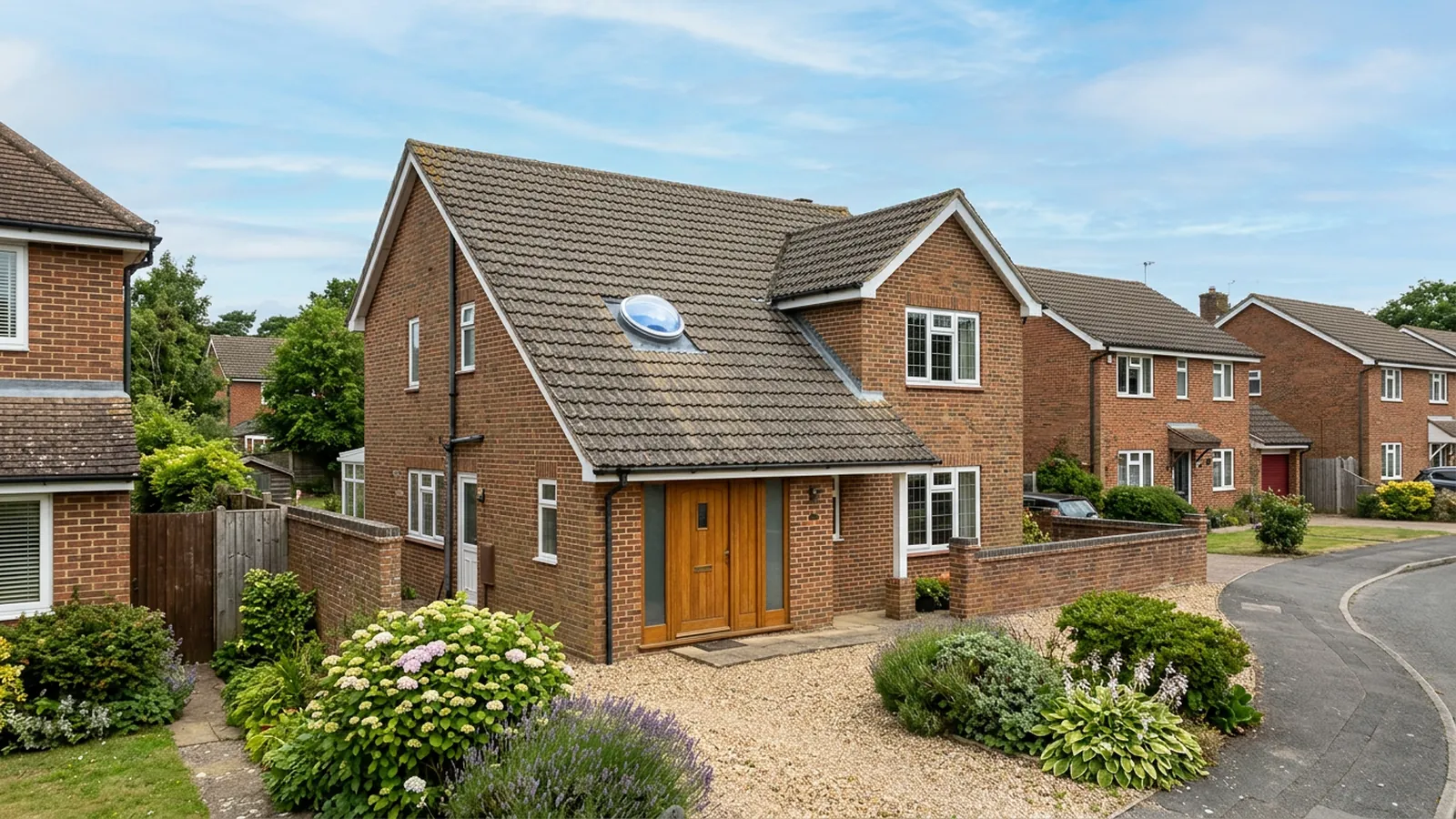
- Clear dome on the roof slope, catching daylight from the sky
- Flashing, weathered into the tiles so rain runs round the dome
- Daylight reflecting off the mirror-finish lining all the way down
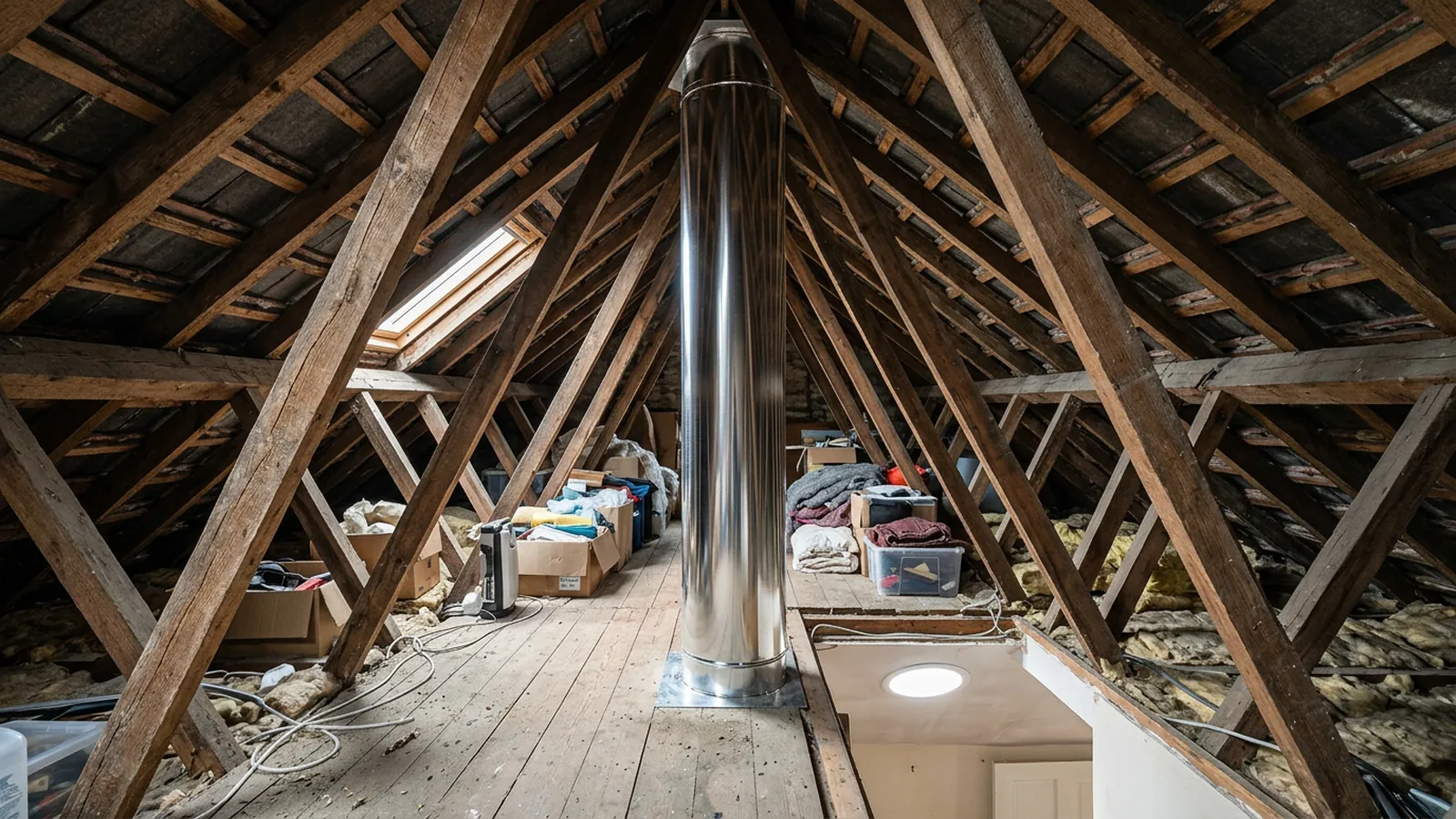
- Reflective tube, here a rigid straight run through the loft
- Loft insulation laid up to the tube, with an insulated sleeve round it to limit condensation
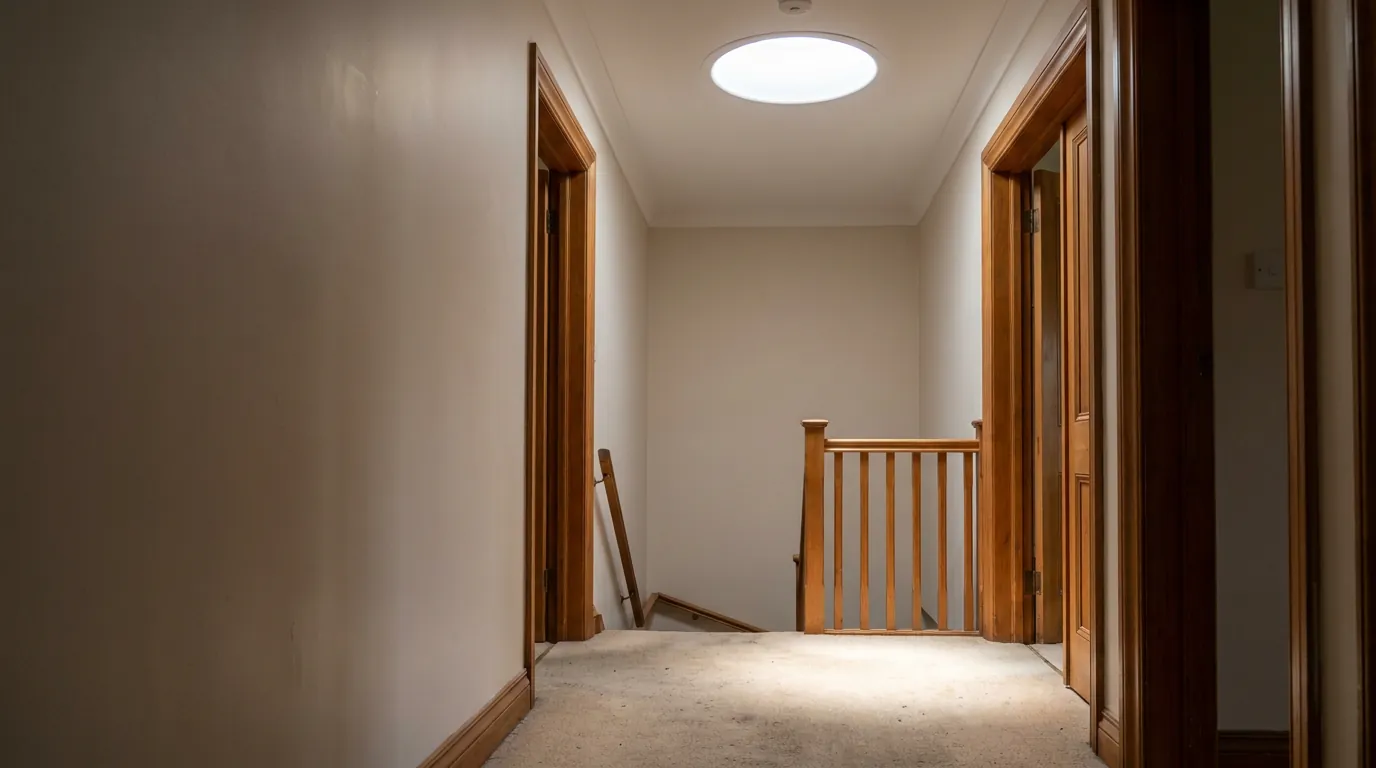
- Ceiling diffuser, spreading the light across the landing below
- Shown faint: angled elbows let the tube step round a truss or purlin, at some loss of light
How it compares with other slopes
Orientation changes the character of the light as much as the amount. The table below sets out the trade-off in general terms; it is a guide to what to expect, not a measurement of any one roof.
| Roof slope | Light it gathers | What it feels like in the room |
|---|---|---|
| South | Direct sun for much of the day plus the open sky | Brightest on clear days, with the most variation from hour to hour |
| East or west | Direct sun for half the day plus the open sky | A strong morning or evening peak, softer the rest of the time |
| North | Mostly sky light, with direct sun only early and late in summer | Lower but steadier, with little glare and little change through the day |
| Flat roof | The whole sky, with the dome level and unshaded by the slope | Close to a south slope in summer, even across the day |
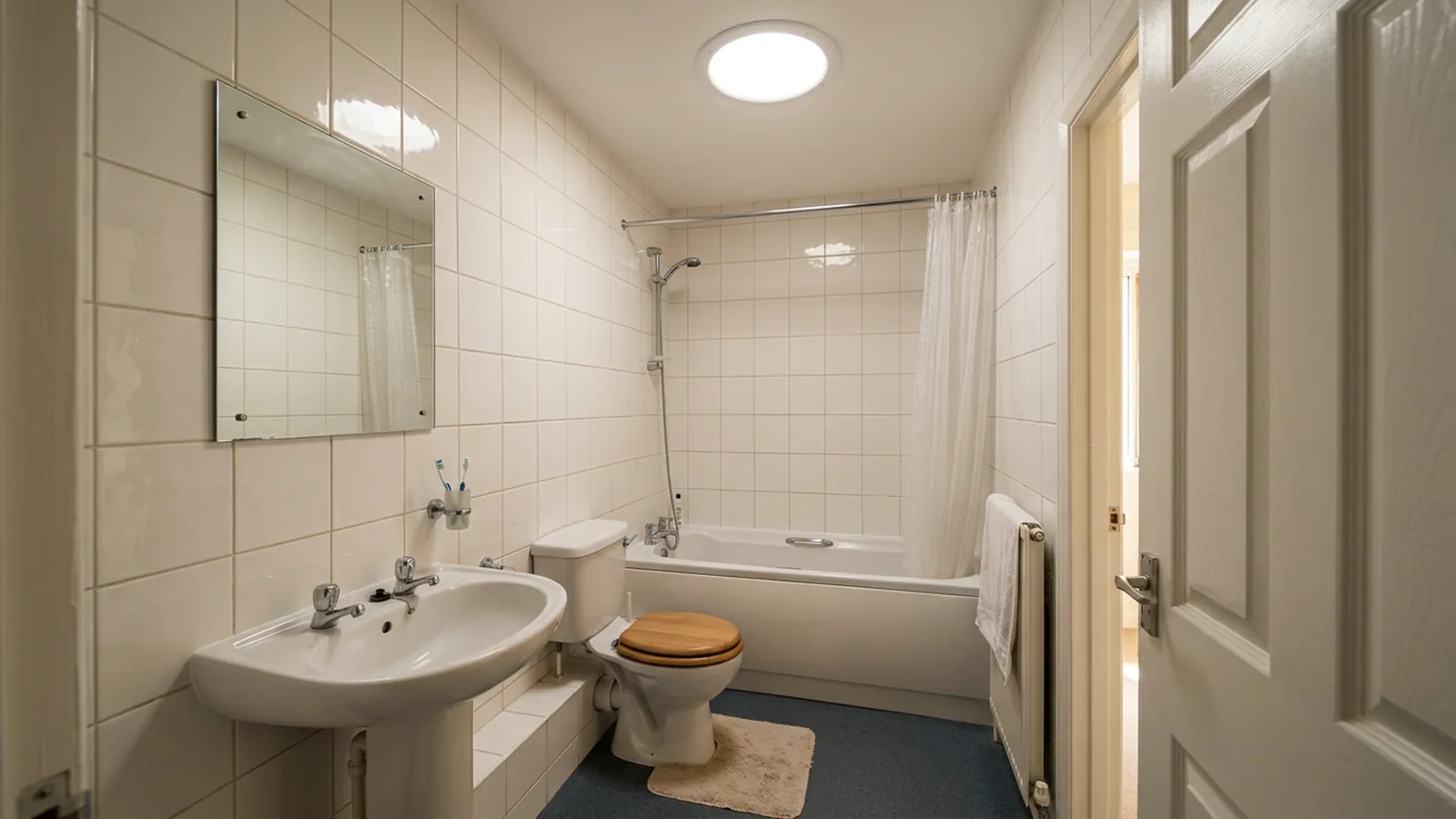
For a hallway, landing or bathroom, where the aim is to stop reaching for the switch in daytime, a steady north light often suits better than people expect. Painters chose north light for the same reason: it does not swing from dazzling to dim as clouds pass. What a single tube typically achieves in a room is covered in how much light does a sun tunnel give?
Getting more from a north-facing tube
If the north slope is the natural place for the dome, a few choices recover much of the shortfall. None of them is exotic; they are the same decisions that make any tube perform well, given more weight.
- Go wider. A larger diameter tube admits more light at the dome, and on a north slope that extra collecting area earns its place. The sizes and what each suits are compared in tube diameter, length and how much light arrives.
- Keep it short and straight. Every bend and every extra metre of tube costs some light. On a slope with less to give, a direct drop from roof to ceiling matters more.
- Place the dome high and clear. Near the ridge, the dome sees more sky and is less likely to be shaded by a neighbouring roof, a chimney or a dormer.
- Choose a rigid, highly reflective tube. Where the run allows it, a rigid tube loses less light than a flexible one over the same distance.
Putting the dome on the other slope
On a pitched roof, the room below does not decide which slope the dome goes on. In a typical estate house around Basingstoke, with a gable-ended trussed roof, a dark north-side landing can often take its light from a dome on the south slope, with the tube crossing the loft to reach the ceiling. The run is longer and usually needs angled sections, so there is a balance to strike between the better slope and the extra length and bends.
The rule: if the tube can reach the south or west slope with a modest run, that slope usually wins. The exception is a long crossing through a crowded loft, where the light lost to length and bends can outweigh what the sunnier slope adds, and a short, wide tube through the north slope gives the better result.
How far a tube can sensibly bend, and what sits in the way in a trussed loft, is answered in can a sun tunnel bend around obstacles in the loft? The trusses themselves are left whole either way, because the tube is chosen to pass between them.
Weather, seasons and what to expect
The difference between slopes is widest on a bright winter day, when a south-facing dome catches low sun and a north-facing one sees only sky. On grey days, which make up much of a Hampshire winter, the gap narrows sharply because every slope is working from the same diffuse light. In summer the sun rises and sets well to the north of east and west, so even a north slope picks up some direct light early and late. The overcast case on its own is answered in do sun tunnels work on cloudy days?
A north slope also brings less solar heat into the tube, which is worth knowing if the room below is a small bathroom or a landing that warms up in summer.
When a roof window may suit better
A sun tunnel is the answer for a room with no roof above it, or where the loft is in the way. Where the room is directly under the slope, as in a loft conversion or a room in the roof, a rooflight on the north slope gives far more light than any tube, along with a view of the sky and fresh air if it opens. For the homeowner comparing a skylight with a tube, the choice turns on the room, not on the compass, and it is laid out in the sun tunnel or roof window guide.
Checking your roof before you decide
The compass point of the slope is only one input. The pitch, the tile or slate, what shades the roof, how far the ceiling sits below it and what crosses the loft between them all shape the answer. We survey the roof before we quote, stand in the loft to trace the route, and tell you which slope and which tube size will light the room best, north side or not. When the tube goes in, the workmanship is guaranteed for ten years. If a dim north-side room is the problem, ask us to look at the roof and we will show you where the light can come from.