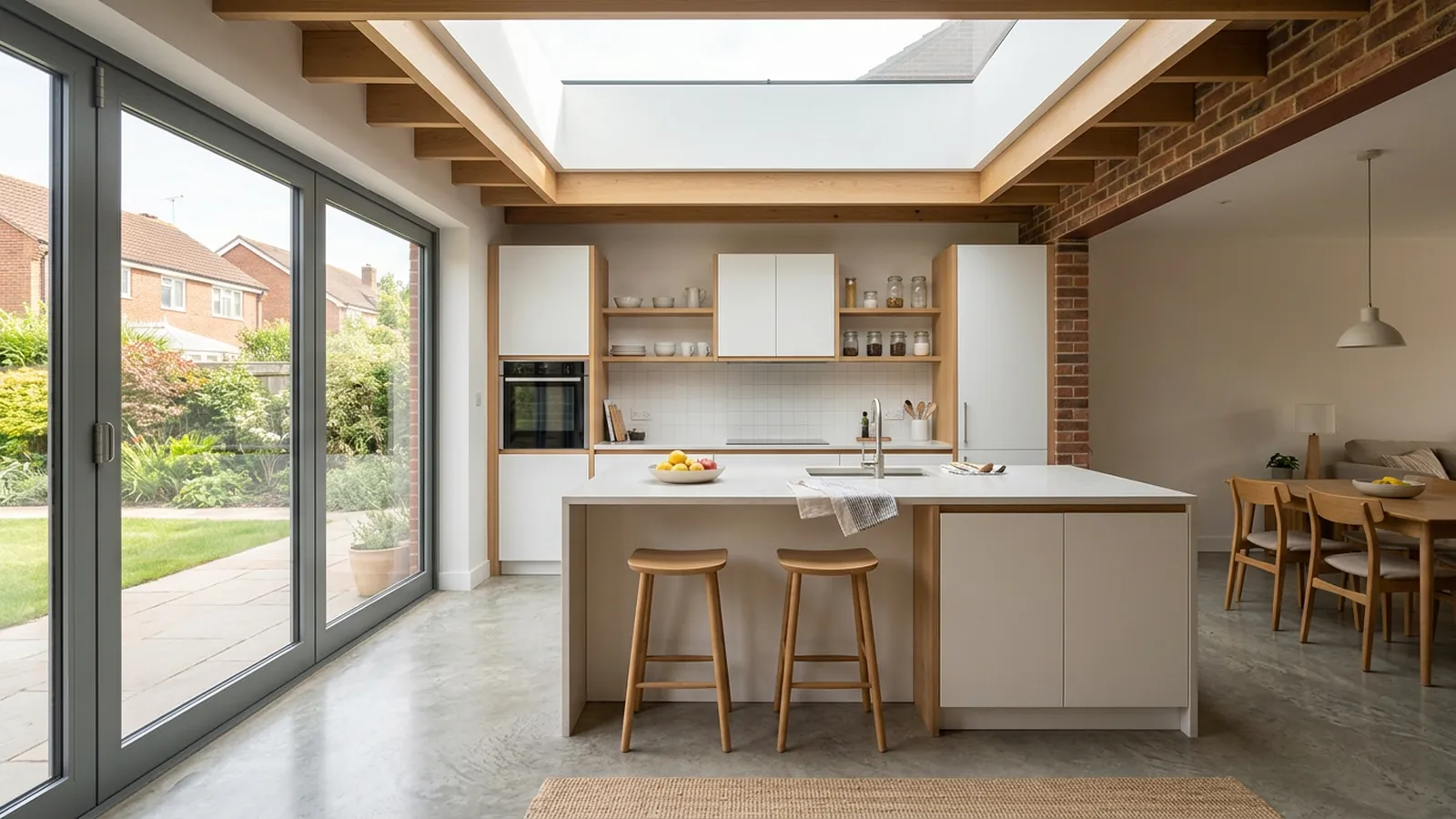
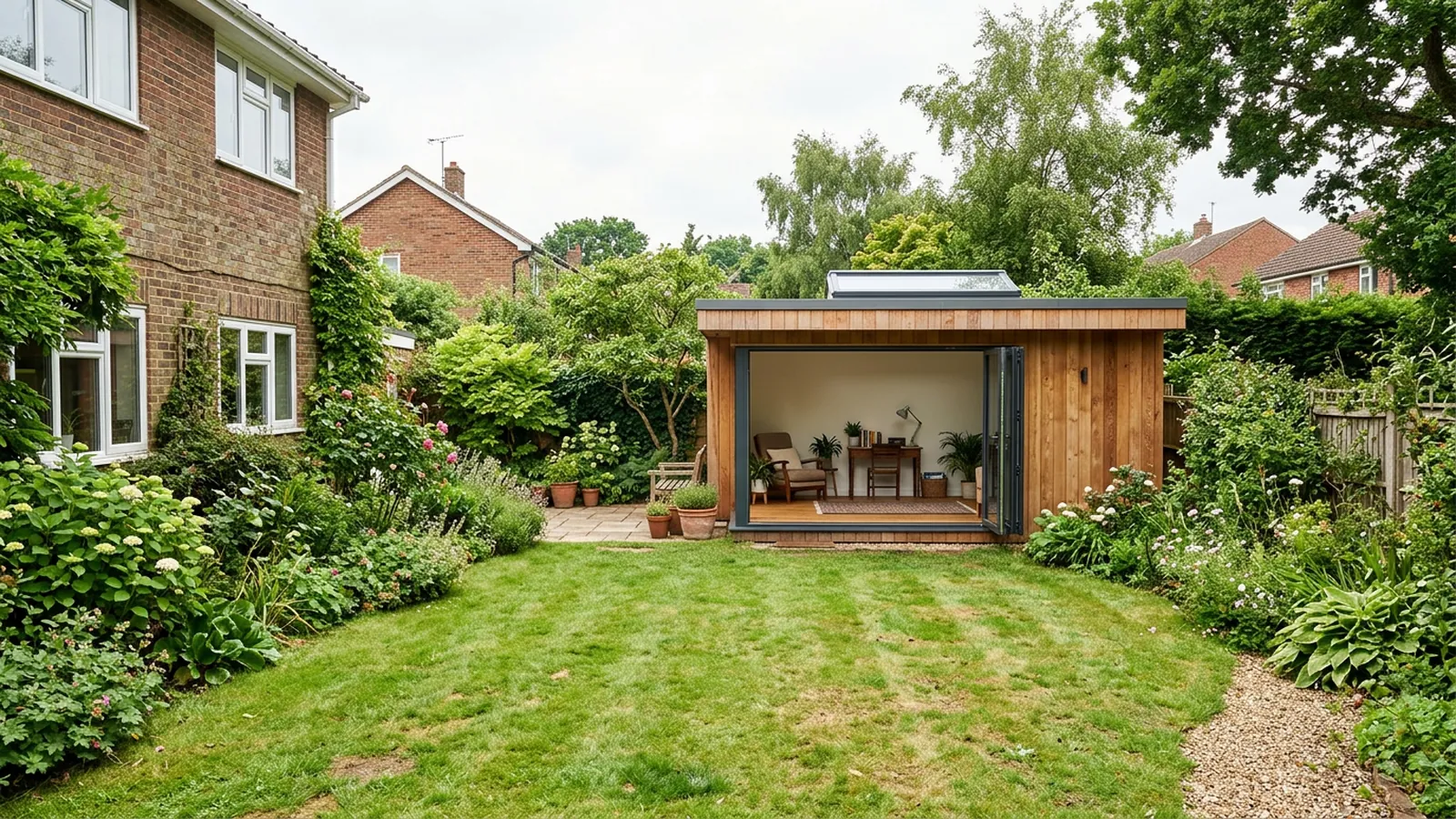
The glazing is one decision among several on a flat roof rooflight installation, and it is worth settling early because it changes the unit size, its weight and sometimes the kerb it sits on. A skylight over a kitchen extension on a Chineham semi asks something different of its glass than one over a cold garage link, so the useful answer is less "yes or no" and more "what does the third pane actually buy you here".
What the third pane changes
A triple glazed rooflight has three sheets of glass with two sealed cavities between them, usually gas filled, with a low emissivity coating on one or more of the inner faces. Adding the second cavity slows heat escaping upward through the glass, which matters on a flat roof because warm air rises straight to the ceiling and sits against the underside of the unit.
The practical effects you notice in the room are a warmer feel standing under the rooflight in winter and less condensation forming on the inner pane, because its surface stays further above the dew point. The glass does not change how the frame, the upstand or the roof around it perform, so a triple glazed unit on a poorly insulated kerb still leaves a cold edge. That weak point is covered in our guide to insulation at the kerb.
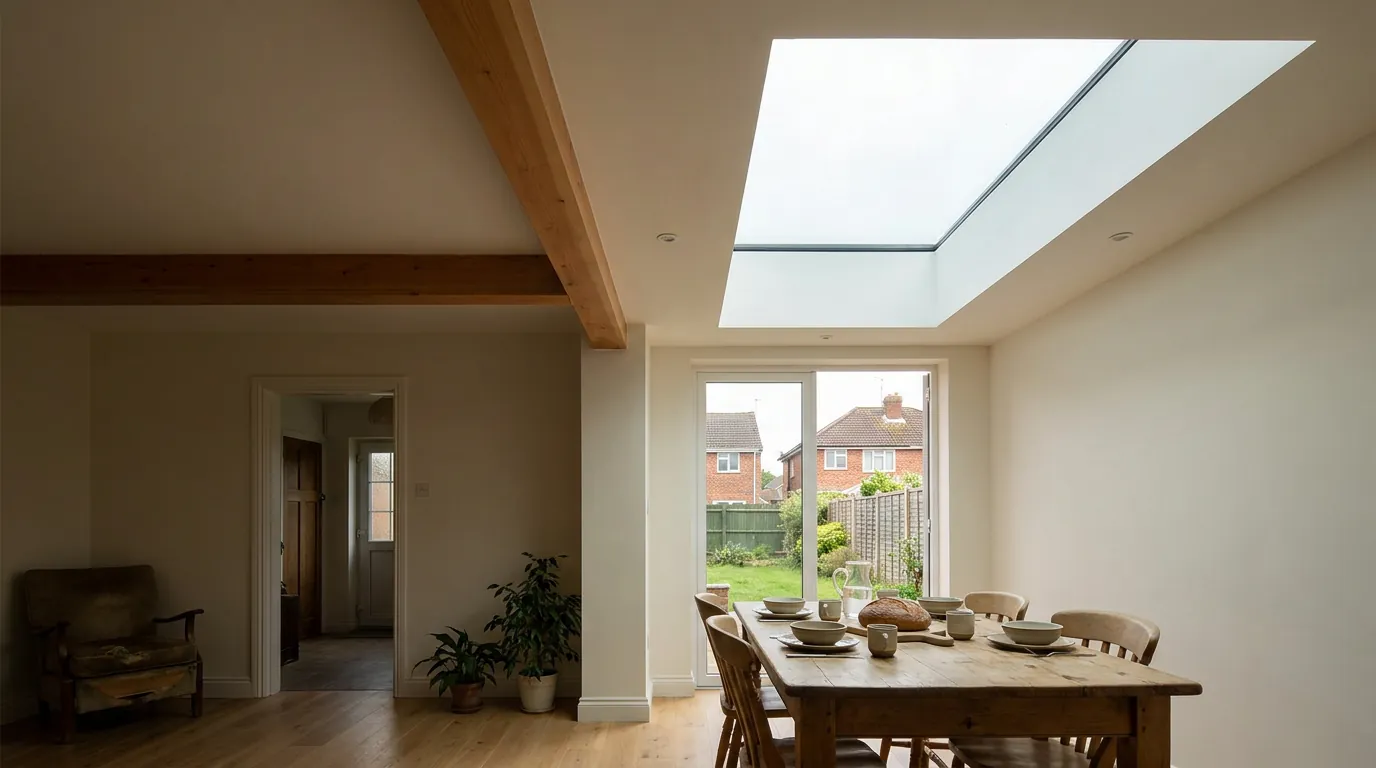
How a sealed rooflight unit works and fails
- Outer and inner glass panes, with the outer pane facing the weather
- Low-emissivity coating on one inner face, reflecting heat back into the room
- Warm-edge spacer bar holding the panes apart, filled with desiccant to soak up trace moisture
- Primary seal against each pane, backed by the secondary seal around the edge
- Dry sealed cavity, the insulating layer between the panes
- Broken edge seal: moist air gets in and the desiccant becomes saturated
- Mist and droplets trapped between the panes; they cannot be wiped off and the sealed unit needs replacing
- Inset: condensation on the room-side face of the glass is a ventilation or humidity issue, not a failed unit
Double or triple: the comparison
Both options meet the energy requirements for new rooflights when specified correctly; the choice is about comfort, weight and light. Here is how they differ in the ways that affect a flat roof.
| Factor | Double glazed | Triple glazed |
|---|---|---|
| Heat loss through the glass | Good with a low emissivity coating and gas fill | Lower, thanks to the second sealed cavity |
| Inner pane in winter | Cooler, so condensation forms more readily in a steamy kitchen | Warmer, so less misting on cold mornings |
| Weight | Lighter to lift and carry on the upstand | Heavier; the kerb and lifting plan must allow for it |
| Daylight | Slightly more light passes through two panes | A small reduction, rarely noticeable in a bright room |
| Rain noise | Softened by the glass mass | Often a touch quieter, with a laminated pane helping further |
On rain in particular, the glass is only part of the story; our answer on whether rain is loud on a flat rooflight explains what else makes a difference.
Weight, size and the kerb
A third sheet of glass adds real mass, and on a flat roof that load bears on the upstand and the joists either side of the opening. For a modest unit between joists on an estate extension it is seldom a concern. For a large single pane it becomes part of the design: the frame has to be rated for the heavier unit, the upstand has to carry it, and lifting it into place may need more hands or mechanical help.
Very large sizes are also where makers set their own limits, and some ranges cap the biggest triple glazed pane below the biggest double glazed one. If you are chasing one wide sheet of glass, read what is the largest single pane flat rooflight alongside this page before settling on a size.
The rule: choose the glazing before the kerb is built, because a heavier, deeper unit can change the upstand height and the fixings. The exception is a factory kerb supplied with the unit, which the maker has already matched to its own glazing.
Safety glass still comes first
Going to three panes does not change the rule for overhead glass. The inner pane should be laminated, so that if it ever breaks the fragments stay bonded to the interlayer rather than falling into the room, and the outer pane is normally toughened to cope with heat and impact. In a triple unit the middle pane is typically toughened too. How those glass types work, and why the order matters, is set out in the guide to laminated and toughened glass in flat rooflights.
When triple glazing earns its place
Three panes make the most sense where the rooflight sits over a room you use every day and heat, sitting under it on winter evenings: a kitchen diner in a rear extension, a snug or a home office in a flat roofed link. It also suits a large unit, since the bigger the glass area, the more the lower heat loss adds up across the room.
Over a utility room, a lean-to store or a garage link that is not kept warm, a good double glazed unit usually does the job, and the saved weight and cost can go into a better kerb or a larger opening instead. A new rooflight is controlled work under the Building Regulations, whichever glazing you pick, and do flat rooflights need Building Regulations approval explains where the notification fits in. If energy performance is your main reason for the change, our energy efficient rooflights page looks at the whole unit rather than the glass alone.
Settling it for your roof
At the survey we look at the room, the joists, the existing or planned upstand and how the roof drains, then set out the double and triple options in writing with the reasons for each. Glazing specification, unit size, kerb type and access all shape the quote, and we list them so you can see what the third pane changes. The fitting is covered by a 10-year workmanship guarantee, which is not insurance backed.
If you are weighing up the glass for a new opening or swapping an older unit, arrange a survey of your flat roof and we will measure it before recommending either.