The honest answer depends less on the glass than on where the roof sits and what falls onto it. Our flat roof rooflight page covers the unit and how it is fitted; this answer is only about keeping the top of it clear so the room below keeps its light, and doing that without putting anyone at risk on the roof.
A skylight on a flat roof sees the sky all day, which is exactly why it lights a kitchen so well, and also why it collects whatever the wind and the trees drop. Knowing what builds up, and what it does to the glass and the kerb, makes the timing easy to judge for yourself.
What builds up on the glass and why
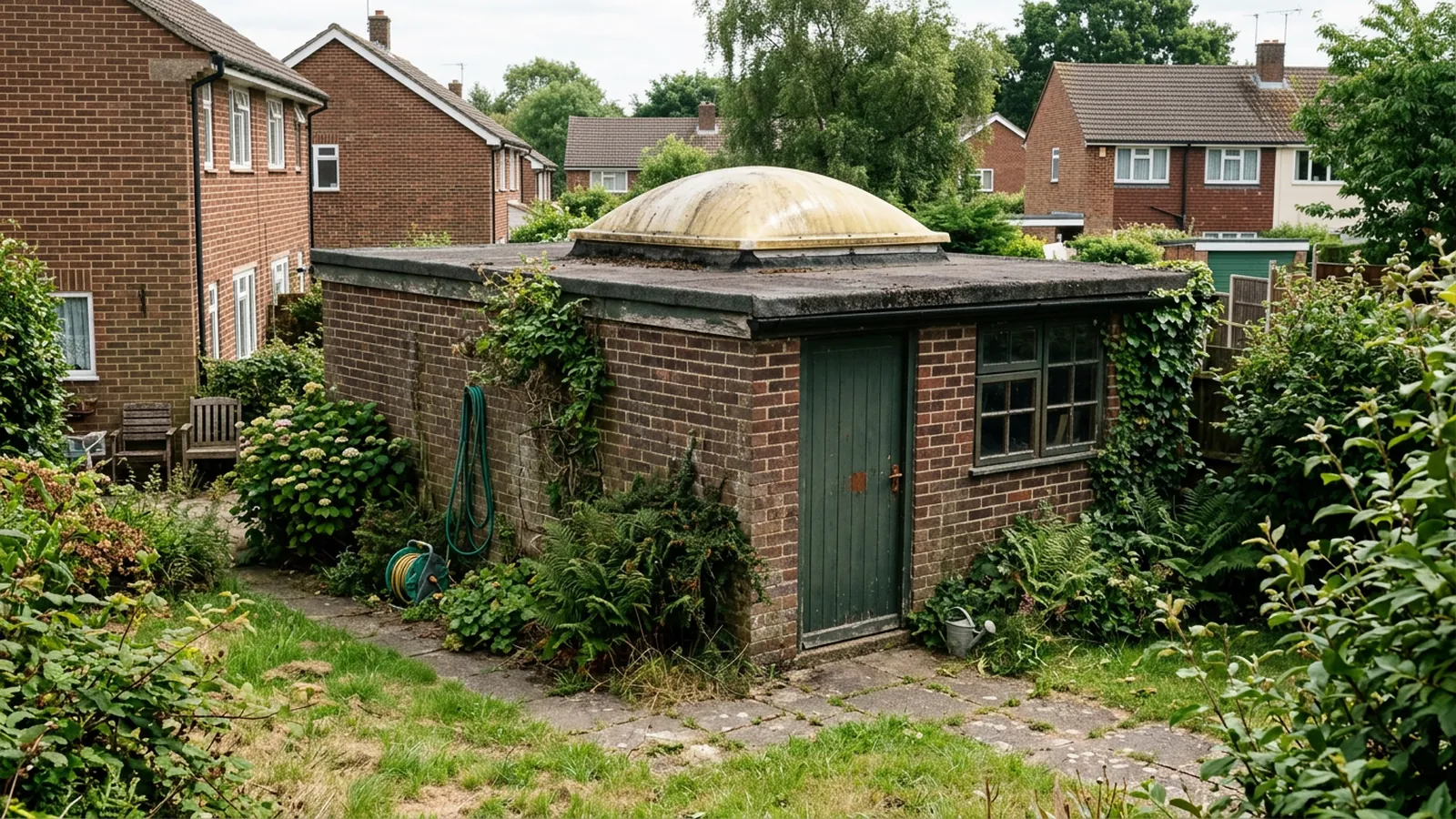
Four things settle on flat roof glazing around Hampshire and Berkshire. Leaves and seed cases from nearby trees arrive in autumn and in late spring. Pollen and fine dust leave a yellow or grey film in early summer. Algae and moss get a start in shaded, damp corners where the glass meets the frame. And rainwater itself, drying off the pane, leaves a faint ring of whatever it carried.
The glass on a well specified unit is laid to a slight fall so rain runs off rather than standing, which carries a lot of that grime away on its own. Our guide on why a flat rooflight is never actually flat explains that fall. Where the fall is shallow, or debris has piled against the upstand, water lingers and the tidemarks form faster; why water sits on a flat rooflight looks at the causes.
Flat rooflight on an insulated upstand
- Double glazed rooflight, set to a slight fall so rain runs off the glass
- Upstand (kerb): a timber kerb with insulation on its outer face
- Membrane dressed up the upstand and over the top, sealed under the rooflight frame
- Waterproof membrane covering the roof, falling towards the gutter outlet
- Insulation laid over the deck, keeping the structure warm
- Roof deck on tapered firrings, which create the fall
- Joists, trimmed around the opening with trimmer joists
- Plasterboard reveal lining the opening, meeting the ceiling below
Signs it is time to clean
You rarely need to go up to find out. Stand under the rooflight on a bright day and look straight up.
| What you notice | Likely cause | What to do |
|---|---|---|
| Dark shapes at one edge | Leaves or twigs caught against the frame | Clear them, and check the roof outlet or gutter nearby at the same time |
| Even grey or yellow haze | Dust and pollen film | A plain water wash and a soft cloth or squeegee |
| Green tinge in a corner | Algae starting where the glass stays damp | Wash gently and remove whatever keeps that corner shaded or wet |
| Ring marks after rain | Water drying on the pane rather than running off | Wash off and keep the low edge of the kerb clear of debris |
| Mist between the panes | The sealed unit has failed, so the fault is inside the glass | No amount of cleaning shifts it; the glazing unit needs replacing |
That last row catches people out. Condensation trapped inside a double or triple glazed unit is not dirt, and it means the seal has gone. Our misted rooflight replacement page explains the options.
How to clean it without going on the roof
The glass on a standard flat rooflight is not designed to be stood on, and a flat roof is still a drop. Where the roof can be reached from an upstairs window or a low wall, a long handled soft brush and a hose on a gentle spray do most of the work from a safe place.
- Pick a cool, dull day. Water dries slowly, so it rinses rather than leaving fresh marks.
- Lift loose debris first. A soft brush or gloved hand, working from a ladder at the roof edge, never kneeling on the glass.
- Wet the whole pane. Plain water, or water with a little mild washing up liquid, loosens the film.
- Wipe with the fall. A soft cloth or rubber squeegee, drawing water towards the low edge so it runs off.
- Rinse and leave it. A final rinse with clean water, then let the fall do the rest.
Skip abrasive pads, scouring powder, solvents and pressure washers. They can scratch coatings on the outer pane and force water at the gaskets and flashing at the kerb, which are sealed against rain, not against a jet.
The rule: clean from a ladder or a window, never from on top of the glass. The exception is a walk-on rooflight built for foot traffic, and even then only as its maker allows; see our walk-on rooflight page for how those differ.
Self-cleaning glass and what it changes
Some makers offer an outer pane with a coating that breaks down organic grime in daylight and lets rain sheet off rather than bead. On a flat rooflight with a sensible fall it keeps the glass clearer for longer between washes. It does not lift leaves, moss or bird droppings, so a check in autumn still pays. If you are choosing a new unit, the coating is one of the glazing options worth asking about alongside the safety glass specification when you choose between laminated and toughened glass for the panes.
The kerb and the roof around it
Keeping the glass bright is half the job. The ring of roof covering around the kerb, whether GRP, felt or EPDM, is where leaves and silt gather, and a pile of wet debris against an upstand holds water there far longer than the covering was meant to see. When you clear the glass, sweep the few feet of roof around it and make sure the outlet or gutter the roof drains to is running free. The guide to drainage falls around a flat rooflight shows how water should move past the unit.
Opening units need a little more. On a hinged or electric rooflight, check the rain sensor, if there is one, is clean, and that nothing lodged in the frame stops the vent closing snugly. Regular care of this kind also helps the unit reach its full working life, which our answer on how long a flat rooflight lasts goes into.
When a clean is not the answer
If the glass stays hazy after washing, the pane is scratched, the frame has lost its finish or there is condensation between the panes, the rooflight has reached the point where replacing it gives you back more light than any cloth will. We look at the kerb, the covering and the size of the opening before recommending anything, and a new unit fitted by us comes with a 10-year workmanship guarantee. If your skylight is in that state, ask us to survey it and you will get a written quote once we have seen the roof.