A puddle on the glass is one of the easiest things to spot from the kitchen below, and it is worth understanding before deciding anything. On our flat roof rooflight installation page we start every job from the roof itself: the deck, the falls and the kerb the unit will sit on. Water pooling on a flat rooflight almost always traces back to one of those three.
This answer sets out what makes water stay put, how to read what you see after rain, and what a correctly set skylight looks like on a flat roof.
Flat on the drawing, angled on the roof
The name misleads. A flat rooflight is meant to be installed with a slight tilt, so that rain slides off the glass towards the roof's own drainage. That tilt comes either from an angled kerb, from a unit whose glass is set at a fall inside its frame, or from both. Each maker states a minimum pitch for its product, and below it the glass cannot clear itself. The reasoning behind that tilt, and how makers build it in, is covered in our guide on why a flat rooflight is never actually flat, and the direct figure question is answered in what is the minimum pitch for a flat rooflight?
So when water sits on the pane, the first thing to ask is simple: where did the fall go?
How a roof window is weathered into a tiled roof
- Sash: the opening glazed unit, fitted last and clipped into the frame
- Flashing kit: head, side and bottom pieces, profiled for tiles or a lower profile for slate, with the bottom apron dressed over the tiles below
- Tiles cut and refitted around the opening so the flashing can lap over them
- Roof window frame, fixed with brackets to the battens and rafters
- Battens cut around the opening, with a trimming batten at the head, fixed across the rafters
- Underlay collar dressed to the frame and lapped into the roof underlay, with a drainage gutter over the head
- Insulation collar packed around the frame to close the gap to the roof structure
- Internal lining: plasterboard reveals taken back to the frame and finished inside
Five reasons the glass holds water
| Cause | What you notice | Where it comes from |
|---|---|---|
| Level kerb | Water spread across the middle of the pane, drying slowly from the edges inwards | A timber upstand built square to a level deck, with a unit that relies on the kerb for its fall |
| Kerb angled the wrong way | A band of water along the edge nearest the house wall | The fall set towards the building rather than towards the roof outlet |
| Raised frame lip | A thin strip of water trapped against the lower frame, leaving a dirty line | A framed unit whose rim stands proud of the glass on the low side |
| Settled roof deck | Pooling that was not there when the unit was new | Joists or decking that have deflected, tipping the kerb back towards level |
| Large pane | A shallow pool towards the centre on a big single sheet | A wide span of glass at too shallow a fall for its size |
More than one can apply at once. An older extension with a level timber upstand and a framed unit can show both a central pool and a strip against the frame.
Reading the marks it leaves behind
Standing water does not stay clean. As each puddle dries it leaves dust, pollen and mineral residue in a ring, and after a season the outline of the pool is drawn on the glass. That pattern is useful, because it shows where the low point is. A ring in the centre points to too little fall overall; a line hugging one frame edge points to the frame or to a kerb angled the wrong way.
Green or dark staining at the lower edge is the same story told over a longer time: water lingering where it should have run off. Our answer on how often a flat rooflight should be cleaned explains why pooled glass needs more attention than glass that sheds its water.
Why it matters beyond the look
A few beads left after rain do no harm, and a clean coating on the glass will not change the physics of a level surface. A puddle that sits for days is a different matter. It holds dirt against the seals and the frame edge, it keeps the lower perimeter wet for longer than the maker intended, and in winter it can freeze on the glass. Over years, that is the kind of exposure that shortens the life of the sealed unit, which is why our answer on how long a flat rooflight lasts puts installation fall near the top of the list.
The rule: the rooflight should shed water in the same direction as the roof around it. The exception is none at all: a unit that drains towards a wall, or back onto a level area of deck, is set up to hold water somewhere.
How the roof around it plays a part
The glass is only half the picture. Rain leaving the rooflight lands on the flat roof, and that roof needs its own fall to carry the water to a gutter or outlet. If the deck around the kerb is level, or has a dip on the upper side, water gathers against the upstand and never reaches the drainage. How falls are planned so the water passes the rooflight rather than meeting it is set out in our guide to drainage falls around a flat rooflight.
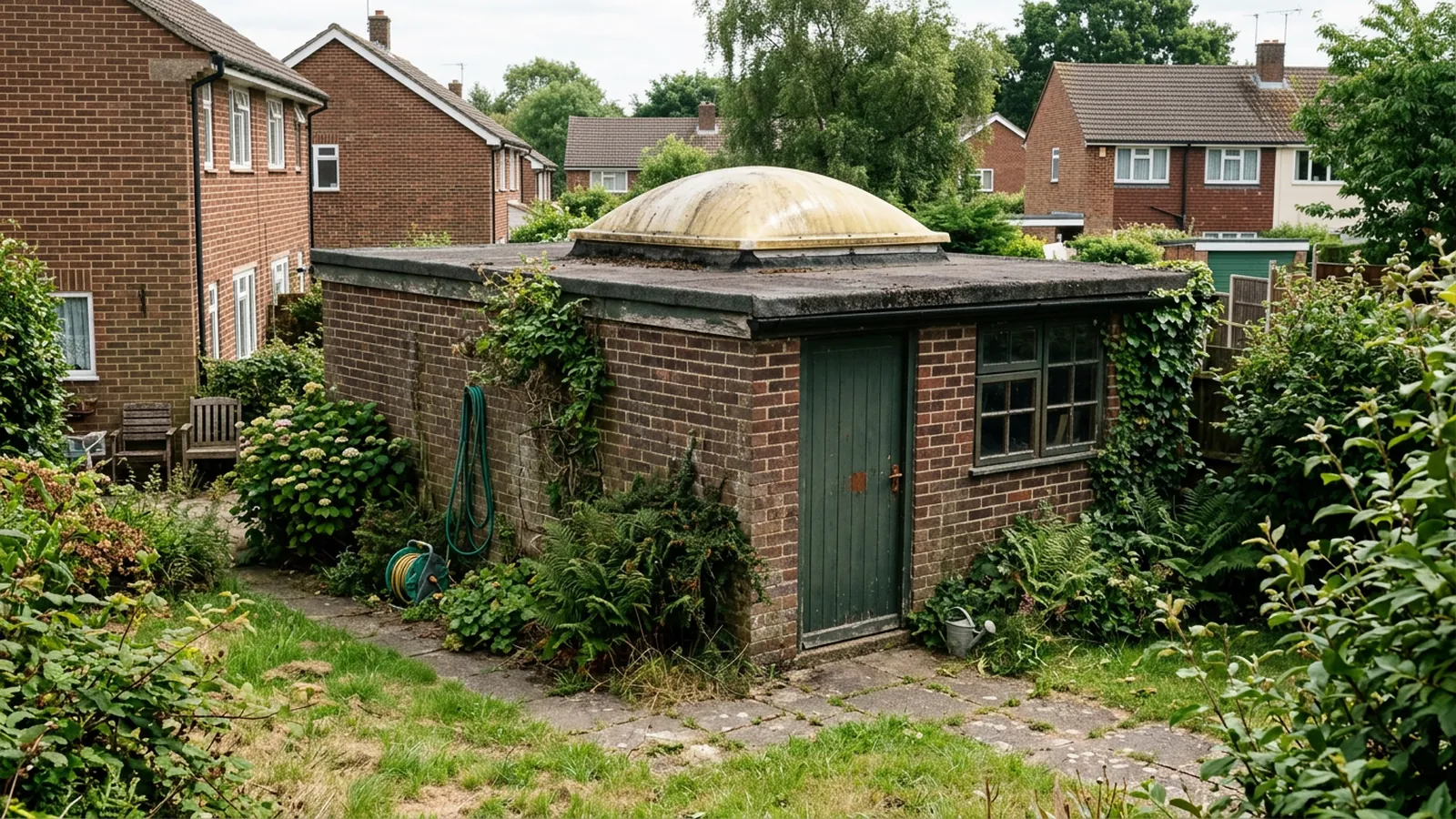
On the single storey extensions and garage roofs found across the estates around Basingstoke, a deck that has settled slightly over the years can undo a fall that was right on the day. That is why the whole roof matters, not just the frame.
What changes when a unit is set correctly
When a flat rooflight is replaced or fitted new, the order of decisions puts the fall first.
- Check the deck. Measure which way the existing roof falls and whether it has sagged near the opening.
- Choose the kerb. An angled upstand, or a factory kerb built with the fall included, sets the tilt before the glass goes on. Our answer on whether a flat rooflight needs a kerb covers that choice.
- Match the unit. Pick glass whose design suits the fall available, with a low edge that lets water leave rather than a lip that holds it.
- Point it the right way. Set the fall towards the roof outlet, away from the house wall.
- Test it. Run water over the finished glass and watch where it goes.
Swapping in a new skylight on the same level kerb gives the same puddle, so where a kerb is the cause, the kerb is part of the job. Where the extension is notifiable, the Building Control paperwork comes with our installation, and the finished work carries a 10-year workmanship guarantee that is not insurance backed.
If rain is sitting on your rooflight and you want to know whether it is the kerb, the frame or the roof, ask us to look at the roof first; we survey before we quote, and the fall is one of the first things we measure.