A sun tunnel has no opening sash and no blind rail of its own, which surprises people who are used to a roof window. The light arrives through a sealed dome on the roof, runs down a reflective tube and spreads out through a diffuser in your ceiling. Our sun tunnel installation service treats the dimmer as a choice made at survey, alongside the tube size and the route through the loft, because it lives inside the tube and is easiest to fit on the day the tube goes in.
This page covers what a sun tunnel dimmer is, which rooms tend to want one, how it is worked, and what happens if you would like one added to a tube that is already there.
Why the light keeps coming
A skylight or rooflight in the slope can take a blackout blind, because the glazing sits in a frame you can reach from the room. A sun tunnel is different: the dome is out on the tiles and the ceiling diffuser is sealed to stop warm, damp air from the room getting into the tube. There is no frame at ceiling level to hang a blind from, and a cover taped over the diffuser looks untidy and traps moisture against the lens.
So the light carries on until the sun goes down. In a hallway or a utility room that is the whole point. In a bedroom, a nursery or an en suite off the main bedroom, a bright disc in the ceiling at five o'clock on a June morning is less welcome.
The rule: if the tube will light a room where anyone sleeps, plan for a dimmer at the survey. The exception is a space you only walk through, such as a landing or stairwell, where daylight at dawn is harmless and a dimmer adds cost for little gain.
How a sun tunnel brings daylight down
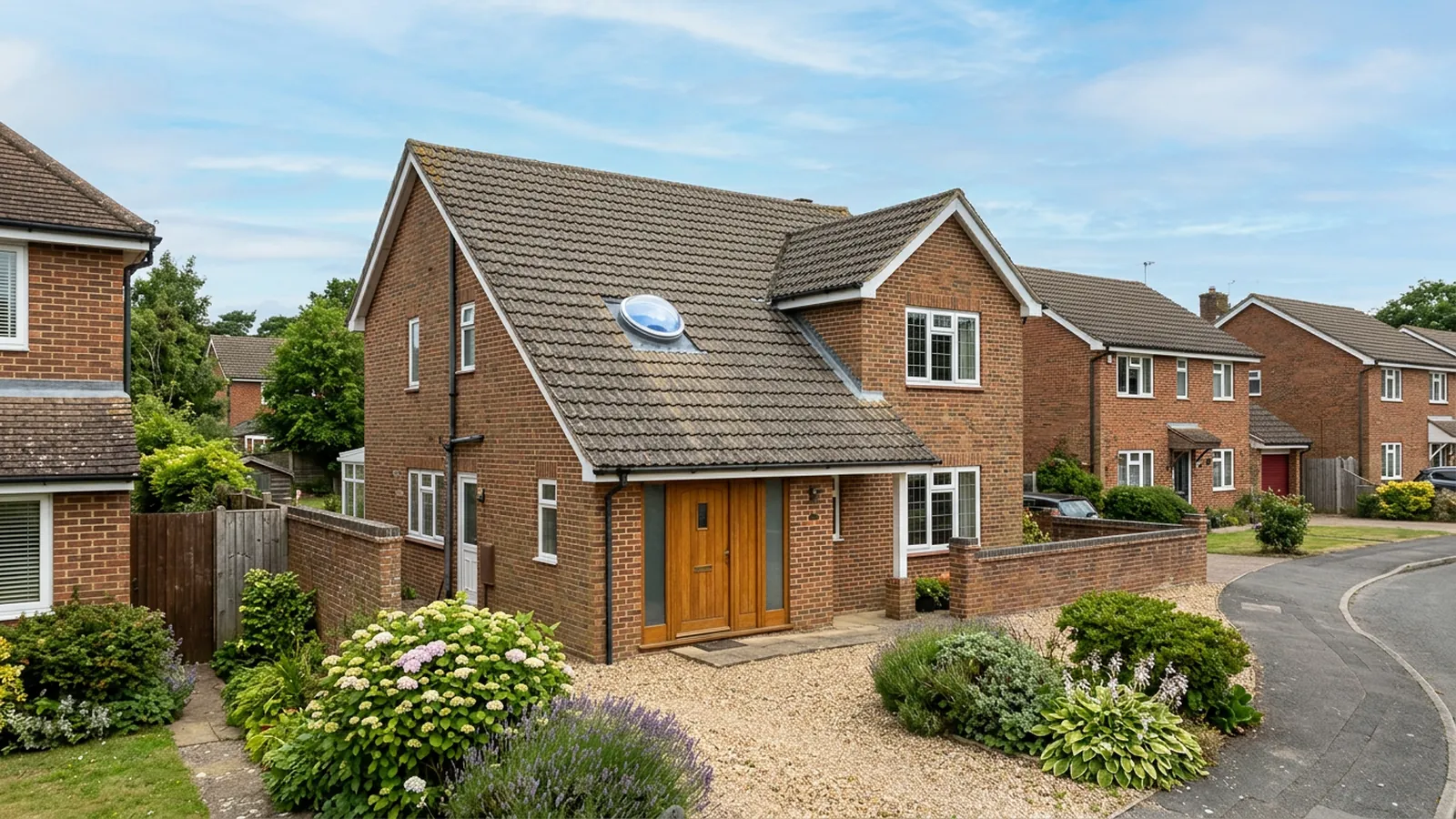
- Clear dome on the roof slope, catching daylight from the sky
- Flashing, weathered into the tiles so rain runs round the dome
- Daylight reflecting off the mirror-finish lining all the way down
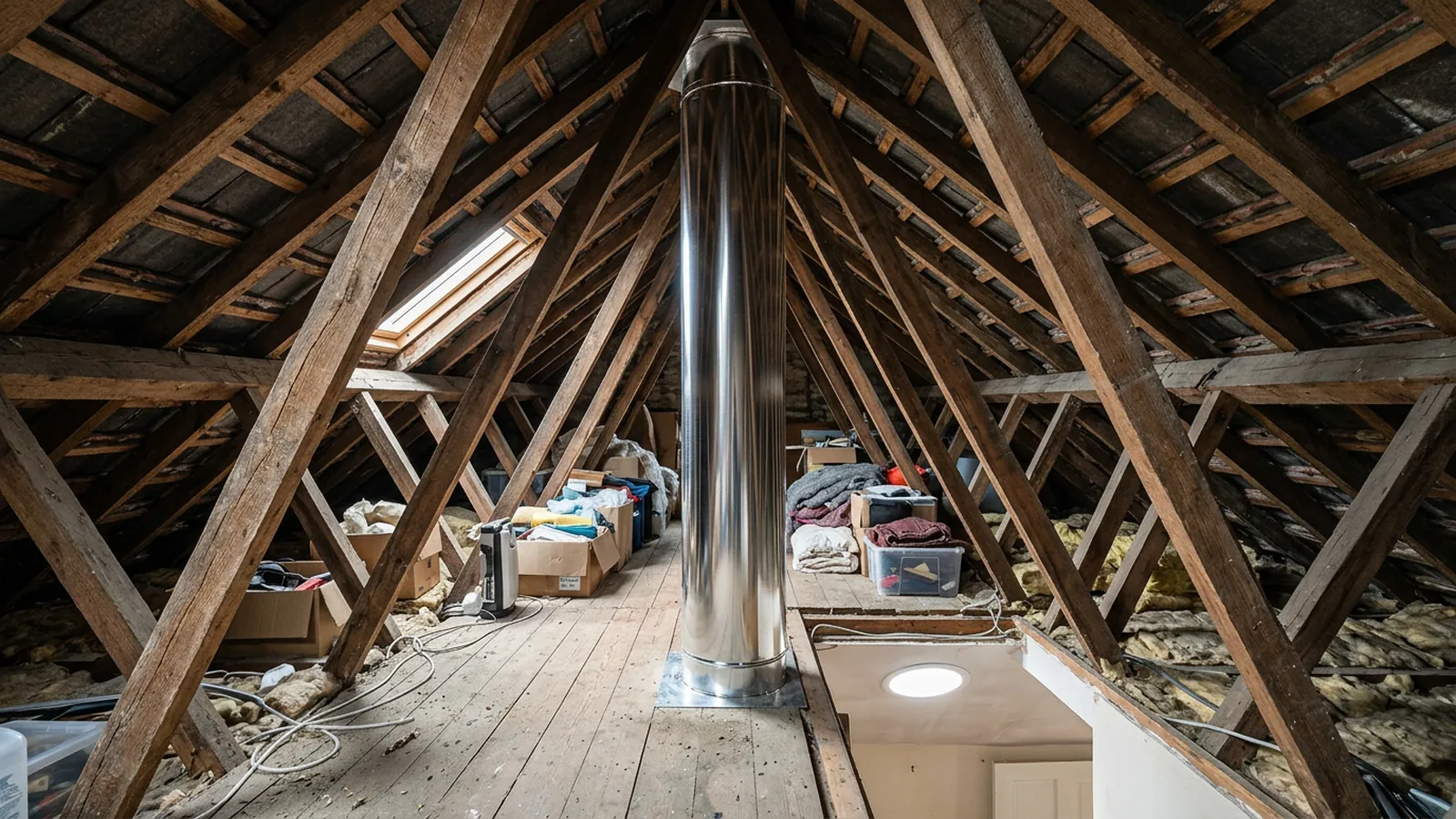
- Reflective tube, here a rigid straight run through the loft
- Loft insulation laid up to the tube, with an insulated sleeve round it to limit condensation
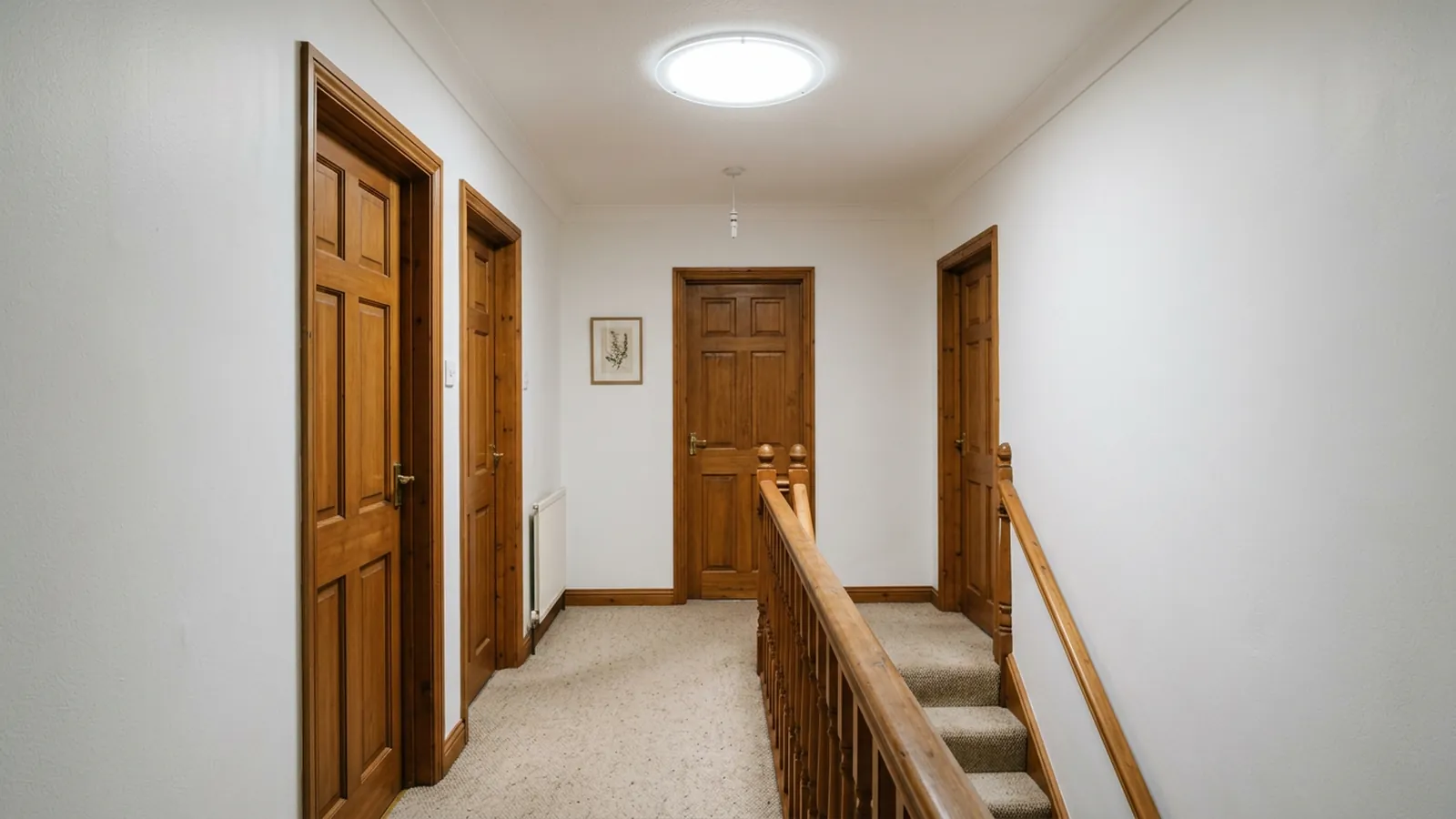
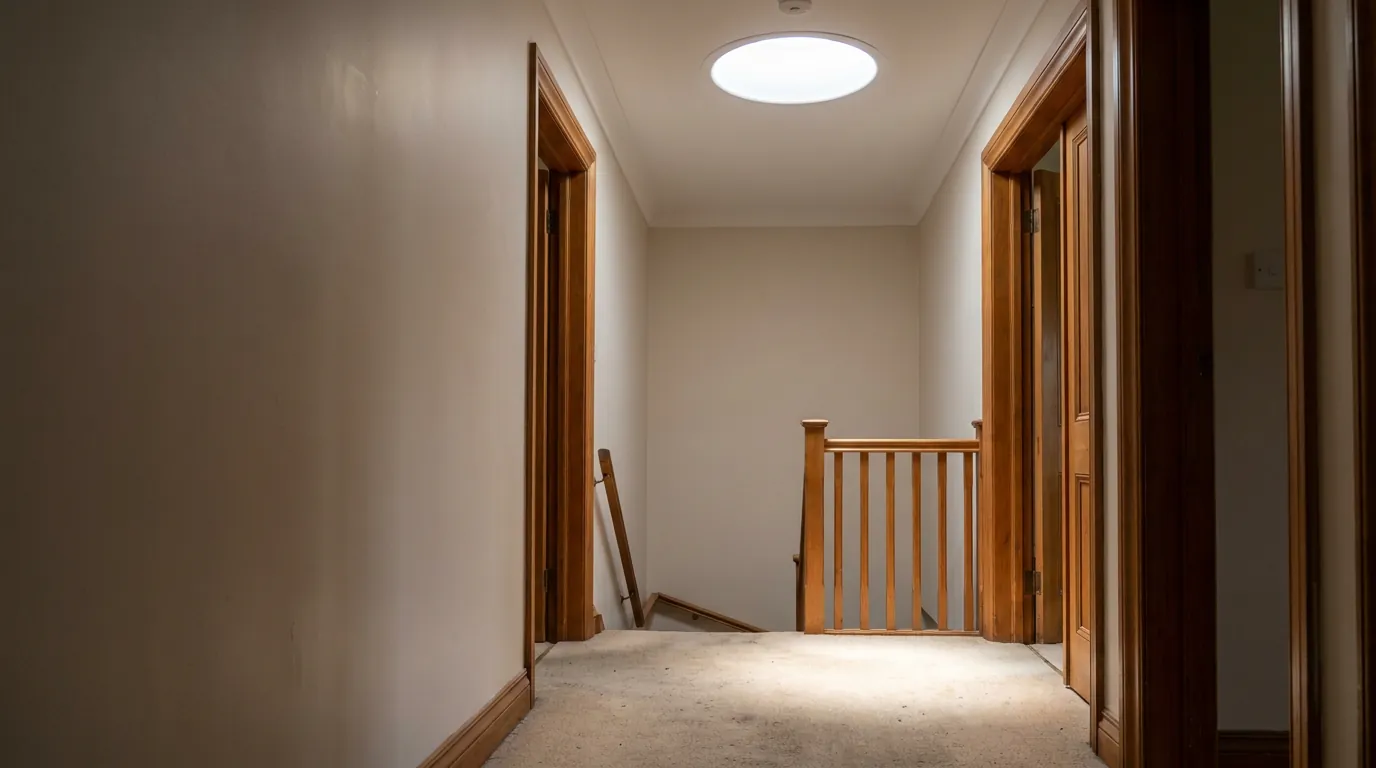
- Ceiling diffuser, spreading the light across the landing below
- Shown faint: angled elbows let the tube step round a truss or purlin, at some loss of light
How a daylight dimmer works
The dimmer is a short section built into the tube, usually just above the diffuser, so it stays inside the insulated part of the run and can be reached for adjustment. Inside it are either rotating vanes, like a butterfly valve, or a sliding disc that closes across the bore. Open, it lets the full column of light through. Closed, it blocks most of it, leaving at most a thin line of light around the edges.
It will not make the room as dark as a blackout blind on a window, and it is sensible to expect a dimmed room rather than a pitch black one. For what the diffuser itself looks like from below, and how the dimmer sits behind it, see our guide to diffusers and what a sun tunnel looks like from the ceiling.
Which control suits which room
How you work the dimmer matters as much as whether you have one. A ceiling in a stairwell is out of reach; a low bathroom ceiling is not.
| Control | How you work it | Good for |
|---|---|---|
| Pull cord | A cord drops from beside the diffuser; one pull closes, another opens | Bedrooms and bathrooms with a standard ceiling height |
| Rod or pole | A hooked pole turns the mechanism from the floor | Higher ceilings where a hanging cord would look out of place |
| Powered switch | A small motor closes the vanes from a wall switch or remote | Stairwells, vaulted ceilings and rooms where the diffuser is hard to reach |
A powered dimmer needs a supply taken to the tube in the loft, which is the same kind of wiring a night light kit uses. If you want both, it makes sense to plan them together; our guide to sun tunnels with ventilation or night light kits sets out how the options combine in one fitting.
Rooms that tend to need one
The question is really about who uses the room and when. On the 1970s and 1980s estates around Basingstoke, sun tunnels often go into the inner rooms that estate house plans left without a window: a box room turned nursery, a shower room off the main bedroom, a dressing area. Those are exactly the rooms where early light gets noticed.
- Bedrooms and nurseries. A dimmer is worth having from the start.
- En suites off a bedroom. Light spills under the door, so a dimmer helps the bedroom as much as the shower room.
- Home offices. Useful where a screen picks up glare in the middle of the day.
- Landings, hallways and utility rooms. Rarely needed, because the light only helps.
If you are unsure how bright the tube will be in the first place, which decides how much the dimmer has to hold back, read how much light does a sun tunnel give?
Adding a dimmer to an existing tube
Many sun tunnel systems accept a dimmer section after the event, fitted by taking the diffuser down and inserting the unit into the tube above it. Whether yours does depends on the make, the tube diameter and whether it is a rigid or flexible tube, so the first step is to identify what is in the loft. Where a matching unit is available, it is a short job from inside the house with no work on the roof.
When the system cannot take one, or the tube is an older unit near the end of its life, it can be more sensible to replace the whole kit with one that includes a dimmer. We check this when we look at the tube, and the written quote shows which route applies.
Does a dimmer change heat or condensation?
A closed dimmer adds a little extra barrier inside the tube, but it is not an insulating layer and it does not replace the insulation wrapped around the tube in the loft. Its job is light, nothing else. Condensation is governed by the seal at the diffuser and the insulation along the cold part of the run, covered in do sun tunnels get condensation?, and heat loss through the tube is answered in do sun tunnels let heat out?
Deciding before the tube goes in
The cheapest moment to add a dimmer is the day the tube is fitted, because the diffuser is already down and any wiring for a powered control goes in with the rest of the work. At the survey we ask how each room is used, look at the ceiling height and the route through the roof void, and put the dimmer in the specification only where it earns its place. The work is covered by our 10-year workmanship guarantee in the same way as the tube itself. If a bedroom or en suite is on your list, arrange a survey and we will show you which control suits it.