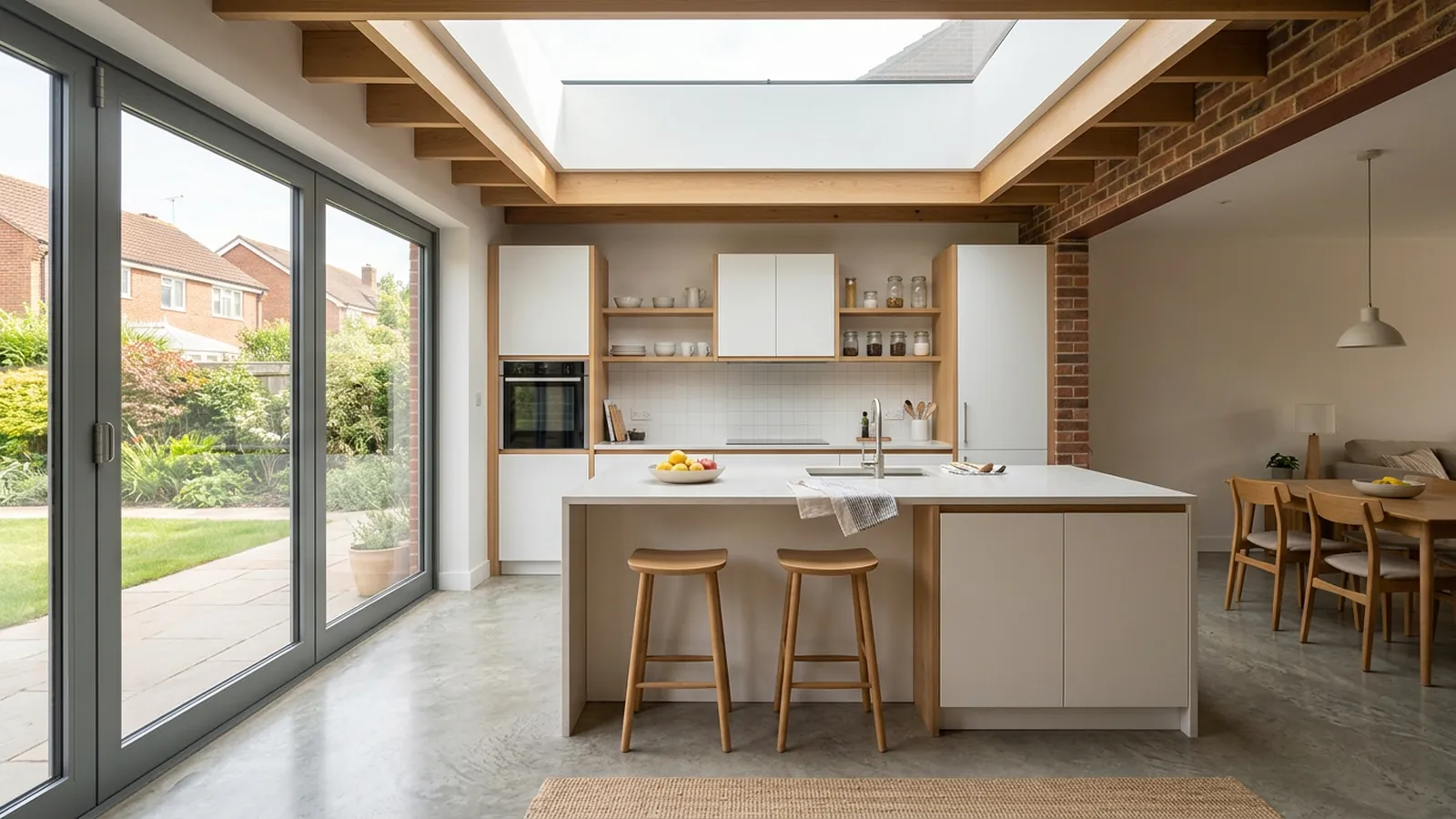
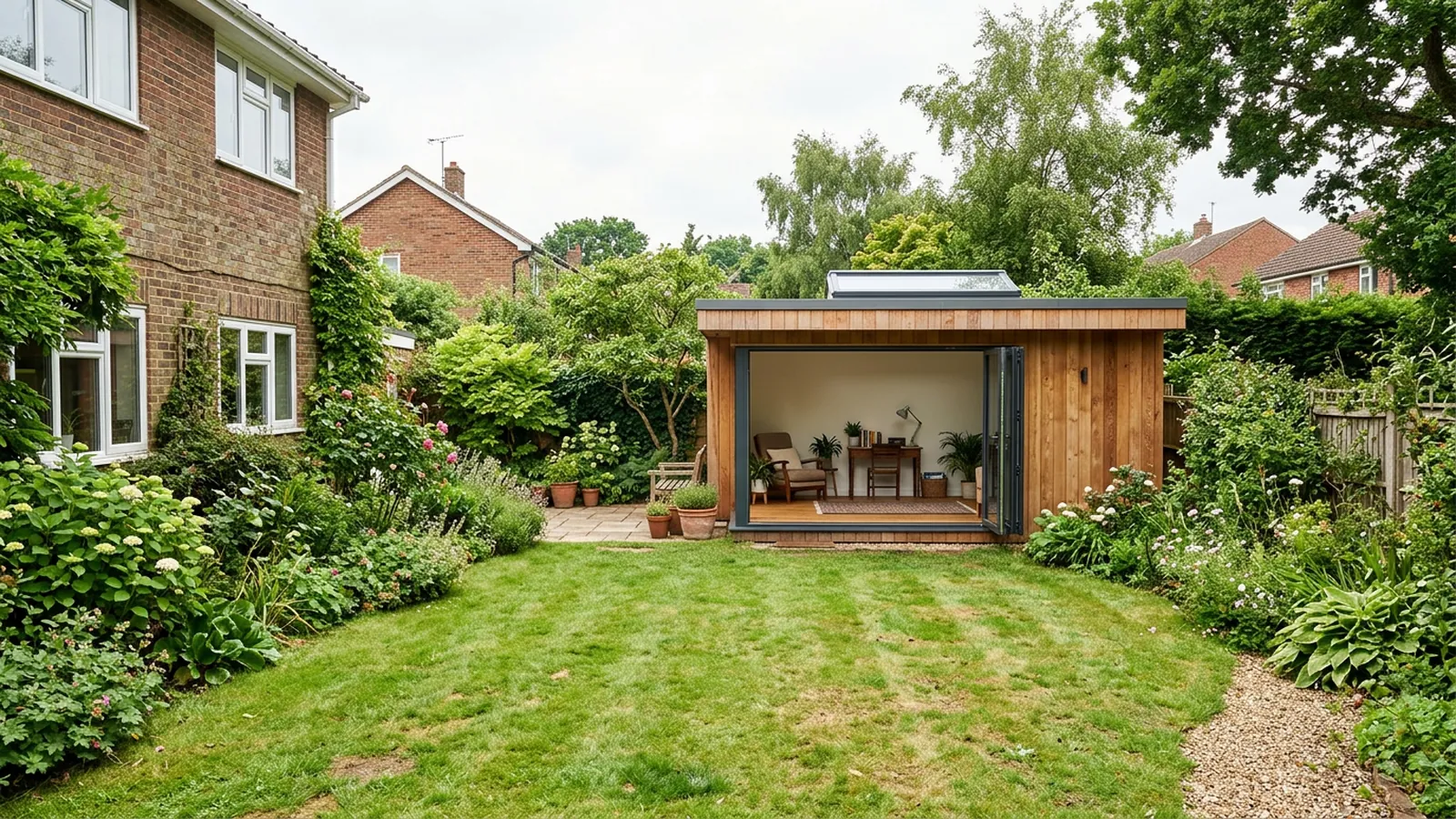
Rain noise is a fair worry when the rooflight is going over a bedroom, a home office or a kitchen extension where you sit and read. It is also one of the easier things to plan for, because the answer sits in choices made before anything reaches the roof. Our flat roof rooflight installation work starts from the room below, and a quiet ceiling is part of that brief as much as daylight.
What follows explains where the sound comes from, which glass and frame choices soften it, and what the room itself does to the noise once it is inside.
Where the sound actually comes from
A raindrop hitting a hard, stiff surface makes a small impact. Thousands of them together become the hiss or roar you hear. On a membrane flat roof, the drops land on felt, GRP or EPDM laid over a timber deck and a layer of insulation, and that soft, heavy build soaks up much of the energy before it reaches the ceiling. A skylight replaces that area of heavy roof with glass and a frame, so the sound path through that opening is different.
Three things shape what reaches your ears. The first is the outer surface: how stiff it is and whether it can vibrate like a drum skin. The second is what sits between the outer and inner layers, such as a sealed gas cavity or a second pane. The third is the room: hard floors, bare walls and a deep shaft above the ceiling can make a gentle patter sound bigger than it is.
How a roof window is weathered into a tiled roof
- Sash: the opening glazed unit, fitted last and clipped into the frame
- Flashing kit: head, side and bottom pieces, profiled for tiles or a lower profile for slate, with the bottom apron dressed over the tiles below
- Tiles cut and refitted around the opening so the flashing can lap over them
- Roof window frame, fixed with brackets to the battens and rafters
- Battens cut around the opening, with a trimming batten at the head, fixed across the rafters
- Underlay collar dressed to the frame and lapped into the roof underlay, with a drainage gutter over the head
- Insulation collar packed around the frame to close the gap to the roof structure
- Internal lining: plasterboard reveals taken back to the frame and finished inside
Glass build: the biggest lever
The unit in a modern flat rooflight is a sealed insulated glass unit, and its layers work against noise as well as heat. Two panes of different thickness vibrate at different frequencies, so one tends to damp the other. A laminated pane, two sheets bonded with a plastic interlayer, is especially good at this because the interlayer absorbs vibration rather than passing it on. Some glass makers also offer acoustic grades of interlayer made for exactly this job.
| Top | How it sounds in rain | Why |
|---|---|---|
| Single skin plastic dome | Loud and drummy | A thin, light sheet flexes under each drop and passes the impact straight through |
| Twin or triple wall plastic dome | Softer, still hollow | The air gap helps, but the sheets are light and still move |
| Double glazed unit, toughened panes | A steady patter | Heavier, stiffer glass with a sealed cavity between the panes |
| Double or triple glazed with a laminated inner pane | The quietest of the common options | The interlayer absorbs vibration before it reaches the room |
A laminated inner pane is already the usual safety choice over a room where people stand below, so the acoustic gain often comes with no extra decision. How the two glass types differ, and where each one belongs in the unit, is laid out in our guide to laminated and toughened glass in a flat rooflight. If you are weighing a third pane for warmth, the answer on whether a flat rooflight can be triple glazed covers the weight and kerb side of that choice; the extra pane and cavity also add mass, which helps with sound.
Frame, fall and fixing
Glass is not the only part in the rain. The frame and the way the unit sits on its kerb matter too. A frame that is solidly bedded and fixed does not buzz, while a loose cover strip or a poorly seated unit can add a tinny note of its own. Aluminium frames with thermal breaks and PVC frames both behave well when fitted properly; the difference you hear comes from fixing, not from the badge.
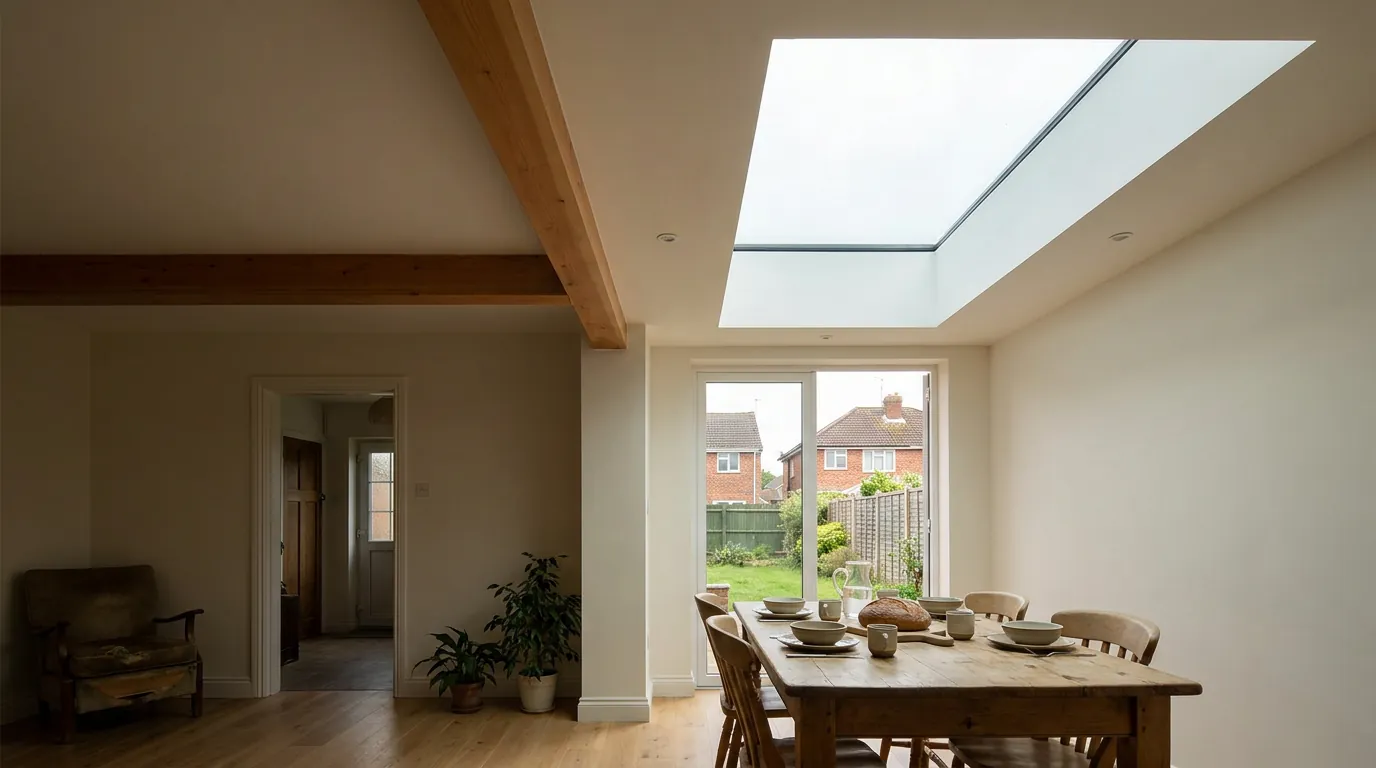
The slight fall built into every flat glass rooflight also helps. Water runs off the glass instead of gathering, so you hear drops landing rather than a sheet of water splashing on a puddle. Why that fall is always there, even on a unit sold as flat, is explained in the guide on why a flat rooflight is never actually flat. If you notice water resting on your current unit after a shower, the answer to why water sits on a flat rooflight explains what causes it.
Worth knowing: a glazed rooflight is quieter than the old domed kind in almost any rain. The exception is hail, which is loud on any hard roof surface, glass included. It passes quickly, and a laminated pane takes the edge off it.
The room changes what you hear
Sound that gets through the glass then bounces around the room. A kitchen extension with a tiled floor, glossy units and bare plaster is a hard, echoey space, so any noise there, rain included, feels louder. A bedroom with carpet, curtains and soft furnishings absorbs it. The reveal between the glass and the ceiling also plays a part: a deep, square shaft can act a little like a funnel, while a shallow or splayed reveal spreads the sound as it spreads the light.
A blind is another soft layer. It will not silence a storm, but a fabric blind drawn under the glass does take some sharpness out of heavy rain and suits a bedroom anyway. Which blinds suit a flat rooflight, and how they are fitted, is covered in the answer on whether a flat rooflight can have a blind.
Choosing a quiet rooflight for your room
- Name the room. A bedroom or study calls for more care over rain noise than a utility room or hallway.
- Pick the glass first. A sealed glazed unit with a laminated inner pane is the quiet default; ask about an acoustic interlayer if sleep is the priority.
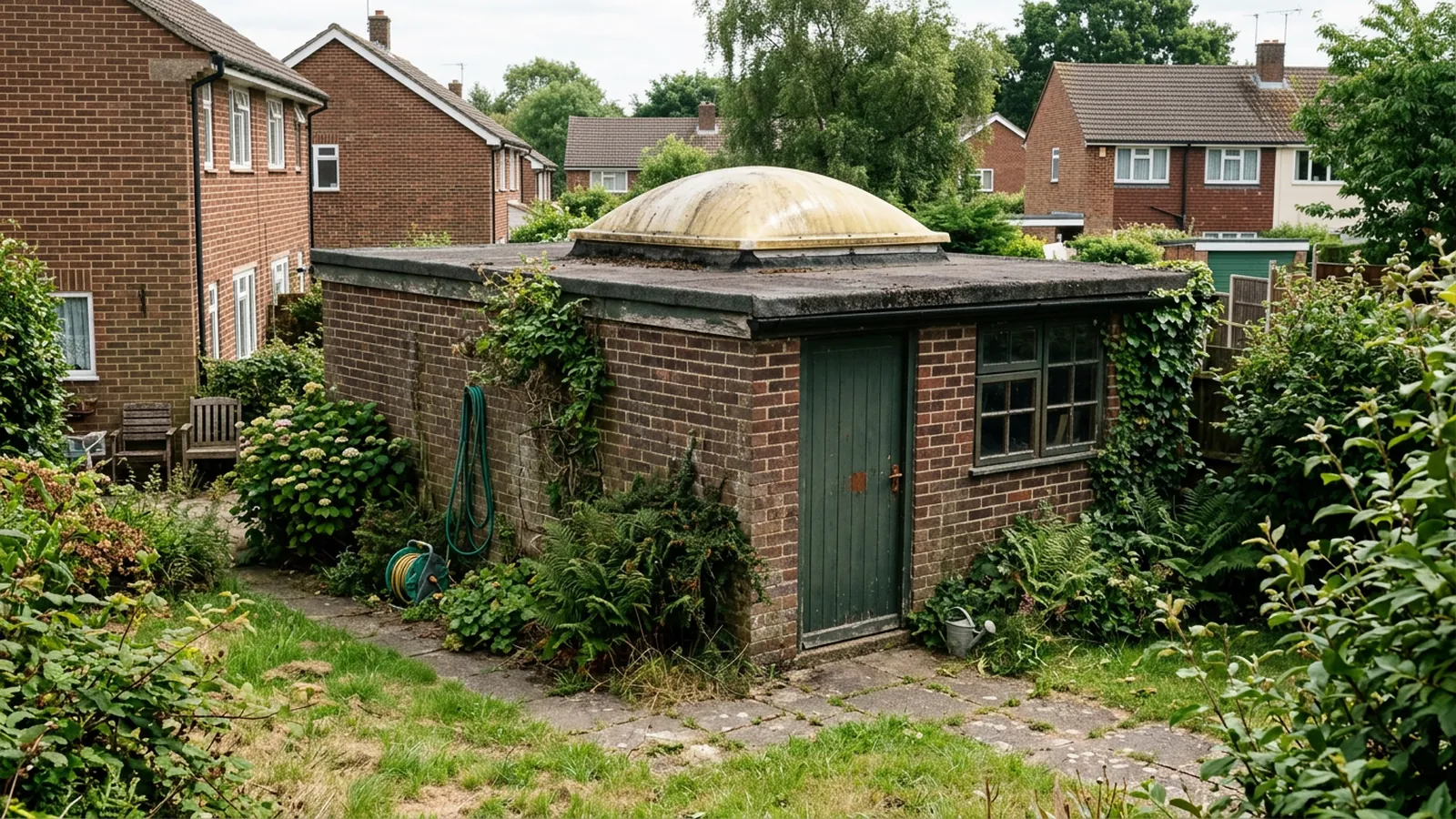
- Look at the old dome. If you are swapping out a plastic dome, the change to glass is where most of the difference in noise comes from.
- Think about the finish inside. Reveal shape, plaster and a blind all soften what is left.
- Confirm at survey. We look at the roof, the room and the kerb, then specify the unit in the written quote.
On the flat roof extensions and garages built onto 1970s and 1980s estate houses around Basingstoke, the original top is often a plastic dome, which is the noisiest arrangement of all. Replacing it with a glazed skylight on a properly insulated kerb changes the sound of a shower overhead as much as it changes the light. The new unit carries our 10-year workmanship guarantee, which is a promise from us rather than an insurance product, and the whole job sits within our wider rooflight installation around Basingstoke, which always begins with the roof you already have.
If rain noise is the thing holding you back, tell us which room it is for when you arrange a survey visit, and we will specify the glass with that in mind.