So the honest answer to a question about flat rooflight lifespan is a list of clocks, each running at a different speed. Our flat roof rooflight installation work is built around stopping any one of them from running fast. This page takes each clock in turn, then covers the signs that a unit on your extension or garage roof is reaching its end.
Four parts, four different clocks
When people ask how long a skylight on a flat roof will go on, the glass is the natural thing to picture. The glass itself barely ages. What wears is everything that keeps it sealed, dry and fixed to the building.
| Part | What wears it | How the end shows |
|---|---|---|
| Sealed glazing unit | Sun, heat cycling and water left lying against the edge seal | Mist or droplets trapped between the panes that no cloth can reach |
| Frame | Ultraviolet light on plastics; very little on powder coated aluminium | Chalky, brittle or yellowed plastic; gaskets shrinking away from the glass |
| Kerb or upstand | Damp getting into timber that was never fully wrapped by the membrane | Soft timber at the corners, staining on the ceiling reveal below |
| Weathering to the roof | Movement between the kerb and the deck, and the age of the roof covering itself | Cracked or lifting felt at the upstand, split trims on GRP, loose laps on rubber |
Read down the right hand column and you have a sensible yearly check. Look up from the room below, then look at the roof from a window above or a ladder at the eaves, and note anything that has changed since last time.
Flat rooflight on an insulated upstand
- Double glazed rooflight, set to a slight fall so rain runs off the glass
- Upstand (kerb): a timber kerb with insulation on its outer face
- Membrane dressed up the upstand and over the top, sealed under the rooflight frame
- Waterproof membrane covering the roof, falling towards the gutter outlet
- Insulation laid over the deck, keeping the structure warm
- Roof deck on tapered firrings, which create the fall
- Joists, trimmed around the opening with trimmer joists
- Plasterboard reveal lining the opening, meeting the ceiling below
The sealed unit is the part that decides it
A modern flat rooflight is double or triple glazed, and the panes are held apart by a spacer bar sealed all round its edge. That edge seal is the component with a working life. Once moisture gets past it, the gap fills with damp air, the inner faces fog and the insulating gas escapes. The frame can be perfectly sound at that point; the unit has simply reached the end of its seal.
What shortens that life is heat and water. A unit that sits dead level holds a film of rain against its edge after every shower, and the seal spends its life wet. That is why the maker specifies a minimum fall for the glass, and why our answer on why water sits on a flat rooflight treats a puddle on the glass as a warning rather than a nuisance. On the roof itself, water should be moved past the kerb, not towards it, which is the subject of our guide to drainage falls around a flat rooflight.
The rule: a flat rooflight that sheds water every time it rains keeps its seal for far longer than one that holds a pool. The exception is a unit already fogged between the panes: better drainage will not clear it, and the answer is a new unit.
The roof covering sets a second deadline
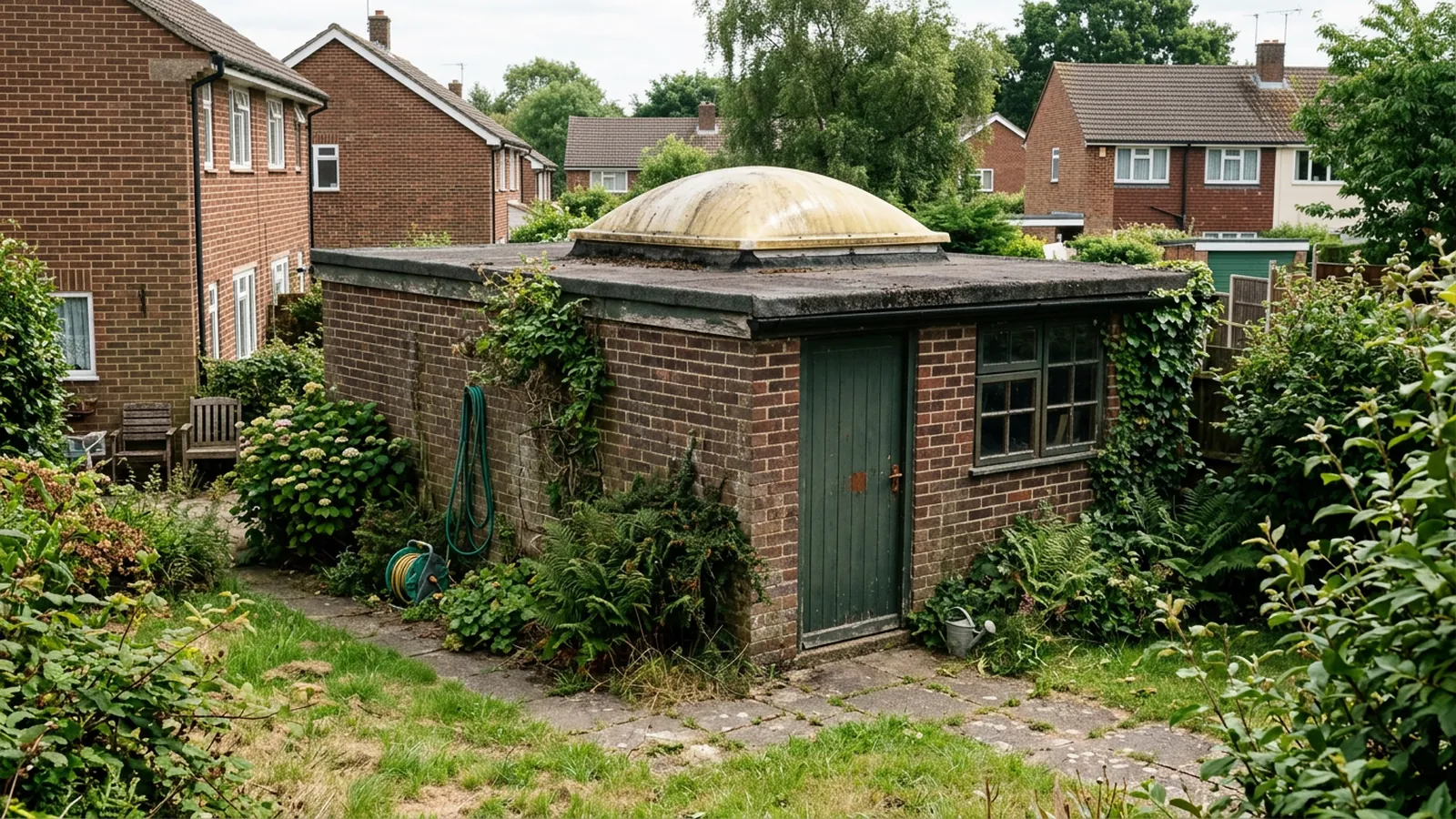
A rooflight is only as long-lived as the join between it and the roof around it. On the flat roofed extensions and link garages of the 1960s to 1980s estates, from Popley and Oakridge to Brighton Hill and Winklebury, that roof is often built up felt, and early plastic domes on those roofs are now due for replacement along with it. Newer extensions tend to be GRP or single ply rubber.
Each covering ages differently and is dressed to the kerb in its own way, so when the roof itself comes up for renewal the rooflight junction has to be lifted and remade too. That is often the right moment to change an old dome or a tired unit rather than dress new covering round something with limited life left. How each material meets the kerb is set out in our guide to flat rooflights on GRP, felt and EPDM, and if yours is felt, our answer on fitting a flat rooflight to a felt roof covers what to expect.
What makes one last longer than another
Two identical skylights on two neighbouring extensions can age at very different rates. The difference lies in the fitting and the upkeep as much as the product.
- Enough fall. The glass sits at the pitch the maker asks for, usually built into the kerb, so rain runs off rather than lying on the seal.
- A dry kerb. Timber upstands are fully wrapped in the roof membrane and insulated, so neither rain from outside nor condensation from inside soaks the timber.
- Movement allowed for. The kerb is fixed to the deck so the roof and rooflight move together, and the weathering is not stretched tight at the corners.
- Clean glass and outlets. Leaves and grit are cleared from the glass and the roof outlets, so water drains and the edge is not sitting in silt. Our answer on how often to clean a flat rooflight covers the routine.
- Gaskets left alone. No sealant smeared over the frame joints, which traps water rather than shedding it.
Signs it is time for a new unit
Some changes mean the rooflight has run its course. Misting between the panes is the clearest, because it cannot be wiped away and it does not come back to clear glass. A plastic dome that has turned cloudy, brittle or crazed has also done its work. Soft timber at the reveal, or staining that returns after redecorating, points to the kerb or the weathering rather than the glass, and a survey finds out which.
Where only the glazing has failed, a like for like unit can often go back on a sound kerb. Where the kerb or the covering has gone, the better answer is to renew the whole junction at once. Either way, the replacement is a chance to move up: better glazing, an opening unit, or a larger clear area if the joists allow it.
Infographic
How a rooflight job runs, from survey to guarantee
Roof survey
We look at the structure, the covering and the room below before anything is priced.
Specification
A size, type and position that fits your roof, and whether the work is notifiable.
Paperwork
Building Control notified where the work needs it, and planning checked where it applies.
Installation
Opening formed, frame fixed, flashed or dressed in, then lined and finished inside.
Sign-off and guarantee
Completion paperwork where needed and a 10-year workmanship guarantee.
Starting the next rooflight on a long clock
When we fit a flat rooflight we look at the deck, the joists and the covering first and quote only after that survey, so the fall, the kerb and the weathering are planned for the roof it is going on. Where the work needs a Building Control notification, we make it. Our own work is covered by a 10-year workmanship guarantee, which is not insurance backed; the glazing unit also carries whatever cover its maker gives.
If your dome has clouded over or the glass has started to fog, ask us to survey the roof and we will tell you which of the four clocks has run down, and what it would take to reset them.