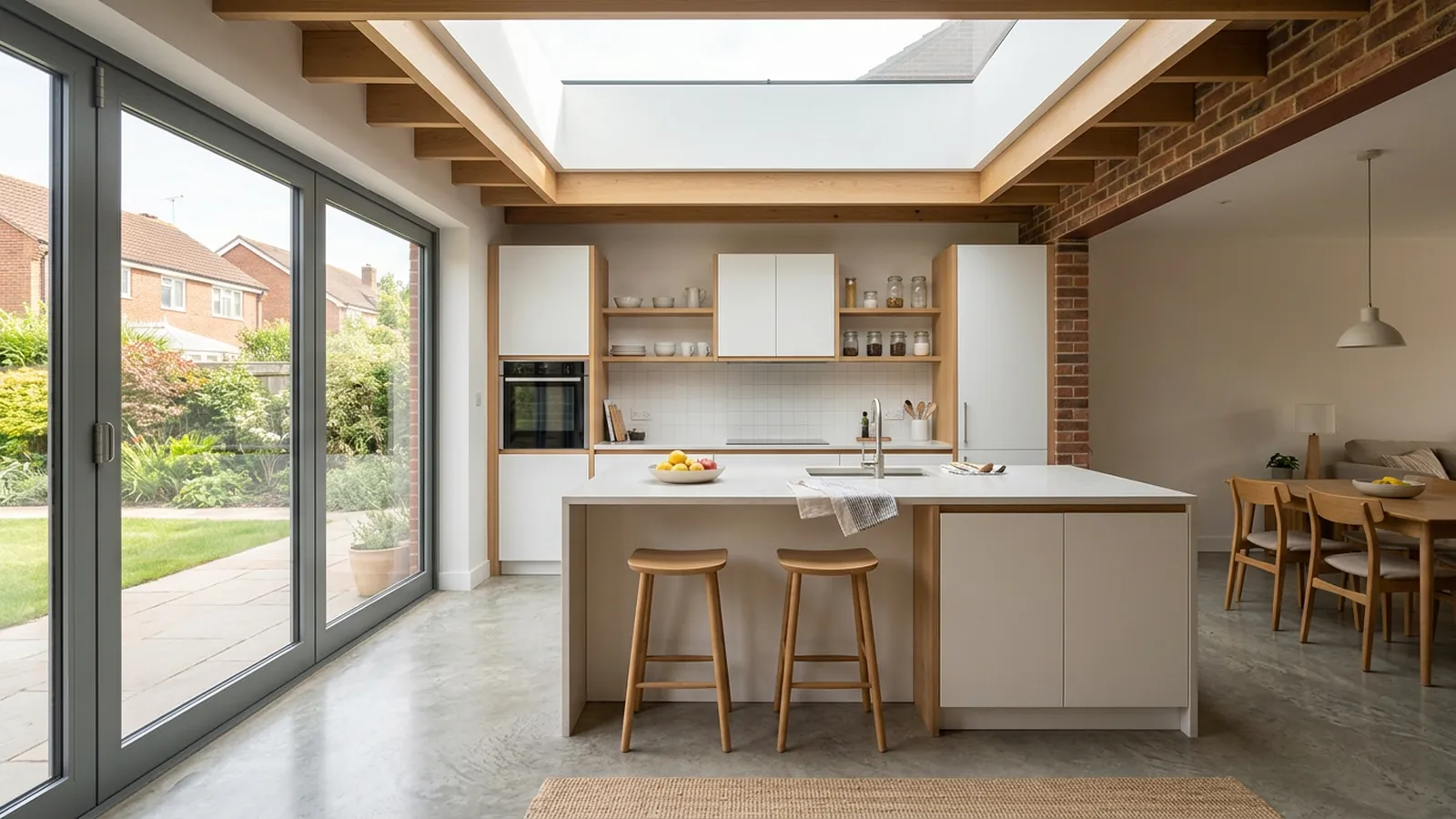
Blinds come up late on a lot of extension plans, often in the first summer after the room is in use. If you are still at the planning stage, the flat roof rooflight installation page sets out the whole job; this answer stays on one narrow point: how shade and darkness get added under a flat skylight, and what has to be decided early for each route to work.
The three ways to shade a flat rooflight
Each route solves a slightly different problem. A bedroom or a home cinema room under a flat roof wants darkness on demand. A south-facing kitchen extension wants less glare and less heat on a bright afternoon. A hallway or landing link may only want to soften the light a little. The table below compares them on the points that matter when choosing.
| Route | Where it sits | What it is good for | What to settle early |
|---|---|---|---|
| Blind in the lined opening | On the inside face of the kerb or the plastered shaft, just below the glass | Blackout, dimming or a pleated fabric, and later changes of fabric | Shaft shape, fixing timber behind the lining, and a power feed if it will be electric |
| Blind sealed inside the glazing | Between the panes of the double or triple glazed unit | Rooms where dust and cleaning would be a nuisance; no fabric to touch | Ordered as part of the unit, so it has to be chosen before the rooflight is made |
| Solar control or tinted glass | In the glass coating or interlayer | Glare and summer heat with nothing to open or close | Glass specification at order; it reduces brightness all day, every day |
Glass choices sit alongside safety glazing and thermal performance, so any tint or coating is agreed with the rest of the glass specification at order.
Flat rooflight on an insulated upstand
- Double glazed rooflight, set to a slight fall so rain runs off the glass
- Upstand (kerb): a timber kerb with insulation on its outer face
- Membrane dressed up the upstand and over the top, sealed under the rooflight frame
- Waterproof membrane covering the roof, falling towards the gutter outlet
- Insulation laid over the deck, keeping the structure warm
- Roof deck on tapered firrings, which create the fall
- Joists, trimmed around the opening with trimmer joists
- Plasterboard reveal lining the opening, meeting the ceiling below
Why the shaft shape matters to a fitted blind
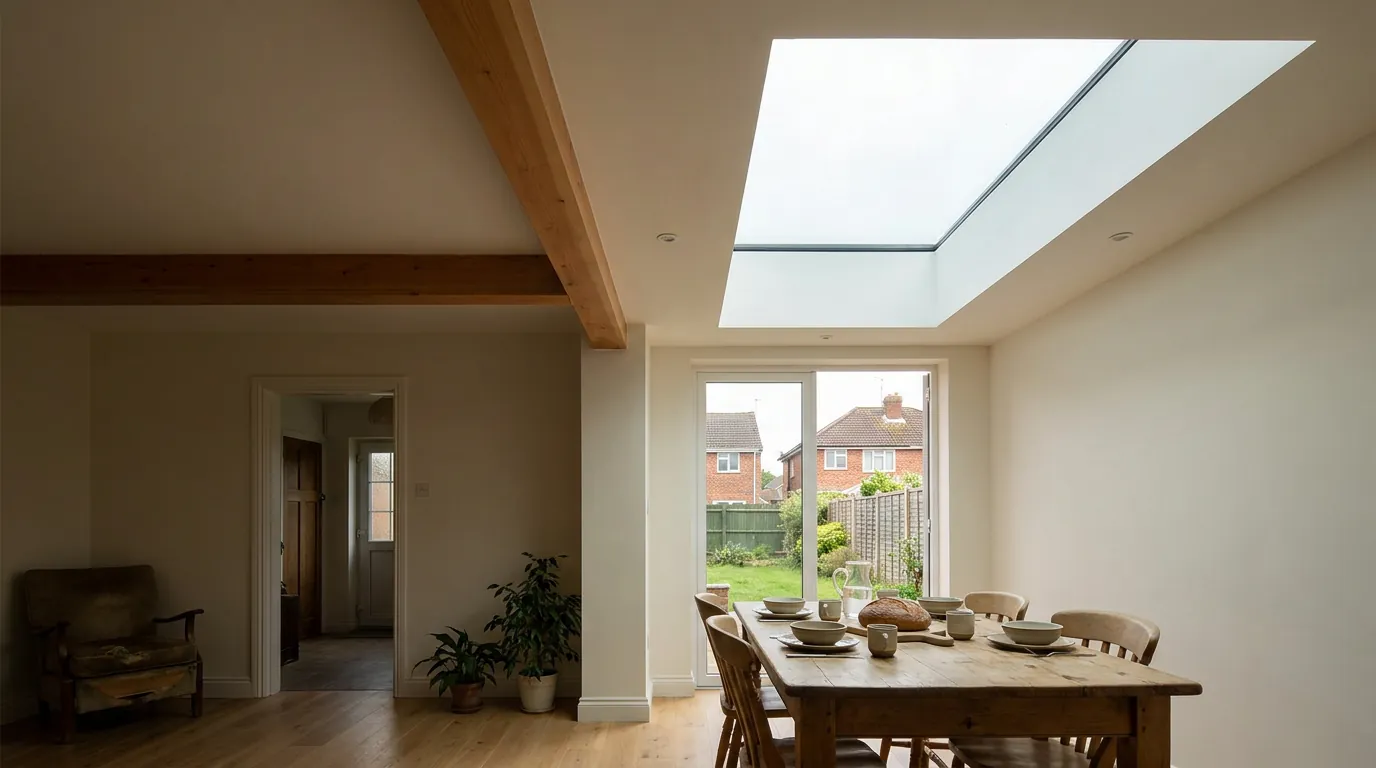
A blind in the lined opening needs something straight and solid to run on. On a square reveal the four sides of the opening drop vertically from the kerb to the ceiling, so a cassette blind or a pair of side channels can sit tight to the plaster with a clean edge all round. A splayed reveal, where the sides angle outward to spread light into the room, still takes a blind, but it goes at the top of the shaft near the glass, where the opening is smallest, rather than at ceiling level.
That choice is usually made for daylight reasons, and the blind simply follows it. The trade-offs between the two shapes are laid out in the guide to splayed or square reveals. The practical point for a blind is that its position should be agreed before the plasterboard goes up, so a length of fixing timber can be set behind the board where the brackets will land.
The rule: fix a blind into timber, not into plasterboard alone, because a rooflight blind hangs horizontally and pulls on its fixings every time it moves. The exception is a light blind made for adhesive or clip fixing to the rooflight frame itself, where the maker says so.
Reaching a blind that sits overhead
A flat rooflight in a single-storey extension is often out of arm's reach, and a blind you cannot reach does not get used. There are three ways round that. A manual blind can be worked with a telescopic pole that hooks onto the bottom bar. An electric blind runs from a wall switch or a remote, which needs a cable routed into the shaft while the ceiling is still open. A solar-powered blind carries its own small panel and battery, so it needs no wiring, which suits a rooflight already lined and decorated.
Where the rooflight itself opens, the blind and the opening gear need to be planned together so one does not foul the other. The fixed, hinged and pop-up flat rooflights guide explains how each type moves; if you want the glazing and the shade on one control, the electric and opening rooflight page is the one to read next.
Blackout, heat and the sound of weather
Owners often expect a blind to deal with everything a flat skylight brings into a room. It helps with some things more than others. A good blackout blind in side channels makes a bedroom properly dark, because the channels stop light creeping round the edges. A fabric blind below the glass cuts glare, and a reflective backing helps a little with heat, though the warmth has already come through the glass by the time it meets the fabric, so shading glass is the stronger answer for a room that overheats.
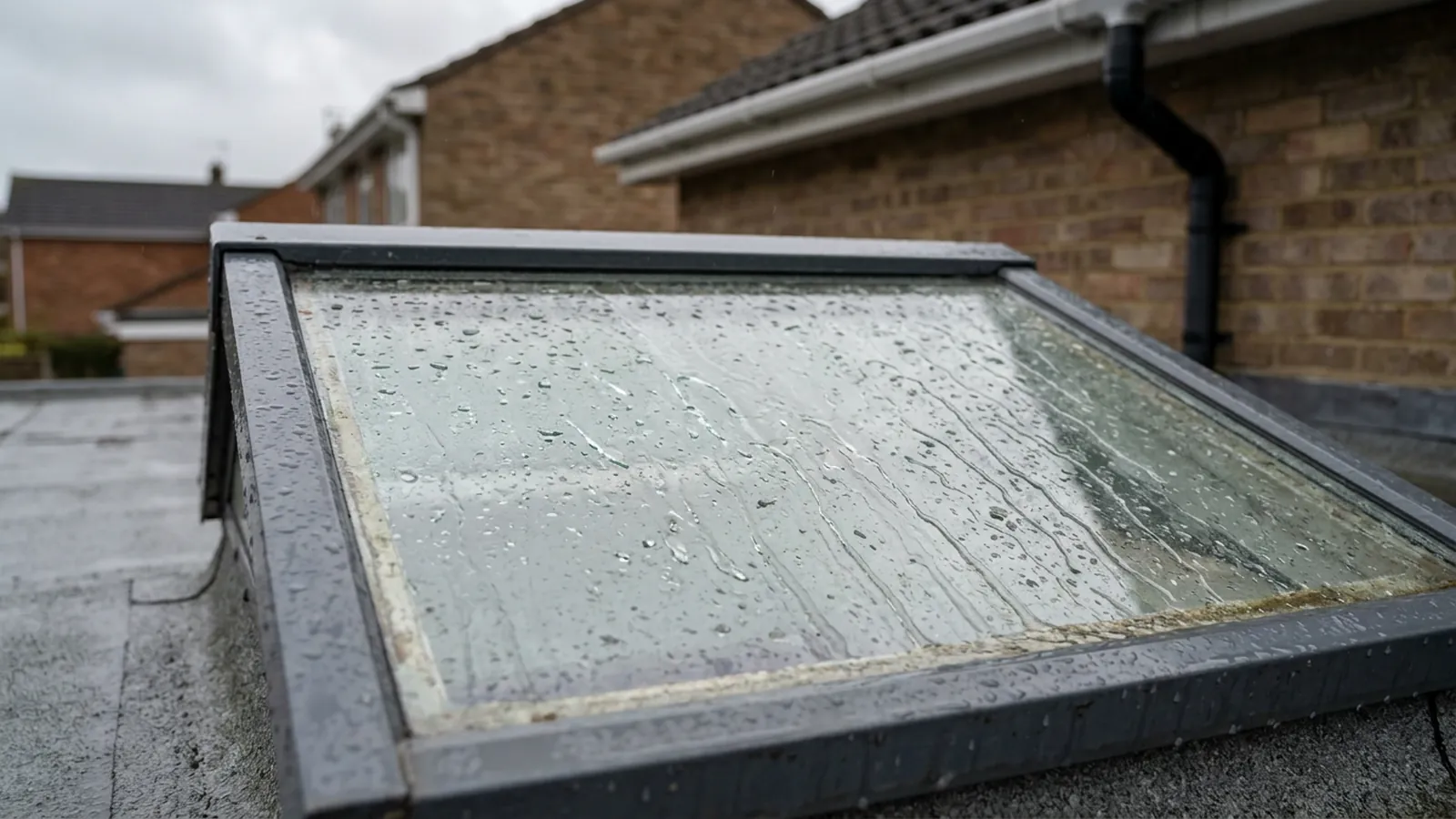
A blind also softens the sound of rain slightly, but the glazing does most of that work. The answer to is rain loud on a flat rooflight? explains why. And if the glass is being chosen from scratch, the answer on whether a flat rooflight can be triple glazed helps weigh the extra pane against a sealed-in blind.
Adding a blind to a rooflight that is already in
An existing flat rooflight can usually take a blind in its lined opening. The steps are simple, and the order keeps the result tidy.
- Measure the opening. Take the width and length at the point where the blind will sit, not at the ceiling, and note whether the sides are square or splayed.
- Find the fixings. Check what is behind the lining at that height; a stud finder or a small test hole shows whether there is timber to screw into.
- Choose the operation. Pole, solar or wired electric, depending on reach and whether a cable can get into the shaft without opening the ceiling.
- Fit and test. Brackets or side channels go in, the blind is hung, and it is run fully open and closed a few times to check it tracks straight.
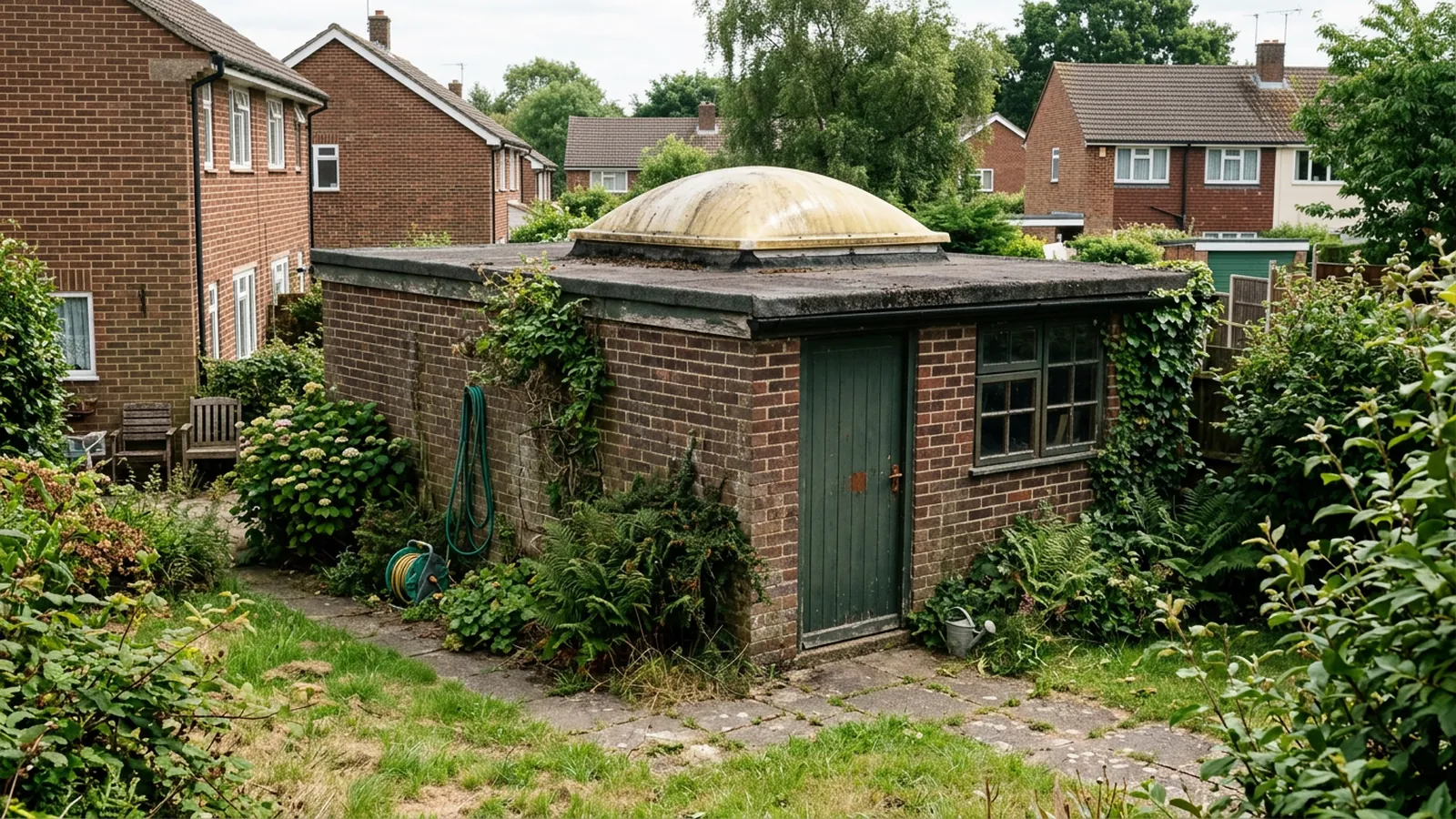
A blind sealed between the panes cannot be added to an existing unit. That route only comes with new glazing, so it tends to belong to a larger change, such as swapping a tired dome or a misted rooflight for a new unit.
Keeping a rooflight blind in good order
Fabric overhead gathers dust on its top face, and on a flat rooflight that face is the one you cannot see. A pass with a soft brush attachment on a vacuum every so often keeps it clean. Condensation is the other thing to watch: in a steamy kitchen or bathroom a blind left closed can hold moist air against the glass, so open it for part of the day. Cleaning the glass outside is a separate job, covered in how often a flat rooflight should be cleaned.
If a new flat rooflight is on the way and shading matters to the room, say so at the survey. We look at the roof and the space below before quoting, so the blind can be allowed for in the shaft, the wiring and the glass from the start. Ask for a survey visit and bring the question with you.