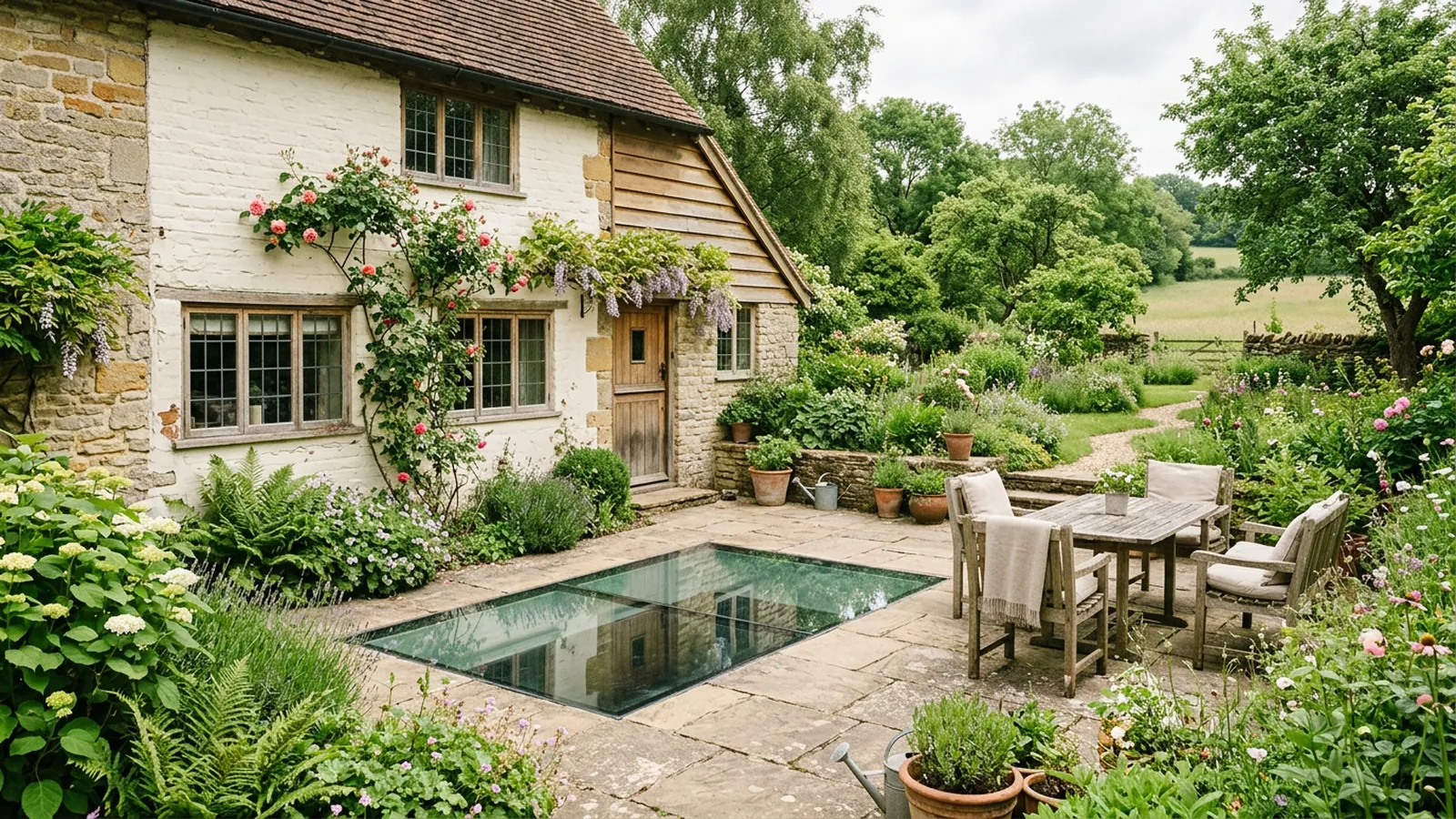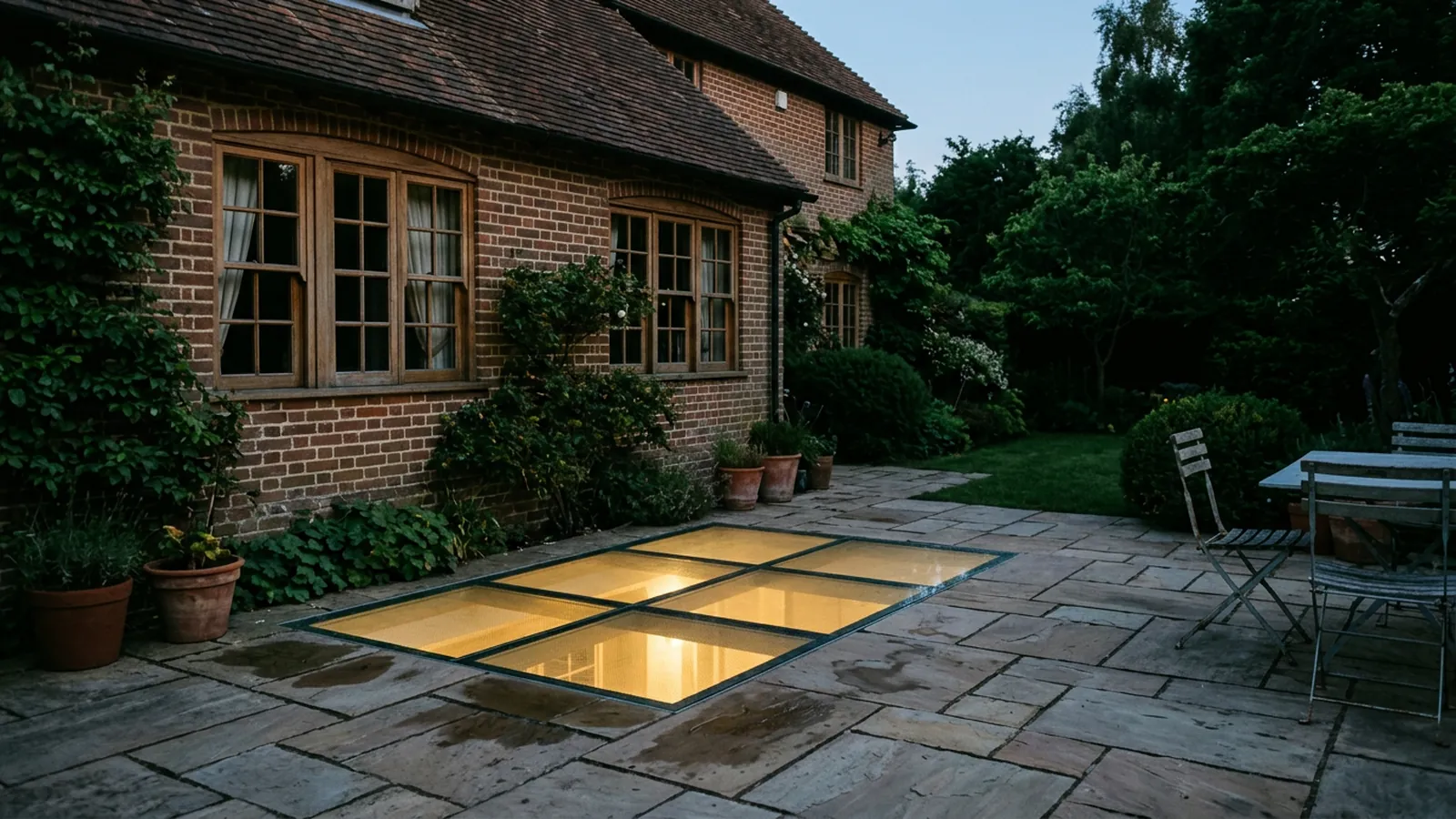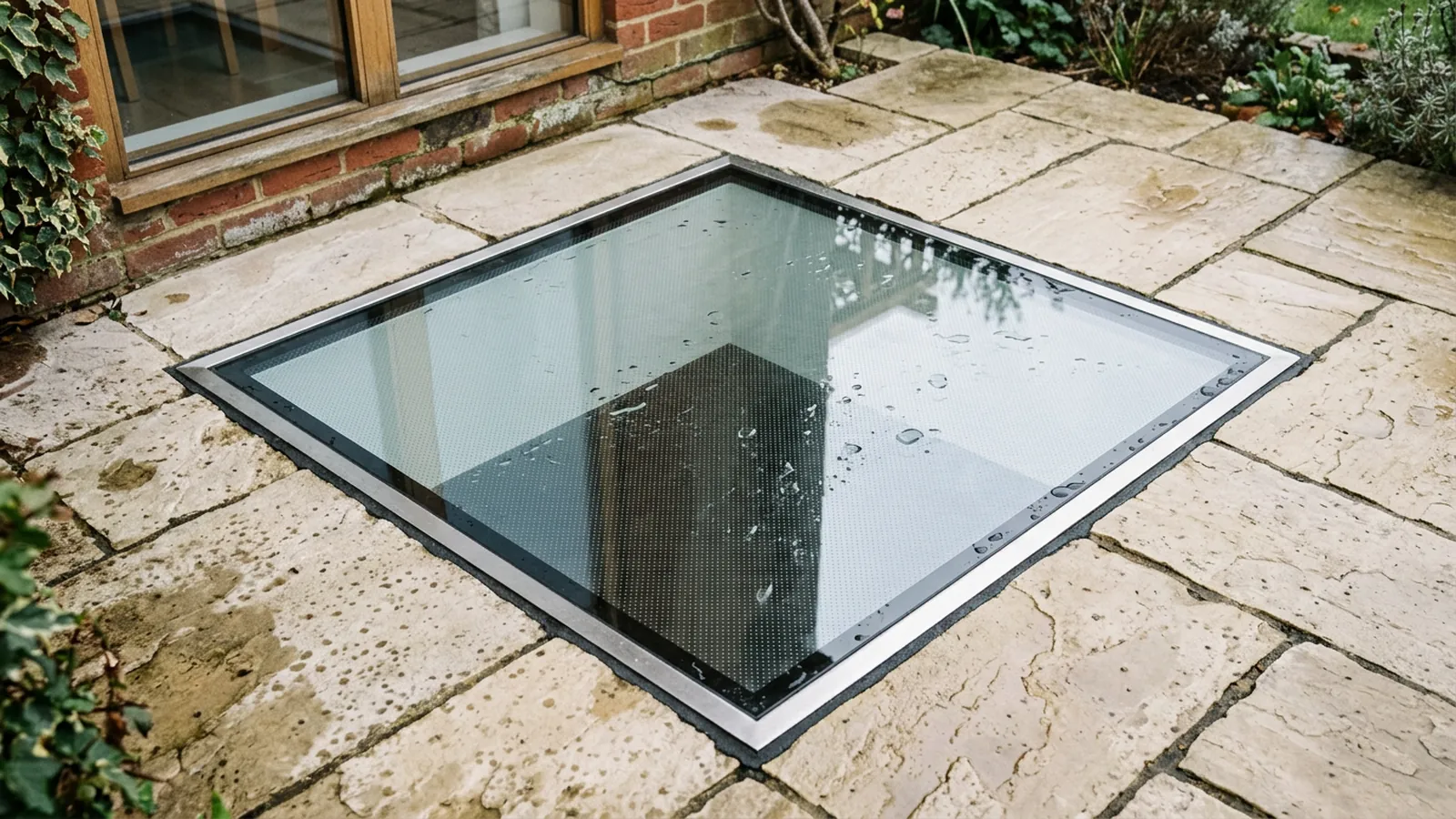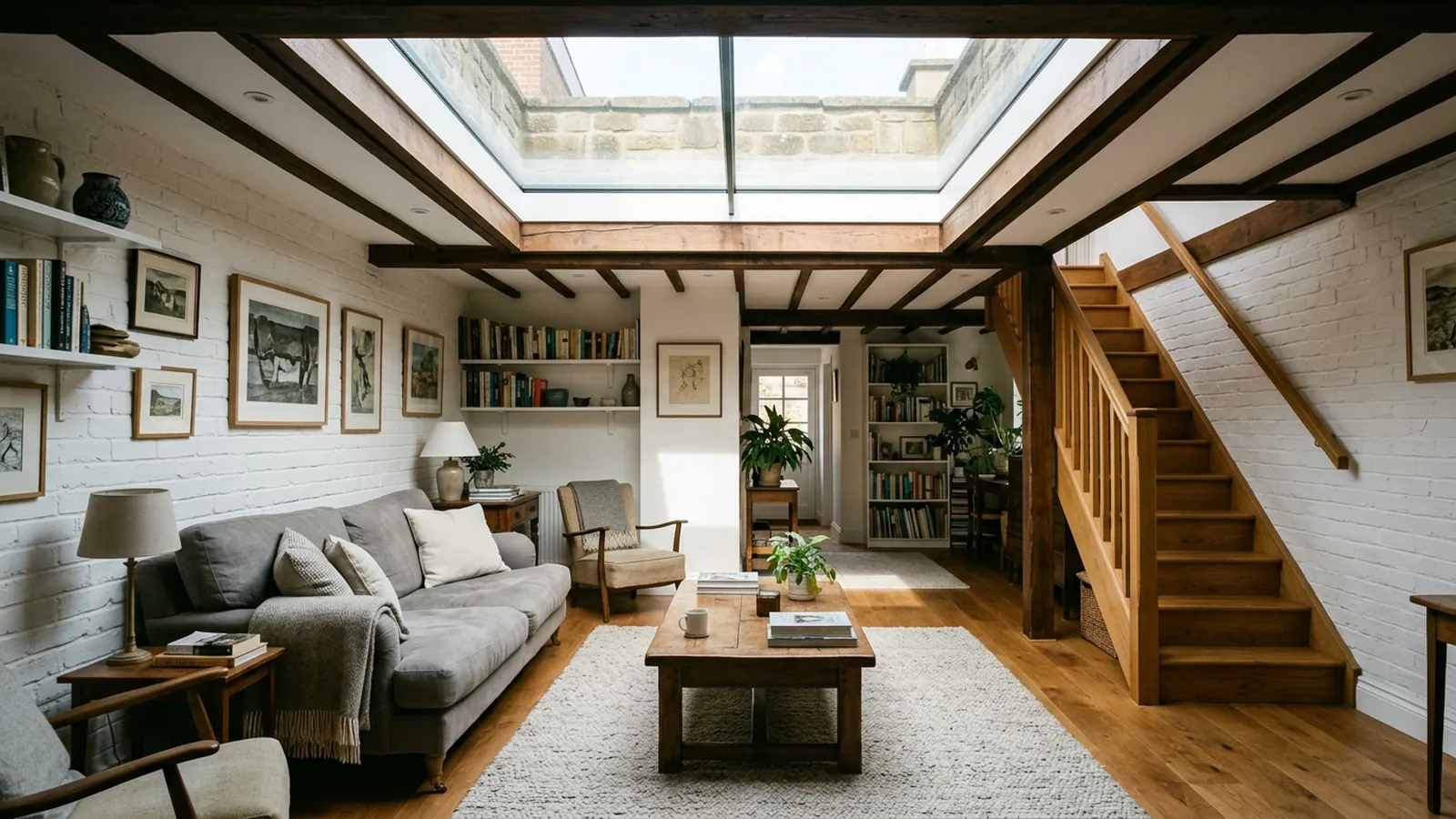
A glass panel in a terrace invites use, and a table on the sunniest spot is the obvious thought. Whether that is sensible depends on how the unit was chosen, which is why our walk-on rooflight service asks what the terrace will hold before the glass is ordered, not afterwards.
Walking and furnishing are two separate loading questions. The sections below explain the difference, what sort of furniture suits the glass, what should stay off it, and how to protect the surface once a table and chairs are in place.
Why a chair leg is not the same as a footstep
A walk-on rating is set against two kinds of load: a spread load over the whole panel, and a concentrated load pressing on a small area anywhere on it. A person walking moves across the glass and never rests on one spot for long. A chair does the opposite. Its weight, plus whoever sits in it, goes down through four small feet that stay in the same place all afternoon, and a person leaning back tips most of that onto two of them.
Well specified walk-on glass handles ordinary seating comfortably, because the concentrated load it is tested for is a harsh case. The detail of how those figures are set and read is in our guide to walk-on rooflight load ratings. What matters here is simpler: the rating printed on your unit's paperwork is the limit, and furniture counts towards it in the same way people do.
The test: if two people could stand close together on that spot without concern, a light chair or side table is within the same order of load. Where it breaks down is anything that combines weight with a tiny contact point, such as a metal stool with narrow legs, or anything that stays loaded for weeks, such as a filled planter.
How a walk-on rooflight sits in a terrace
- Anti-slip fritted top surface, so the glass is safe to walk on when wet
- Laminated glass: several layers bonded with interlayers, so it stays in place if a layer breaks
- Sealed cavity between the laminated glass and the inner pane
- Inner pane, completing the insulated unit
- Frame carrying the glass, sealed at the edges
- Kerb around the opening, bedded to the roof structure
- Waterproofing dressed up the kerb and under the frame
- Paving on pedestals, finished level with the glass
What is reasonable to put on the glass
The table below sorts common terrace items by how they load the panel. It is a guide to the kind of load, not a substitute for the rating of your own unit.
| Item | How it loads the glass | Usual advice |
|---|---|---|
| Folding chairs, bistro set | Light, but on small feet that can mark the surface | Fine on a rated panel with soft pads fitted to every foot |
| Lounger or sun bed | Spread along a frame or runners; heavier when occupied | Usually fine; wide runners are kinder than narrow legs |
| Outdoor rug or mat | Almost no load, but traps damp and blocks daylight | Better kept on the surrounding deck or paving |
| Large planter or trough | Heavy when wet and in place for months | Keep it off the glass unless the unit was designed for it |
| Hot tub, water feature, heavy barbecue | Very heavy, fixed, sometimes hot | Belongs on the roof structure, not the rooflight |
Scratches, heat and shade
Load is rarely what spoils walk-on glass under furniture. The surface is. Chair feet dragged back and forth carry grit with them, and grit is harder than the glass coating. Soft felt or rubber pads on every foot, and lifting rather than sliding, make the biggest difference. Our answer to does walk-on glass scratch? goes into what marks the top layer and what does not.
There is a second effect. A dark cushion, a closed parasol base or a covered table left over one part of the glass in strong sun warms that area while the rest stays cooler, and heavy shade also takes daylight away from the room below, which defeats the reason for the rooflight. How the top surface behaves in summer sun is covered in does a walk-on rooflight get hot underfoot?
If you plan to furnish the terrace, say so at the start
A walk-on unit is chosen for its use, and a terrace that will carry a dining set is a different brief from a panel people step across on the way to the garden. Telling us early changes the specification in practical ways: the glass build-up, the choice of a slip resistant top, and where on the terrace the skylight sits relative to the seating area.
- Describe the use. Where the table goes, whether planters are wanted, how many people use the terrace at once.
- Site the glass. Often the neatest answer is to set the rooflight beside the seating area rather than under it, so the room below keeps its light.
- Specify the unit. The glass and frame are chosen for the loads that remain, and the rating is written into the paperwork you keep.
- Check the roof beneath. The deck, joists and kerb carry the load down, so the survey looks at those as closely as the glass.
How the panel fits into a terrace layout, with decking or paving around it, is explained in the guide to a walk-on rooflight in a roof terrace or balcony.
A rooflight that is not rated for walking
Everything above assumes a genuine walk-on unit. A standard flat rooflight, even a strong looking one, is designed for weather and maintenance access, not for people or furniture, and nothing should be placed on it. If you are unsure which you have, the product label or the original paperwork usually settles it, and if neither exists the glass should be treated as not rated. Our answer to can you really stand on a walk-on rooflight? explains how to tell the difference.
Getting it right on your terrace
On the flat roofed kitchen extensions and garden rooms common behind homes across the Basingstoke area, the walk-on panel often ends up as the middle of the terrace, and a table drifts onto it over time. Light chairs with padded feet are sensible. Planters, heavy fixed pieces and anything dragged about are not. A new unit comes with our 10-year workmanship guarantee, and the survey we carry out before quoting is the moment to raise how the terrace will be furnished. To plan the glass around the way you will actually use the roof, arrange a survey or see the wider range of rooflight and skylight installation around Basingstoke.