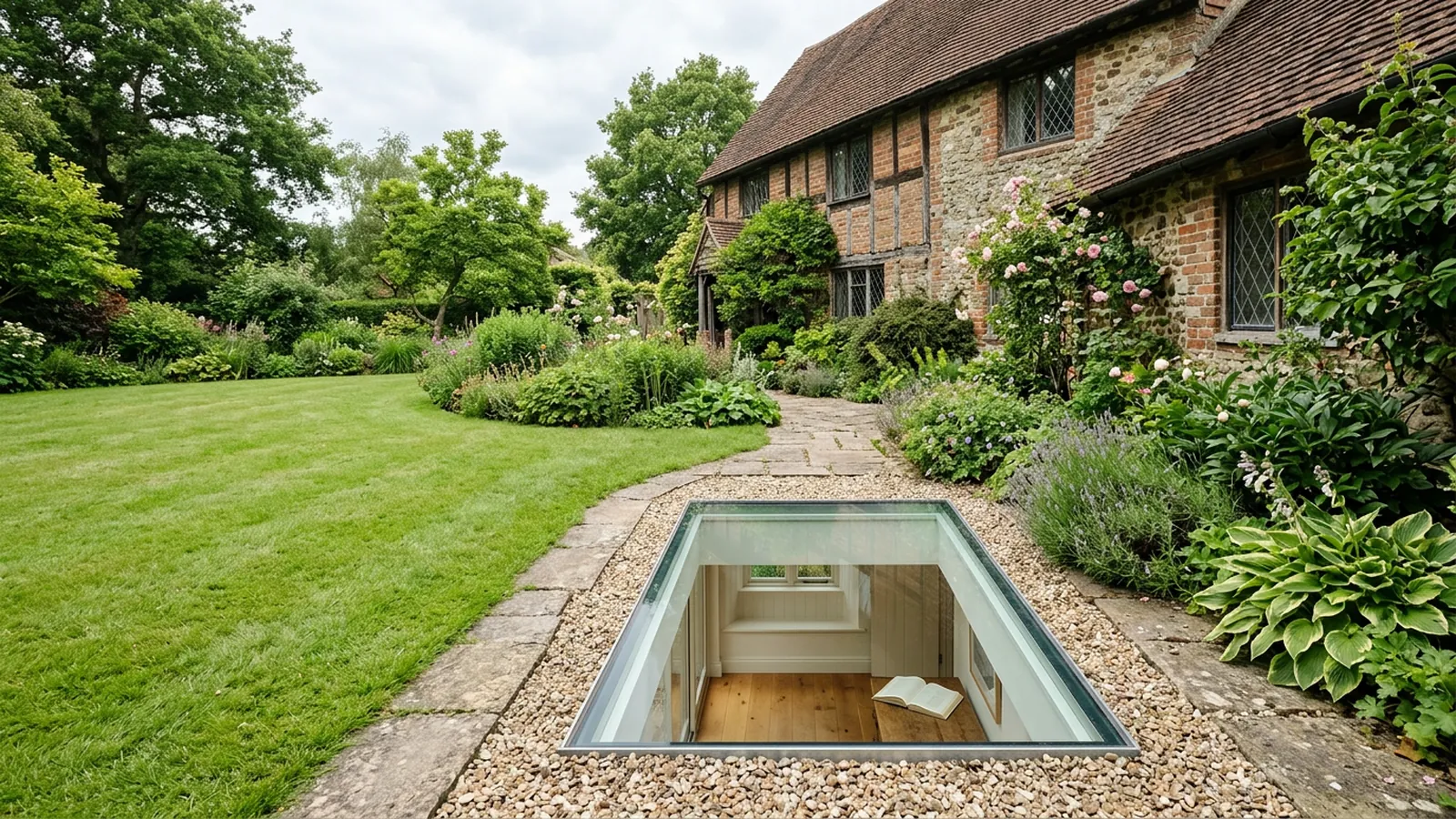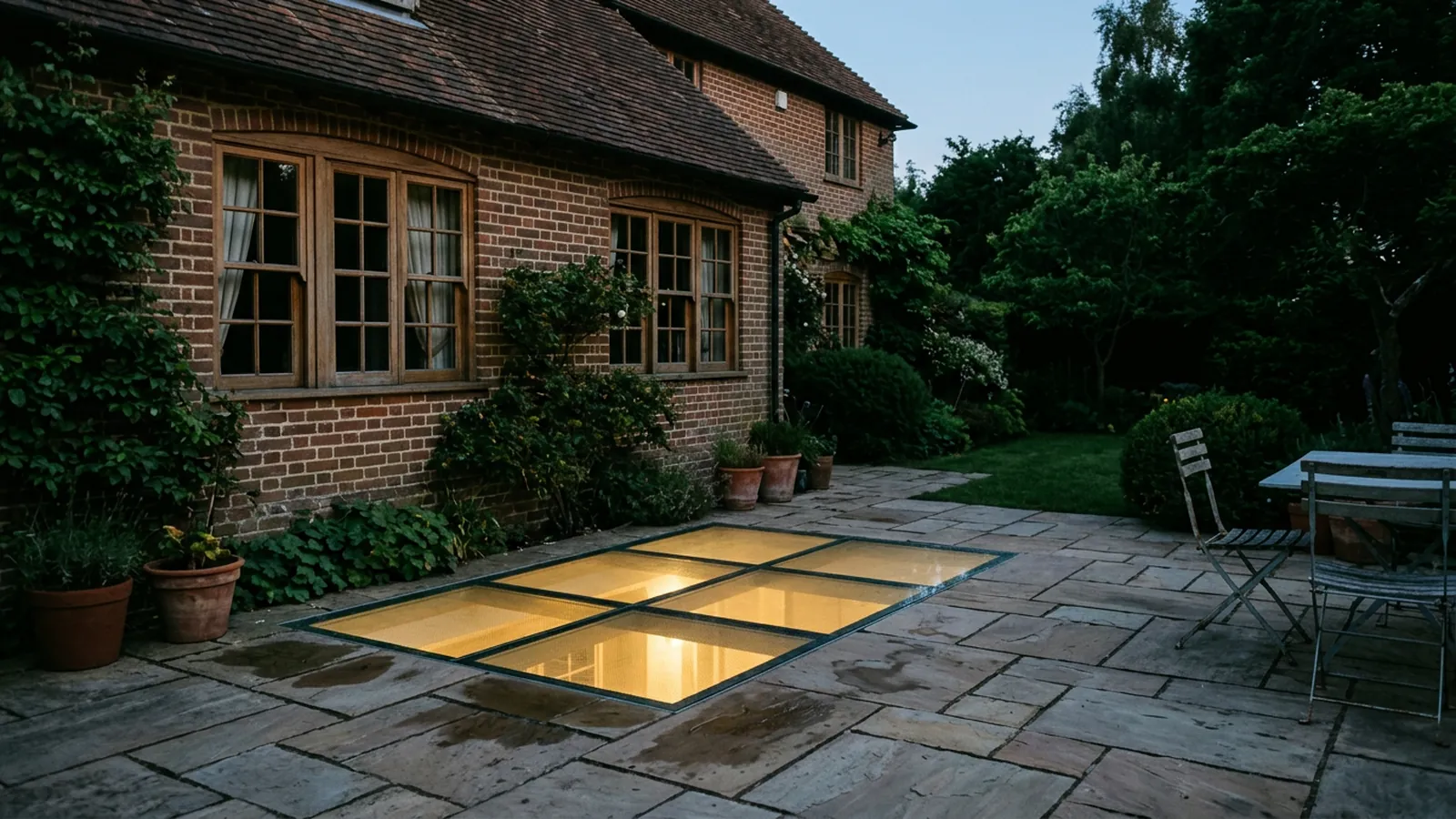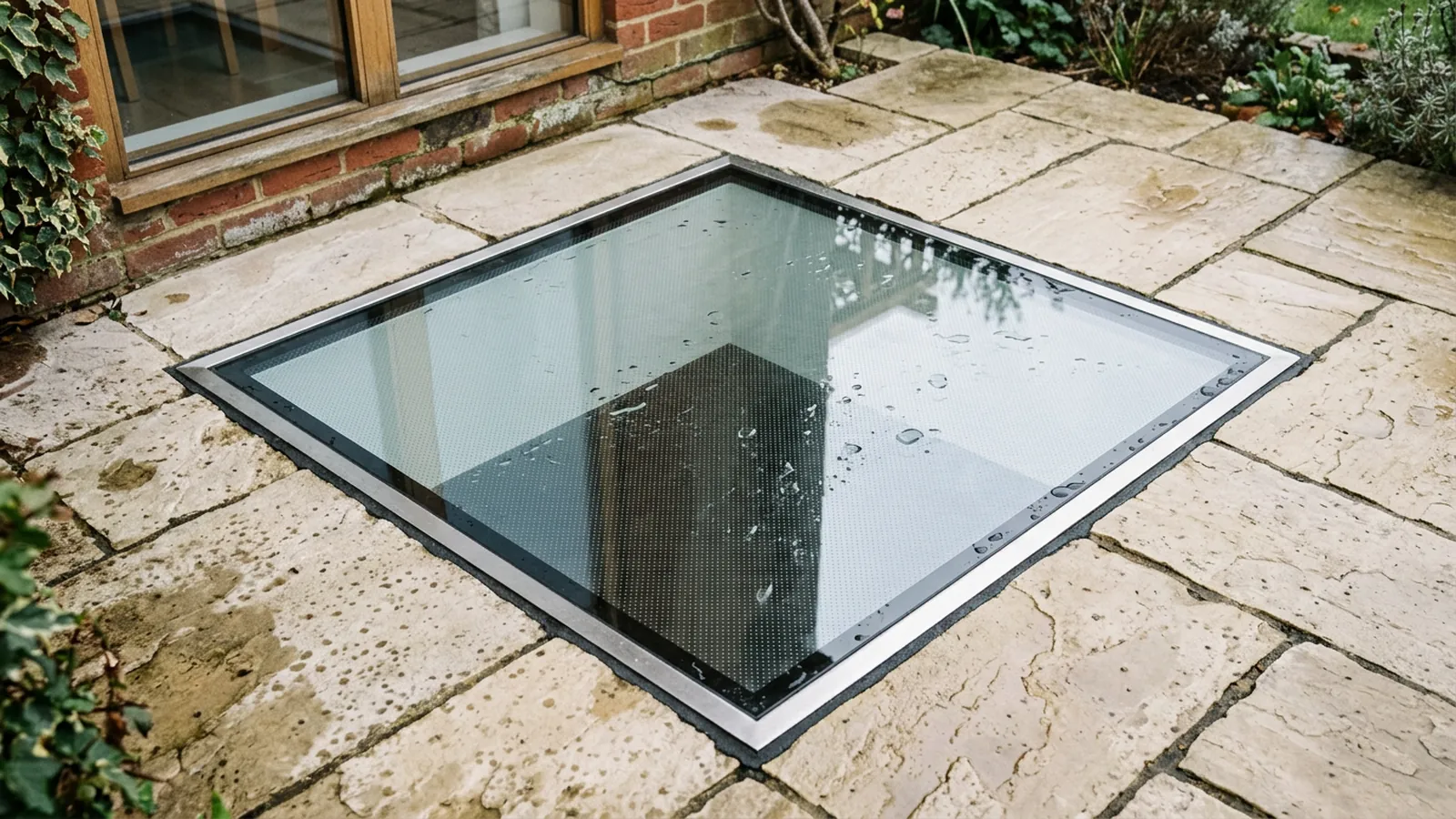
That matters most where a terrace is used barefoot in summer, over a kitchen extension or beside a loft room. The glass itself is only one part of a walk-on unit, and our walk-on rooflight installation page explains how the whole unit is put together and fitted into a flat roof. This page stays with one question: what your feet will notice on a bright July afternoon, and what can be specified to keep it comfortable.
Why glass behaves differently from paving
A surface heats in the sun according to how much of the light it absorbs rather than reflects or lets through. Dark, matt materials soak up most of it, which is why a black single ply membrane or a grey porcelain slab can be uncomfortable to touch by early afternoon. Clear glass lets a large share of the light straight through to the room below, so less of that energy stays in the top pane to warm it.
The top pane still warms. The laminate interlayer, any printed frit and the edge where the glass meets its frame all absorb some heat, and a pane that has sat in direct sun for hours will feel warm under a bare foot. The trade point is that clear or lightly fritted glass tends to run cooler than the dark finishes a terrace is often built from, not hotter.
How a walk-on rooflight sits in a terrace
- Anti-slip fritted top surface, so the glass is safe to walk on when wet
- Laminated glass: several layers bonded with interlayers, so it stays in place if a layer breaks
- Sealed cavity between the laminated glass and the inner pane
- Inner pane, completing the insulated unit
- Frame carrying the glass, sealed at the edges
- Kerb around the opening, bedded to the roof structure
- Waterproofing dressed up the kerb and under the frame
- Paving on pedestals, finished level with the glass
What decides how warm the surface feels
| Factor | Runs cooler | Runs warmer |
|---|---|---|
| Glass colour | Clear or low-iron glass | Body-tinted glass that absorbs more of the light |
| Surface print | A light, sparse anti-slip frit | A dense or dark ceramic frit covering most of the pane |
| Orientation | Shaded by a parapet, wall or the house for part of the day | Open sky from late morning to evening on a south or west facing terrace |
| Surroundings | Pale paving or timber decking around the frame | Dark membrane or dark slabs holding heat right up to the edge |
| Frame | Frame set below or flush with a pale finish | An exposed dark metal edge in full sun |
None of these is a reason to avoid glass on a terrace. They are the levers a specification can pull, and on a sheltered terrace between two houses several of them are already working in your favour.
Frit, tint and coatings
Most walk-on glass carries a printed ceramic frit on the top face for grip, and the density of that pattern changes both how the glass feels underfoot and how much sun it holds. A pale, open pattern keeps the surface close to clear glass. A heavy or dark pattern gives more privacy and more shade to the room below, and it takes up a little more warmth in exchange. Our answer on whether walk-on glass can be fritted or patterned covers the choices, and whether it is slippery when wet covers the grip side of the same frit.
Solar control coatings sit on an inner face of the sealed unit beneath the walkable layer, where they cut the heat reaching the room. They do little for the top surface you stand on, so they are a comfort choice for the room below rather than for your feet. How the walkable pane, the interlayer and the sealed unit stack up is set out in our guide to the glass build-up in a walk-on rooflight.
The room below matters as much as the surface
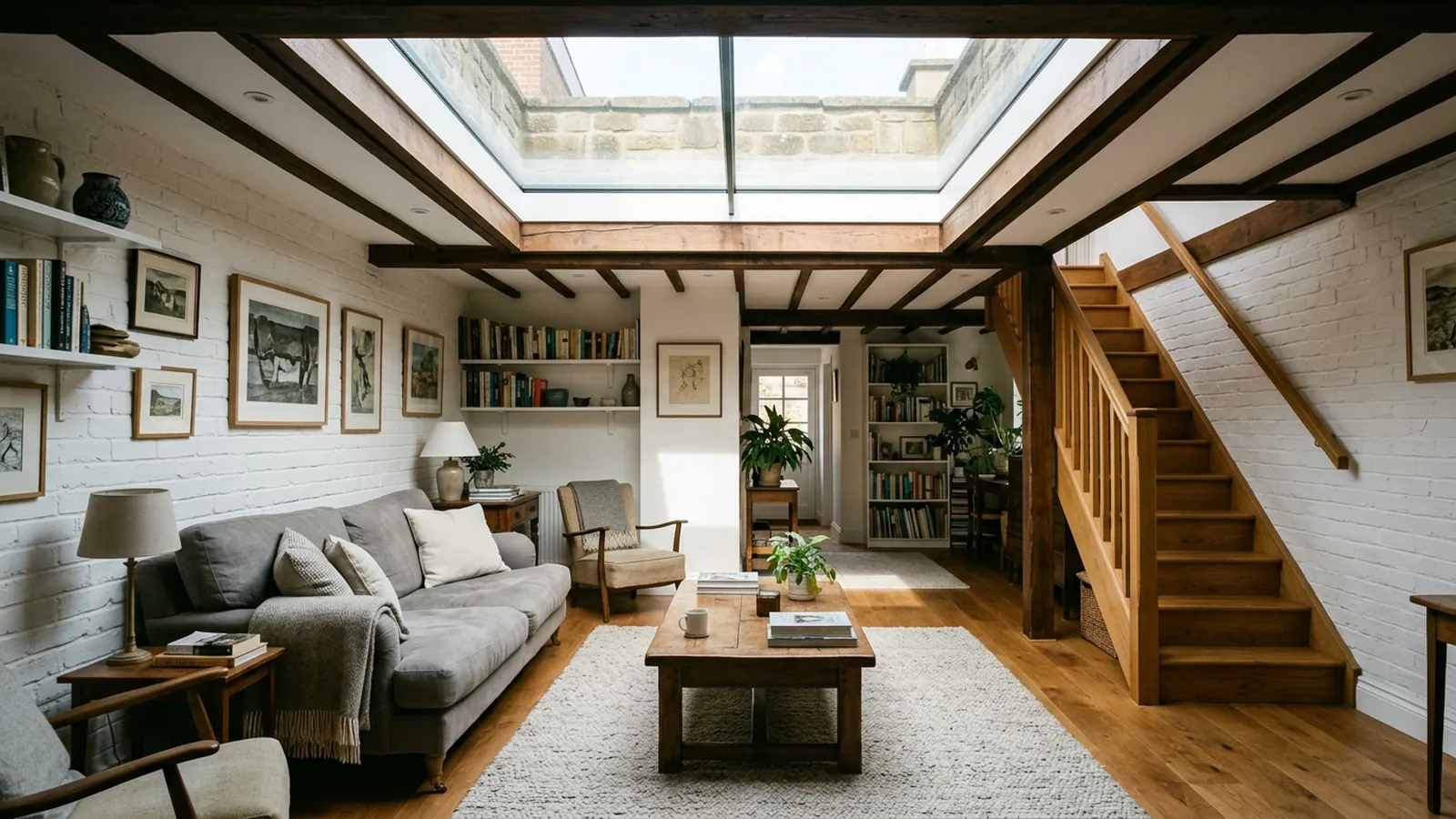
A walk-on skylight is also a window in the ceiling, and on a hot day the bigger comfort question is often indoors. A south facing pane over a kitchen can let a lot of warmth into the room, so the choice of coating and glass is usually made with the room below in mind first. The light it gives the space underneath is a separate matter, answered in how much daylight a walk-on rooflight gives.
The rule: choose the coating for the room below and the frit for the surface above. The exception is a pane that sits in shade for most of the day, where a clear, lightly printed unit usually suits both.
Heat and the glass itself
Sun on glass raises a second, quieter point. When one part of a pane is in hot sun and another is in the shade of a planter, a parapet or a stored chair, the two parts expand by different amounts, and that uneven warming puts stress into the glass. Walk-on panes are made from toughened or heat-strengthened laminated glass, which is far more tolerant of that stress than ordinary annealed glass, and the edge and frame detail is designed to allow for movement.
It is still a good habit to keep large objects that cast a hard shadow off the pane for long spells in summer. If the terrace is planned around outdoor living, our guide to a walk-on rooflight in a roof terrace or balcony covers where furniture, planters and routes across the roof should go.
Keeping a sunny terrace comfortable
- Check the aspect. Note when the terrace gets direct sun and where shade falls from walls and neighbouring roofs.
- Pick the print. Choose a pale, open anti-slip frit unless privacy calls for a denser one.
- Match the surround. Pale paving or timber next to the frame stops a dark border storing heat at the edge.
- Specify the unit for the room. Settle the solar control coating on what the room below needs in summer.
- Plan the shade. If there will be an awning or parasol, place it so its shadow falls evenly rather than cutting across the pane.
What we look at on the roof
Everlight surveys the roof before quoting, and for this question the visit notes the direction the pane will face, the parapets and walls that shade it, the finish that will surround it and how the space below is used. From that we can say which glass and frit suit your terrace and set it all out in writing. The glass is covered by our workmanship guarantee for ten years, which is not insurance backed. If a warm summer terrace is part of the plan, ask us to survey the roof and the specification can be settled around the way you will use it.