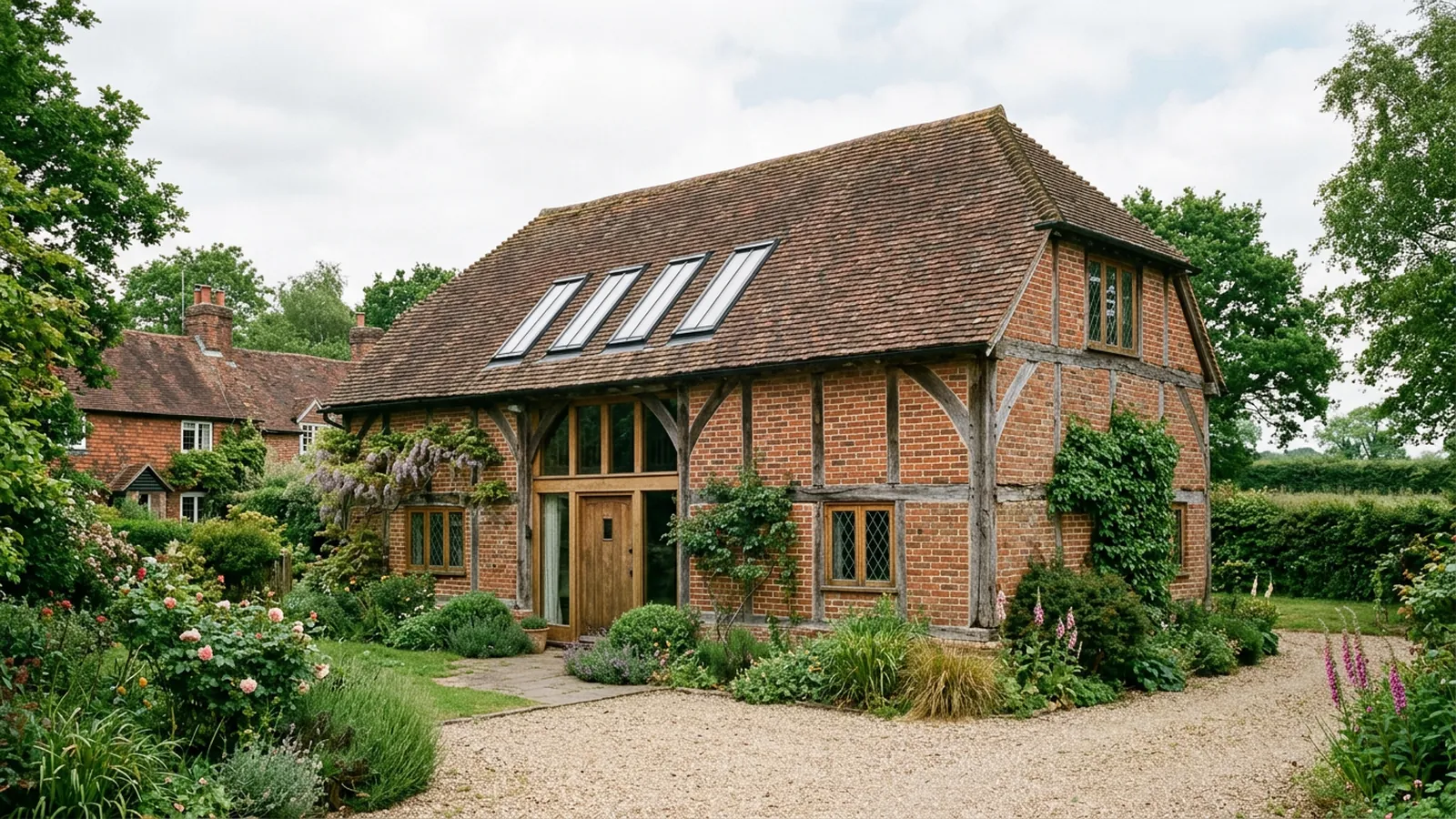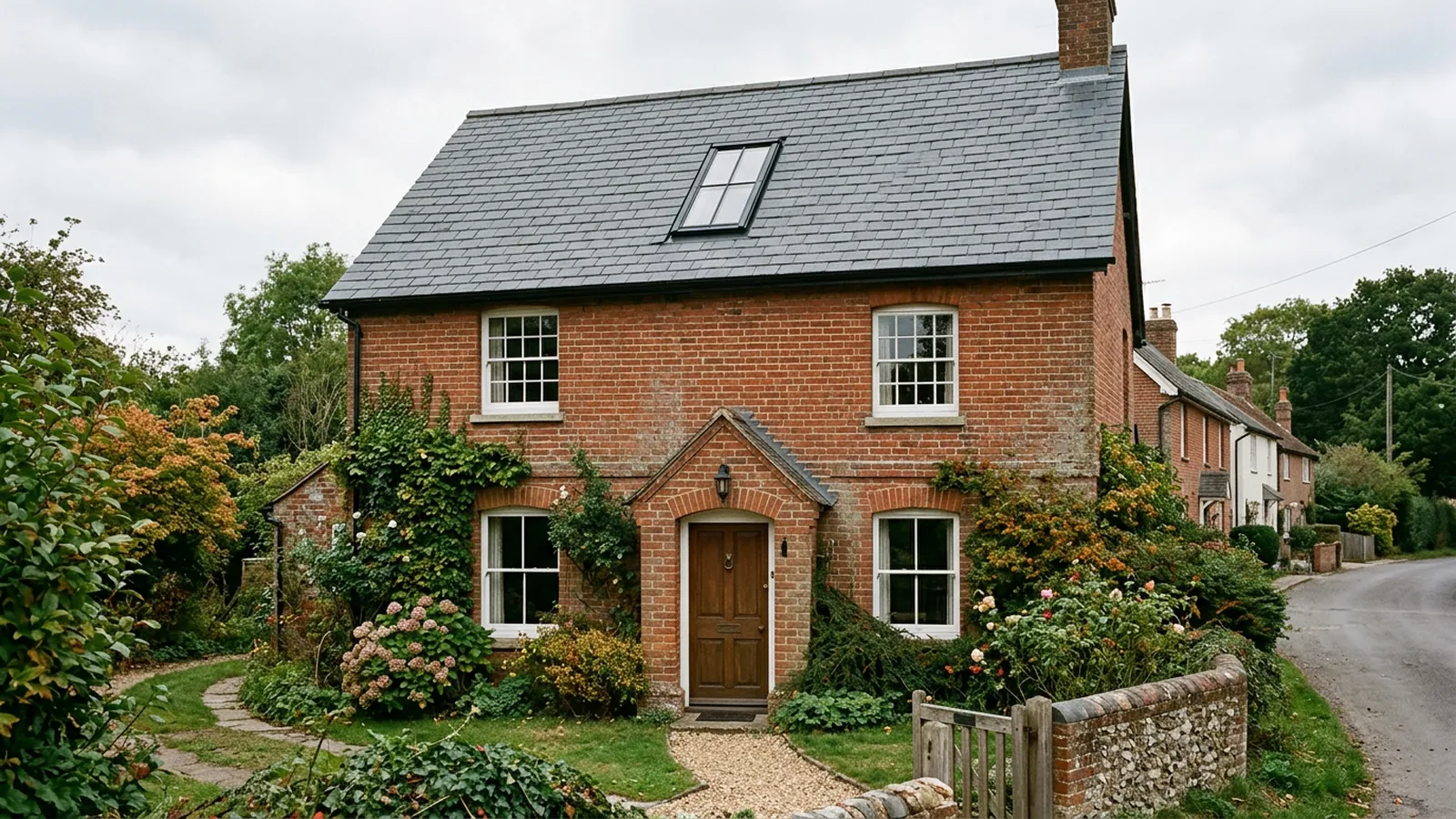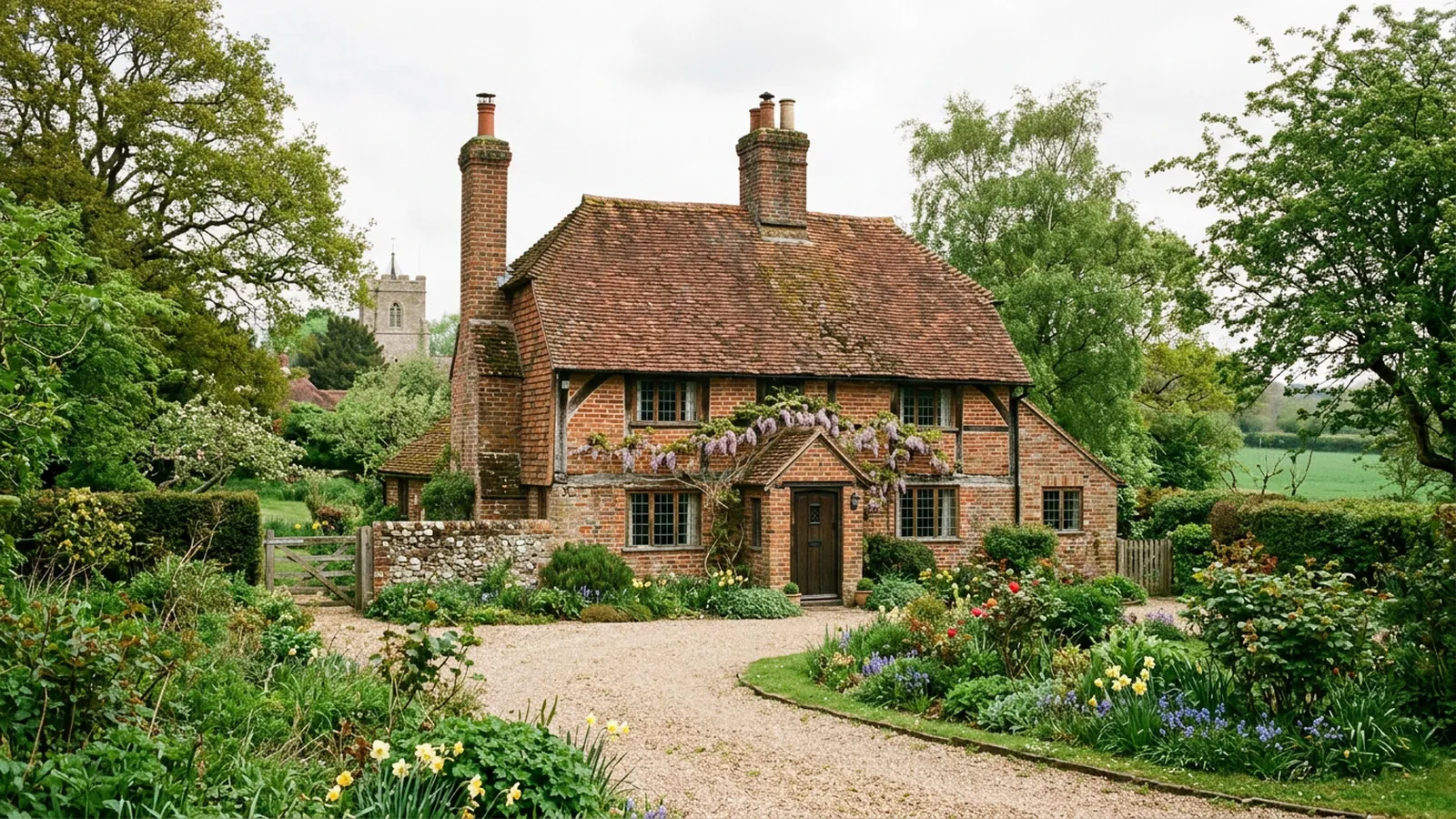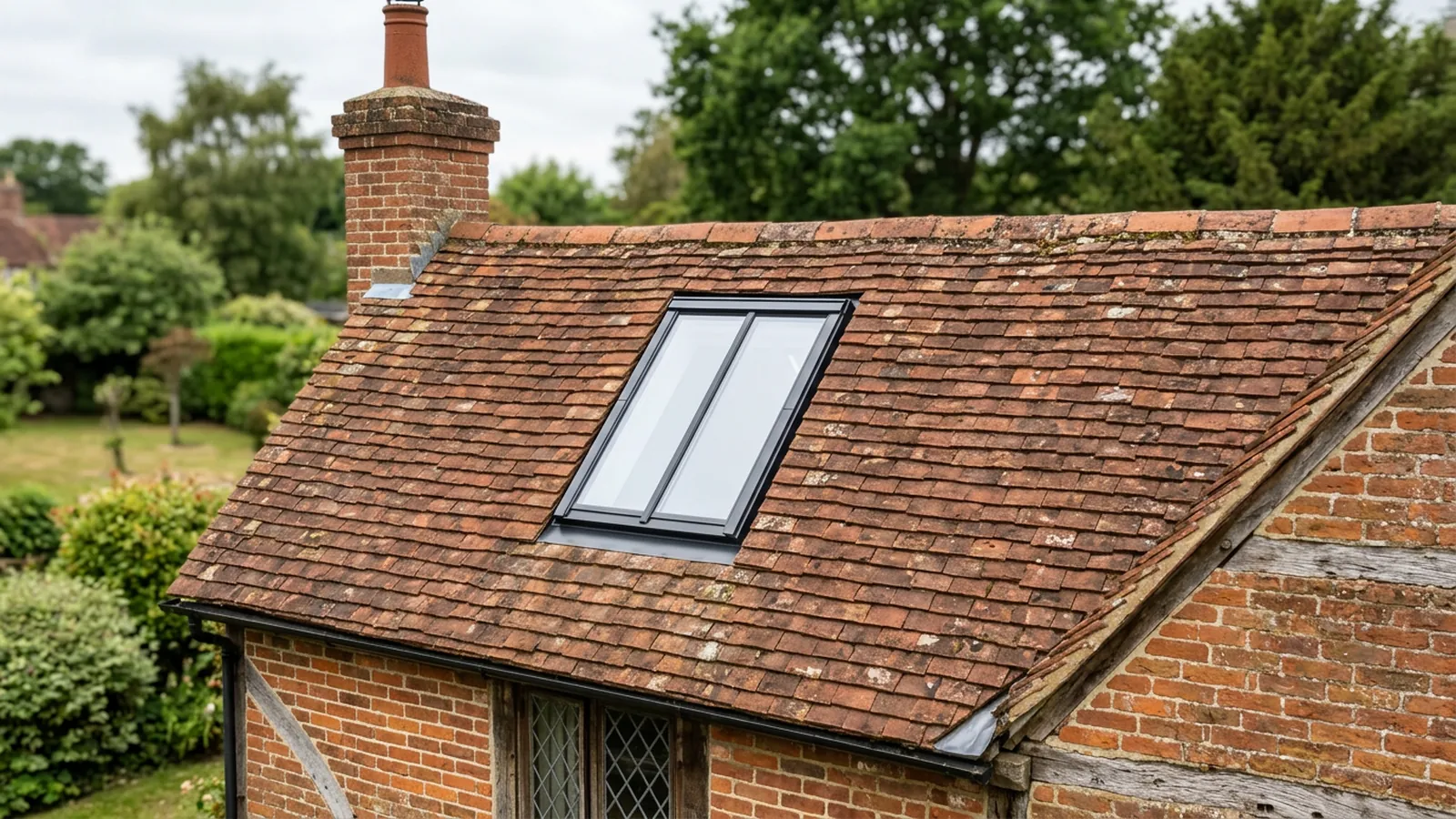
Colour sounds like the last thing to decide, yet on an old roof in Old Basing, Overton or Odiham it is one of the details that decides whether the new opening looks like it belongs. Our conservation rooflight installation page covers the whole job; this answer deals only with the finish, what shades are usual, and who has a say in choosing one.
Why the traditional shade is black
The pattern for a conservation rooflight is the small cast iron skylight fitted to Victorian and Edwardian roofs, over attics, stairwells and servants' rooms. Cast iron was painted to protect it, and the paint was almost always black or a very dark colour. Generations of those lights set the look that people now read as "period", so a modern conservation unit borrows the same appearance: a slim dark frame, a glazing bar down the middle, and glass lying close to the plane of the tiles.
There is a practical reason the tradition survives, too. Seen from the street, a dark frame against weathered slate or old clay tile reads as a shadow rather than an object. A light or bright frame outlines the opening and draws the eye straight to it, which is the opposite of what a rooflight on a sensitive roof is meant to do.
Conservation rooflight compared with a standard roof window
- Low profile: the glass sits close to flush with the roof covering
- Slim dark metal frame, closer to a traditional cast iron rooflight
- Central vertical glazing bar dividing the glass
- Roof covering of slate or clay tile laid on battens
- Flashing dressed into the covering around the frame
- Standard roof window: frame, sash and flashing stand proud of the roof line (roof line shown dashed in both sections)
The shades you will actually be offered
Makers of steel and aluminium conservation rooflights finish the frames in a factory powder coat, and the standard choice is narrow. The table sets out the usual options and where each tends to sit comfortably.
| Finish | How it looks on the roof | Where it tends to suit |
|---|---|---|
| Black | The closest match to painted cast iron; the frame almost disappears into the slope | Natural slate and dark weathered tile, and any roof where the old lights were black |
| Dark or anthracite grey | Slightly softer than black, close to the colour of wet slate | Slate roofs and grey concrete or clay tile where pure black looks harsh |
| Other dark shades to order | A brown or bronze tone picked to sit with a particular covering | Warm handmade clay tile, where the planning officer or owner prefers a tone nearer the roof |
| Pale or bright colours | Frames the opening and stands out from a distance | Rarely a fit on a sensitive roof; better kept for modern flat and pitched roofs outside protected areas |
The metal itself affects how the finish ages and how slim the frame can be, which our guide to steel or aluminium conservation rooflights compares side by side.
Matching the finish to slate or clay tile
Around Basingstoke the two coverings that most often carry a conservation rooflight are Welsh style natural slate and handmade clay tile. They ask for slightly different thinking.
Slate is grey to blue-black, and it darkens in the rain. Black or a deep grey both work, and the choice often comes down to which reads better against that particular slate when it is dry. Old clay tile is a different story: its reds, oranges and browns mellow over time and gather lichen, so a jet black frame can look like a hole punched in a warm roof. Here a dark grey, or a dark brown tone where one is offered, may sit more quietly, although black remains the default expectation in many conservation areas. Neither covering has a single right answer; the survey looks at the actual roof in daylight and the finish is chosen against it.
The best colour is the one you stop noticing from the pavement.
What colour the inside of the frame is
The inner face of the frame is a separate decision, and the planning interest in it is usually slight because nobody sees it from outside. A white or light inner finish keeps a bedroom or bathroom ceiling bright and makes the opening feel lighter, while matching the outside colour gives a more industrial look that suits an exposed-timber attic or a barn. Many makers supply a white interior as standard with the dark outside, and a dual colour finish can be ordered where the room calls for it. The timber or plaster linings around the frame are then decorated to suit the room, just as they would be for any skylight.
Who gets a say in the colour
The rule: where a rooflight needs planning permission or listed building consent, the council may set the external colour as a condition, and that condition must be followed. The exception: where no consent is needed, the choice is yours, though a dark traditional finish is still the sensible way to respect an old roof.
Whether you need consent at all depends on where the house is, what it is, and which slope the rooflight faces. Our answer on whether conservation rooflights need planning permission sets that out, and what a planning officer looks at explains how finish sits alongside size, position and the glazing bar in the officer's view. For a listed house the finish is part of the consent drawings, so it is agreed before an order is placed rather than chosen from a brochure afterwards.
Colour does not make a rooflight a conservation one
A black frame on its own is not enough. A standard roof window finished in a dark colour still sits proud of the tiles, still has a deep external frame, and still reads as modern. What makes a unit a conservation rooflight is the whole set of features: the low profile, the slim frame, the central bar and the way it lies in the roof. Our guide to what makes a rooflight a conservation rooflight goes through each one. The same point sits behind the naming question in is a heritage rooflight the same as a conservation rooflight? A product called "heritage" in a black finish is worth checking against those features before you assume a planner will treat it as conservation grade.
Choosing yours
Start from the roof, not the catalogue. Look at the slope from the street and from the garden, note the covering and how it has weathered, and check whether any consent that applies names a finish. At the survey we look at the same things, confirm what the slope and covering will take, and set the external and internal colours out in the written quote, so the order goes in with the finish settled and matched to the consent. The installation work is covered by our ten-year workmanship guarantee.
If you would like the finish judged against your own roof rather than a sample swatch, arrange a survey of the roof and the colour choice can be made standing in front of it.