The doubt is fair. A sun tunnel looks, from below, like a ceiling light fitting, and it is hard to believe a tube can bring real daylight through a loft. It can, and the reason is simple physics, but it only pays off when the roof, the loft and the room line up. Our sun tunnel installation page covers the whole service; this answer sticks to one thing: whether it will work in your house.
Why the tube actually carries light
A clear dome on the roof catches daylight from across the sky. Below it, a tube lined with a highly reflective finish bounces that light down, reflection after reflection, until a diffuser in the ceiling spreads it into the room. Nothing is powered and nothing moves. The daylight you get is the daylight falling on that dome, so it rises and falls with the weather and the time of day, just as it would through a window.
The mechanics, from dome to diffuser, are laid out in our guide on how a sun tunnel carries daylight into a room. For the question of whether it works, what matters is that every reflection loses a little light, so the path between roof and ceiling is what decides the result.
How a sun tunnel brings daylight down
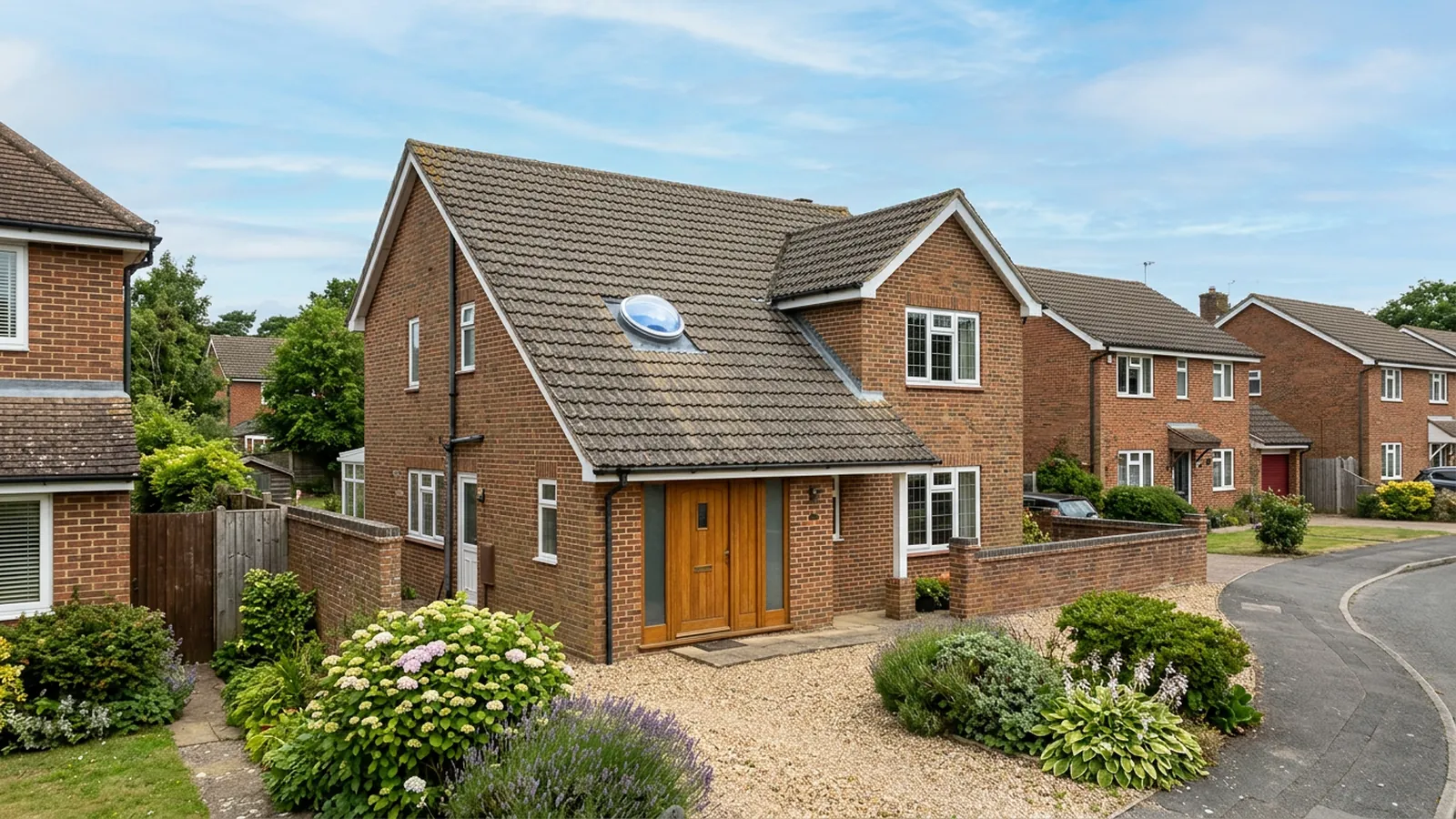
- Clear dome on the roof slope, catching daylight from the sky
- Flashing, weathered into the tiles so rain runs round the dome
- Daylight reflecting off the mirror-finish lining all the way down
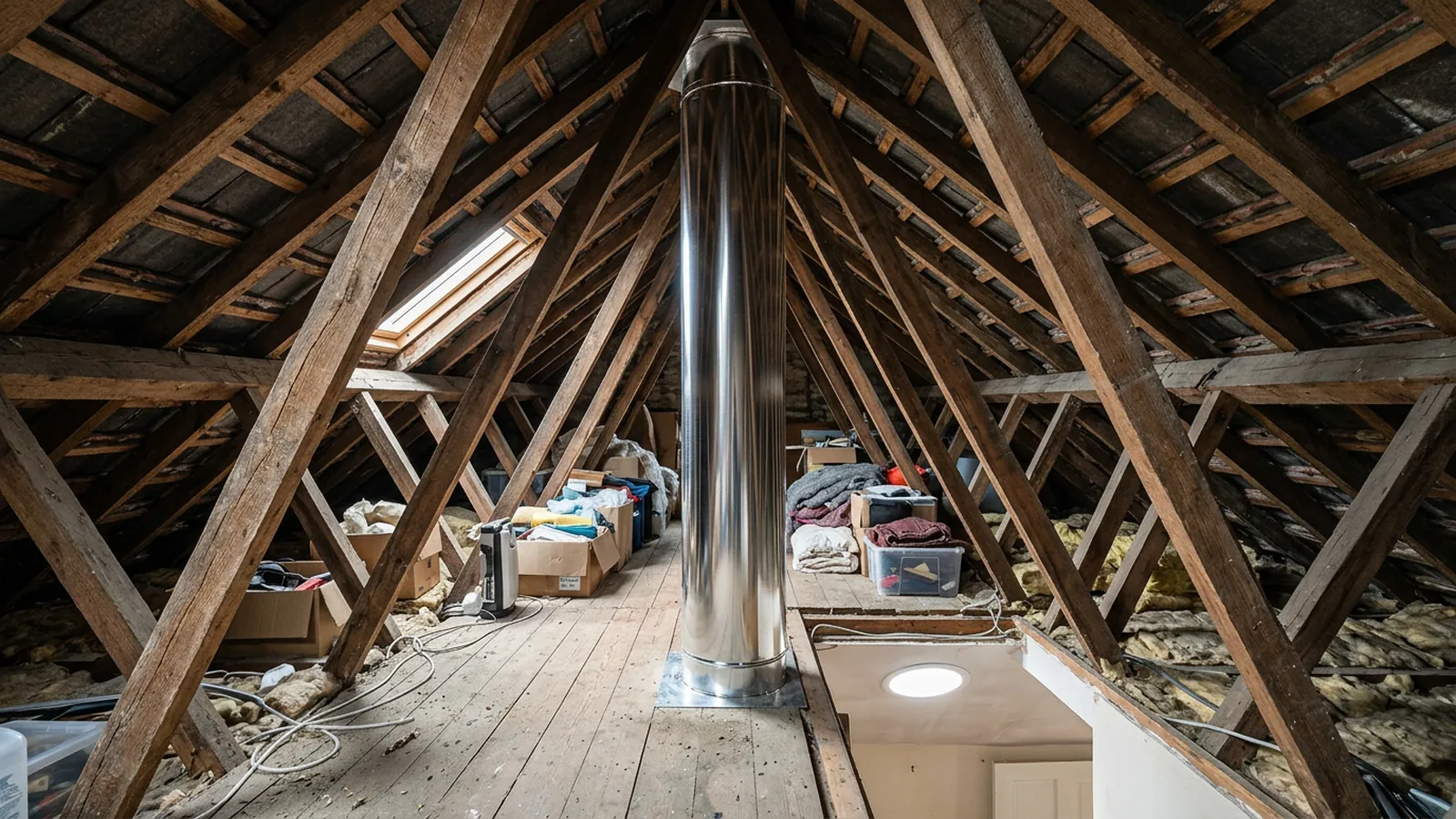
- Reflective tube, here a rigid straight run through the loft
- Loft insulation laid up to the tube, with an insulated sleeve round it to limit condensation
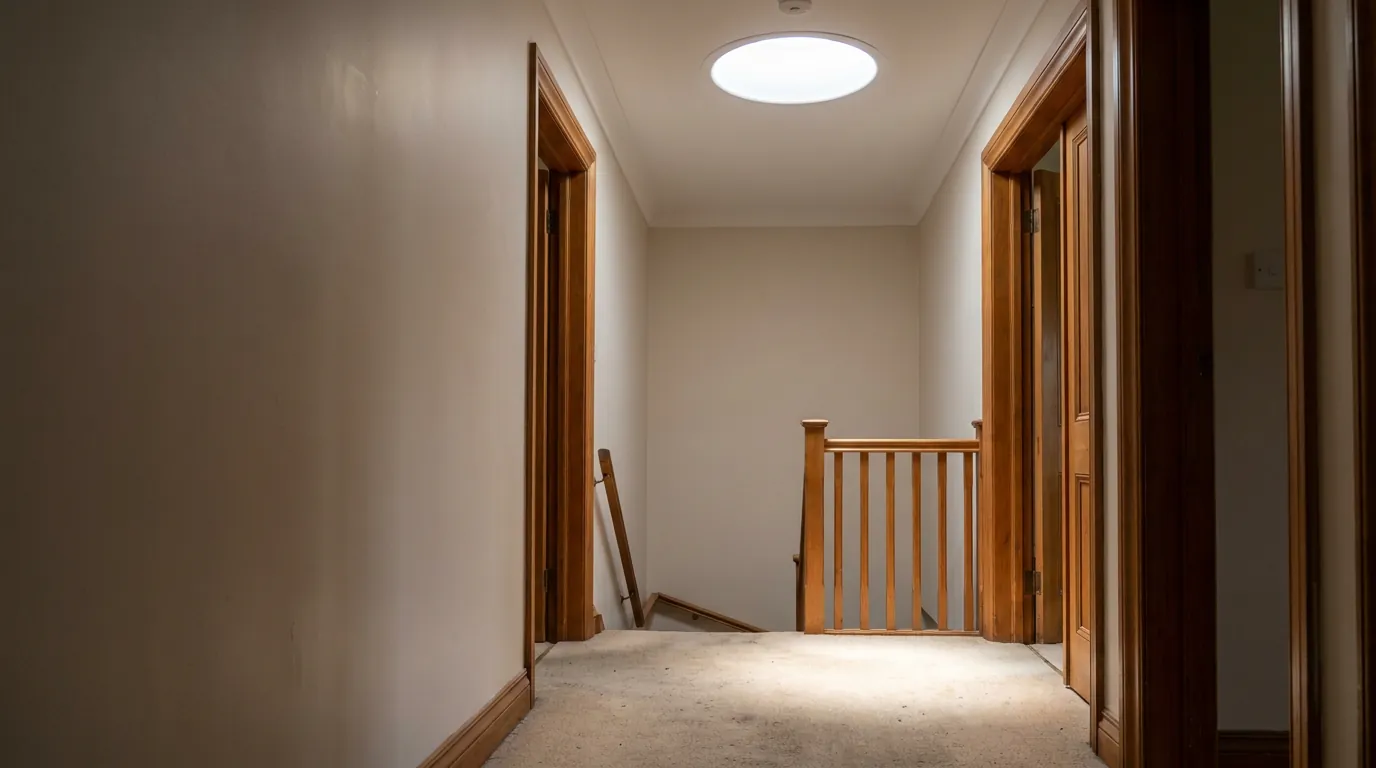
- Ceiling diffuser, spreading the light across the landing below
- Shown faint: angled elbows let the tube step round a truss or purlin, at some loss of light
Where a sun tunnel earns its place
Think of a sun tunnel as a way to put daylight into a room that has none, rather than a way to flood a big room with sun. That is why the classic spaces are the ones in the middle of a house.
| Space or situation | How it tends to go | Why |
|---|---|---|
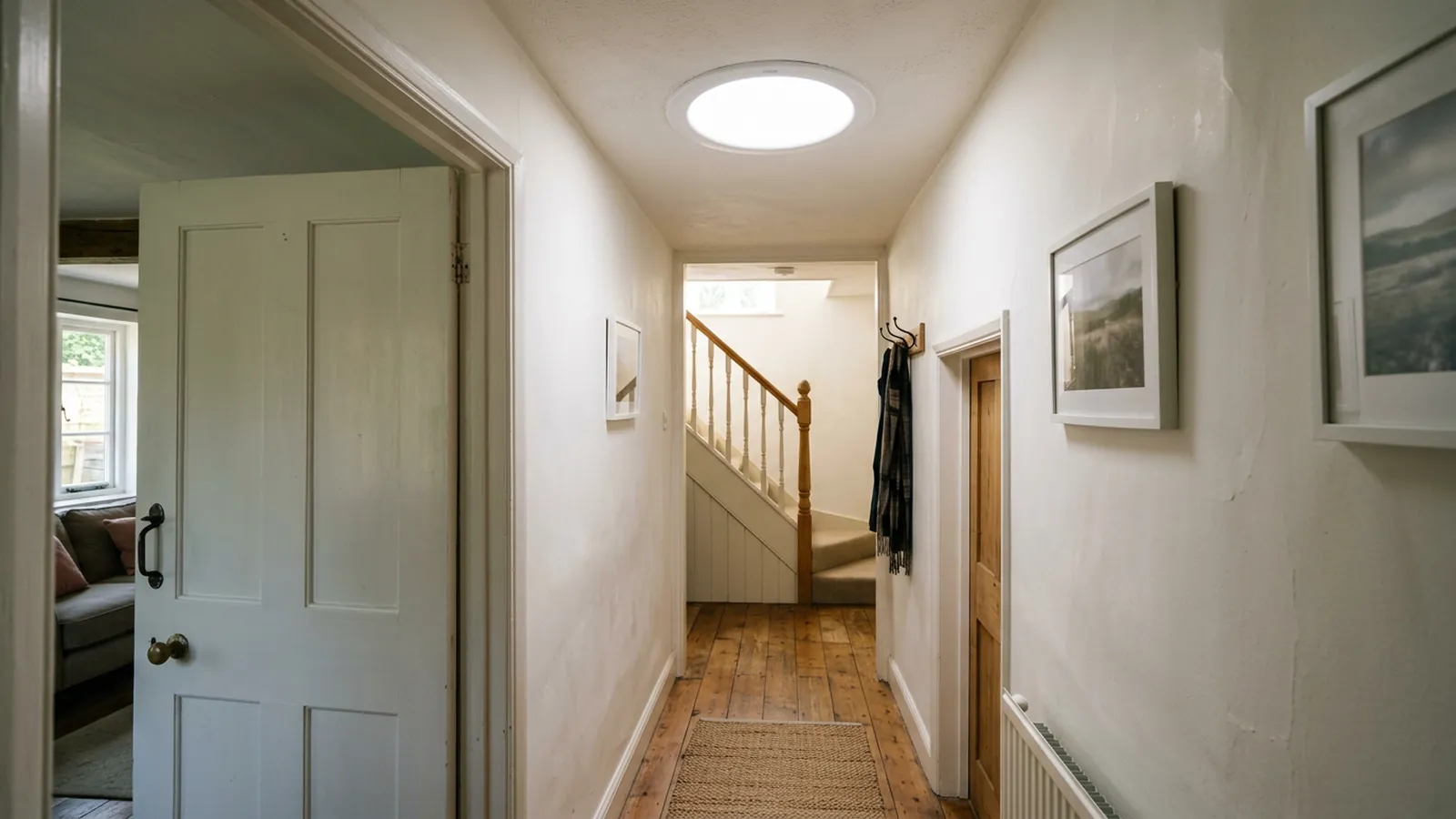
| Landing or hallway under the loft | Works well | Short drop through the loft, small floor area, and the room had no daylight to begin with |
| Windowless bathroom or en suite | Works well | A small, enclosed room where modest daylight makes an obvious difference in the daytime |
| Walk-in wardrobe or utility | Works well | Compact space used in the day, often on an inside wall |
| Large open-plan living space | Adds some light, rarely enough alone | One tube spreads its light over too much floor; a rooflight or several tubes suit better |
| Ground floor room under a bedroom | Depends on the route | The tube has to pass through the storey above, which adds length and needs boxing in |
| Long run with several bends | Noticeably dimmer | Each bend and each extra length of tube costs light before it reaches the diffuser |
How bright the result is in practice, and what changes it, is answered in how much light does a sun tunnel give?
What makes one disappoint
The unhappy stories behind this search usually trace back to one of a few causes, and each can be spotted before anything is fitted.
- The route was too long or too bent. A flexible tube snaking round a water tank or purlin loses far more light than a straight rigid one.
- The dome sat in shade. A chimney, a taller neighbouring roof or a dormer cheek throwing shadow on the dome cuts what goes in at the top.
- The room was too big for one tube. The expectation was a window's worth of light across a large space.
- The wrong job was asked of it. A sun tunnel does not open, gives no view and does not ventilate unless a vent kit is added.
Weather is less of a problem than people expect. Diffuse daylight on an overcast day still reaches the dome, which is why sun tunnels still work on cloudy days, just at a lower level, the same as any window in the house.
How the roof itself affects the answer
On the trussed estate houses around Basingstoke, a sun tunnel is often an easy fit. The dome and its flashing sit between trusses at the usual 600mm centres, so no structural timber is touched, and a clear loft gives a short, direct drop to a landing ceiling. Concrete interlocking tile and plain tile both take a matching flashing. Older cut rafter roofs in the villages vary more, and the survey measures what is there.
The rule: the dome goes where the tube is shortest and straightest, and that usually means the slope directly above the room. The exception is a slope in heavy shade, where a slightly longer route to brighter roof can give the room more light overall. Orientation matters less than shade, which is why a north-facing roof can still take a sun tunnel.
Sun tunnel, rooflight or skylight?
Where a room sits directly under the roof slope, as in a loft conversion or a top-floor room with a sloping ceiling, a roof window or rooflight will outperform a tube: more glass, a view of the sky, and ventilation when it opens. A skylight in a flat roof extension is the same story. The sun tunnel wins where there is a loft void between the roof and the room, because it reaches daylight into a space no window could serve.
If you are weighing the two for a particular room, our guide to choosing between a sun tunnel or a roof window sets out which suits which space.
How to know before you commit
You can do a rough check yourself. Stand in the room and picture the ceiling spot you want lit, then go up into the loft and look straight above it. If there is a clear run to the roof with nothing but insulation in the way, and the slope outside is not shaded, the omens are good. If there is a tank, a chimney breast or a converted room in the way, the route needs thought.
A survey settles it properly. We look at the loft route, the roof covering, the shade on the slope and the size of the room, and tell you whether a sun tunnel will do what you hope or whether a different kind of glazing would serve you better, before any price is put on paper. The fitted tube is covered by a 10-year workmanship guarantee (not insurance backed). To find out whether your landing or bathroom is a good candidate, arrange a survey of your roof and loft.