Grey skies are the normal weather over north Hampshire for much of the year, so a tube that only earned its place in July would be a poor buy. The sun tunnel installation hub covers the whole job from roof to ceiling; this page deals with one narrow worry: what the tube does when the cloud rolls in.
Where the light comes from when the sun is hidden
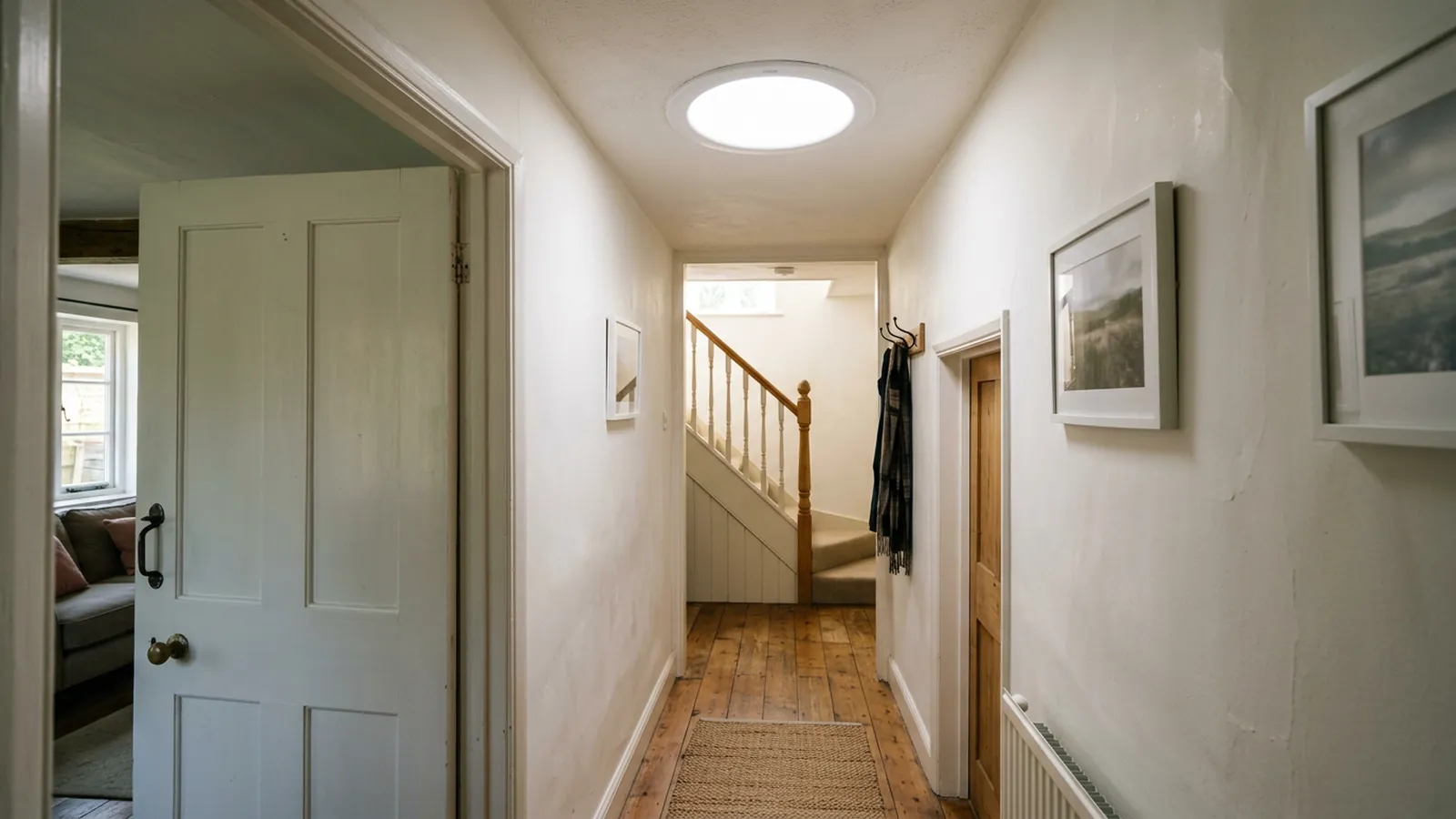
Cloud does not switch daylight off. It scatters it. On an overcast day the whole sky becomes a dim, even source, and light reaches the ground from every direction rather than in one bright beam. A clear dome on the roof sits in that scattered light and gathers it from above and around, which is why the diffuser in a hallway ceiling still reads as a pale disc of daylight when the view from the front door looks flat and dull.
The mirror lining of the tube then does the work. Light that enters the dome bounces down the reflective walls to the diffuser, losing a little at each reflection. On a sunny day there is plenty to spare, so those losses hardly show. On a dull day there is less to start with, so the same losses matter more. The mechanics are set out in the guide to how a sun tunnel carries daylight into a room.
How a sun tunnel brings daylight down
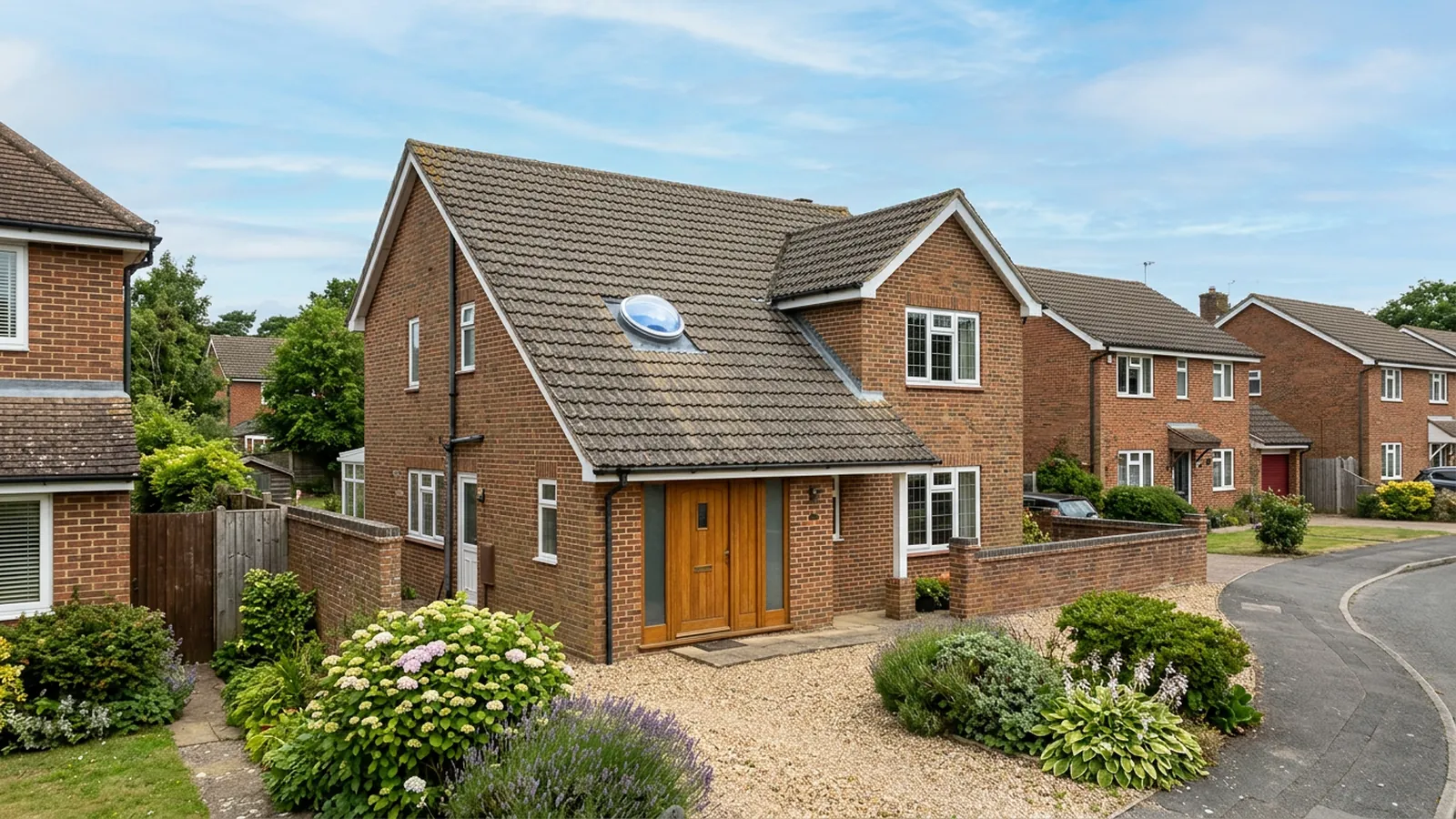
- Clear dome on the roof slope, catching daylight from the sky
- Flashing, weathered into the tiles so rain runs round the dome
- Daylight reflecting off the mirror-finish lining all the way down
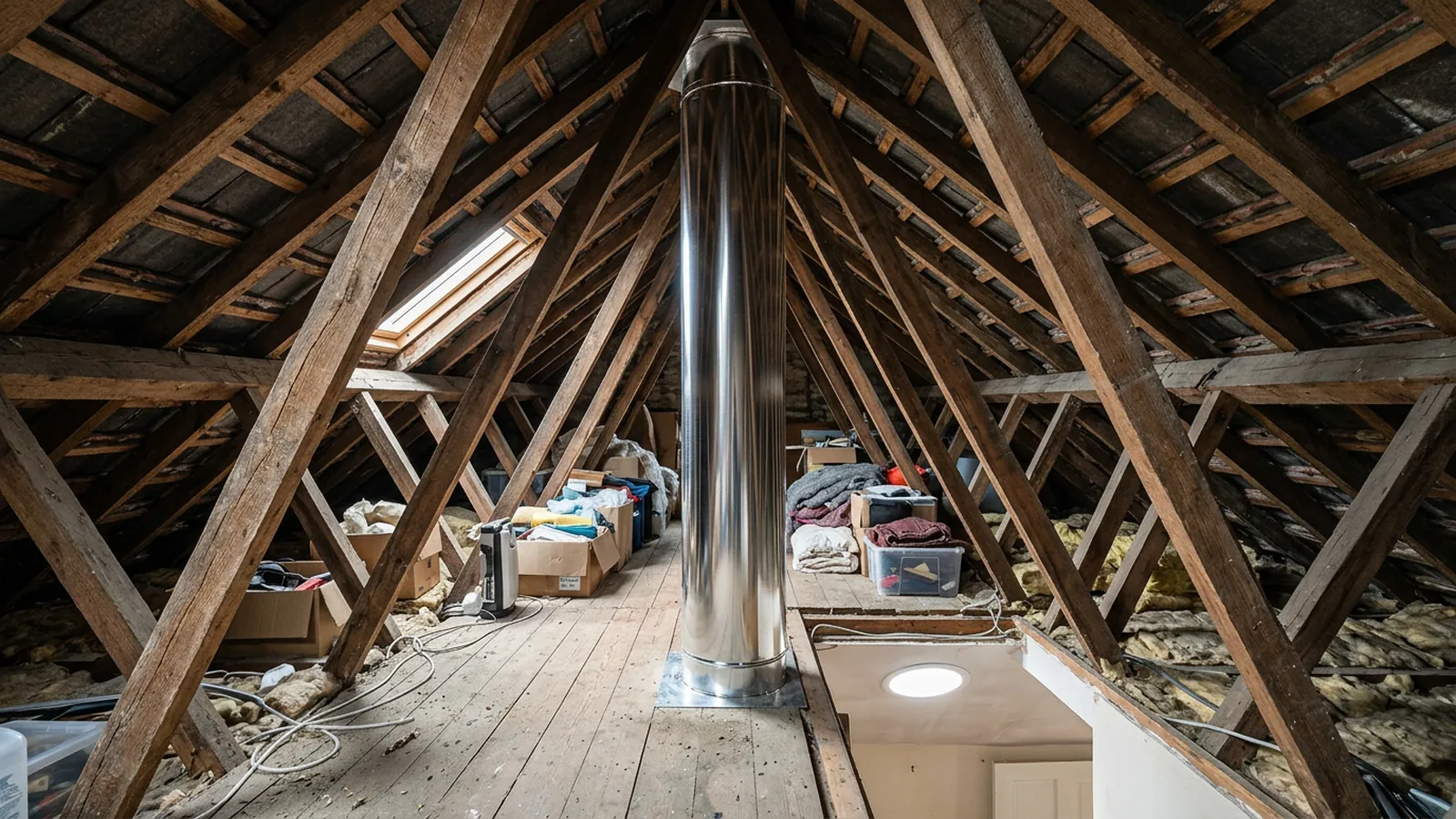
- Reflective tube, here a rigid straight run through the loft
- Loft insulation laid up to the tube, with an insulated sleeve round it to limit condensation
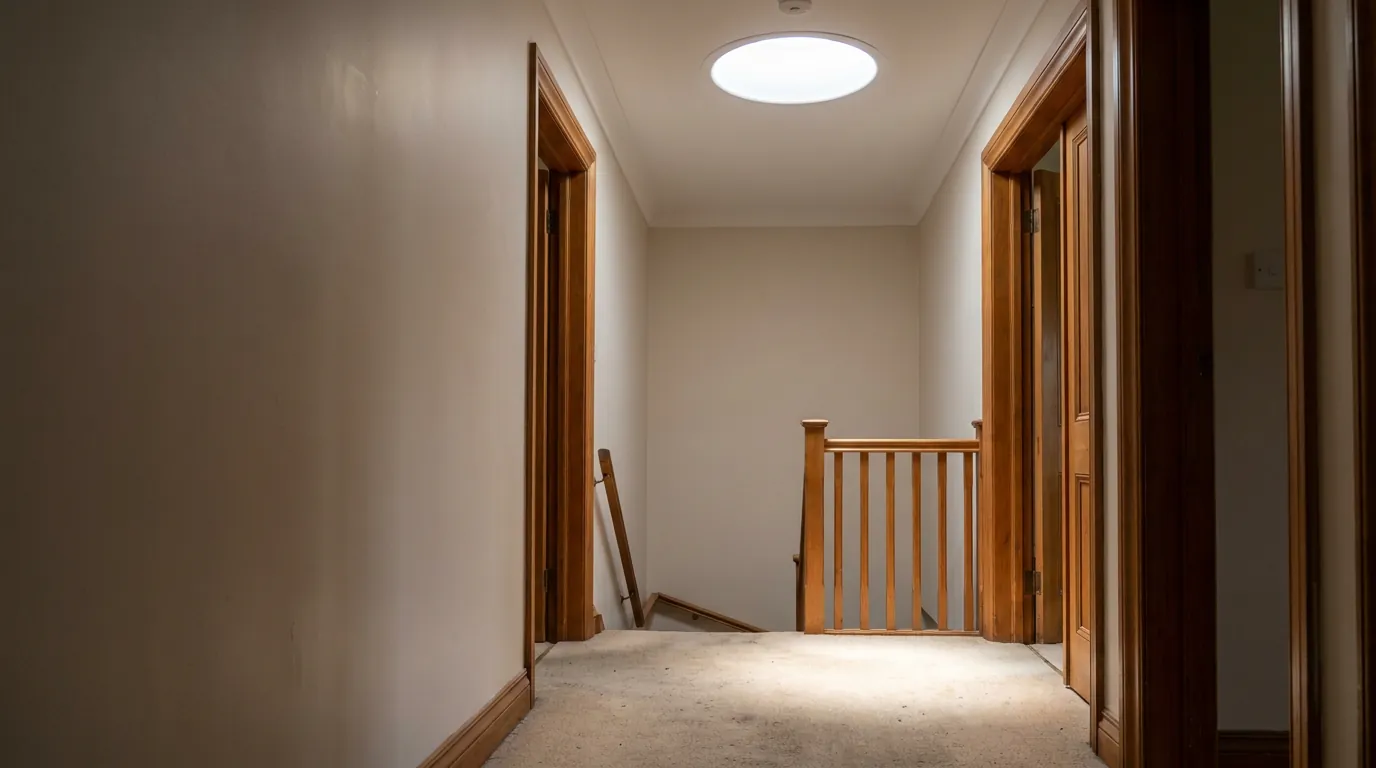
- Ceiling diffuser, spreading the light across the landing below
- Shown faint: angled elbows let the tube step round a truss or purlin, at some loss of light
What changes between a bright day and a grey one
| Sky | What reaches the dome | What you see at the ceiling |
|---|---|---|
| Bright sun | A strong direct beam plus light from the open sky | A bright disc that lights the room like a lamp |
| Thin, high cloud | Scattered light from across the sky, still fairly strong | Even, comfortable daylight with no hard edges |
| Heavy overcast | Dim light from every direction, no direct beam | A softer glow, enough to see by in a small space |
| Dusk or winter gloom | Very little daylight of any kind | A faint disc; a lamp takes over |
The pattern is the one you already see through any window: the tube follows the sky. It never makes light that is not there, and it does not stop working at the first cloud either.
Why the tube matters more on dull days
Because the losses in the tube bite hardest when light is scarce, the design choices that seem minor in summer become the deciding factor in November. A wider tube lets more light in at the top and loses less on the way down. A short, straight run keeps more of it than a long run with elbows. A rigid, highly polished tube holds its reflectivity better than a flexible one with ridged walls.
The rule: for a space you want lit on grey days, keep the run short and straight and choose the widest tube the ceiling and the gap between the trusses allow. The exception is a very small room such as a cloakroom or an en suite, where even a modest tube gives enough of a glow to make the room usable without switching a light on.
Sizes, run lengths and the trade-offs between them live in the guide to tube diameter, length and how much light arrives. On a trussed estate roof, the width of tube that passes cleanly between trusses at 600mm centres is usually the practical ceiling on size.
Does the direction of the roof slope matter under cloud?
Less than it does in sunshine. On a clear day a south or west facing dome catches the direct beam for longer, and a north facing one misses it. Under full cloud the sky is lit almost evenly, so the gap between the slopes narrows. That is one reason a north facing slope is often still a reasonable place for a tube, a point covered properly in the answer on whether a sun tunnel can go on a north-facing roof.
What does matter under cloud is the dome's open view of the sky. A dome tucked below a taller neighbouring roof, a chimney stack or a large tree sees less of the sky, and on a dull day that shading costs more light than the compass direction does.
Is a tube enough for the room, or does it need a skylight?
It depends what the room is for. A tube is at its best in a landing, a hallway, a bathroom or a walk-in cupboard: spaces where a steady daylight glow replaces a light left on all day. In a larger living space, a single tube on a grey afternoon will not feel like a window. There, a roof window or a rooflight gives far more light, plus a view of the sky and fresh air, where the roof allows one to be fitted.
- Name the room. A small, windowless space suits a tube; a room you sit in for hours may want more.
- Check the roof above it. The route from the roof to that ceiling decides the tube's length and how many bends it needs.
- Weigh the grey days. If the room must feel bright in winter, favour a wider tube, a second tube, or a glazed opening instead.
How much light each option gives, in plain terms, is compared in how much light does a sun tunnel give?, and the bigger choice is weighed in are sun tunnels better than skylights?
Getting the most from a tube in a grey climate
At the survey we look at the things that decide dull-day performance on your house: where the dome can sit with the widest open sky, the straightest route through the loft, the space between the trusses and the ceiling position below. We then say plainly whether one tube will light the space on an overcast morning or whether it needs something more. The installation carries a 10-year workmanship guarantee, and it is not insurance backed.
If you want to see what your hallway or bathroom would get on a typical cloudy day before deciding, arrange a survey of your roof and we will trace the route with you in the loft.