So the useful question is not which product wins, but how far your dark room is from the roof tiles. Our sun tunnel installation service and our roof window work start from that distance, then from the roof structure it has to pass through, and only after that from the product.
Below is how the two compare on the things owners weigh up: where each one can go, what the light looks like, fresh air, heat, disruption and cost drivers. Where a sibling page covers a point in depth, this answer points you to it rather than repeating it.
Two different jobs on the same roof
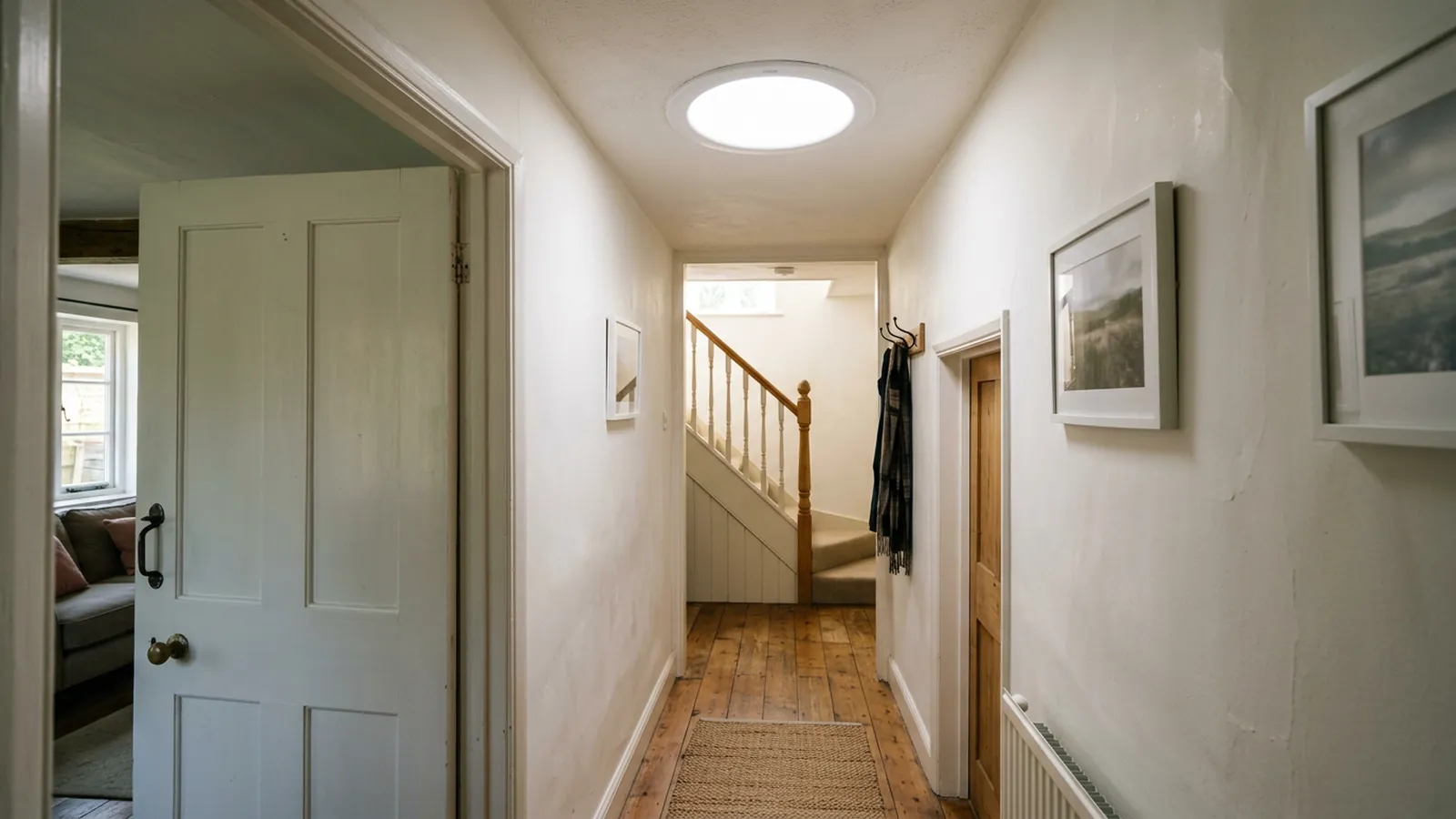
A rooflight or skylight is glazing set into the roof slope or a flat roof, with the room directly beneath it. You look up and see sky. A sun tunnel is a small clear dome on the roof, a reflective tube running down through the loft, and a diffuser in the ceiling of the room below. You look up and see a round, frosted disc of light, a little like a flush ceiling fitting that happens to be lit by the sun.
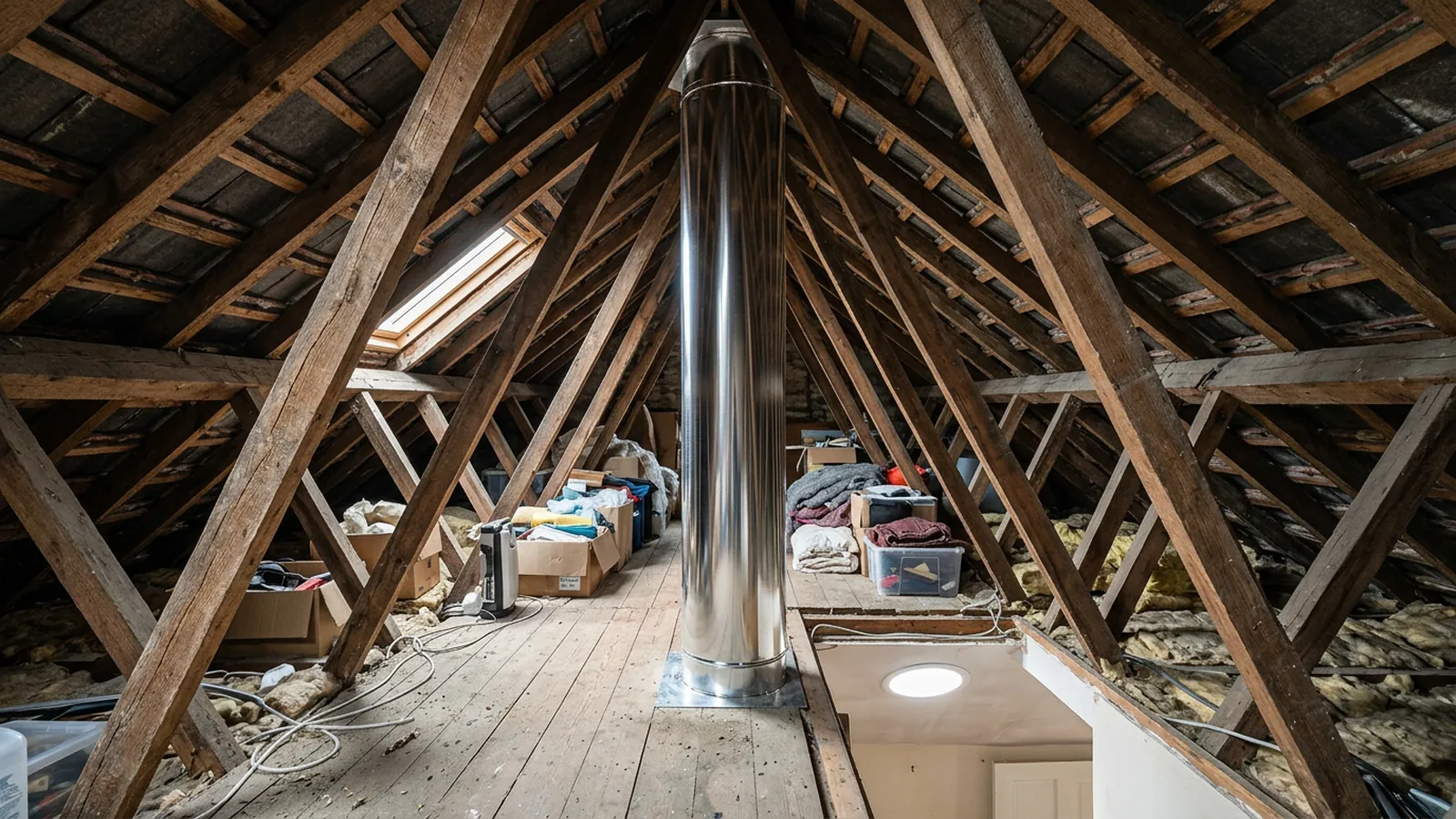
That difference in shape is the whole story. A skylight needs the room to touch the roof. A tube can travel through a loft void to reach a ceiling the roof never touches. How the mirror finish inside the tube carries daylight down is explained in our guide on how a sun tunnel carries daylight.
How a sun tunnel brings daylight down
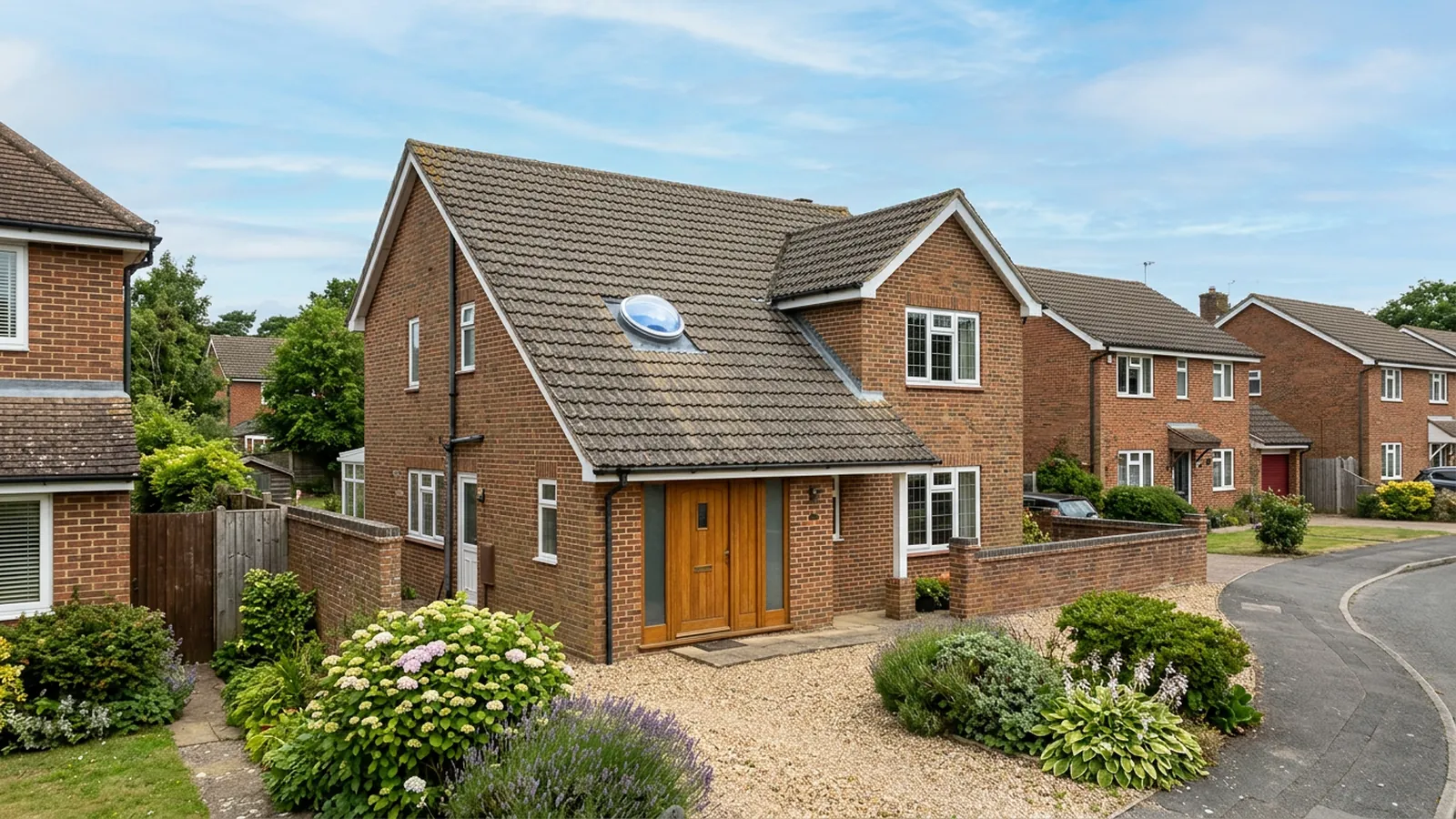
- Clear dome on the roof slope, catching daylight from the sky
- Flashing, weathered into the tiles so rain runs round the dome
- Daylight reflecting off the mirror-finish lining all the way down
- Reflective tube, here a rigid straight run through the loft
- Loft insulation laid up to the tube, with an insulated sleeve round it to limit condensation
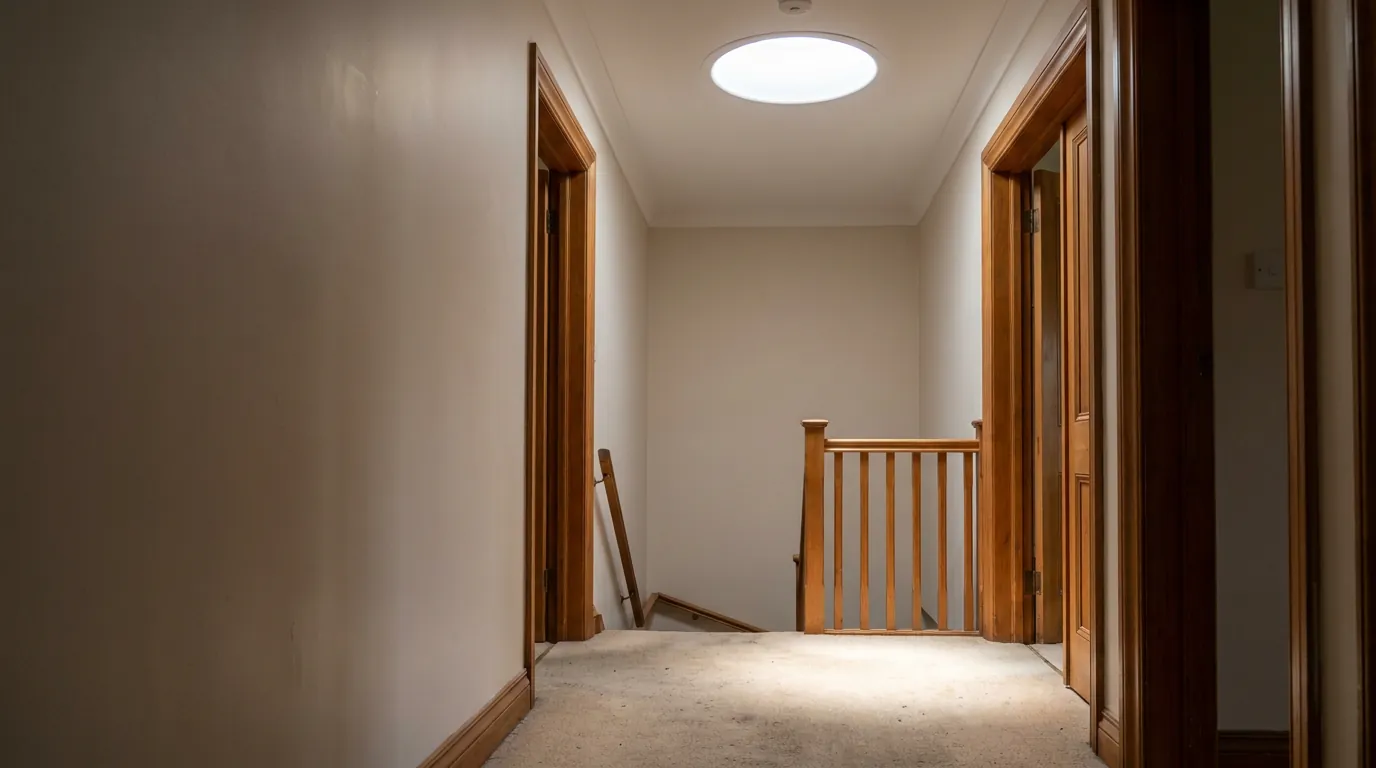
- Ceiling diffuser, spreading the light across the landing below
- Shown faint: angled elbows let the tube step round a truss or purlin, at some loss of light
Which suits which room
The quickest way to see the split is room by room. These are the spaces that come up on the estate houses and bungalows around Basingstoke, and the option that normally fits each one.
| Room | Usual fit | Why |
|---|---|---|
| Inner landing or hall on the first floor | Sun tunnel | The loft sits between the ceiling and the roof, and a tube crosses it easily |
| Windowless bathroom or en suite | Sun tunnel | Daylight arrives without a pane of glass anyone can see through |
| Loft conversion bedroom or study | Skylight or roof window | The room is under the slope, so glazing gives light, a view and an opening sash |
| Single-storey extension with a flat roof | Rooflight | The ceiling is the roof, and a flat rooflight spreads light across the whole space |
| Deep middle room in a bungalow | Either | A vaulted ceiling favours glazing; a flat ceiling with a loft above favours a tube |
A ground floor room in a two-storey house is the hard case, because there is a whole floor in the way. Glazing cannot reach it, and a tube can only get there if it can pass through a cupboard or boxed corner upstairs.
Where a skylight gives you more
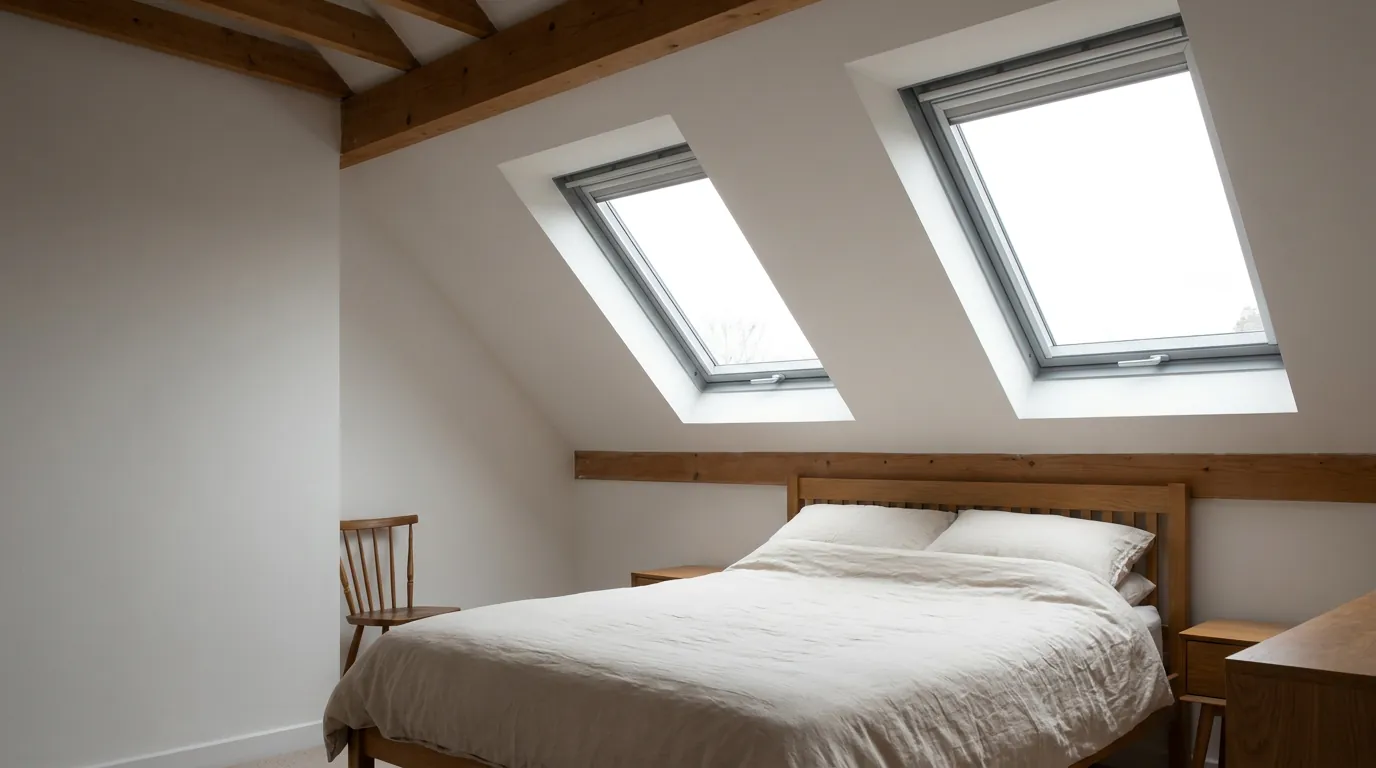
For a room already under the roof, glazing wins on almost every count. It lets in far more daylight from the same area of roof, because the light does not have to travel down a tube. It shows the sky, which changes how a room feels in a way a diffuser never will. A roof window can open for ventilation, and an electric one can close itself when it senses rain. In a loft room the glazing also becomes a view out, which a tube cannot offer at all.
The trade-off is the work. On a trussed rafter roof, typically at 600mm centres, a roof window has to be sized to sit between the trusses or have a designed trimming scheme for a wider opening. Inside, the reveal needs lining and plastering. The steps are set out on our roof window installation page.
Where a sun tunnel gives you more
A tube earns its place where glazing simply cannot go. Its small roof dome normally slots in between trusses without cutting any timber, and the ceiling opening is modest, so there is little making good in the room below. The daylight it delivers is soft and even, with no glare and no bright pool of sun moving across the floor, which suits a bathroom or a stairwell well.
What you give up is quantity and variety of light. The output depends on tube diameter, length and the number of bends, so a long, bent run delivers noticeably less than a short straight one. Whether that is enough for your space is covered frankly in do sun tunnels really work?
The rule: if the room touches the roof, glazing normally gives more for the same effort. The exception is a small room where privacy or a clear ceiling matters more than a view, such as an en suite under the slope, where a tube can still be the tidier answer.
Heat, air and upkeep side by side
Both lose some heat, and both gain some on a summer afternoon. A modern double or triple glazed rooflight is a large surface, so its glazing specification matters. A sun tunnel has a small ceiling opening, but its tube passes through a cold loft and needs insulating along that run to limit heat loss and condensation. The detail on that is in do sun tunnels let heat out?
On fresh air, a roof window opens and a tube does not, although some sun tunnel kits add a ventilation option at the diffuser. Upkeep is light for both: glass to keep clean on the rooflight, a dome that is largely self-cleaning in the rain on the tube.
How the costs compare
The price of either depends on the specific roof, not the product name. For glazing, the drivers are the size, whether the opening sits between trusses or needs a trimming design, the covering, access, blinds or motors, and the plastering inside. For a tube, they are diameter, length, bends, the covering the dome sits on, and whether the run needs insulating. Our separate answer, are sun tunnels cheaper than skylights?, walks through that comparison. You get a written quote once the roof has been surveyed, never before.
Deciding for your own room
Stand in the dark room and look up. If you are looking at the underside of the roof, start with glazing. If you are looking at a flat ceiling with a loft above it, a tube is the likely answer. If there is a bedroom above you, the answer depends on whether there is a route through. The full side by side, with more on room shapes and how each looks once fitted, is in our guide to choosing between a sun tunnel or roof window.
If you would rather have someone check the loft, the roof covering and the route before you decide, arrange a survey of your roof and we will tell you which of the two suits that room, and why.