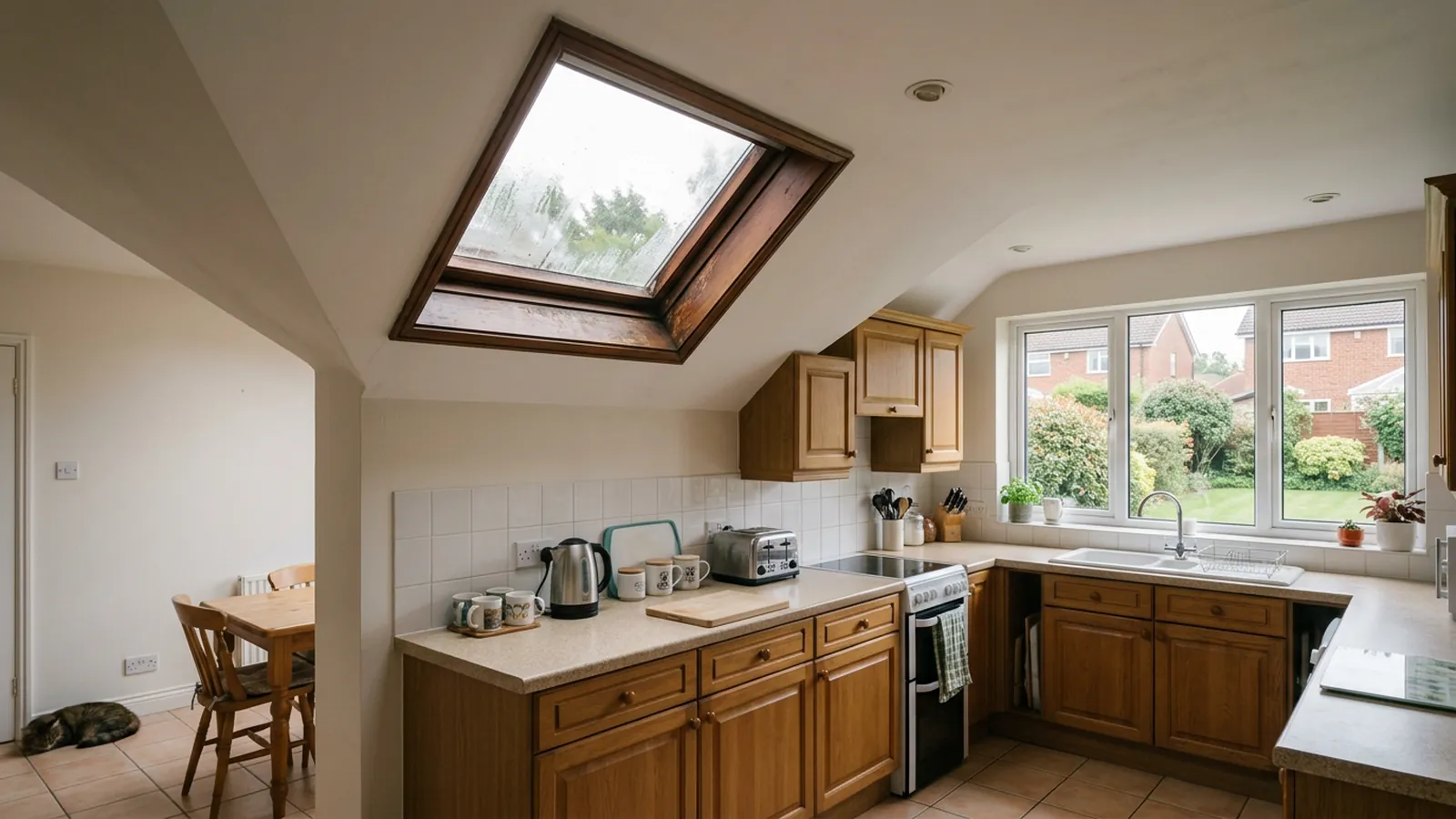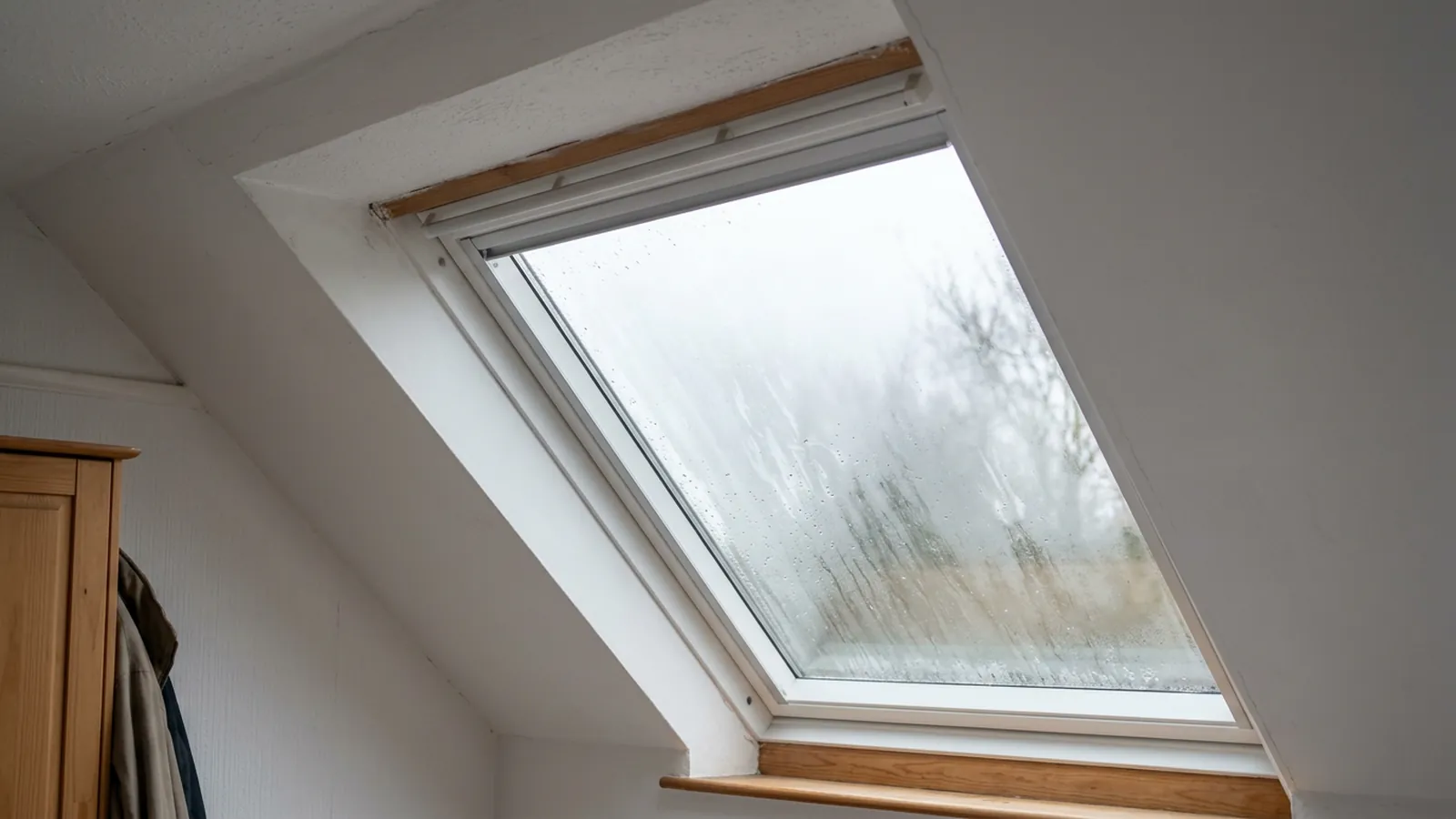
A cloudy skylight looks like the end of the whole thing, so it is fair to ask before anyone quotes you for a new one. The misted and failed rooflight replacement page covers the full job; this answer deals with one narrow point, which is how far the damage goes when the only visible symptom is fog trapped inside the glass.
What the mist is actually telling you
A double or triple glazed rooflight holds its panes apart with a spacer bar round the edge, sealed so the gap stays dry. Once that seal lets go, damp air gets in and settles as a film on the inner faces, then dries and returns as the temperature swings. The mist is a symptom of one component, the glazing unit, and it says nothing on its own about the timber or aluminium around it. How that seal breaks down in the first place is explained in the guide to why a rooflight mists between the panes.
So the honest reading is narrow: the insulated glass has stopped being sealed. That is a real fault and it will not reverse, as the answer on whether misted rooflight glass can be cleared sets out. But it is a fault in the glass, not a verdict on the window.
How a sealed rooflight unit works and fails
- Outer and inner glass panes, with the outer pane facing the weather
- Low-emissivity coating on one inner face, reflecting heat back into the room
- Warm-edge spacer bar holding the panes apart, filled with desiccant to soak up trace moisture
- Primary seal against each pane, backed by the secondary seal around the edge
- Dry sealed cavity, the insulating layer between the panes
- Broken edge seal: moist air gets in and the desiccant becomes saturated
- Mist and droplets trapped between the panes; they cannot be wiped off and the sealed unit needs replacing
- Inset: condensation on the room-side face of the glass is a ventilation or humidity issue, not a failed unit
The parts a misted pane does not touch
A rooflight is several assemblies working together, and each ages at its own pace. Looking at them one by one is how you judge whether the fog is the whole story.
| Part | What it does | Signs it has had its day too |
|---|---|---|
| Sealed glazing unit | Keeps heat in and gives a clear view | Fog or a white bloom inside the glass that you cannot wipe off from either side |
| Frame and sash | Holds the glass and carries the opening mechanism | Soft or blackened timber, flaking finish, a sash that binds or drops |
| Weather seals and gaskets | Close the gap between sash and frame | Hardened, cracked or shrunken rubber, draughts round a closed sash |
| Flashing | Sheds rain from the roof covering around the frame | Staining on the lining or ceiling below the window, lifted or corroded trims |
| Hinges and handles | Let the sash open, tilt and lock | Stiff or loose action, a handle that no longer pulls the sash tight |
If the glazing is the only line in that table that applies, a new glazing unit or sash is often the sensible route. If two or three lines apply, the case for renewing the whole rooflight gets much stronger.
When a new unit alone makes sense
On many roof windows the glass sits in a sash that can be lifted out and replaced, and the maker may still supply a matching pane or sash for that model and size. When the frame is sound, the flashing sheds water properly and the lining inside is dry, changing just the glazing keeps the opening, the trims and the plaster untouched. For branded pivot and top-hung windows, the answer on whether just the glass can be replaced in a VELUX goes through how that works.
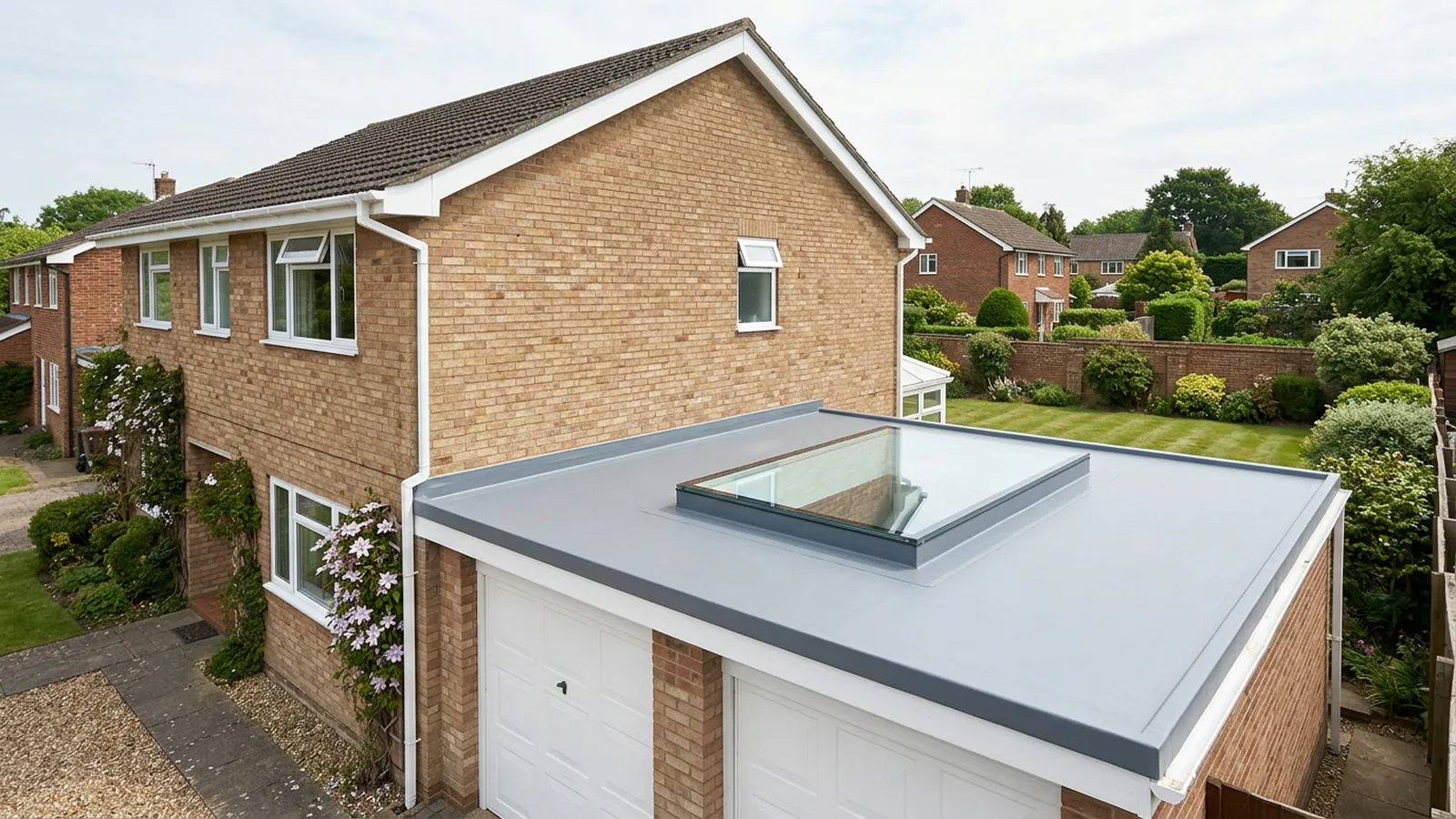
The rule: if only the glass has failed and a matching unit is available, the glass alone is a fair choice. The exception: fixed flat rooflights and some older domes have the glazing bonded into the kerb frame, so there is no separate unit to swap and the whole rooflight comes out instead.
When the whole rooflight is the better answer
Several things tip the balance the other way. The model may be discontinued, so no matching glazing exists. The timber may be tired enough that a new pane would sit in a frame with little life left. An early plastic dome on a flat roof has no sealed unit to change at all. And an older unit set in a sloping roof may have flashing that was never quite right, so the staining below the window is a second fault running alongside the mist.
In those cases a complete new rooflight in the same opening costs more on the day but deals with every ageing part at once, and brings a current thermal specification with it. The trade-off is weighed in full in the guide to replacing the sealed unit or the whole rooflight.
A quick way to check from inside the room
You can gather most of the evidence yourself before anyone visits.
- Wipe both faces. Clean the inner surface and, if you can reach it safely, the outer one. Fog that stays is inside the unit; fog that wipes away is surface condensation, a different matter.
- Look at the lining. Check the plaster or boarding around the window for tide marks, bubbling paint or mould spots.
- Work the sash. Open and close it. Note stiffness, sagging or a handle that will not draw it tight.
- Feel the seals. Run a finger round the rubber gaskets. Brittle or split rubber points past the glass.
- Find the label. Many roof windows carry a data plate on the frame giving the model and size, which settles whether matching glazing can be ordered.
The fuller list of signs, beyond misting, is in the answer on how to tell if a rooflight has failed.
Getting the right answer for your window
The glass is where the problem shows, but the choice between a new unit and a new rooflight is decided by everything around it. We look at the frame, the seals, the flashing and the data plate on the roof itself before we put a price in writing, and the fitting work that follows carries a 10-year workmanship guarantee (not insurance backed). If the misted window turns out to be one of many on the house, the page on rooflight replacement around Basingstoke gives the wider picture. When you want the fogged pane looked at properly, arrange a survey of that rooflight.