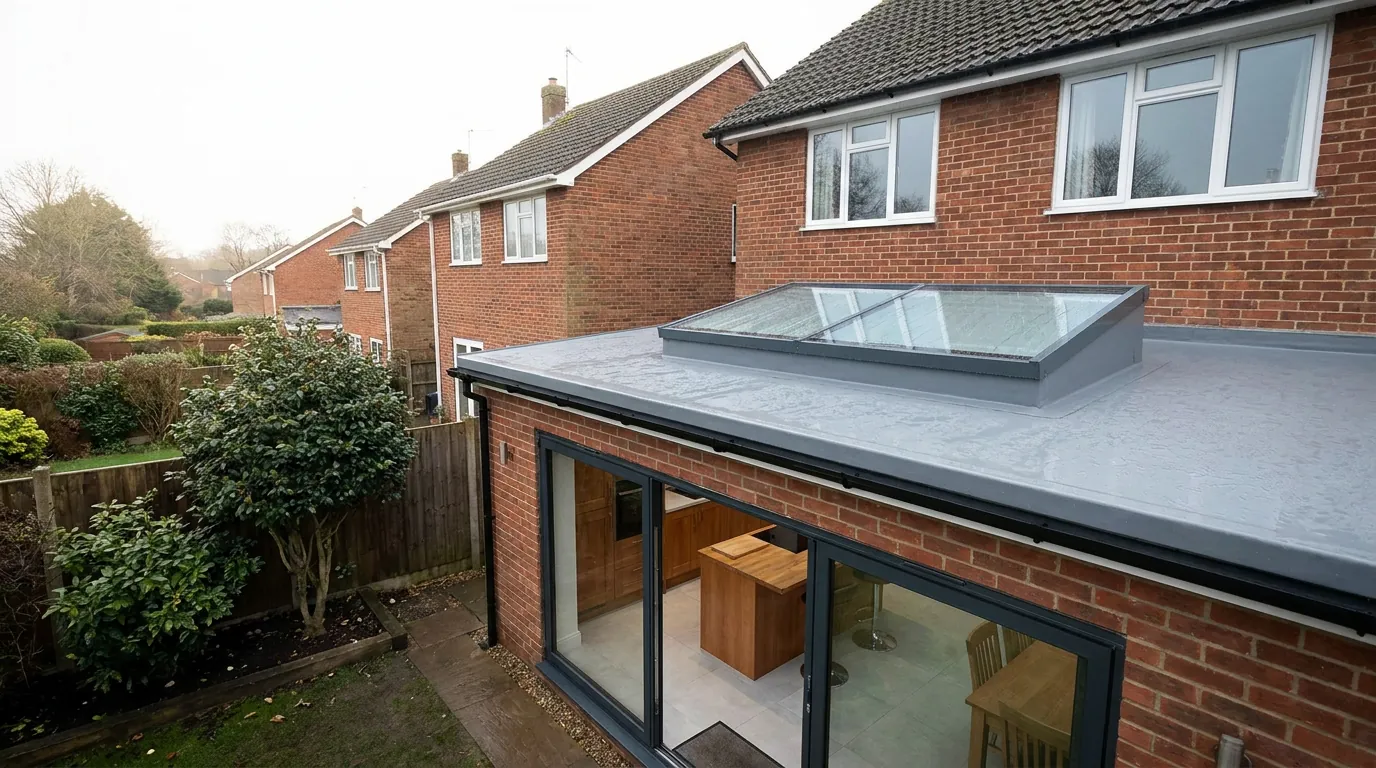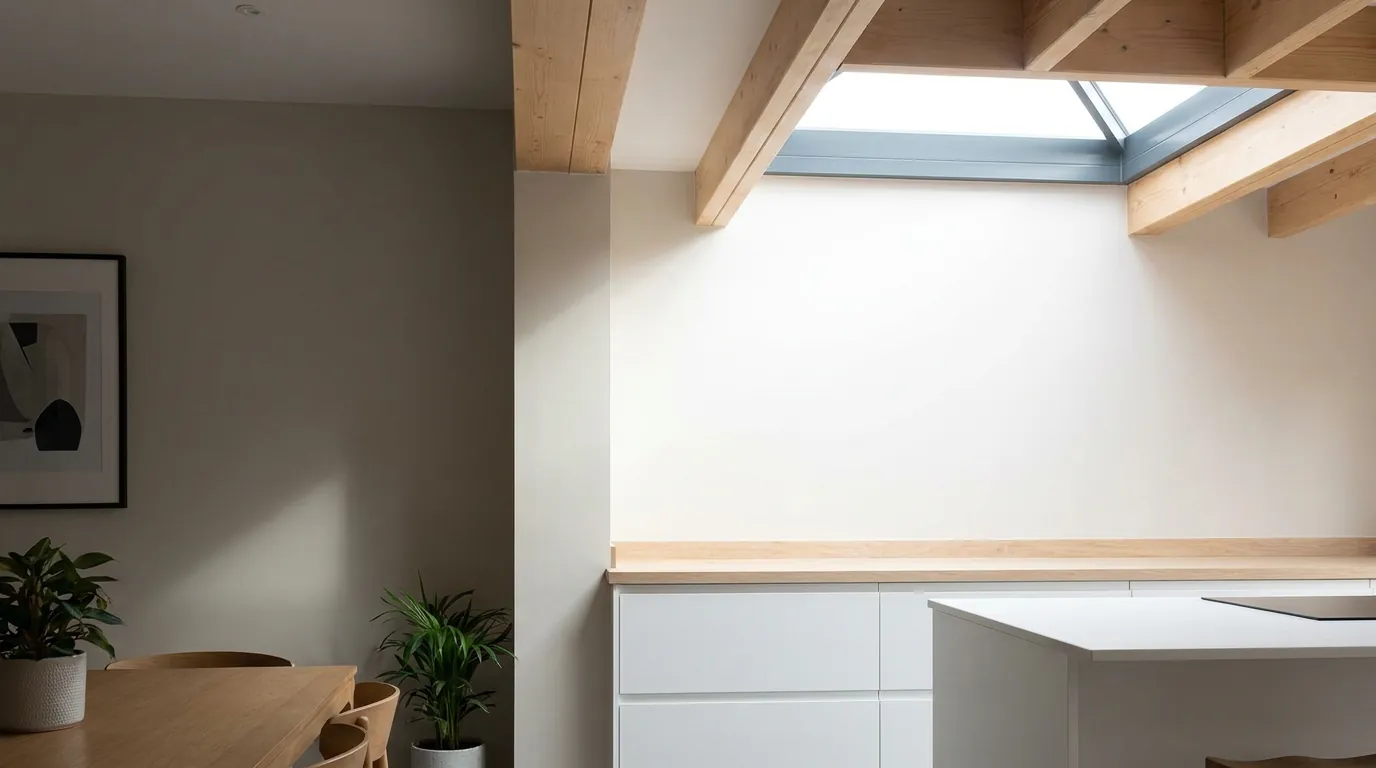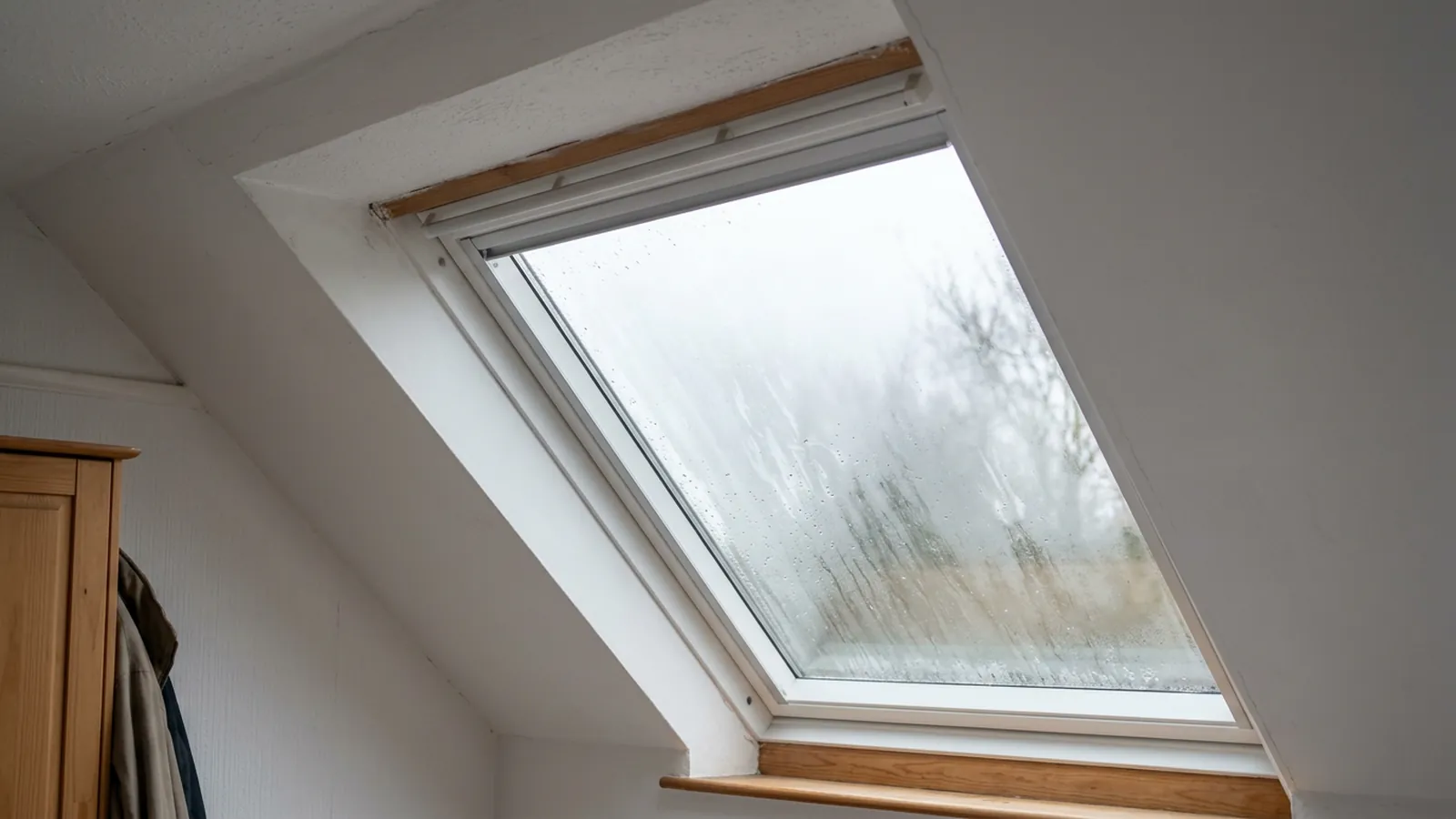
A misted skylight poses one practical question before any other: does the glass come out and a new sealed unit go in, or does the whole rooflight come off the roof and a new one go in its place? Both routes end with clear glass. They differ in what they leave behind: an old frame with fresh glazing, or a new frame, new flashing and new glazing together. This guide sets out how that choice is made on the kinds of roofs found around Basingstoke, and why the answer on a 1970s townhouse in Oakridge is often not the answer on a flat-roofed kitchen extension or a recent roof in Beggarwood.
It sits under our misted and failed rooflight replacement service, which covers the whole job from survey to finished lining. Here the focus is narrower: the fork in the road between the glass and the complete window.
Two parts that wear out at different speeds
Every glazed rooflight is two things bolted together. There is the sealed unit, which is the panes of glass held apart by a spacer bar and sealed round the edge so the gap stays dry. And there is everything else: the frame or sash that holds the unit, the hinges and handle on an opening window, the gaskets that bed the glass, the flashing that ties the frame into the tiles or the flat roof covering, and the lining boards inside.
These parts do not age together. The edge seal on the glass is the thing that lets go first on many older units, and when it does, moist air creeps into the cavity and condenses there. The frame, meanwhile, may still be sound, or it may be further gone than the glass. Our guide on why a rooflight mists between the panes explains that failure in full; the point here is that misting tells you about the glass, and only about the glass. What the frame is doing has to be checked separately.
Misting is the glass reporting on itself. It says nothing about the frame around it.
How a sealed rooflight unit works and fails
- Outer and inner glass panes, with the outer pane facing the weather
- Low-emissivity coating on one inner face, reflecting heat back into the room
- Warm-edge spacer bar holding the panes apart, filled with desiccant to soak up trace moisture
- Primary seal against each pane, backed by the secondary seal around the edge
- Dry sealed cavity, the insulating layer between the panes
- Broken edge seal: moist air gets in and the desiccant becomes saturated
- Mist and droplets trapped between the panes; they cannot be wiped off and the sealed unit needs replacing
- Inset: condensation on the room-side face of the glass is a ventilation or humidity issue, not a failed unit
When a new sealed unit is the sensible answer
Changing only the glazing makes sense when the rest of the window has plenty of life left and the maker still supports that model. The typical case is a modern centre-pivot or top-hung roof window from one of the major manufacturers, where the glazing is designed to be replaced as a part. The frame stays fixed in the roof, the flashing is untouched, nothing inside the room is disturbed, and the new unit is made to the exact size the sash expects.
For a pitched roof window, that route is covered in detail in our guide to misted VELUX glazing and the replacement pane route, and the short version is answered in can just the glass be replaced in a VELUX? The conditions that make it work are the same on any brand:
- the frame timber or uPVC is firm to the touch, with no soft corners or open joints;
- the sash opens, closes and locks as it should;
- the flashing is lying flat with no lifted edges or gaps against the tiles;
- the inside lining shows no staining that points to water getting past the frame;
- a replacement unit of the right size and glass specification can actually be supplied.
Tick all of those and a glazing swap keeps disruption to a minimum. Miss one, and the case for it weakens quickly.
When the whole rooflight should come out
There are roofs where replacing just the sealed unit would be money spent on the wrong part. The clearest cases are these.
The frame is past its best. Early timber roof windows from the estate-building decades can have sashes that have softened at the bottom rail, where water sits longest. New glass in a tired sash is still a tired window, and the next thing to go will be the frame.
There is no sealed unit to replace. Many older flat roof rooflights are moulded plastic domes, single or double skinned, with no glass at all. A clouded or crazed dome has no insert to change. Replacement here means a new rooflight, and it is often the moment to move from a dome to a glazed flat rooflight on a new or refurbished upstand.
The glass is bonded to the frame. Some fixed flat rooflights have the glazing structurally bonded into the frame at the factory. That design keeps a clean sightline, but it means the unit and frame are one component, and the whole thing is changed together. When a flat rooflight's seals have failed looks at this type in more depth.
The model is no longer supported. If the maker no longer produces glazing for that frame, a unit can sometimes be made to measure, but it may not match the original thermal or safety specification, and the hinges and seals around it remain the old ones.
The owner wants something different. A change from a fixed window to an opening one, a move to electric or solar operation, integral blinds, or a better thermal specification all point to a new window rather than new glass.
Side by side: glazing swap or complete replacement
The table sets the two routes against each other on the questions that decide it. It is a guide to the conversation, not a verdict on any one roof; the survey settles that.
| Question | New sealed unit only | Whole rooflight replaced |
|---|---|---|
| What is disturbed on the roof | Nothing outside the sash; tiles and flashing stay put | The frame, flashing and the tiles or covering immediately round it |
| What is disturbed inside | Usually nothing beyond access to the sash | The lining round the opening, made good afterwards |
| Frame condition needed | Sound, square and operating properly | Any; the old frame is removed |
| Flashing and seals | Stay as they are, so they must be in good order | New flashing kit and gaskets supplied with the window |
| Plastic dome rooflights | Not possible; there is no unit to change | The route for every dome |
| Chance to change the specification | Limited to what the sash accepts | Opening type, glazing, blinds and operation can all change |
| Weather needed | A dry spell for the glass change itself | A dry window long enough to open the roof and weather it in |
What era your roof is from changes the odds
Around Basingstoke the build era of the house is a strong hint about which route a failed rooflight will take. In the 1960s to 1980s estates of Popley, Oakridge, Winklebury, South Ham and Brighton Hill, roof windows added in a later loft conversion are now old enough for both the glazing and the frame to be tired at once, and flat-roofed extensions from the same period often still carry a plastic dome. Those roofs lean towards the whole window. Our guide to failed roof windows in 1980s estate houses covers that stock specifically.
On newer roofs in Chineham, Hatch Warren or Beggarwood, a roof window fitted when the house was built may have a sound frame and flashing, with only the glazing showing its age. That is where a sealed unit swap has the best chance. If the house is recent enough to still be under a housebuilder warranty, check the warranty terms before arranging any work.
In the conservation cores of Old Basing, Overton or Odiham, a conservation rooflight with slim steel glazing bars has its own considerations. Its appearance matters to the street, so any change to the frame deserves more thought than a glass swap does.
The trussed roof point, and why keeping the opening matters
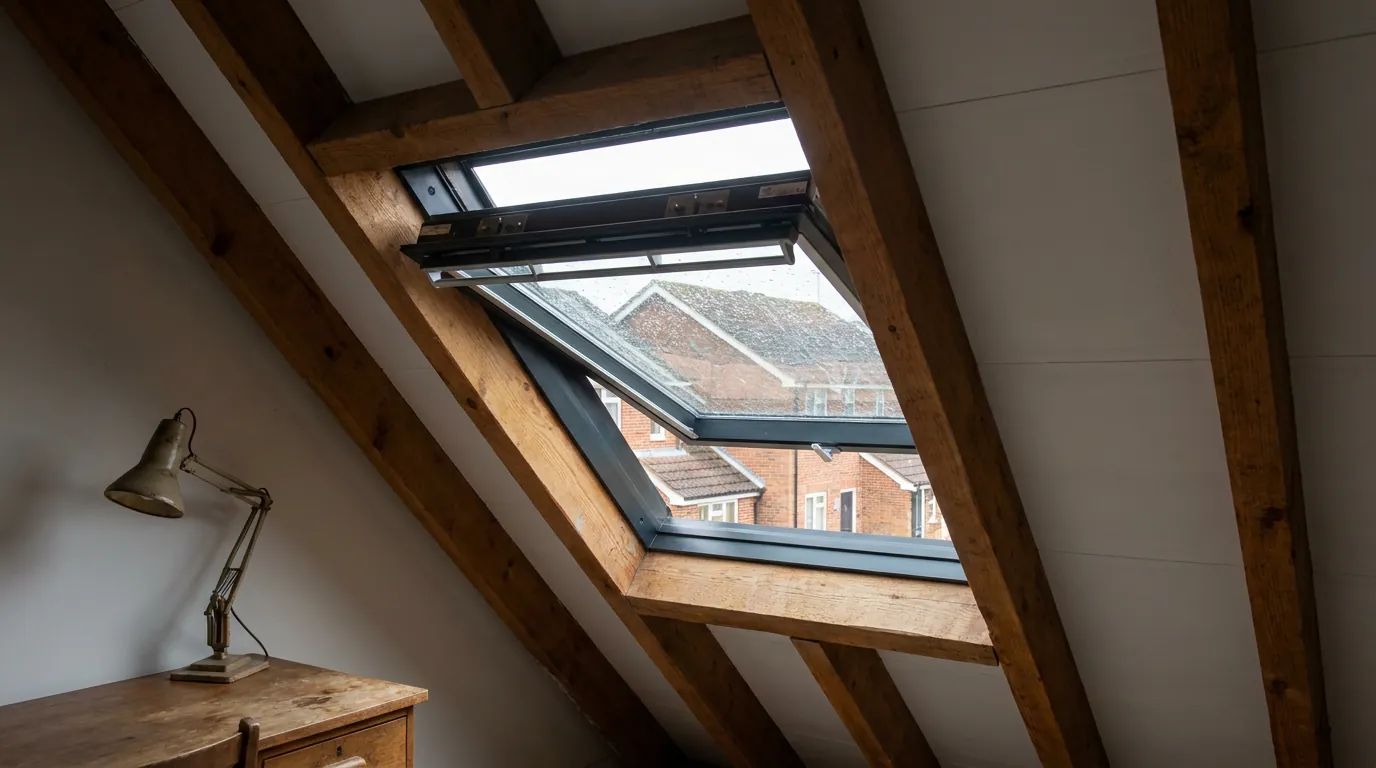
Most roofs built across the borough since the 1960s are trussed rafter roofs, with factory-made trusses typically at 600mm centres. The existing roof window will almost always sit in an opening that was either chosen to fall between two trusses or was trimmed when it was first fitted. Either way, the structure round it is already settled.
That is a quiet argument for both routes staying inside the existing opening. A sealed unit swap never goes near the structure. A complete replacement usually doesn't either, provided the new window is chosen to suit the opening that is already there. Enlarging the hole in a trussed roof is a different job with a designed trimming solution, and it belongs in a separate conversation. Replacing a failed rooflight in the same opening explains how a like-for-like size is matched, and will the new rooflight be the same size as the old one? gives the short answer.
The rule: keep the opening, change what sits in it. The exception: where the old size is no longer made and the nearest current size is larger, the extra width is checked against the truss spacing before anything is ordered, so the new frame still lands between the trusses rather than across one.
Seals, gaskets and the parts people forget
A glazing swap replaces the glass and, usually, the glazing seals that bed it. It does not touch the frame gaskets on an opening sash, the weatherstrips against the outer frame, or the flashing. If those are hardened or split, the room can feel draughty or show damp marks even with brand new glass. Our guide to perished frame seals and gaskets on older rooflights sets out what to look for.
So a fair comparison adds these parts in. A new sealed unit on a window whose gaskets and flashing are also due is really the first of several visits. A complete rooflight brings every one of those parts new in a single job. Neither answer is right everywhere, which is exactly why the frame is inspected before the choice is made.
How the choice gets made on the day
The decision is made on the roof and in the room, not from a photo of the misting. The survey runs in a set order.
- Identify the window. The maker, model and size are read from the data plate or the frame, which settles whether a matching sealed unit exists at all.
- Test the sash. It is opened, closed and locked; the bottom rail and corners are checked for softness or movement.
- Look outside. Flashing, the tiles or roof covering at the edges, and any upstand on a flat roof are checked for lifted, split or failed parts.
- Look inside. The lining and plaster round the opening are checked for staining, and the room is considered for condensation, which is a separate issue from a failed unit.
- Weigh the options. If a new unit would leave tired parts in place, both routes are set out in the written quote so the choice is yours.
If you want to note a few things before that visit, the answer on whether a misted pane means the whole rooflight has failed lists what is worth looking at from inside the house.
Paperwork: glass only against a whole window
The two routes can differ on Building Regulations. Replacing a complete rooflight is the kind of work that normally falls under the regulations for replacement windows, with thermal performance to meet, while changing only a glazing unit is treated differently. The detail, and where the line sits, is set out in does replacing a failed rooflight need Building Regulations? Where our work is notifiable, the notification to Building Control is part of the job rather than something left for you to arrange.
Planning is a separate matter from Building Regulations. In a conservation area, such as the historic centres of Old Basing or Odiham, a change in the look of a rooflight may need a conversation with Basingstoke and Deane Borough Council or Hart District Council, whereas like-for-like glazing is less likely to change anything visible. Any application is for the council to decide.
Thinking beyond this one window
A failing sealed unit is often the first sign that a whole generation of rooflights on a house is reaching the same point. If a loft room has two or three windows fitted at the same time, the others will usually follow the same path. It is worth deciding whether to change one window now and the rest later, or to plan them together so that the frames, flashings and finishes match.
If an upgrade is part of the thinking, the energy efficient rooflights service explains the current glazing options for a complete replacement. For the wider picture of fitting new daylight into a roof, rooflight and skylight installation for Basingstoke homes is where the rest of the services start.
A clear answer for your roof
Whichever route suits your window, the workmanship carries a 10-year guarantee (which is not insurance backed), and the quote arrives in writing after the survey, never before it. If the glazing alone will do the job, that is what the quote says. If the frame, flashing or model means a new rooflight is the better answer, the quote says why, in plain terms, alongside the glass-only figure where that is still an option.
To get the choice made on your actual roof, arrange a survey of the failed rooflight or read more on the replacement service page first. Either way, you will know which of the two routes fits your house before anything is ordered.