A VELUX that has gone milky between its two sheets of glass looks like a window that has had its day, and the instinct is to price a whole new one. On many of these roof windows that is not where the conversation starts. The sash and the frame are built so the glazing inside them can be changed, which means there is often a second, smaller job available: a replacement pane fitted into the window you already have, with the frame, the flashing and the plasterwork round the opening left exactly as they are.
This guide, part of our misted rooflight replacement section, is about that route. It explains how to read the window you have, when a new pane is the sensible answer, when it is not, and what the swap looks like on the day. If you are still deciding whether the fog is inside the unit at all, telling condensation apart from a failed unit comes first.
What a fogged VELUX pane is telling you
A roof window pane is a sealed unit: two or three layers of glass held apart by a spacer bar round the edge, with dry air or gas in the cavity and a desiccant inside the spacer soaking up any moisture that sneaks in. When the edge seal lets go, damp air gets into the cavity, the desiccant eventually gives up, and moisture condenses on the inner faces of the glass where no cloth can reach it. The guide to why a sealed unit mists covers the physics; the practical point here is narrower.
Fog inside the unit is a fault of the glazing, not automatically of the window. The timber or polyurethane sash, the hinges, the handle, the ventilation flap and the flashing on the roof outside may all be in decent order. That is the gap the replacement pane route fits into. Once the seal has broken the unit will not dry itself out for good, and clearing misted glass with drilling and drying kits does not restore the lost seal, so the choice is between a new pane and a new window.
How a sealed rooflight unit works and fails
- Outer and inner glass panes, with the outer pane facing the weather
- Low-emissivity coating on one inner face, reflecting heat back into the room
- Warm-edge spacer bar holding the panes apart, filled with desiccant to soak up trace moisture
- Primary seal against each pane, backed by the secondary seal around the edge
- Dry sealed cavity, the insulating layer between the panes
- Broken edge seal: moist air gets in and the desiccant becomes saturated
- Mist and droplets trapped between the panes; they cannot be wiped off and the sealed unit needs replacing
- Inset: condensation on the room-side face of the glass is a ventilation or humidity issue, not a failed unit
Find the data plate before anything else
Every VELUX roof window carries an identification plate, normally on the top of the frame and visible once the sash is swung open. It holds the information that decides whether a replacement pane can be ordered. Take a clear phone picture of it before a survey; it saves a round of guessing.
| Part of the code | What it describes | Why it matters for a new pane |
|---|---|---|
| Type letters | The window family, such as centre-pivot or top-hung, and the sash material | The pane has to suit that sash profile and its fixings |
| Size code | The frame size, written as letters and digits such as MK04 or SK06 on current windows | Sets the glass dimensions; older windows use a different numbering |
| Glazing code | The glazing specification the window left the factory with | Shows what you have now and what an upgrade would be measured against |
| Production marking | When and where the window was made | Separates current ranges from discontinued ones that may need a different answer |
If the plate has been painted over, worn smooth or removed, the frame can still be measured and the model identified from its details. It just takes longer, and it is one of the things the survey sorts out.
Pane only or the whole window: the two routes side by side
Both routes end with clear glass. They differ in what else changes, and that is what should drive the choice. The wider comparison across every kind of rooflight lives in replacing the sealed unit or the whole rooflight; this table is the VELUX-specific version.
| Question | Replacement pane | New window in the same opening |
|---|---|---|
| What comes out | The glazed unit only, from inside the sash | Sash, frame and usually the flashing on the roof |
| Roof covering | Untouched | Tiles or slates round the frame lifted and relaid |
| Inside finish | Untouched | Linings checked and made good round the new frame |
| Sash and hardware | Kept, so their condition matters | All new |
| Access | Usually from inside the room | Work on the roof as well as inside |
When a new pane is the right call
The pane route earns its place when the glass is the only thing wrong. Look at the window with that in mind rather than with the fog in mind.
The rule: if the sash opens and closes cleanly, the frame timber is sound, there is no staining round the lining and a matching pane is still made for the model on the plate, a replacement pane is usually the proportionate answer. The exception: when any one of those fails, the saving from keeping the window shrinks fast, because you would be putting new glass into a frame that is itself close to replacement.
A window in the loft room of a 1990s Chineham house, still sweet on its hinges and dry at the lining, with one fogged unit, is the classic case. So is a roof window over a stairwell where getting onto the roof is awkward and the frame gives no trouble. Keeping the opening, the flashing and the plaster finish exactly as they are is often worth more to the owner than any upgrade a new window would bring. The short answer to whether just the glass can be replaced in a VELUX is yes, on the right window.
When the window itself should go
The same fogged unit can sit in a window that tells a different story. These are the signs that point to replacing the whole thing in its existing opening:
- Soft, dark or swollen timber at the bottom of the sash or frame, where water has been sitting.
- Brown tide marks on the plasterboard lining below the window, which say water has been getting past something other than the glass.
- A sash that binds, drops or will not lock, or a pivot mechanism that has worn loose.
- A model so old that no matching pane is produced, or one where the pane costs a large share of a new window.
- A wish for something the old frame cannot give: an electric opener, a different opening type, or noticeably better insulation all round rather than in the glass alone.
In those cases the new window normally goes into the hole the old one leaves. Where a matching size code is available the opening stays as it is, which is the point of the same-opening replacement guide. On an estate roof built with trusses at 600mm centres that matters, because the existing opening already sits in the space the roof was designed around.
What a pane swap involves on the day
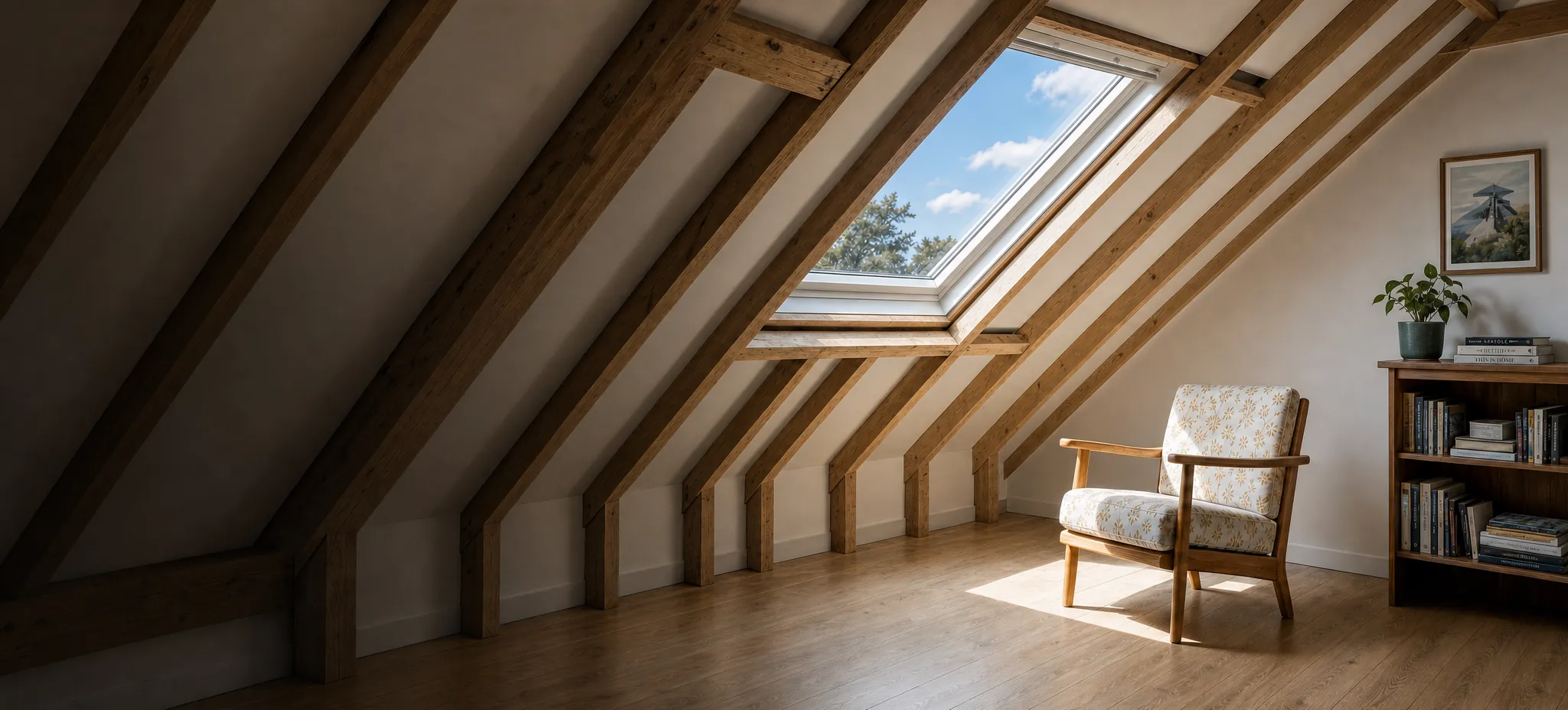
The work is mostly done from inside the room, with the sash either turned or taken off its hinges so the glazing can be reached. The exact sequence depends on the window family, but it runs roughly like this.
- Confirm the pane. The plate is read and the sash checked on the survey, so the right unit is ordered for that type and size code before anyone arrives to fit it.
- Protect the room. Dust sheets go down and blinds are taken off; on a centre-pivot window the sash is usually removed and laid flat to work on.
- Take out the failed unit. The external cladding and glazing beads on the sash are released and the old pane is lifted out whole.
- Look at the rebate. With the glass out, the sash timber and seals that sat behind it can be seen properly, which is the last check that the window is worth keeping.
- Fit and seat the new pane. The new sealed unit goes in on its packers, the beads and cladding are refitted and the sash is hung back.
- Test it. The window is opened, closed and locked, the ventilation flap checked, blinds refitted and the old glass taken away.
Because the frame and the flashing never move, there is no lifting of tiles, no scaffold for the glazing itself and no redecorating round the opening. The pane is heavy and awkward on a big sash, so it is a two-person job, but a short one.
Choosing the glass while you are changing it
A replacement pane is a rare cheap moment to change the glazing specification, because the labour is being spent anyway. Depending on the model, the options usually include a laminated inner pane for safety overhead, better thermal glazing than the window was built with, and noise-reducing units for bedrooms facing a busy road such as the M3. The detail of how glazing performance is rated belongs to the energy efficient rooflights page; the question for this job is simply which of the panes made for your sash suits the room.
The pane is the one part of a roof window you can upgrade without touching the roof.
One point on heat: a fogged unit has lost some of what it was designed to do, and the answer on whether a misted rooflight loses more heat goes through what changes and what does not. A new pane restores the unit's design rather than improving the whole window, which is worth keeping in mind if comfort is the main aim.
Estate roofs, loft rooms and why the opening stays put
Around Basingstoke a great many VELUX windows sit in loft conversions and top-floor rooms on the post-war and later estates: Brighton Hill, Oakridge, Lychpit, Hatch Warren, Chineham. On those trussed roofs the original opening was sized to sit between the trusses or was trimmed to a design when the loft was converted. Changing that opening now is a structural question, not a glazing one.
That is where the pane route and the same-size window route both sit comfortably. Neither changes the hole, so neither disturbs the trusses, the trimming or the insulation packed round the frame. When a bigger or differently shaped window is wanted instead, it becomes a new installation question, and the fit check on the rooflight and skylight installation side of the site is the place to start. The answer on whether a new rooflight will be the same size explains how the match is made when the whole window is changed.
In cut-rafter roofs in the older village centres, such as Old Basing or Overton, a replacement pane has a further advantage: nothing visible from the street changes, so the conservation question that can come with altering a roof does not arise from the glass alone.
Paperwork, guarantee and what shapes the price
Swapping the glazed unit in an existing sash is generally treated differently from replacing a whole window, which can fall under the Building Regulations. Where a job is notifiable, Everlight files the Building Control notification itself, so it is not a form left on your kitchen table. Pane swaps and full replacements alike carry the 10-year workmanship guarantee, which is not insurance backed.
No figure is published here, because the price moves with things the survey measures:
- the window family and size code, and whether a pane is still made for it;
- the glazing specification chosen, from a like-for-like unit to laminated or noise-reducing glass;
- how easy the sash is to reach, for example over a stairwell or in a room with a sloping ceiling close to the floor;
- the number of windows done on one visit;
- whether the survey finds the frame should be replaced rather than reglazed.
The answer on the cost of replacing a misted VELUX walks through those drivers in more depth, and the written quote after the survey is the only number that counts.
Before you book: what to have ready
A few minutes with the window makes the survey quicker and the advice more exact. Photograph the data plate, note which rooms have fogged windows and whether it is one pane or several, and look along the lining below each sash for any staining. Open and close each window to see whether it moves freely.
With that in hand, the conversation is about your window rather than roof windows in general, and the misted and failed rooflight replacement service picks it up from there. Whether it ends in a new pane or a new skylight in the same opening, the survey comes first and the quote follows it. To arrange one, book a roof survey and send the plate photograph along with it.