So the useful question is less about a number of years and more about what shortens or stretches the life of the unit sitting over your landing or loft room. The page for misted and failed rooflight replacement covers the replacement itself; this answer deals with the clock that runs before it, and how to read where yours is.
What actually wears out
A double or triple glazed unit is two or three sheets of glass held apart by a spacer bar round the edge, with a desiccant inside the spacer and a sealant bonding the whole perimeter. The desiccant soaks up the small amount of moisture that creeps through the sealant over time. While it has capacity left, the cavity stays dry and clear. When the desiccant is full, or the sealant has lost its grip on the glass, damp air gets in and condenses on the inner faces.
That is why a sealed unit does not fail in stages the way a timber frame weathers. It looks perfect, then one cool morning it has a faint bloom in a corner that does not wipe off. The deeper reasons a seal gives up are set out in our answer on what makes a rooflight sealed unit fail.
How a sealed rooflight unit works and fails
- Outer and inner glass panes, with the outer pane facing the weather
- Low-emissivity coating on one inner face, reflecting heat back into the room
- Warm-edge spacer bar holding the panes apart, filled with desiccant to soak up trace moisture
- Primary seal against each pane, backed by the secondary seal around the edge
- Dry sealed cavity, the insulating layer between the panes
- Broken edge seal: moist air gets in and the desiccant becomes saturated
- Mist and droplets trapped between the panes; they cannot be wiped off and the sealed unit needs replacing
- Inset: condensation on the room-side face of the glass is a ventilation or humidity issue, not a failed unit
Why roof glass has a harder life than a wall window
A skylight sits at an angle to the weather rather than upright in a wall. Rain lies on it longer, snow and frost sit on the glass, and the sun hits it more squarely through the middle of the day. Each warm afternoon and cold night makes the air in the cavity expand and contract, pumping gently against the edge seal. A vertical window in the same house sees a milder version of all this, so a roof unit and a wall unit fitted on the same day will not age at the same rate.
The rule: the lower the pitch, the harder the unit works. The exception is a flat rooflight built with its own fall and a drained perimeter, where water is shed off the glass rather than left to sit against the seal.
What stretches or shortens it
Several things decide whether a unit reaches old age or gives up early. None of them can be read off a label, but most can be judged by looking at the roof.
| Factor | Helps the seal | Works against it |
|---|---|---|
| Drainage in the frame | Clear weep paths and a sash that sheds water outward | Blocked drainage leaving the unit edge standing in water |
| Roof pitch | A steeper slope that clears rain quickly | A shallow or flat roof where water lingers |
| Exposure | Some shade from a neighbouring roof or tree line | A south facing slope in full sun all day |
| Frame condition | Sound gaskets and a frame that holds the unit square | Perished gaskets or a twisted sash putting stress on one corner |
| How it was made | A unit built for sloped glazing by the rooflight maker | A general purpose unit fitted into a roof opening |
Frame seals matter more than people expect, because a gasket that has gone hard lets water reach the unit edge where it was never meant to sit. The guide to perished frame seals and gaskets on older rooflights shows what that looks like up close.
The age of the house is a clue, not an answer
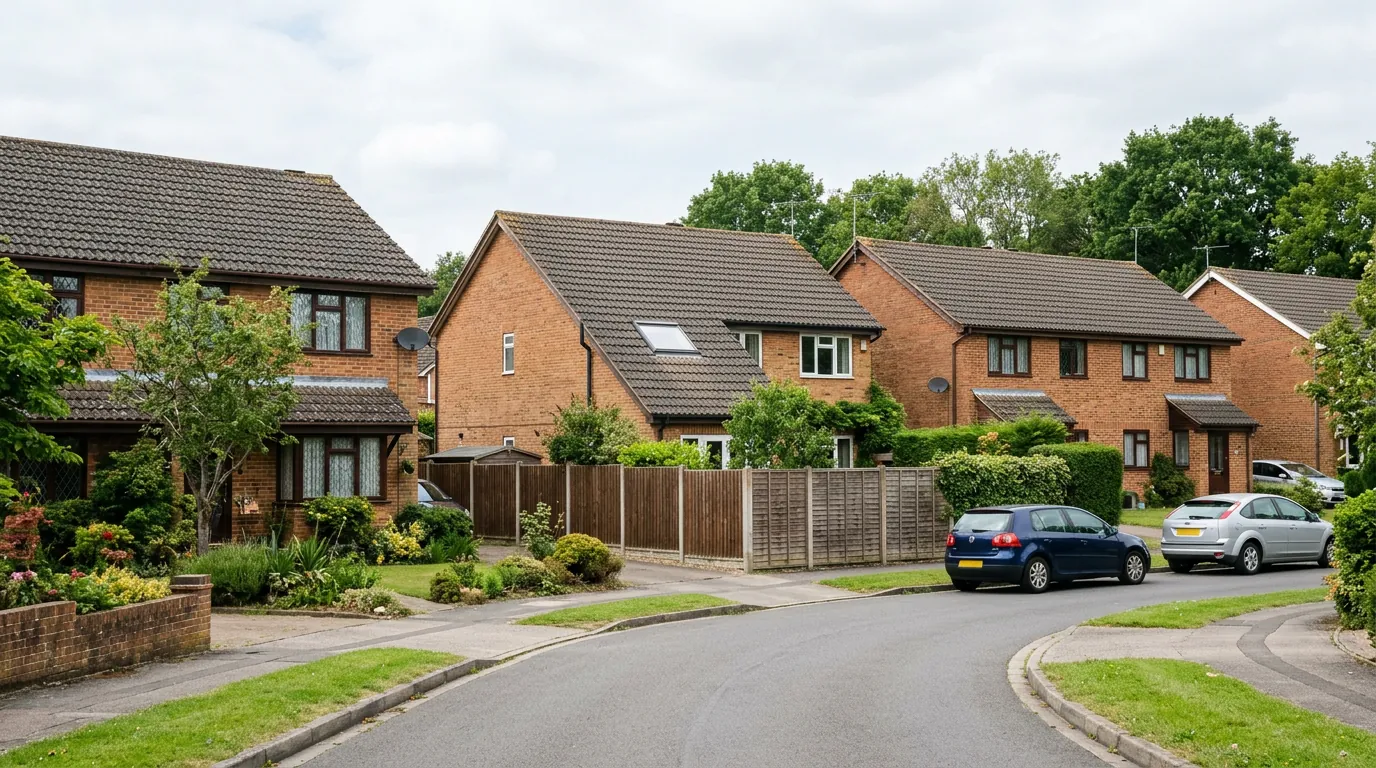
Around Basingstoke the build era of a home tells you something about its roof glass. A Brighton Hill or Lychpit house with its original timber roof windows is carrying glazing that has been through a great many winters, and a unit of that age that still looks clear is doing well rather than being guaranteed more. A newer Beggarwood or Hatch Warren home has younger glass, but young units can still fail if the frame drainage was compromised when the roof went on. An older plastic dome over a flat roofed extension is a different case again: there may be no sealed unit at all, only a single or twin skin that yellows and crazes rather than mists.
So age narrows the odds without settling them. The glass itself is the better witness.
How to tell where yours is
You can do a fair check from indoors on a cool, dry morning, which is when a failing cavity shows most clearly.
- Clean the inside face. Wipe the room side of the glass so surface condensation is out of the way.
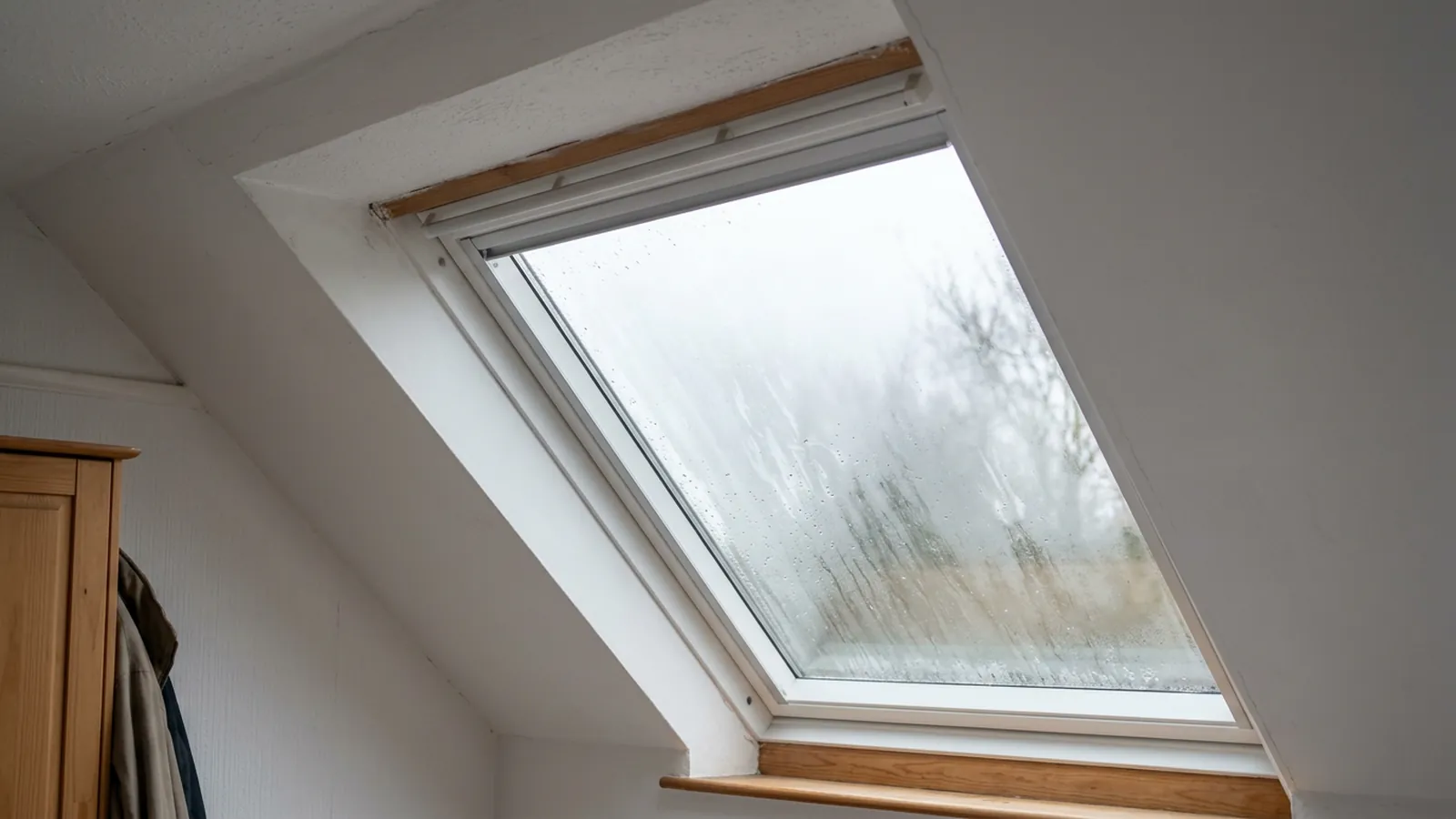
- Look at the corners. A faint haze or droplets inside the unit usually starts at a lower corner where water sits against the edge.
- Watch it through the day. Mist that comes and goes with the temperature is an early failure; a permanent white film or streaking means the cavity has been wet for a while.
- Check the frame. Note any gaskets that have hardened or pulled away, and any staining on the lining below.
If the glass is only wet on the room side, the unit may be fine and the room simply humid. Our answer on how to know if a rooflight has failed separates the two in more detail.
Once it has gone, it stays gone
A unit that has let moisture in will not heal. Drilling and drying services exist for some wall glazing, but the edge seal is still broken afterwards, and on a sloped rooflight that takes the weather full on, the mist tends to return. That is covered fully in can misted rooflight glass be cleared?. Whether you then change just the glazing or the whole rooflight depends on the frame, the flashing and whether the maker still supplies a matching pane; the guide to replacing the sealed unit or the whole rooflight walks through that decision.
Worth knowing: a new unit in a tired frame starts its life with the same drainage and gasket problems that finished the last one. Where the frame is sound, a replacement pane is often the sensible choice; where it is not, the whole rooflight is the better spend.
Infographic
How a rooflight job runs, from survey to guarantee
Roof survey
We look at the structure, the covering and the room below before anything is priced.
Specification
A size, type and position that fits your roof, and whether the work is notifiable.
Paperwork
Building Control notified where the work needs it, and planning checked where it applies.
Installation
Opening formed, frame fixed, flashed or dressed in, then lined and finished inside.
Sign-off and guarantee
Completion paperwork where needed and a 10-year workmanship guarantee.
Getting the most from the next one
When the old unit comes out, the replacement should give its seal the best possible conditions: a frame that drains, gaskets in good order, and flashing that keeps water off the edges. On a whole-window replacement we also look at the pitch and orientation so the new skylight suits the slope it sits on, and we confirm it all on the roof before we price anything. The fitting work carries a 10-year workmanship guarantee (it is not insurance backed), and if the house needs it, we look after the Building Control notification. For how the wider service fits your home, see rooflight replacement around Basingstoke.
If your glass has started to cloud, arrange a survey of the rooflight and we will tell you plainly whether it is the pane or the whole unit that has reached the end of its run.