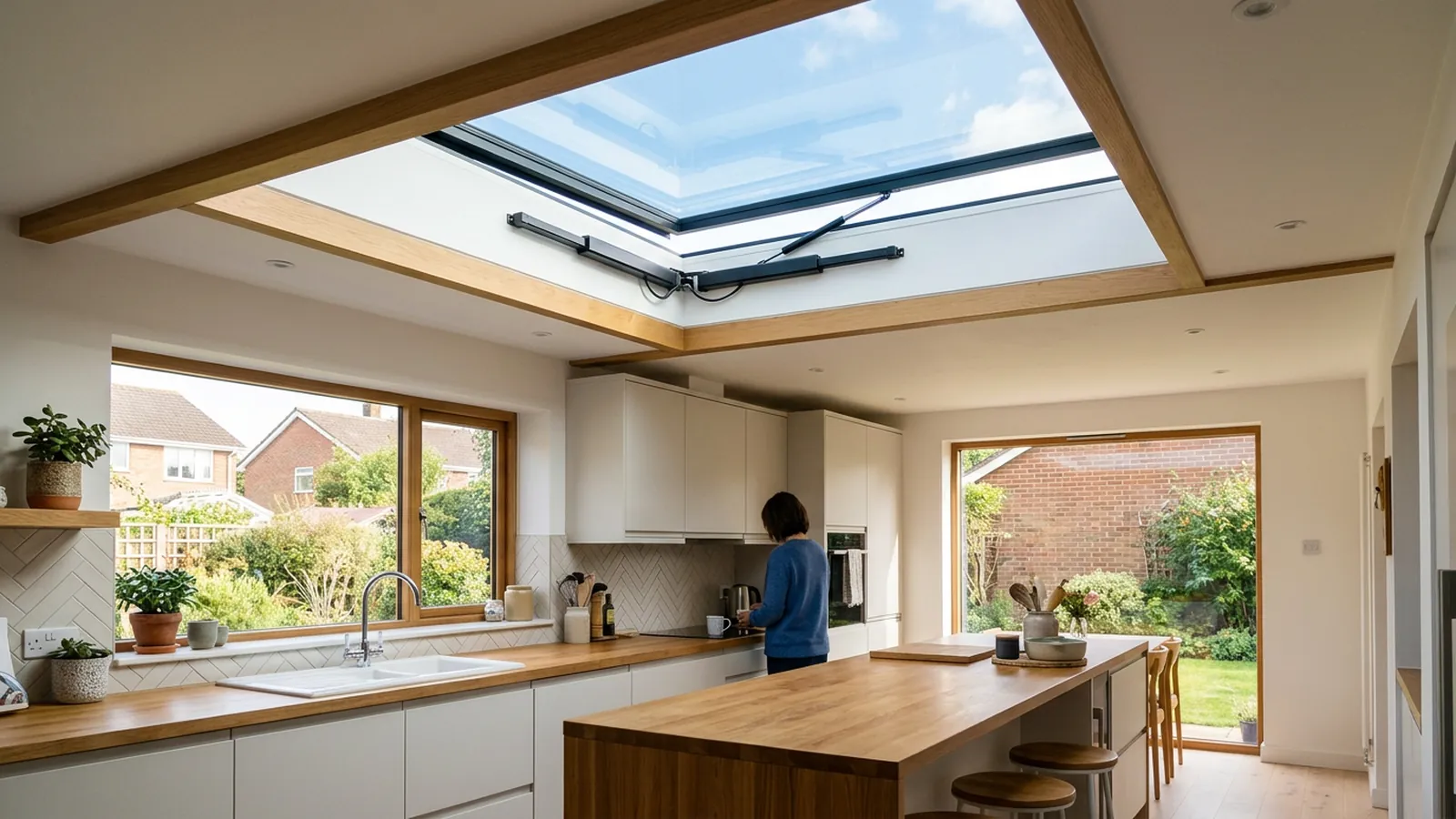
Run a fingertip along the black strip where the glass of an older rooflight meets its frame. On a sound window it gives slightly, like a pencil eraser, and springs back. On a tired one it feels like liquorice left in a drawer: hard, shiny, sometimes cracked across, sometimes pulled away from the corner so there is a small gap you can see daylight through. That strip is a gasket, and when it has perished it is telling you something about the whole window, not only about a bit of rubber.
This guide is about those seals and gaskets on the older roof windows, domes and fixed rooflights found around Basingstoke: what each one does, how perishing shows itself, what it leads to, and how to judge whether the answer is new seals or a new skylight. It sits within our misted and failed rooflight replacement pages, which cover the wider picture.
Three different seals, three different jobs
People tend to call every rubbery strip on a window "the seal", but an older rooflight usually has three separate kinds, and they fail in different ways with different consequences.
Glazing gaskets hold the glass in the sash. They are pressed or clipped into a channel and grip the pane on the outside face, the inside face, or both. Their job is to keep water off the edge of the glass and to cushion it against the frame.
Weather seals sit between an opening sash and the fixed frame around it. On a centre-pivot or top-hung roof window they are the compressible strips that squash shut when you close the handle. Their job is to stop wind and rain driving through the gap that has to exist for the window to open at all.
The edge seal of the sealed unit is inside the glazing itself, bonding the two or three panes to a spacer bar around their perimeter. It is not a gasket you can see or touch, but it is the one people are really worried about when a pane goes cloudy. We explain how that seal gives up in why a rooflight's sealed unit mists between the panes; here it matters because a perished glazing gasket is one of the things that shortens its life.
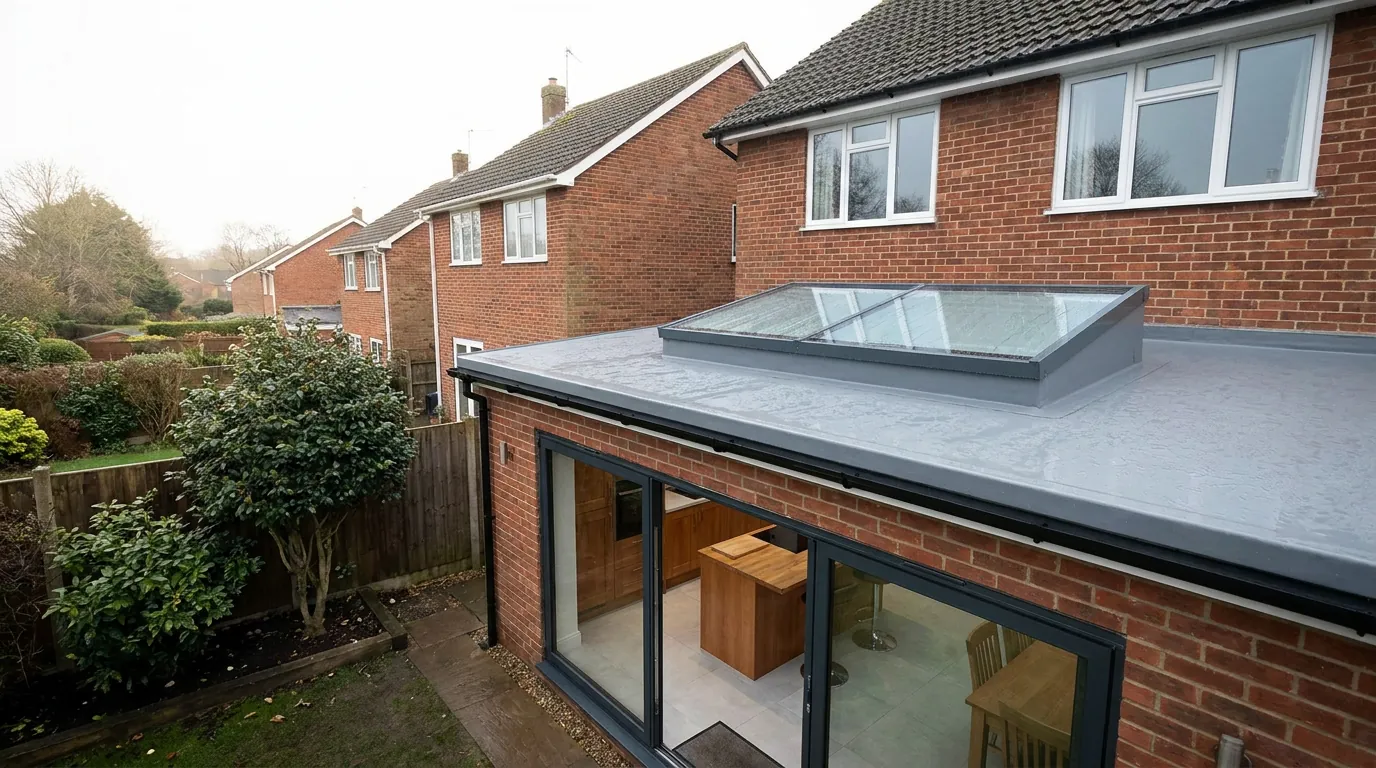
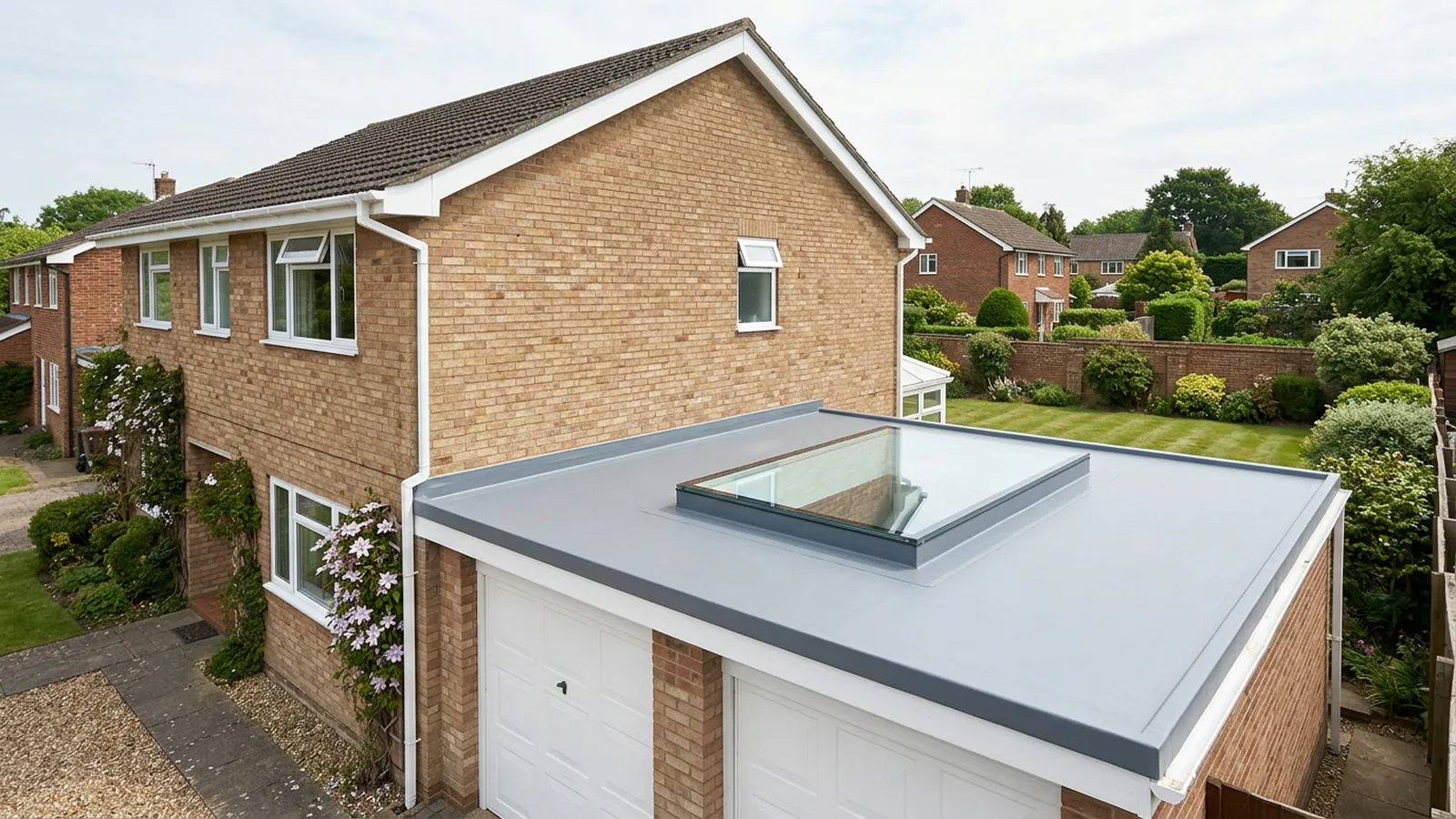
Fixed flat rooflights and domes have their own arrangement again, usually a perimeter seal or bead where the glazing or the dome sits on its kerb, and their failures are covered separately in when a flat rooflight's seals have failed. This page keeps to pitched roof windows and the older fixed rooflights set into a slope.
How a sealed rooflight unit works and fails
- Outer and inner glass panes, with the outer pane facing the weather
- Low-emissivity coating on one inner face, reflecting heat back into the room
- Warm-edge spacer bar holding the panes apart, filled with desiccant to soak up trace moisture
- Primary seal against each pane, backed by the secondary seal around the edge
- Dry sealed cavity, the insulating layer between the panes
- Broken edge seal: moist air gets in and the desiccant becomes saturated
- Mist and droplets trapped between the panes; they cannot be wiped off and the sealed unit needs replacing
- Inset: condensation on the room-side face of the glass is a ventilation or humidity issue, not a failed unit
What perishing looks like up close
Perishing is the slow change in a rubber or plastic compound as sunlight, heat, frost and ozone work on it. The material loses the oils and plasticisers that kept it flexible, and it starts to behave like something else entirely. On a rooflight the signs are usually easy to read once you know them.
| What you see or feel | What has happened to the material | What it means for the window |
|---|---|---|
| Hard, glossy strip that no longer gives under a fingertip | It has lost its flexibility and no longer presses against the glass or frame | The seal is only touching the surface, not gripping it; water can track past |
| Fine cracks running across the strip | Surface crazing from sunlight and ozone, deepening with each winter | Each crack is a small channel; on the outside gasket it lets water reach the glass edge |
| Strip shrunk back from the corners | The compound has contracted along its length as it aged | The corners, where water collects first, are left open |
| Chalky, grey or powdery surface | Breakdown of the outer skin of the rubber | Advanced ageing; the rest of the strip is usually no better |
| Sticky or tacky feel that marks your finger | Some older compounds soften and break down rather than harden | The gasket is losing shape and will slump out of its channel |
| Weather strip flattened into a permanent groove | Compression set: it has stayed squashed and will not recover | Draughts and whistling in wind; rain can be driven past a closed sash |
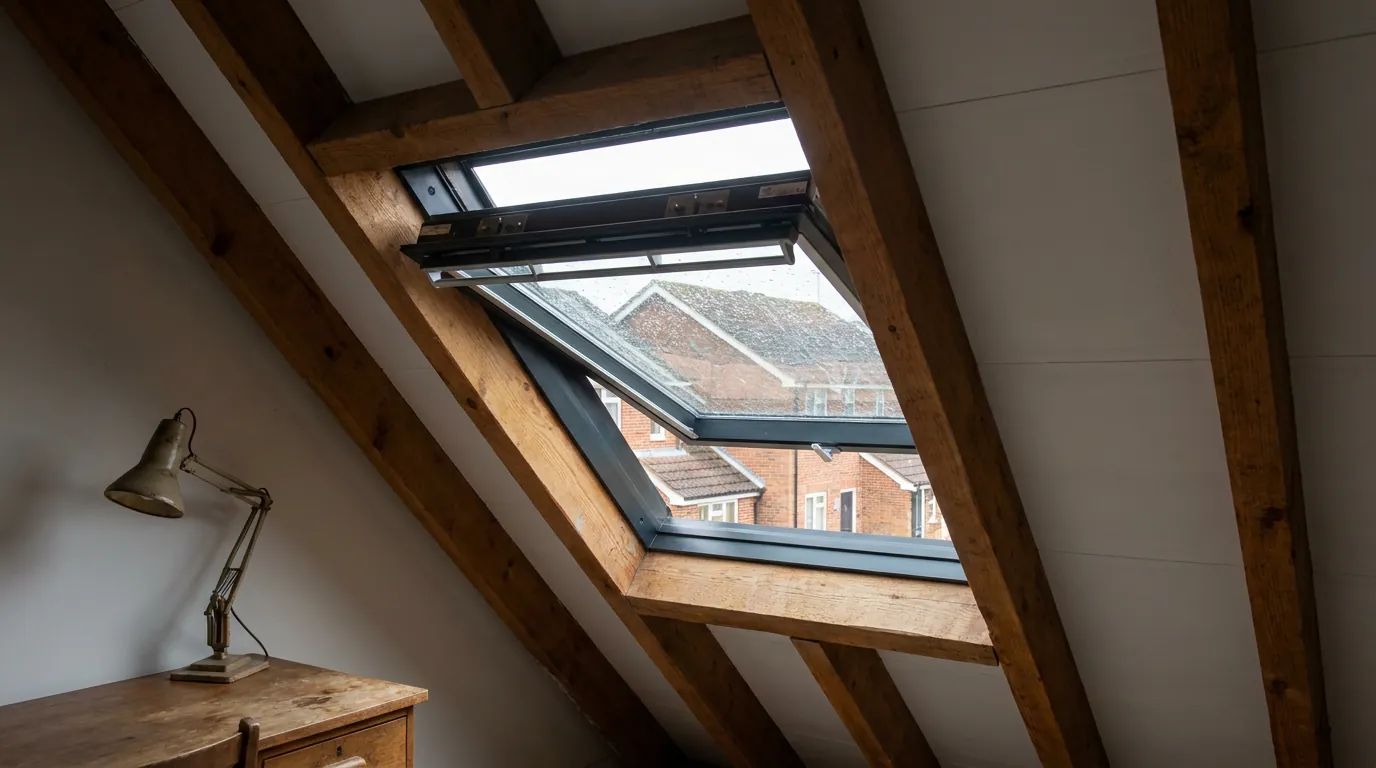
None of these signs needs a ladder to spot on the inside face of a roof window. The outside face is a different matter, and on an upper floor it is best seen from inside with the sash turned, or left to the survey, rather than by leaning out of a loft room.
Why gaskets give up on a roof and not on a wall
The same rubber in a vertical window lasts noticeably better than it does in a roof. A pitched rooflight faces the sky, so the outside gasket takes direct sunlight for far more of the day, and a dark frame on a south-facing slope gets properly hot in summer. On a clear winter night the same glass drops well below the air temperature around it. That swing, repeated every day for years, is what drives the material to harden and shrink.
Water behaves differently too. On a wall, rain runs down the glass and off the sill. On a slope it sits in a film across the pane, collects against the bottom edge and is held there by the frame. A bottom gasket on a roof window spends a good part of every wet week in standing water. Once it has shrunk or cracked, that water has somewhere to go.
A gasket on a roof works in the hardest spot on the house, facing the sun by day and the cold sky by night.
The age of the window matters as well. Seal compounds have changed over the decades, and the rooflights fitted when the Basingstoke estates were new were made with the materials of their day. A roof window from that era that has never had its seals changed is working on its original rubber, and that rubber was never expected to last the life of the frame.
What a perished seal leads to
A failed gasket on its own is a small thing. What it lets happen is not. The consequences build in a fairly predictable order, and it helps to know where your window sits on that path.
- Draughts and noise. Flattened weather seals let air through a closed sash. The first sign is often a whistle on a windy night or a cold stripe of air on the landing.
- Water at the glass edge. Cracked or shrunken outside glazing gaskets let rain reach the edge of the sealed unit and sit there. Timber sashes darken along the bottom rail.
- A shorter life for the sealed unit. The edge seal of the glazing is not designed to live wet. Water held against it speeds up the point where moisture gets between the panes, which is one of the reasons set out in what makes a rooflight sealed unit fail?
- Marks on the lining. Water that gets past the frame shows up below as brown tide marks on the plaster reveal or ceiling, or as black spotting where the air is damp and still. Our guide to water staining around an old rooflight reads those marks.
- A softened frame. On timber roof windows the last stage is the sash or frame itself going soft at the bottom corners, and at that point the question of new gaskets has quietly been answered for you.
The earlier you catch it, the more choices you have. A window at the first or second step is a different conversation from one at the fifth.
Condensation, a perished gasket or a failed unit
Three problems can look alike from the room below, and it is worth separating them before anyone quotes for anything.
Water running down the inside of the glass on a cold morning and pooling on the sill is usually condensation from the room, not the window letting weather in. It is at its worst over showers, kettles and drying laundry, and it tends to clear as the day warms up. Water that appears after rain, especially wind-driven rain, and sits at one corner or along the bottom rail, points to the outside gaskets or the flashing. Cloudiness that you cannot wipe off from either side is between the panes, and that is the sealed unit. We look at the first two in more detail in is water dripping from a rooflight always a failed unit?
The rule: water that follows the weather comes from outside, and water that follows the household comes from inside. The exception: a perished inside gasket can let room moisture get behind the lining and into the sash, so an old window can show both at once. That is one of the reasons the survey looks at the inside and the outside of the frame.
Black spotting in the corners of the reveal is worth mentioning here too. It is usually a sign of damp, still air meeting a cold surface, and a tired seal can add to it without being the only cause. Why is there black mould round my rooflight? goes through the likely sources.
Can the gaskets be changed on their own?
Sometimes, and it depends on three things: the make and model of the window, whether the parts still exist, and the state of everything the gaskets are holding.
On current roof windows from the main manufacturers, some models have seal kits and glazing gaskets listed as spare parts, and a sash that is otherwise sound can take new ones. On older models the picture changes. Ranges get replaced, profiles change shape, and a gasket from a newer range will not sit properly in the channel of an old sash. A generic strip pressed into the wrong profile might look tidy on the day but it is not doing what the original was designed to do.
Then there is what sits behind the gaskets. If the sealed unit has already misted, or the timber along the bottom rail has softened, new seals on the old sash leave you with a window that is still failing in another place. That is the point at which our guide to replacing the sealed unit or the whole rooflight becomes the more useful read, because it weighs the parts route against a full replacement.
| Condition | Points towards new gaskets | Points towards a new rooflight |
|---|---|---|
| Make and model | Identified, with seal parts still listed for that model | Unknown, discontinued, or an unbranded unit with no parts |
| Sealed unit | Clear, with no misting between the panes | Misted, or showing marks inside the glazing |
| Frame and sash | Firm, square, closing evenly | Soft at the corners, twisted, or catching as it closes |
| Flashing | Sitting properly with no water marks below it | Tired or disturbed, so the outside needs opening up anyway |
| Room below | Clean lining, no tide marks | Staining or damp in the reveal that has built up over time |
A window with every row in the left-hand column is a candidate for new seals. A window with two or three rows on the right is usually better replaced, because the gaskets were only the first part of it to wear out.
Older estate roof windows around Basingstoke
The Basingstoke estates were built in waves, and their loft rooms and landings got roof windows either when the houses were new or when the loft was first converted. Popley, Oakridge and Winklebury from the earlier expansion years, then Brighton Hill, Lychpit and Hatch Warren later on, all have homes where the rooflight is original to the house or to its first conversion. Those windows are the ones now showing hardened gaskets, flattened weather strips and darkened bottom rails together.
On these trussed roofs the useful point is that a like-for-like replacement goes into the opening that is already there. The trusses were worked around when the window first went in, and a new roof window of the same or a close size can sit in the same place without touching them. Failed roof windows in 1980s estate houses covers that stock in more depth, including what changes when the original size is no longer made.
In Old Basing, Overton and the other conservation villages around the town, older rooflights sit in clay tile and slate on cut rafter roofs. A replacement there is chosen with the conservation area in mind, which is a different conversation from an estate roof and one the survey starts early.
What to note before anyone visits
You can save time on the survey by gathering a few things first. None of it needs a ladder or a tool.
- Look for a data plate or label on the frame, usually at the top of the sash when it is opened or turned. A model code makes the parts question quick to answer.
- Note which way the window faces and whether the problem is worse after sunshine, frost or wind-driven rain.
- Press the inside gaskets along each edge and note where they feel hard, cracked or loose.
- Check whether the glass itself is clear or cloudy between the panes.
- Look at the plaster reveal and the ceiling around the window for tide marks or spotting, and take a photo so you can see whether it changes.
Our answer on what to check on an old rooflight before booking a survey adds a few more points for windows that open.
How the survey decides it
What you see from the landing is a good start, and the survey fills in the rest. We look at the gaskets inside and out, the sealed unit, the sash and frame, the flashing on the roof and the lining below, then say plainly whether seals alone would do the job or whether the window has reached the end of its life. If the answer is a new rooflight, the survey measures the opening so the replacement is sized to what is there rather than to a catalogue.
Where the replacement counts as notifiable building work, the Building Control side is arranged by us as part of the job, so you do not have to chase it. Fitting work comes with our 10-year workmanship guarantee, which is a promise from us rather than an insurance product. Both points are set out in full on the replacement service page, along with the order the work runs in.
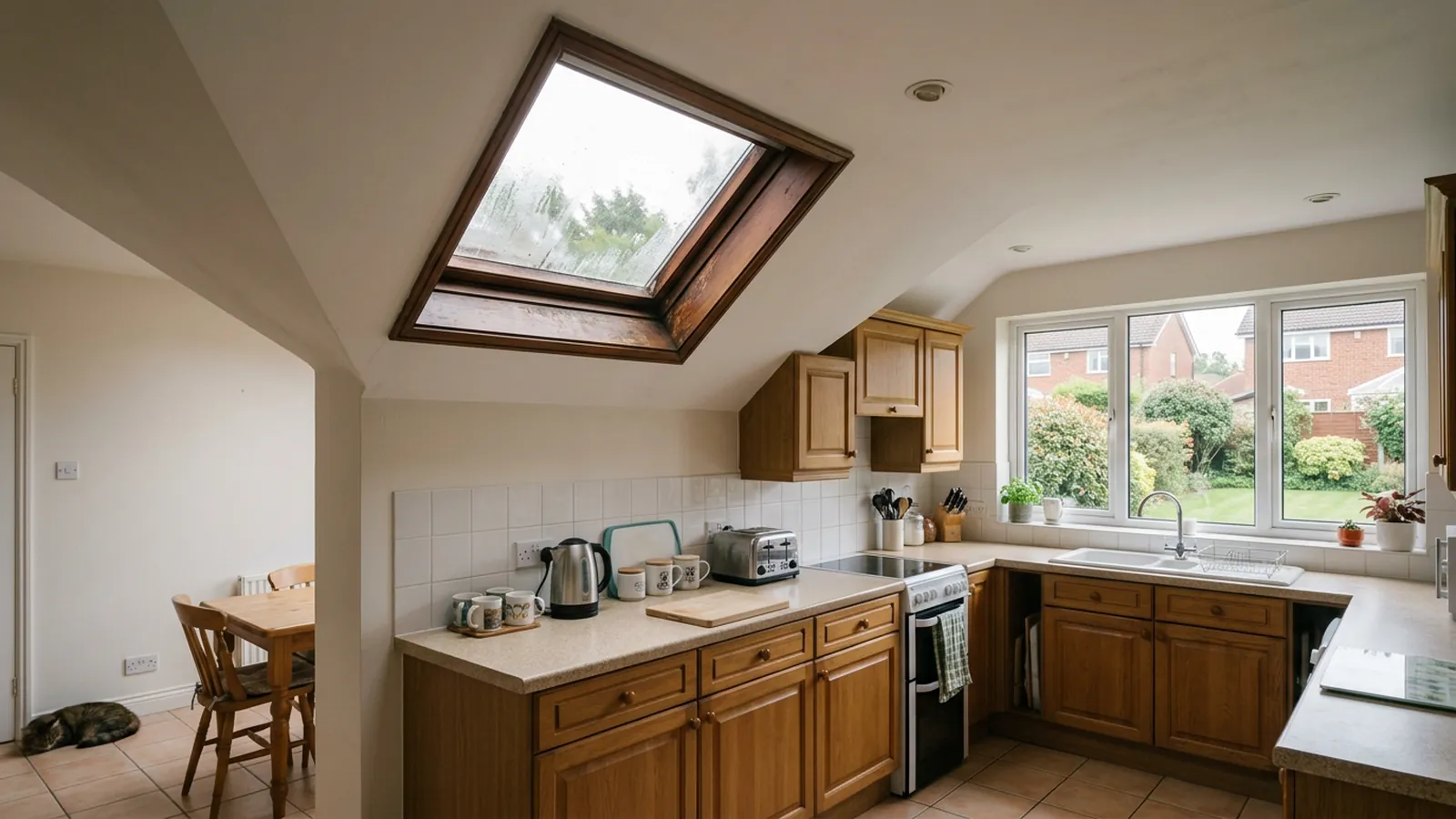
Getting ahead of the next winter
Gaskets perish slowly and then all at once: a strip that has been hardening for years finally shrinks off a corner in a hard frost, and the first wet week after that shows it. Catching a rooflight while its seals are the only tired part keeps the choices open. Waiting until the unit mists or the rail softens narrows them to one.
If your old skylight is showing the signs on this page and you want a straight answer on seals or a whole new window, arrange a survey of the rooflight and we will tell you which it is. For the bigger picture on replacing tired glazing across the area, the rooflight replacement in Basingstoke homepage is the place to start.