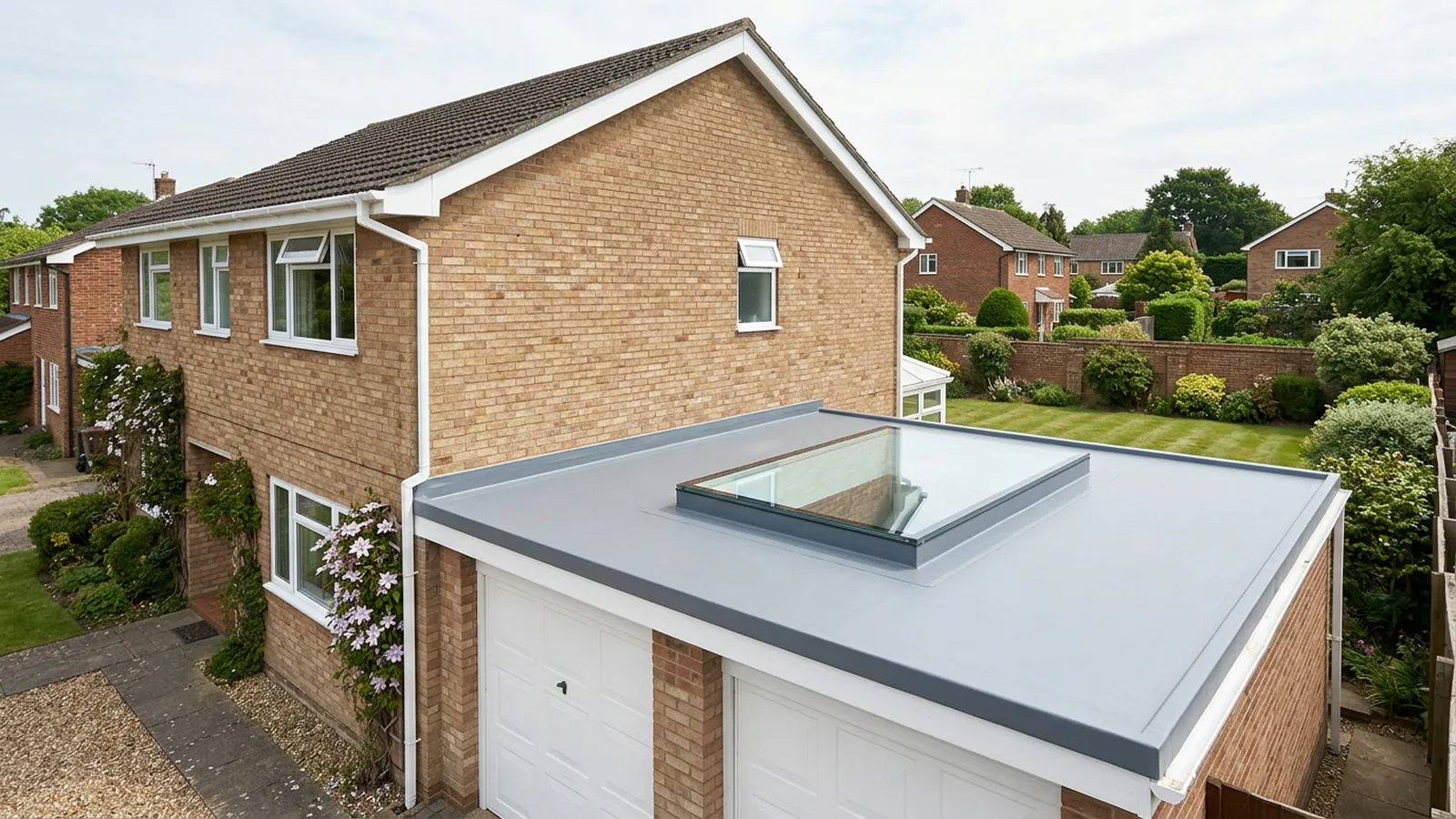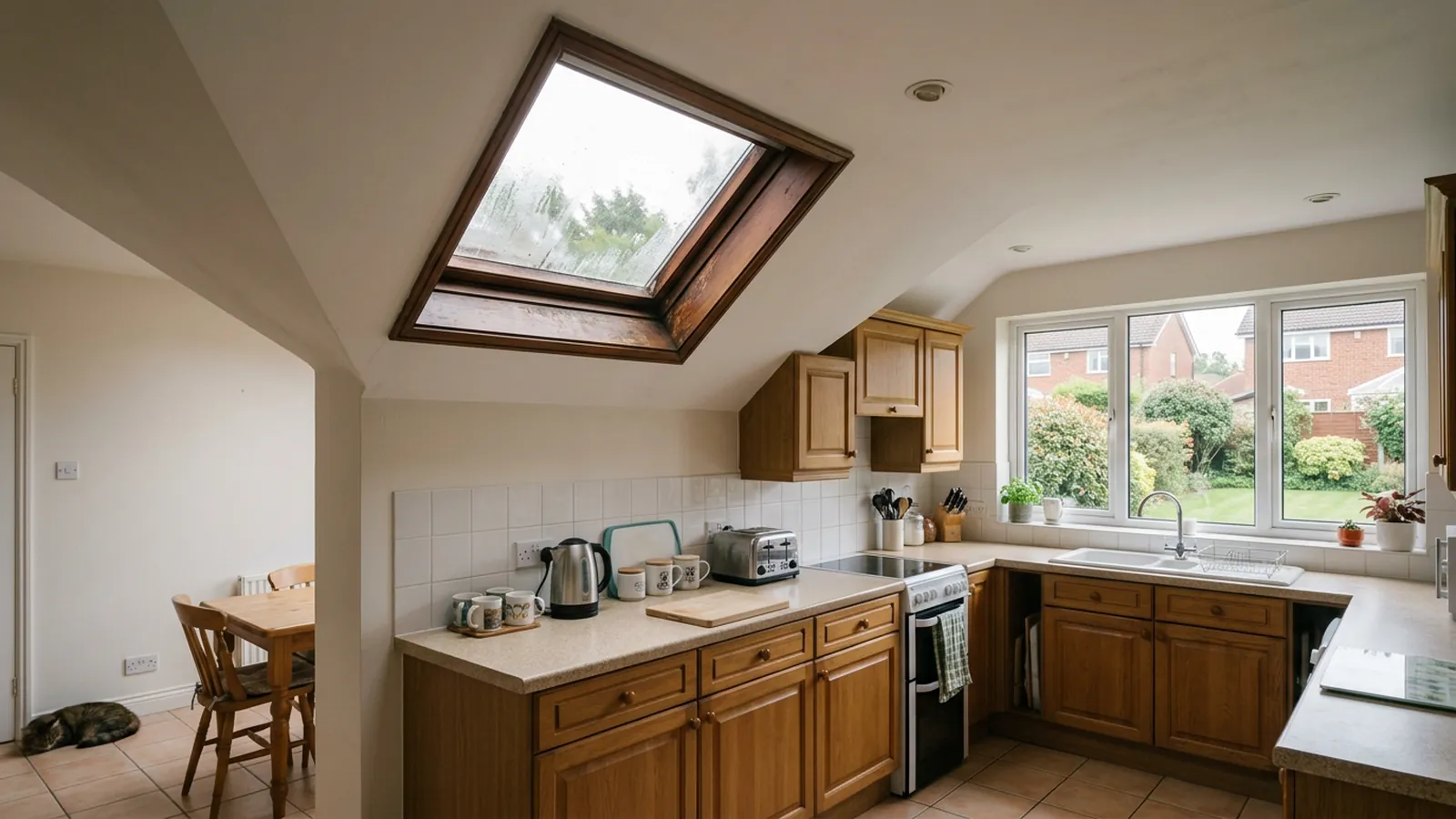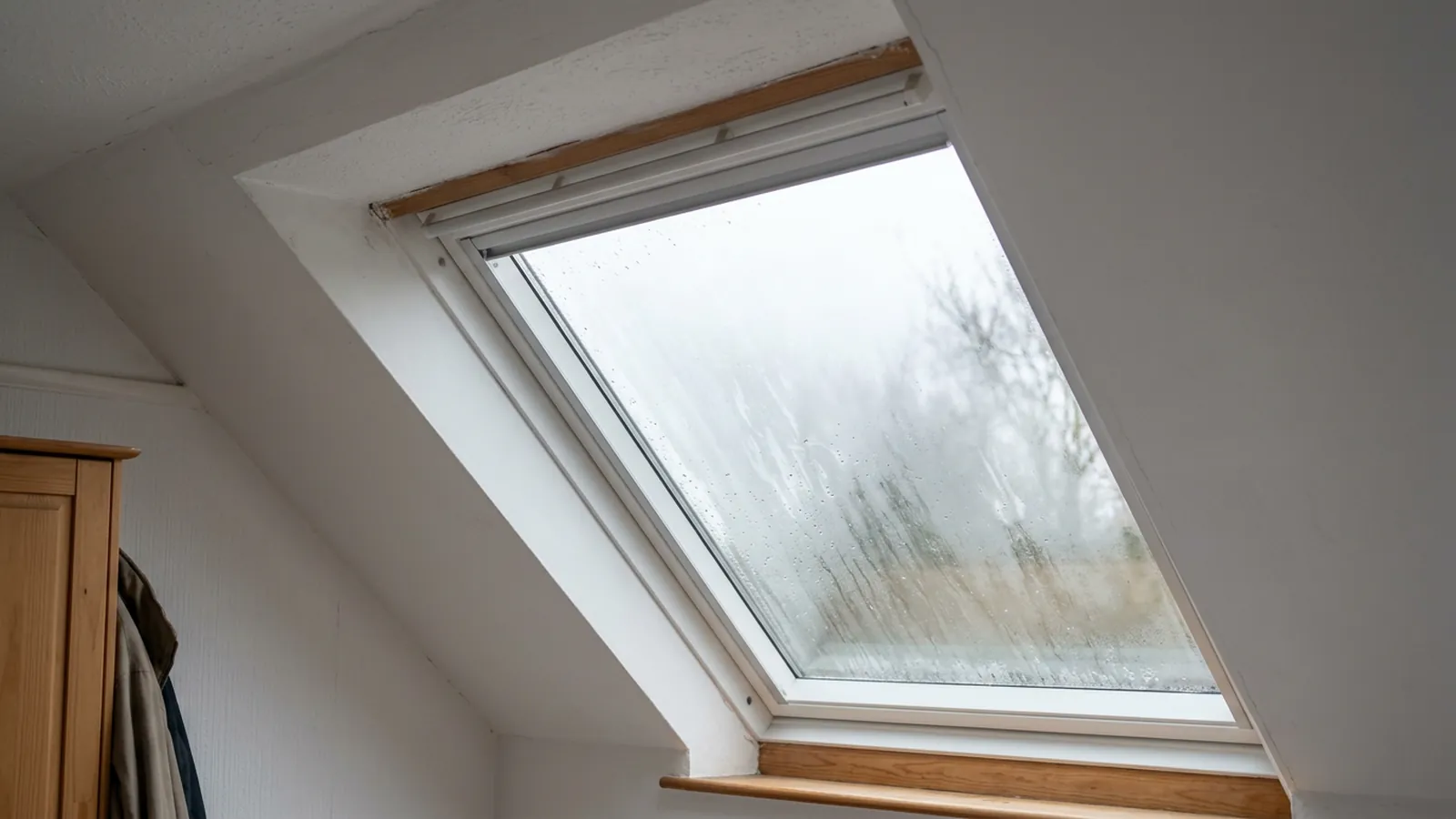
Seeing drops land on the landing carpet or the kitchen worktop under a skylight is unsettling, and the first thought is that the whole thing has given up. It is worth pausing on the timing and the weather before deciding that. This answer sits under replacing a failed or misted rooflight, and it deals only with the drip: where the water can come from, how to tell the sources apart, and which of them genuinely means the unit needs changing.
Three places the water can come from
A dripping rooflight has one of three sources, and they behave differently enough that a few days of watching usually narrows it down.
From the room. Warm, moist air from cooking, showers, drying laundry or simply breathing meets the coldest surface in the room, which on a winter morning is often the glass overhead. The vapour turns to water on the room side of the pane, beads up, and runs down to the lower frame. Roof windows are shaped so that this runs onto the sill or into a small condensation channel, but a heavy build-up overflows it and drips.
From outside, round the frame. Rain that gets past the flashing, a worn frame gasket or a gap where the tiles or the flat roof covering meet the upstand runs down inside the lining and appears at the corners or along the bottom edge.
Through the glass. A cracked outer pane, or a unit whose edge has come away from its frame, lets rain straight through. This is the least common source and the easiest to spot, because the damage is usually visible from inside.
How a sealed rooflight unit works and fails
- Outer and inner glass panes, with the outer pane facing the weather
- Low-emissivity coating on one inner face, reflecting heat back into the room
- Warm-edge spacer bar holding the panes apart, filled with desiccant to soak up trace moisture
- Primary seal against each pane, backed by the secondary seal around the edge
- Dry sealed cavity, the insulating layer between the panes
- Broken edge seal: moist air gets in and the desiccant becomes saturated
- Mist and droplets trapped between the panes; they cannot be wiped off and the sealed unit needs replacing
- Inset: condensation on the room-side face of the glass is a ventilation or humidity issue, not a failed unit
Reading the drip: a quick comparison
Note when it happens, what the weather was doing, and where exactly the water collects. Those three things separate the sources better than anything else a homeowner can do from the floor.
| What you notice | Likely source | Does it mean a failed unit? |
|---|---|---|
| Drips on cold, dry mornings, worse after showers or cooking | Condensation on the room-side pane | No. The glass is doing its job; the room air is too humid for how cold the pane gets |
| Water beading evenly across the whole inner face | Condensation | Not on its own, though single glazed or early double glazed units run colder and collect more |
| Drips only during rain, often at one corner | Flashing, upstand or frame gasket | Not the glass, but on an old frame it often means the rooflight as a whole has reached its end |
| Mist or droplets trapped between the two panes | Broken edge seal on the sealed unit | Yes, the unit has failed, but this water stays inside the glass and does not drip |
| Visible crack, with water coming through in rain | Damaged glazing | Yes. The glazing, or the whole rooflight, needs replacing |
The fuller method for separating surface condensation from a failed unit, including the fingertip test on each face of the glass, is in our guide to telling condensation from a failed unit.
Why condensation drips more in some rooms
The same skylight can stay dry over a landing and stream every morning over a bathroom. What changes is the moisture in the air under it. A shower room, a kitchen with the hob below the glass, or a loft bedroom with the door shut all night puts far more vapour against the pane. Older units run colder at the edge, where an aluminium spacer bar conducts heat out, so drops tend to form first along the bottom of the glass and run straight onto the sill.
There are sensible steps to try before anyone climbs a ladder: open the ventilation flap if the window has one, run the extractor in the bathroom or kitchen for longer, keep the blind from sealing the glass off from the room overnight, and dry laundry somewhere else. If the drip stops when the air is drier, the rooflight was never the problem. Where the drip has left dark spots in the reveal, our answer on black mould round a rooflight explains what that tells you.
The rule: a drip that tracks the humidity in the room, not the rain outside, is condensation, and a sound unit does not need changing for it. The exception: a very old single glazed or early double glazed rooflight can run so cold that no amount of ventilation keeps it dry, and then a modern, warmer unit is the real answer.
When a drip does point to replacement
Water that arrives with the weather is a different matter. On an older rooflight, the parts that keep rain out age together: the gaskets harden and shrink, the flashing loses its grip on the covering, and the frame timber or plastic moves. A drip in a south-westerly downpour that never shows in calm rain is typical of water being driven past a seal that has lost its spring.
At that stage the useful question is not whether one seal can be dealt with, but whether the rooflight as a whole is worth keeping. If the glass is also misted, the frame is stained, and the gaskets are brittle to the touch, those signs together say the unit has had its life. Our answer on how to know if a rooflight has failed lists the signs to weigh, and the guide to water staining around an old rooflight explains how to read the marks the water has left on the lining and ceiling.
What to note before the survey
A written record of the drip makes the survey quicker and the answer surer. None of it needs a ladder.
- Timing. Write down when the water appears: first thing in the morning, after a shower, or only while it is raining.
- Weather. Note whether it was cold and still, or wet and windy, and roughly which way the wind was blowing.
- Position. Mark where it collects: across the whole sill, at one corner, or from the lining above the frame.
- The glass. Look for mist between the panes and for any crack, from the room side only.
- Photos. Take a picture of the wet area and the ceiling round the lining, so the pattern is on record.
Our answer on what to check on an old rooflight before booking a survey adds the frame and hardware checks that go alongside these.
What happens next
We look at the roof before we quote, and for a drip that means checking both sides: the flashing, upstand and covering from outside, and the glass, gaskets and lining from the room. The outcome is one of a few plain answers. The rooflight is sound and the room needs better ventilation; the glazing alone needs changing; or the whole rooflight is due, and a new one goes into the same opening with fresh flashing. Where the glazing or the whole window is changed, the work carries a 10-year workmanship guarantee, which is not insurance backed, and if the change is notifiable the Building Control notification is dealt with as part of the job.
So a dripping rooflight is a prompt to look, not proof that anything has failed. If the water keeps coming after the room has been aired, or it only arrives with the rain, arrange a roof survey and the source can be settled on the roof itself.