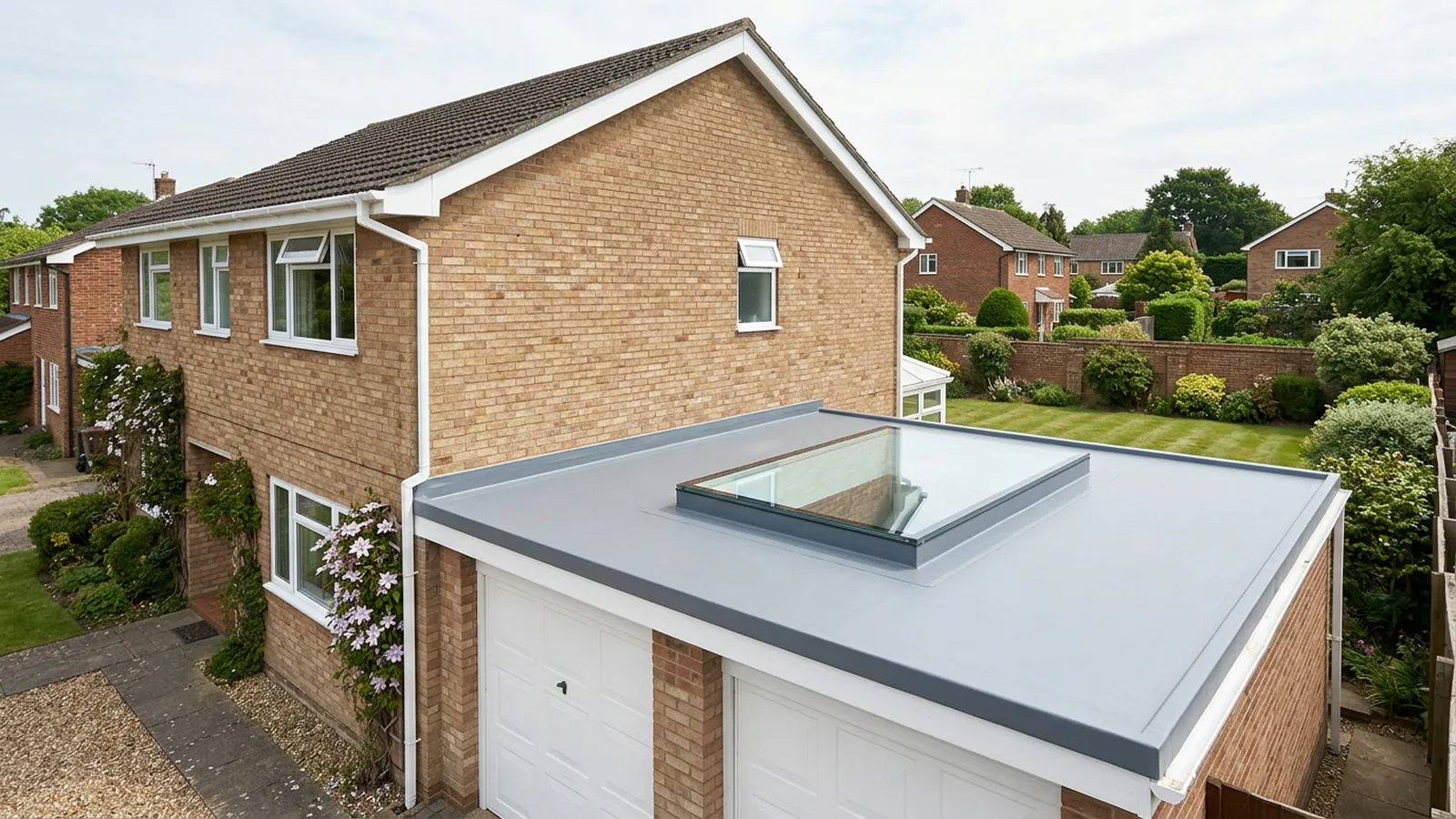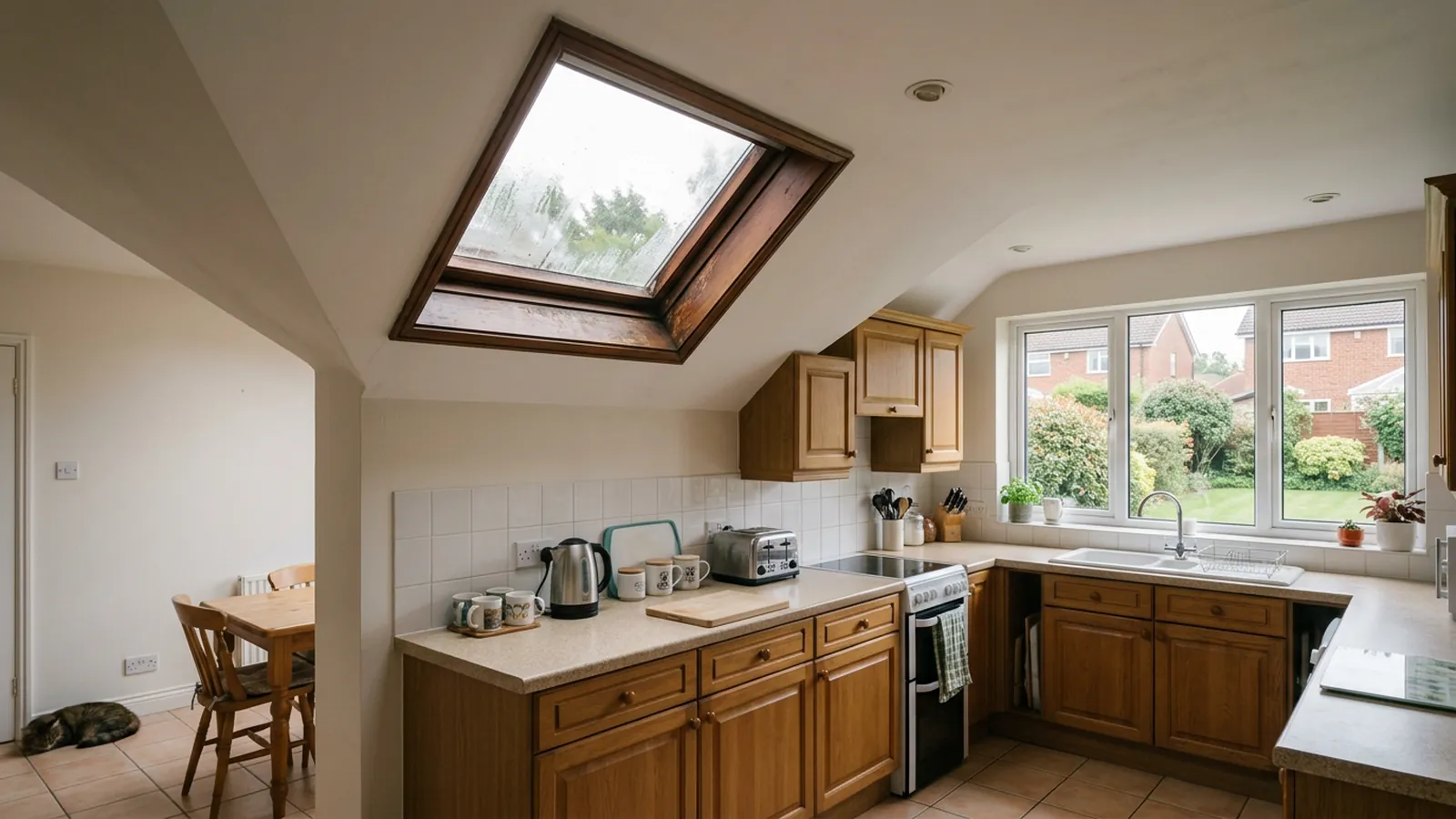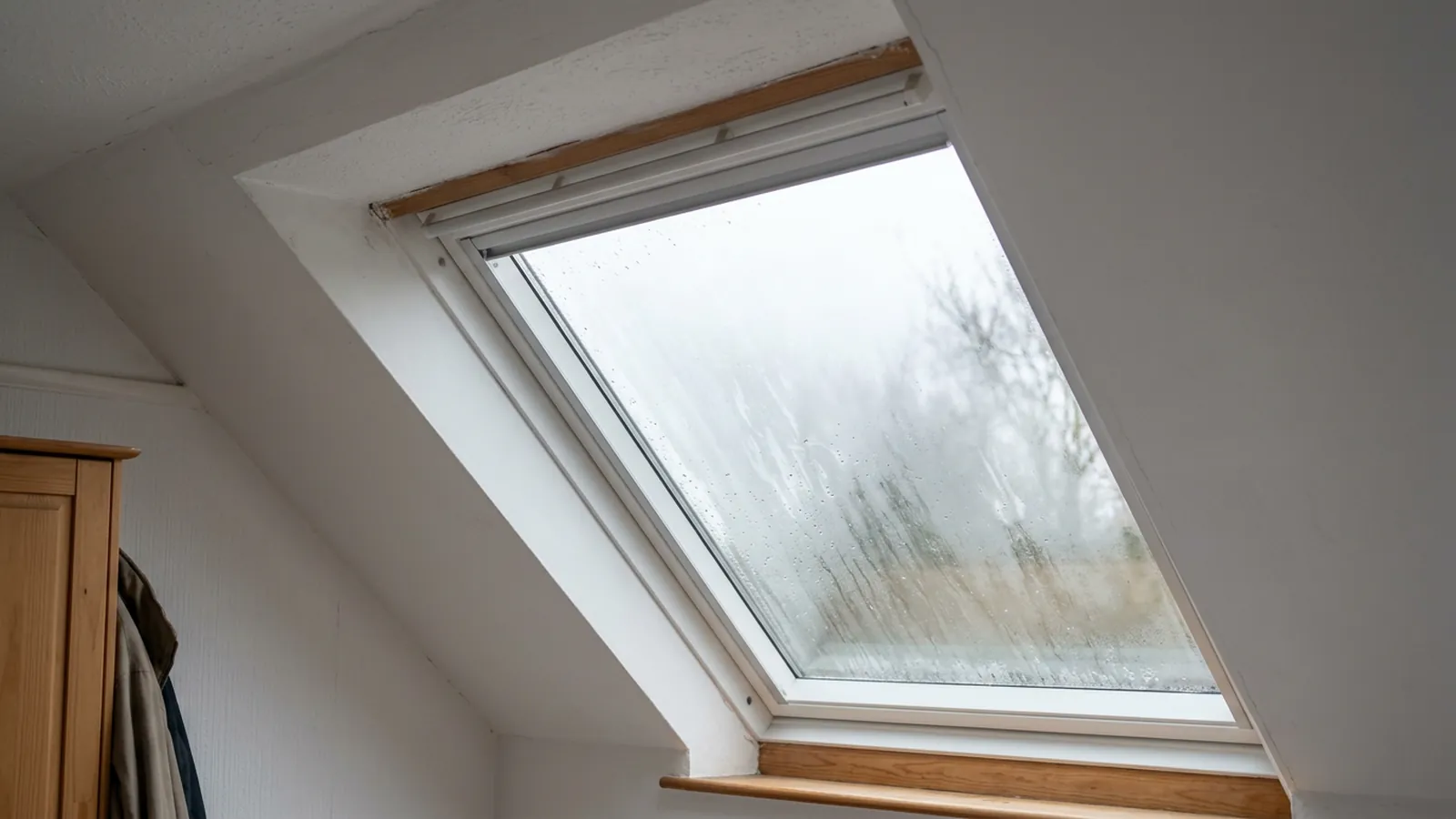
A single cloudy panel in an otherwise clear lantern is one of the easier problems a flat roof extension can throw at you, because lanterns are built as a kit of separate pieces. This page gives the short route to deciding. The full picture of why lantern units mist and how to confirm it sits in our guide to misted panes in a roof lantern, and the wider options for tired glazing are on our misted and failed rooflight replacement page.
How a lantern holds its glass
Look up from the room and you will see a ridge along the top, hip bars running down to the corners, and rafter bars dividing each slope. Every gap between those bars carries a separate unit: long panes down the sides, triangles or trapezoids at the hipped ends. Outside, each bar is capped, and that cap is what clamps the glass onto gaskets underneath. Because the bars do the structural work and the glass simply sits in them, one unit can come out without the neighbouring ones being disturbed.
Timber lanterns work on the same principle with glazing beads instead of caps. Older lanterns glazed in polycarbonate sheet are different again: the sheet is often one piece across a whole slope, so a single panel may mean a whole face, and at that point the question becomes whether the frame is worth keeping at all.
How a roof lantern sits on a flat roof
- Ridge, where the glazing bars meet at the top
- Hip bar, closing each sloped end of the lantern
- Glazing bar, holding the edges of the glass
- Glass panel, sealed double or triple glazed units
- Eaves or perimeter frame, which the whole lantern stands on
- Insulated kerb (upstand), raising the lantern clear of the roof
- Flat roof covering, dressed up the kerb and under the frame
- Plastered reveal, lining the lantern well into the room below
When one pane is the right answer
Changing just the affected unit makes sense when the misting is confined to that pane and the rest of the lantern is sound. Before anyone orders glass, it is worth being sure the fog really is inside the unit, since moisture on the room side wipes away and points to ventilation rather than a failed seal. Our answer on whether a misted pane means the whole rooflight has failed walks through that check.
| What you see | Likely route | Why |
|---|---|---|
| One pane fogged inside, frame and caps in good order | Replace that one sealed unit | The bars and gaskets are still doing their job, so only the glass needs to change |
| Two or three panes fogged, the others clear | Replace the failed units together in one visit | Access and set-up are shared, and the lantern keeps a consistent look |
| Most panes fogged or drips at the ridge | Consider a new lantern | The frame, gaskets or upstand may have reached the end of their life along with the glass |
| Polycarbonate sheet gone yellow or brittle | A glazed replacement lantern | Sheet glazing is rarely changed panel by panel, and glass performs better |
Getting the new unit to match
A lantern unit is made to order, so the replacement has to be measured and specified from the one it replaces. The details that count are the exact size, the shape and angles of a hip-end triangle, the overall thickness so the cap clamps down properly, and the glass itself: toughened or laminated on the inner pane, any solar control coating, any tint, and whether it has a self-cleaning outer face.
Coatings are where the eye catches a mismatch. A new unit with a neutral coating beside older units with a blue or bronze cast will show from the garden, so the survey notes what the existing glass looks like in daylight as well as its specification. Sometimes matching a discontinued coating exactly is not possible, and it is better to know that before the order goes in than after the unit arrives.
What the visit involves
Most of the work happens outside, on the flat roof around the upstand, so safe access comes first. The sequence is short.
- Measure and specify. The failed unit is sized in place and its glass build-up recorded, then the replacement is ordered to suit.
- Open the bar. On delivery day the caps either side of the pane come off and the old unit is lifted clear, with the room below protected.
- Set the new unit. Gaskets are checked, the new glass is bedded onto its packers, and the caps go back on and are clamped down.
- Check the finish. End caps, ridge cover and the joints along the bars are inspected so water runs off as the lantern was designed to shed it.
That is normally a same-day job once the unit is on site. The waiting is in the ordering, because the glass is cut to measure; our answer on how long replacing a misted rooflight takes covers the timing in more detail.
When a new lantern is the better call
A lantern is a system of frame, gaskets, glass and the upstand it sits on. If the frame has been in place long enough that the gaskets are hardening, the powder coat is chalky, or several units are failing in turn, swapping panes one at a time keeps paying for access to a frame that is itself near the end. A replacement lantern, specified to the upstand you already have or to a rebuilt one, is then the more sensible spend. The choices for a new one are set out on our roof lantern installation page, and the general weighing of glass against frame is in our guide to replacing the sealed unit or the whole rooflight.
Worth knowing: swapping a unit into an existing frame is a glazing job, while taking out the whole lantern and fitting another is a replacement skylight with its own paperwork. Our answer on whether replacing a failed rooflight needs Building Regulations explains where that line falls, and if the whole lantern is changed we take care of any notification it needs.
What decides the cost
The price of a single unit turns on its size and shape, the glass specification it must match, and how the flat roof is reached: a single-storey kitchen extension with easy garden access is a different proposition from a lantern above a two-storey rear wing. Replacing several units together shares that access. Whichever route fits, the written quote follows a survey of the lantern itself, and the work carries our 10-year workmanship guarantee, which is not insurance backed.
If one foggy pane has started to spoil the view from your kitchen, arrange a survey of the lantern and you will know whether a single unit is all it needs.