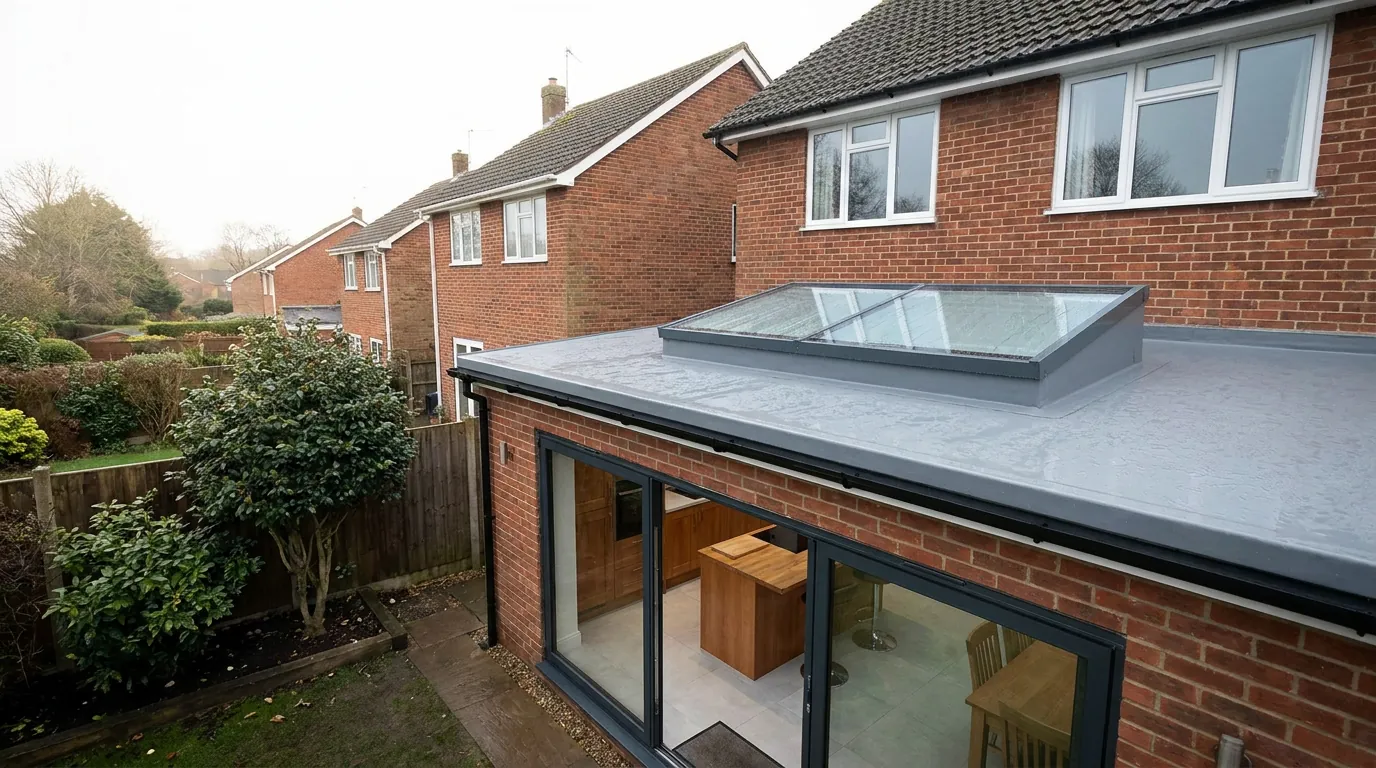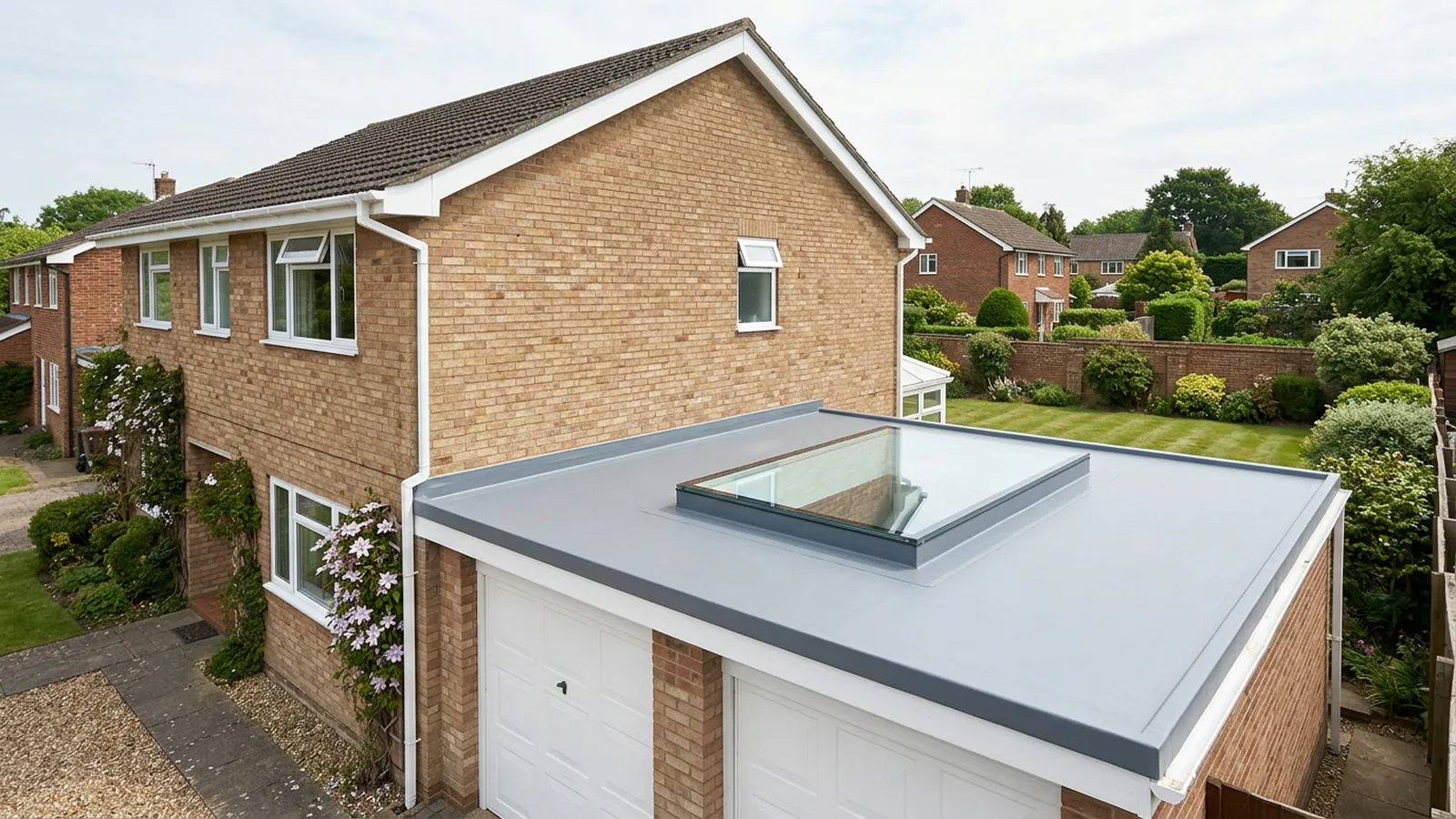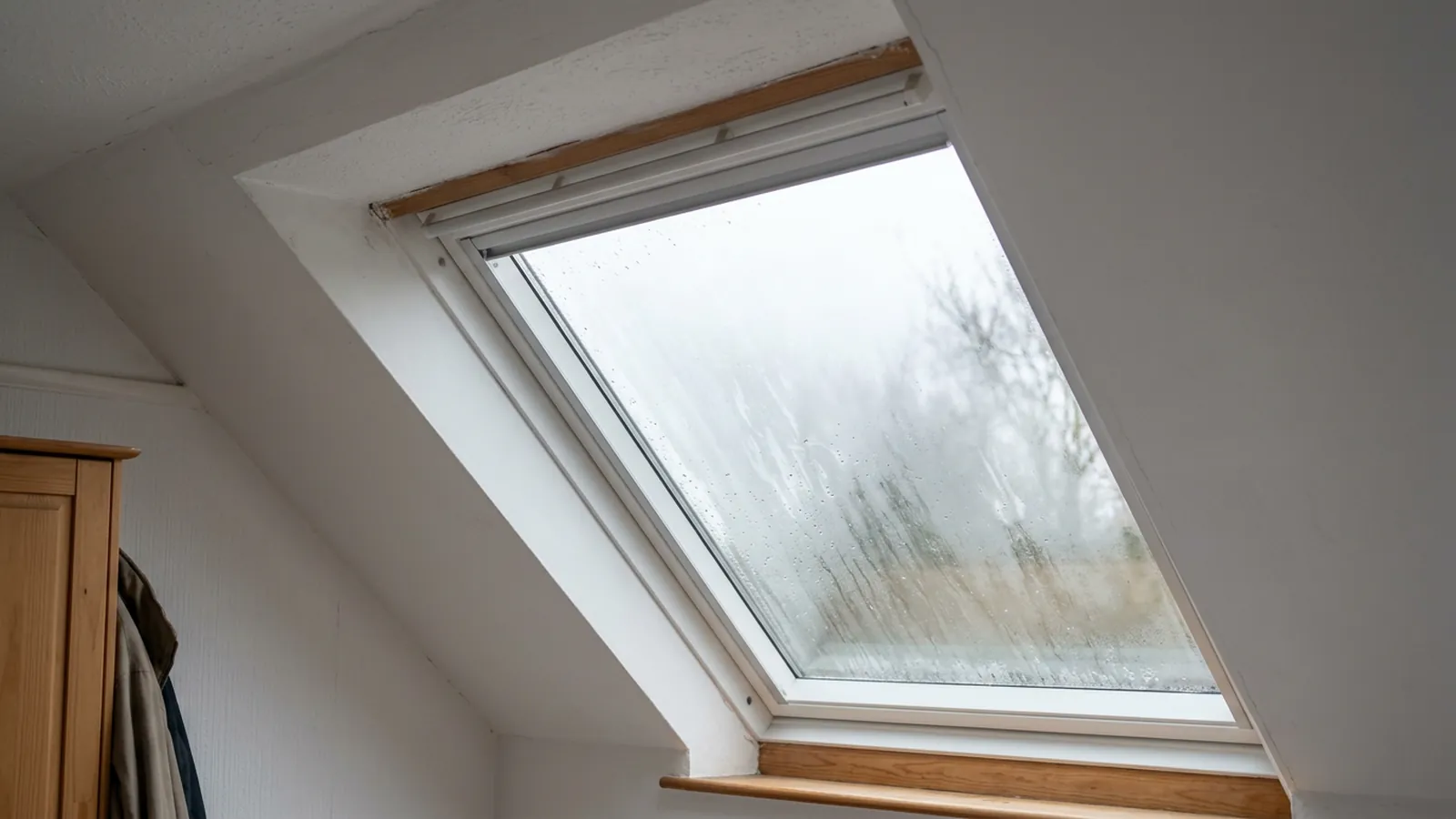
A roof lantern is really a small glass roof. It sits on a kerb above a flat roof, usually over a kitchen or garden room extension, and it is built from a frame of glazing bars with a separate sealed unit dropped into every bay. That construction is why misting in a lantern behaves differently from misting in a single roof window. One pane can cloud over while its neighbours stay perfectly clear, and the fix depends on which pane it is, what shape it is and what state the frame around it is in.
This guide is about that exact situation: you look up from the kitchen table and one or two panes in the lantern have gone milky, streaked or beaded on the inside of the glass. It covers how to confirm the pane has actually failed, why lantern units are more exposed than most, how a single unit is taken out and replaced, and when the honest answer is a new lantern rather than new glass.
First, check where the moisture actually is
Water you can wipe away is not a failed unit. A lantern over a busy kitchen collects steam from cooking and from the kettle, and on a cold morning that steam lands on the coldest surface in the room, which is often the lantern glass. That is surface condensation, and it clears as the room warms or the extractor runs.
A failed pane is different. The moisture is trapped in the cavity between the two sheets of glass, so a cloth on the inside does nothing and nobody can reach it from the roof either. Our guide to telling condensation from a failed unit goes through the checks in full; for a lantern, the quick version is below.
| What you see | Likely cause | What it means for the lantern |
|---|---|---|
| Droplets on the room side that wipe off | Surface condensation from cooking, drying laundry or a cold snap | The glass is working; ventilation in the room is the thing to look at |
| A milky haze in one pane that stays put | The edge seal of that sealed unit has let moist air into the cavity | That unit has failed and needs replacing; the others may be sound |
| Tide marks or white residue inside the cavity | Moisture has been condensing and drying in the cavity over many seasons | A long-standing failure; the view will not recover on its own |
| Several panes clouding in the same period | Units of the same age and batch reaching the end of their seal life together | Worth pricing a full reglaze or a new lantern alongside single units |
| Drips from the frame or the kerb lining | Could be condensation running off the glass, or water getting past the frame | Needs looking at from the roof as well as the room before anything is ordered |
If the drips are the worry rather than the haze, the answer on whether dripping always means a failed unit is the better place to start.
How a roof lantern sits on a flat roof
- Ridge, where the glazing bars meet at the top
- Hip bar, closing each sloped end of the lantern
- Glazing bar, holding the edges of the glass
- Glass panel, sealed double or triple glazed units
- Eaves or perimeter frame, which the whole lantern stands on
- Insulated kerb (upstand), raising the lantern clear of the roof
- Flat roof covering, dressed up the kerb and under the frame
- Plastered reveal, lining the lantern well into the room below
Why the panes in a lantern fail one at a time
Every pane in a lantern is its own sealed unit: two sheets of glass held apart by a spacer bar, with a desiccant inside the spacer and a sealant bonding the edges. The spacer and desiccant keep the cavity dry for as long as the edge seal holds. When the seal gives way, damp air gets in, the desiccant soaks up what it can, and once it is full the cavity mists. The full chain of cause is set out in why a rooflight mists between the panes.
In a lantern that process runs pane by pane. Each unit has its own seal, its own spacer and its own exposure. The panes facing south take more sun and swing through bigger temperature changes; the ones on the shaded side stay damp longer after rain; the hipped end panes are cut to an angle and have longer, more awkward edges to seal. So it is normal for one unit to go while the rest carry on, and a single misted pane is not, on its own, proof that the whole lantern is finished. The short answer to whether a misted pane means the whole rooflight has failed makes the same point for other rooflight types.
In a lantern, a misted pane is a failed unit, not yet a failed lantern.
What makes lantern glazing more exposed than a wall window
A window in a wall stands upright and sheds water straight down. Lantern glass lies at a shallow pitch, so rain runs slowly across it and the bottom edge of each unit sits in the path of that water every time it rains. Frost, standing water behind the cappings and a blocked drainage channel in a glazing bar all put the lower edge seal under more strain than it would ever get in a wall.
The lantern also sits on top of a flat roof, where it takes full sun from dawn to dusk in summer and the coldest night sky in winter. The glass, the aluminium or timber bars and the sealant all expand and contract at different rates, and the edge seal takes that movement on every cycle. None of this means a lantern is a poor choice of rooflight; it means the glazing is working in a harder spot, and the seal life reflects it.
The rule: nobody should stand or kneel on lantern glass to inspect a misted pane. The exception is a unit specified as walk-on glazing, which a roof lantern almost never is. Access is from crawl boards on the flat roof, or from a tower inside the room.
Measuring a lantern pane is its own job
A replacement sealed unit for a lantern is made to order, and it has to match the failed one in every way that counts. That is why the pane is measured and recorded before anything is ordered, rather than guessed from a brochure size. On a typical hipped lantern there are three shapes to deal with:
- Side panes along the long faces, usually rectangular or slightly tapered.
- Hip panes at each end, triangular or trapezoid, cut to follow the hip bar.
- Any upstand or gable glazing on lanterns with a vertical glazed section, which may differ in thickness from the roof panes.
For each unit the details that matter are the overall size and angles, the total unit thickness (so it sits correctly in the glazing bars), the spacer colour, the glass types in each leaf, and any coating. Overhead glazing is normally built with a laminated inner pane so that broken glass stays in place, and many lanterns carry a solar control or self-cleaning coating on the outer leaf. A new unit without the same coating can look a different colour from the room below, which is why the specification is read off the existing glass, not assumed.
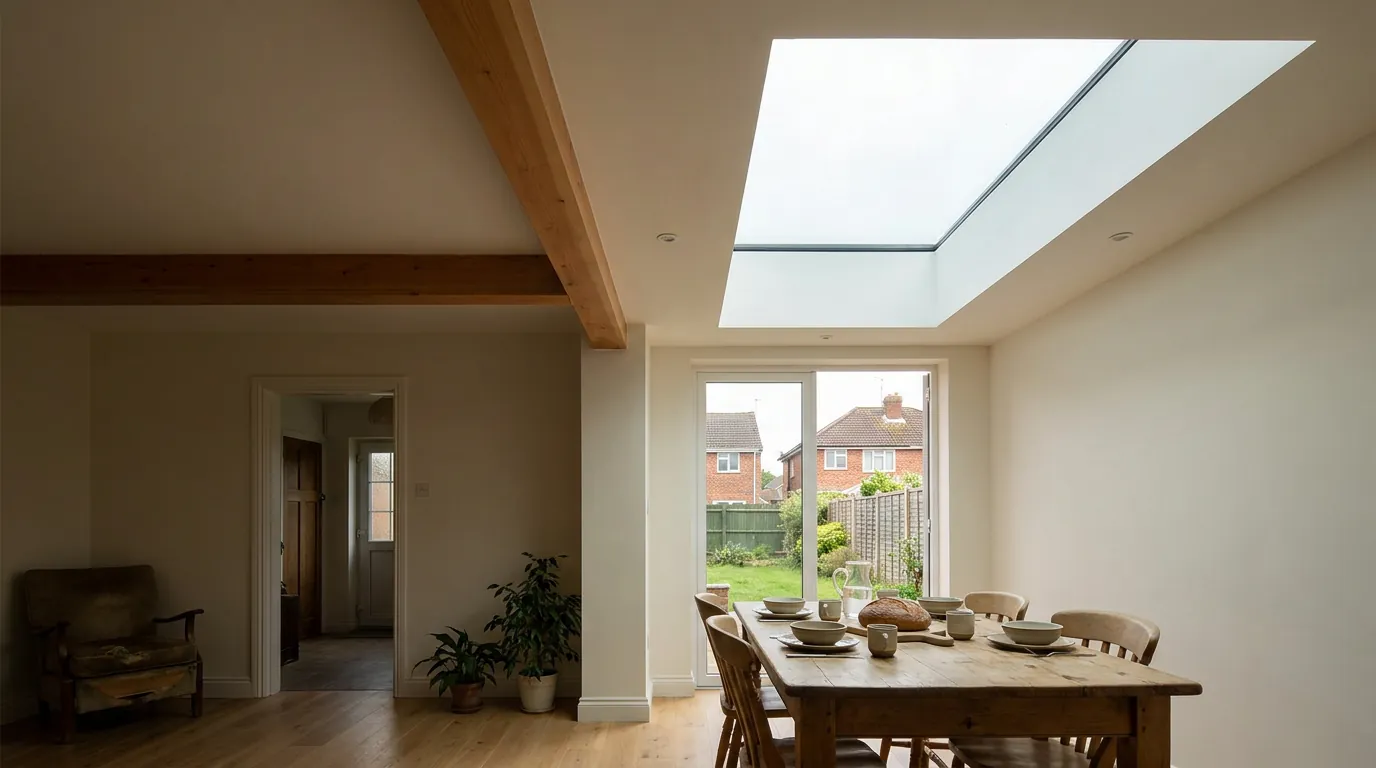
How one misted unit is changed in a lantern
Where the frame is sound and the unit can be matched, swapping a single pane is a neat, contained job. The sequence runs like this:
- Survey. The lantern is looked at from the flat roof and from the room. The failed pane is confirmed, the frame, cappings and kerb are checked, and the unit is measured and its glass specification recorded.
- Order. The replacement sealed unit is made to the recorded size, shape, thickness and glass build, with a matching coating where the original has one.
- Protect. On the day, the room below is sheeted and the roof around the lantern is protected with boards so nobody loads the glass or the membrane.
- Release. The top caps or pressure cappings over the failed pane are unclipped or unscrewed, and the old gaskets and any glazing tape are taken out.
- Lift out. The failed unit is lifted clear, and the glazing bars are cleaned and checked, including the drainage path at the foot of the pane.
- Glaze in. The new unit goes in on fresh setting blocks and gaskets, is centred in the bay, and the cappings go back on and are checked for a weathertight close.
- Finish. The inside is wiped down, the dust sheets come up, and the old glass is taken away.
How quickly that can happen depends mostly on how long the unit takes to make, since the fitting itself is contained. The answer on whether one misted pane in a roof lantern can be changed gives the short version, and the parent page on misted and failed rooflight replacement explains how we plan the visit around the order.
When a new unit is the wrong answer
Changing a unit is only worthwhile if the frame around it has plenty of life left. There are lanterns where fitting a new pane would be spending money on the wrong part. The signs that point that way include:
- Timber glazing bars that have softened, split or lost their finish at the foot of the panes.
- Cappings that have warped, or gaskets that have shrunk back from the glass along several bars (see perished frame seals and gaskets).
- An older polycarbonate or single-glazed lantern where the question is not the glass but the whole thermal standard of the roof.
- Several panes clouding at once, so single units would be followed by more single units.
- A kerb or upstand that has moved or been poorly built, so the lantern is not sitting true.
At that point the comparison is between reglazing every bay and replacing the lantern outright. Our guide to replacing the sealed unit or the whole rooflight sets out how that decision is weighed. Where a new lantern wins, the design work (size, bar layout, glass, opening vents) belongs to our roof lantern installation service, and it often fits the existing kerb.
Can the mist be cleared without a new pane?
There are services that drill a small hole in the glass, dry the cavity and plug it again. On a vertical window in a wall that is a debated option; on sloping overhead glazing it is harder to recommend, because the laminated and coated build of lantern glass, the shallow pitch and the exposure all work against it. The failed edge seal is still failed, so the cavity is open to damp air even once the view is clearer. The direct answer to whether misted rooflight glass can be cleared covers this in more detail.
A new sealed unit restores both the view and the insulating cavity. It is the approach that actually deals with the cause.
Does a misted lantern pane matter in the meantime?
A misted pane is mainly a loss of clarity and of some insulating value. It does not, by itself, let rain into the room, because the outer leaf and the frame still keep the weather out. What it does do is dull the light in exactly the place the lantern was meant to brighten, and the cavity can stain over time so the haze becomes permanent. There is no need to panic, but there is also nothing to be gained by waiting for it to clear, because it will not.
What does need prompt attention is anything that suggests water getting past the frame: staining on the kerb lining, damp plaster below, or drips that come with rain rather than with cooking. Those are signs the frame, cappings or roof junction need looking at, and they take priority over the glass.
Building Control, the guarantee and the kerb
Swapping a sealed unit into an existing lantern frame is generally treated as a like-for-like glazing change. Taking the whole lantern out and fitting a new one is a different matter, because a replacement rooflight in England counts as a controlled fitting under the Building Regulations and the new unit has to meet the current thermal standard. Where the job is notifiable, the notification is part of our work, not an extra task left with you. The answer on whether replacing a failed rooflight needs Building Regulations sets out the line.
Our 10-year workmanship guarantee covers the fitting we carry out, whether that is one pane or a whole lantern; it is not insurance backed. The kerb and the flat roof junction are checked at survey either way, because a clear new pane on a tired upstand does not make a good roof.

Lanterns on extensions around Basingstoke
Around Basingstoke, lanterns turn up in two kinds of house. The first is the estate semi or detached home in places like Hatch Warren, Chineham or Brighton Hill, where a single-storey rear extension with a flat roof was added later and the lantern brings light into a kitchen that has lost its window. The second is the older village property in Old Basing or Overton where an orangery or garden room has a timber lantern. The glazing question is the same in both: which unit has failed, can it be matched, and is the frame worth keeping.
If you would like a wider view of skylight replacement in Basingstoke beyond lanterns, the homepage sets out every type we fit. For the lantern over your own extension, arrange a survey of the lantern and we will measure the failed pane, check the frame and tell you in writing which route makes sense. You can also read the full misted rooflight replacement service page first.