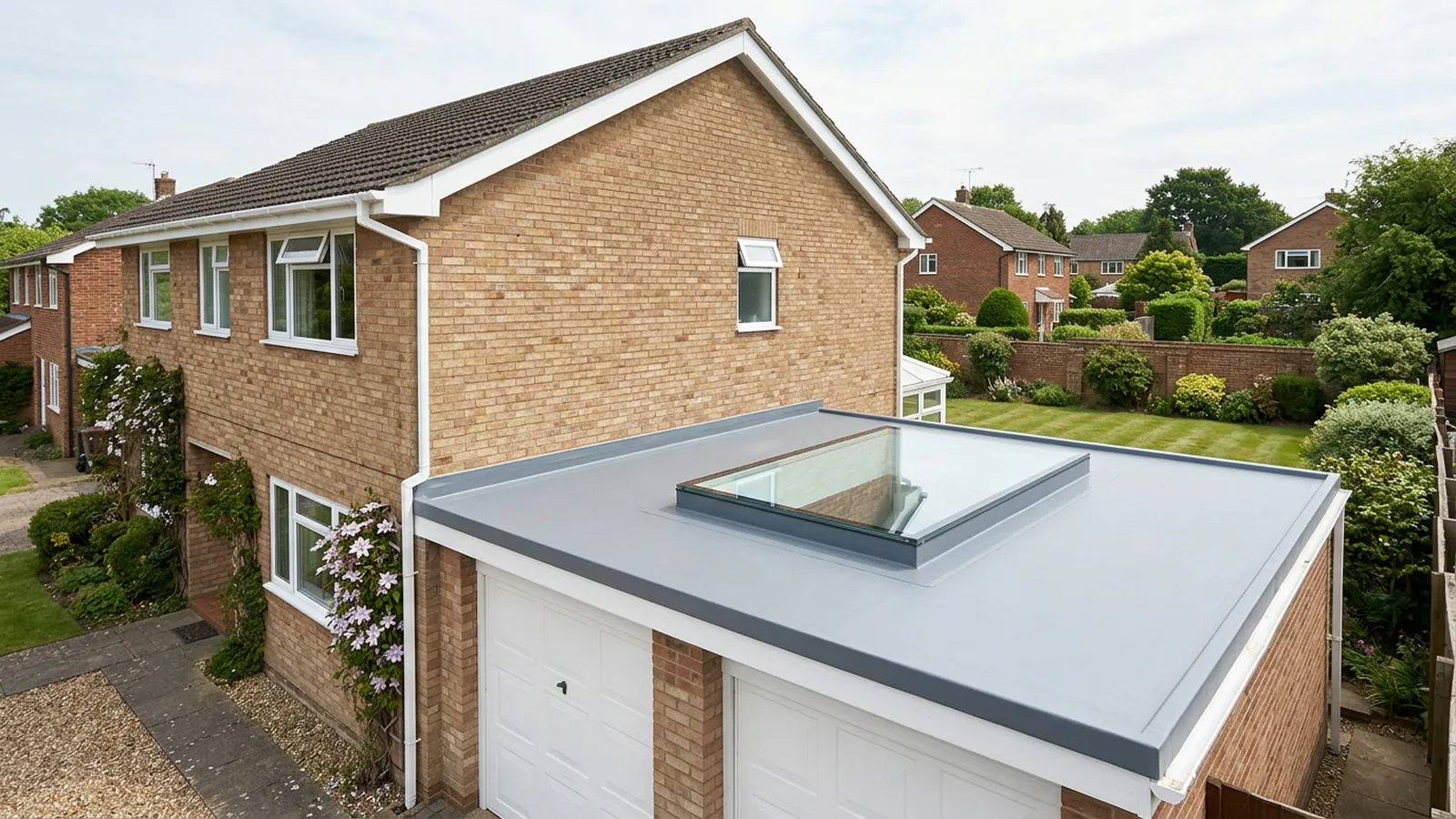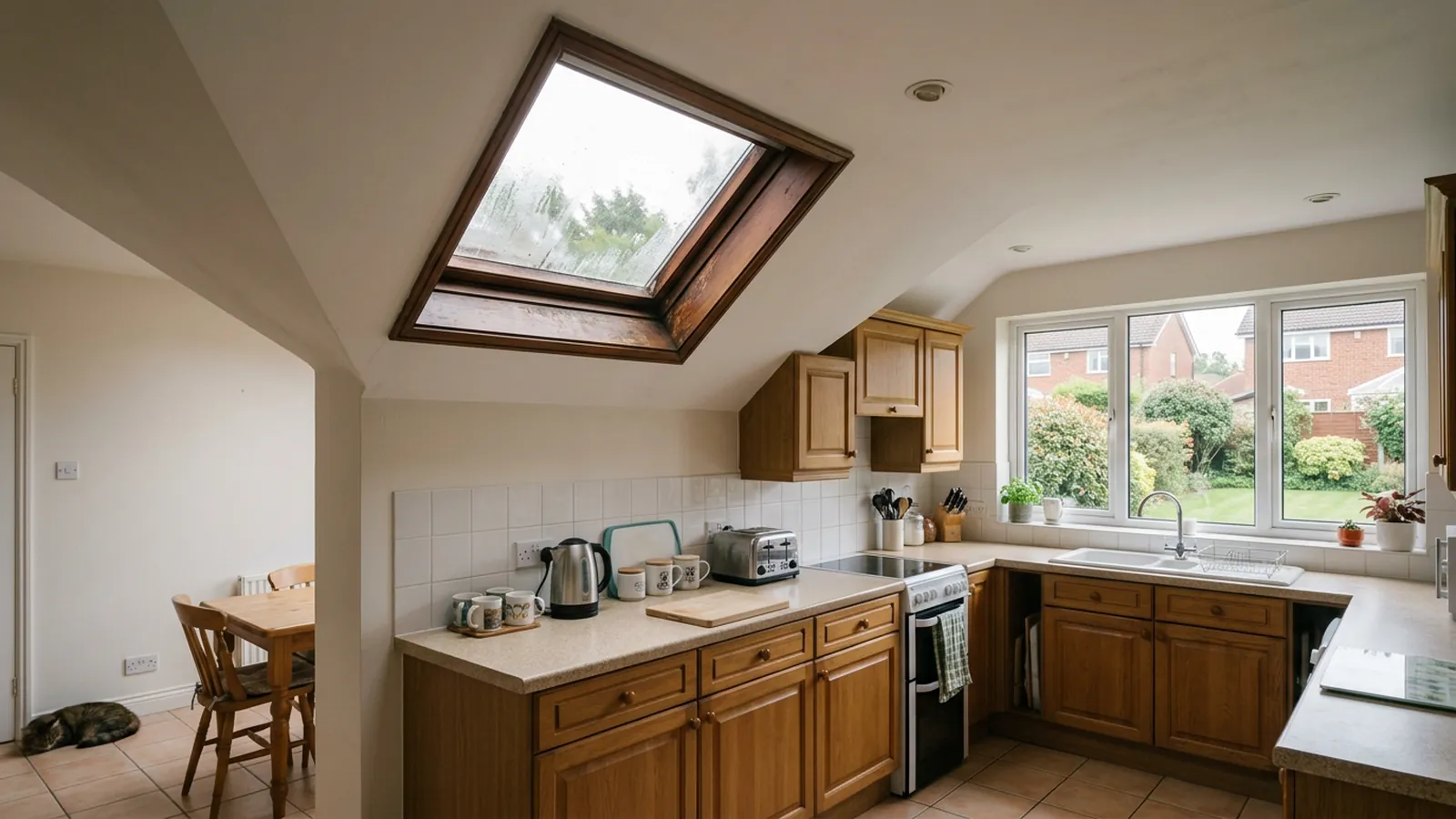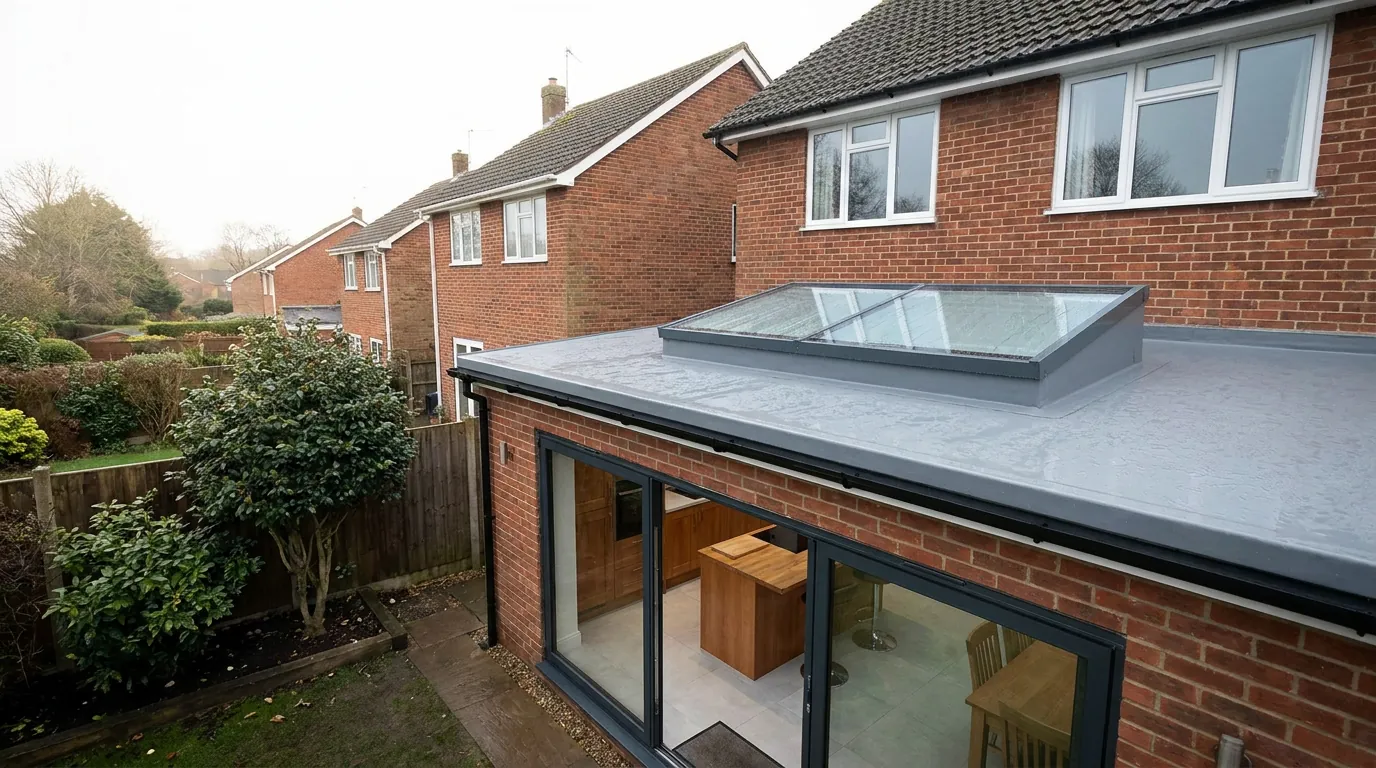
A misted or failed skylight tends to arrive as a practical problem, and the paperwork question comes second. It is worth settling early, though, because the answer depends on exactly what gets replaced. Our misted and failed rooflight replacement work always starts by pinning that down, since glass only, a like-for-like frame and a bigger opening each sit differently under the regulations.
Below, each of those three routes is taken in turn, followed by what the rules ask of the new rooflight and who deals with the paperwork.
Why a like-for-like swap still counts
It feels odd that taking out an old frame and putting a similar one back is regulated at all. The reason is that the Building Regulations treat a window, roof window or rooflight as a controlled fitting. When the whole fitting is renewed, the new one is judged against today's standard for thermal performance, not against whatever was acceptable when the house was built.
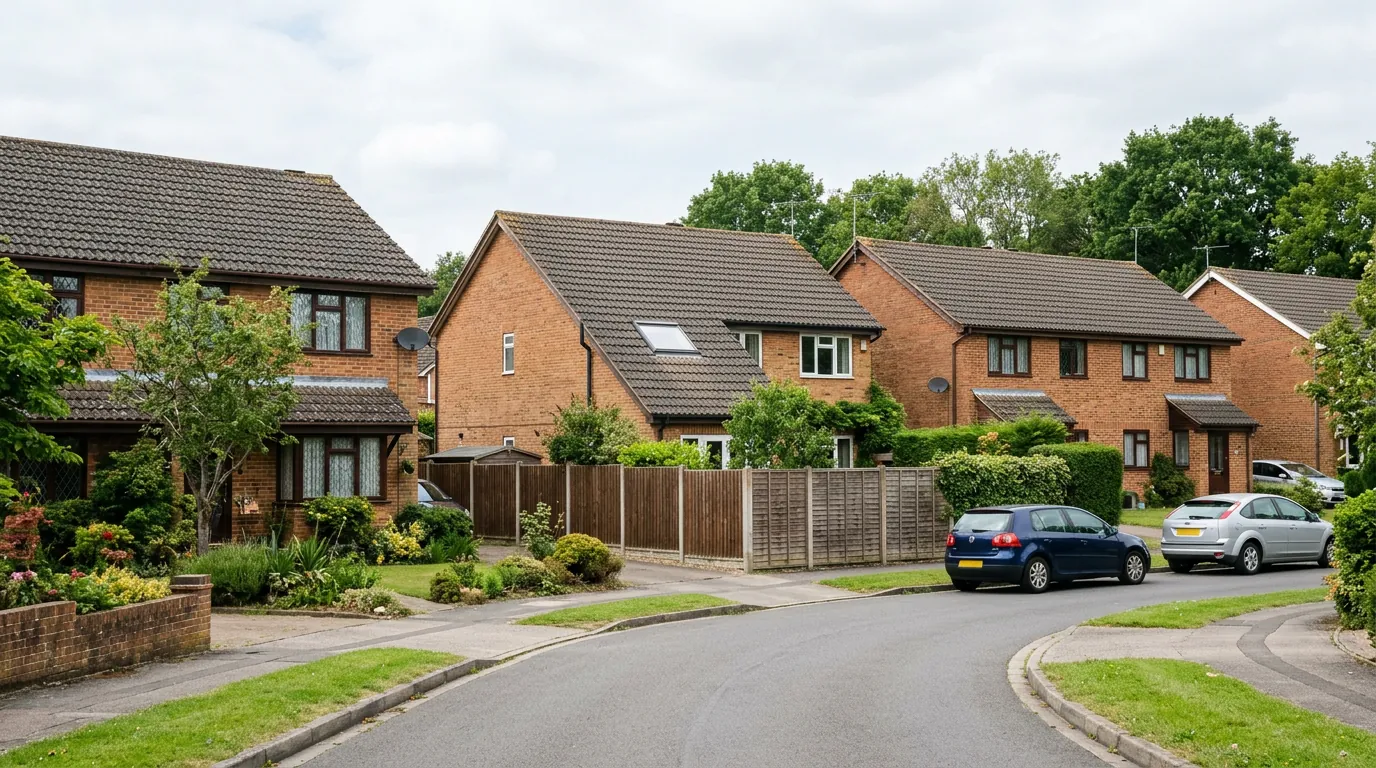
That matters on a 1970s or 1980s estate home in Basingstoke, where the original unit may be an early timber roof window or a single-skin plastic dome. Nobody expects the old one to be upgraded in place. The expectation is simply that its successor is a properly performing unit, fitted so the rest of the building is no worse off than before.
The rule: renewing the complete rooflight, frame and all, is notifiable building work. The exception: swapping a misted sealed unit inside a frame that stays in the roof is treated as glazing work, not a new fitting, so no notification is needed for that alone.
How a sealed rooflight unit works and fails
- Outer and inner glass panes, with the outer pane facing the weather
- Low-emissivity coating on one inner face, reflecting heat back into the room
- Warm-edge spacer bar holding the panes apart, filled with desiccant to soak up trace moisture
- Primary seal against each pane, backed by the secondary seal around the edge
- Dry sealed cavity, the insulating layer between the panes
- Broken edge seal: moist air gets in and the desiccant becomes saturated
- Mist and droplets trapped between the panes; they cannot be wiped off and the sealed unit needs replacing
- Inset: condensation on the room-side face of the glass is a ventilation or humidity issue, not a failed unit
Three routes and where each one stands
Whether the regulations bite depends on how far the job goes into the roof. The survey decides which route is realistic; this table shows how each is treated.
| Route | Building Regulations position | What else to consider |
|---|---|---|
| New sealed unit, existing frame kept | Glazing work only, normally not notifiable | Only sensible where the frame, flashing and hinges are still sound |
| Whole rooflight renewed in the same opening | Replacement controlled fitting, notifiable, must meet the current energy standard | Ventilation and any escape role of the old window must not be made worse |
| Opening enlarged or moved | Structural alteration as well, notifiable, may need a trimming design | On trussed roofs the truss designer or an engineer specifies any cut |
Which of the first two makes sense for your unit is weighed up in our guide to replacing the sealed unit or the whole rooflight. For VELUX owners specifically, can just the glass be replaced in a VELUX? covers the pane route for that make.
What the new rooflight has to achieve
Approved Document L sets the thermal standard a replacement roof window or rooflight has to meet, and that is the headline requirement. A modern double or triple glazed unit from a mainstream maker is designed with it in mind, so on a straightforward swap the product choice does most of the work.
Two other points get less attention. First, the replacement must not leave the room worse off on ventilation, so an opening roof window should not be swapped for a fixed one where it was the room's only means of airing. Second, in a converted loft the roof window may be the escape route from an upstairs room, and its replacement has to be at least as usable for that purpose. Safety glazing rules also apply to the glass itself.
The test is simple: the new rooflight meets today's energy standard, and nothing else about the room gets worse.
When the size changes
If the old opening stays put, the structure is untouched. Widening it is a different matter. On the trussed estate roofs around Chineham, Popley or Brighton Hill, cutting a truss member without a written design is off the table, so a bigger rooflight means a trimming scheme drawn up for that roof and a Building Control notification that includes the structural change.
That is why the first thing checked is whether a unit in the existing size is available. Our answer on whether the new rooflight will be the same size explains how makers' current ranges line up against older openings, and our guide to replacing a failed rooflight in the same opening covers the fitting detail.
Who deals with the paperwork
For a notifiable replacement there are two lawful routes. An installer registered with a competent person scheme can self-certify the work and register it. Otherwise the local authority's Building Control service, or an approved inspector, is notified and the work is signed off through them. Either way, you should end up with a completion certificate to keep with the house deeds, which a buyer's solicitor may ask for when you sell.
- Survey. We look at the frame, flashing and opening and confirm which of the three routes applies.
- Specification. The replacement unit is chosen to meet the energy standard and keep the room's ventilation and any escape role.
- Notification. Where the work is notifiable, we submit it to Building Control before the old unit comes out.
- Fitting and sign-off. The new rooflight goes in, and the completion paperwork follows for your records.
Our workmanship on the fitting is covered for ten years; that guarantee is not insurance backed.
Infographic
Planning and Building Control: the questions in order
Is the house listed?
Yes: listed building consent is needed before any rooflight goes in.
No: next question.
Is it in a conservation area, or a flat or maisonette?
Yes: check with the council. A conservation-style rooflight is often the expected choice.
No: next question.
Will it sit within permitted development limits?
Usually yes when it projects no more than 150mm from the roof plane and stays below the highest part of the roof.
If not: a householder planning application.
Is the work notifiable under the Building Regulations?
A new rooflight, or a replacement that changes the structure, is. We notify Building Control for you.
Either way the glazing must meet current thermal standards.
Planning is a separate question
Building Regulations and planning permission are two different systems. Swapping a rooflight for one of a similar size and look is rarely a planning matter on an ordinary house, but a listed building needs listed building consent for changes, and in a conservation area such as Old Basing or Overton the appearance of a new unit deserves a check with the council before ordering. Where that applies, a conservation-style rooflight that sits low in the roof is usually the starting point for the conversation, and any decision rests with the planning authority.
If cost is part of the decision, what replacing a misted VELUX costs sets out what moves the figure, including notification. For the wider picture on skylight replacement across Basingstoke, start from the homepage. Otherwise, arrange a survey of the old rooflight and you will know which route, and which paperwork, your roof needs before any price is agreed.