Price lists online tend to quote a pane or a window in isolation, and neither tells you what your own misted roof window will cost to put right. This page walks through what actually moves the number, so the quote you receive makes sense line by line. The wider service, from diagnosis to fitting, is on our page for misted and failed rooflight replacement.
We publish no prices here on purpose. Two misted skylights that look identical from the landing can sit in very different roofs, and a figure given before anyone has looked at yours would only be a guess.
The first fork: new glazing or a new window
The biggest single decision in the cost is whether the misted pane goes and the rest stays, or whether the whole unit comes out. On many VELUX models the glazing unit is designed to be changed in the sash, so a sound window with a failed seal between its panes can take new glass without disturbing the roof outside. That keeps the tiles, the flashing and the plaster round the opening as they are, which is why it is usually the leaner route.
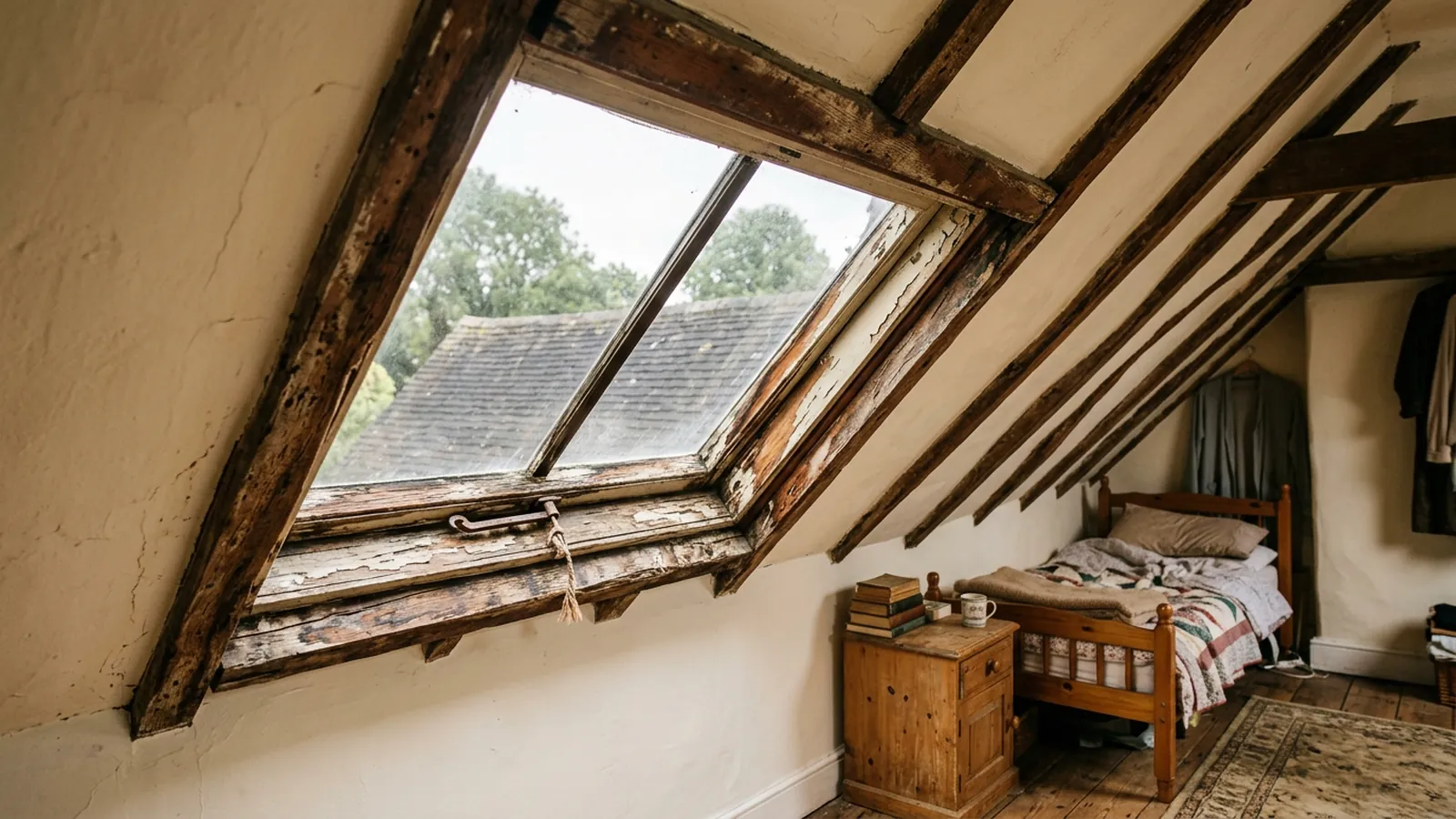
A whole window becomes the better value when the timber is soft or stained, the hinges or handle have worn, the flashing is past its best, or the model is old enough that the matching glazing is no longer made. Paying for a new pane in a frame that will need changing in a few seasons is money spent twice. Our guide to misted VELUX glazing and the replacement pane route covers which windows suit a new pane, and replacing the sealed unit or the whole rooflight sets the two routes side by side for any make.
How a sealed rooflight unit works and fails
- Outer and inner glass panes, with the outer pane facing the weather
- Low-emissivity coating on one inner face, reflecting heat back into the room
- Warm-edge spacer bar holding the panes apart, filled with desiccant to soak up trace moisture
- Primary seal against each pane, backed by the secondary seal around the edge
- Dry sealed cavity, the insulating layer between the panes
- Broken edge seal: moist air gets in and the desiccant becomes saturated
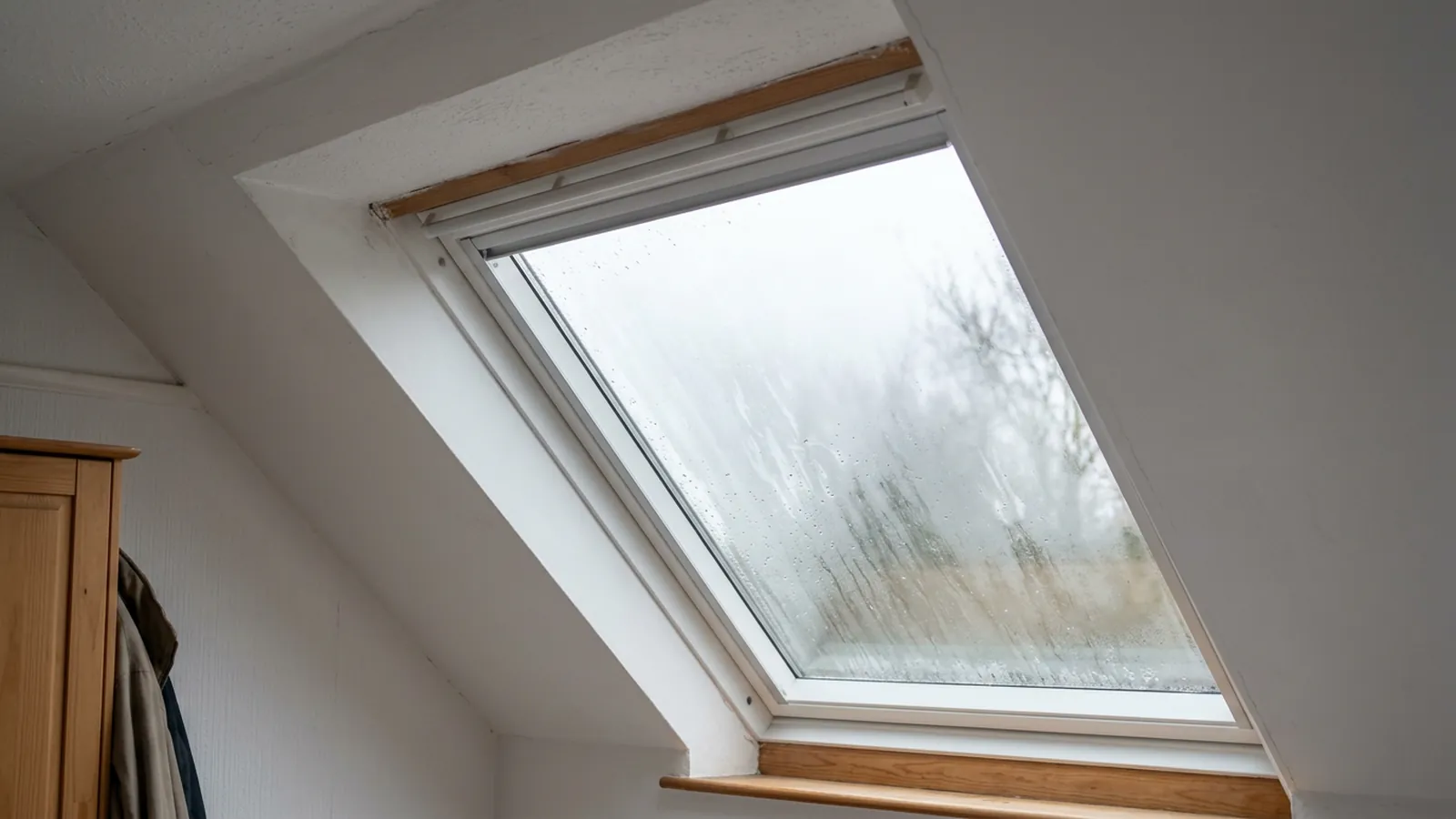
- Mist and droplets trapped between the panes; they cannot be wiped off and the sealed unit needs replacing
- Inset: condensation on the room-side face of the glass is a ventilation or humidity issue, not a failed unit
What pushes the total up or keeps it down
Once the route is chosen, the same handful of factors decide where your job lands. None of them is hidden; each one shows up as a line in the quote.
| Factor | Leaner job | Bigger job |
|---|---|---|
| Route | New glazing unit in a sound sash | Whole roof window, frame and flashing changed |
| Size | A common size code with the glazing readily available | A large or unusual size, or an old code that needs a different new size |
| Access | Reachable from inside, or low on a single storey slope | High on a two or three storey roof needing a tower or scaffold |
| Roof covering | Untouched, because only the glass changes | Tiles or slates lifted and relaid around a new flashing kit |
| Extras | A plain manual window with no blind | A new blind, electric or solar opening, or a rain sensor |
| Inside | Existing linings and plaster left as they are | New linings, plastering and decoration around the opening |
Most real jobs sit somewhere between the two columns. A glazing change high on a three storey townhouse can need more access than a whole window swap in a bungalow, so the columns are a guide to the drivers rather than a ranking.
Size codes and why they matter here
Every VELUX carries a data plate, usually visible on the top of the frame when the sash is open, with the type and a size code. That code is the first thing that decides the cost, because it tells us whether matching glazing is still produced and whether a new window of the same size exists. Current windows are built to fit the openings of earlier generations in most sizes, so a like-for-like swap normally leaves the roof opening untouched. Where it does not, the opening is adjusted, and that work is priced in its own line. The answer on whether the new rooflight will be the same size explains that check in more detail.
Worth doing before you ring: open the sash and photograph the data plate. With the size code in hand, the conversation about routes and likely scope is far quicker, and you avoid paying for a guess.
The roof and the house around the window
A pane change is mostly indoor work. A whole window change is roof work, and the roof sets part of the price. Concrete interlocking tiles on an estate semi in Brighton Hill or Chineham lift and relay differently from small clay plain tiles or natural slate on an older cottage in Old Basing or Overton, and each covering takes its own flashing kit. On a trussed rafter roof, keeping the same opening means the trusses are left exactly as they were, which is one reason like-for-like replacement is usually the simplest structural answer.
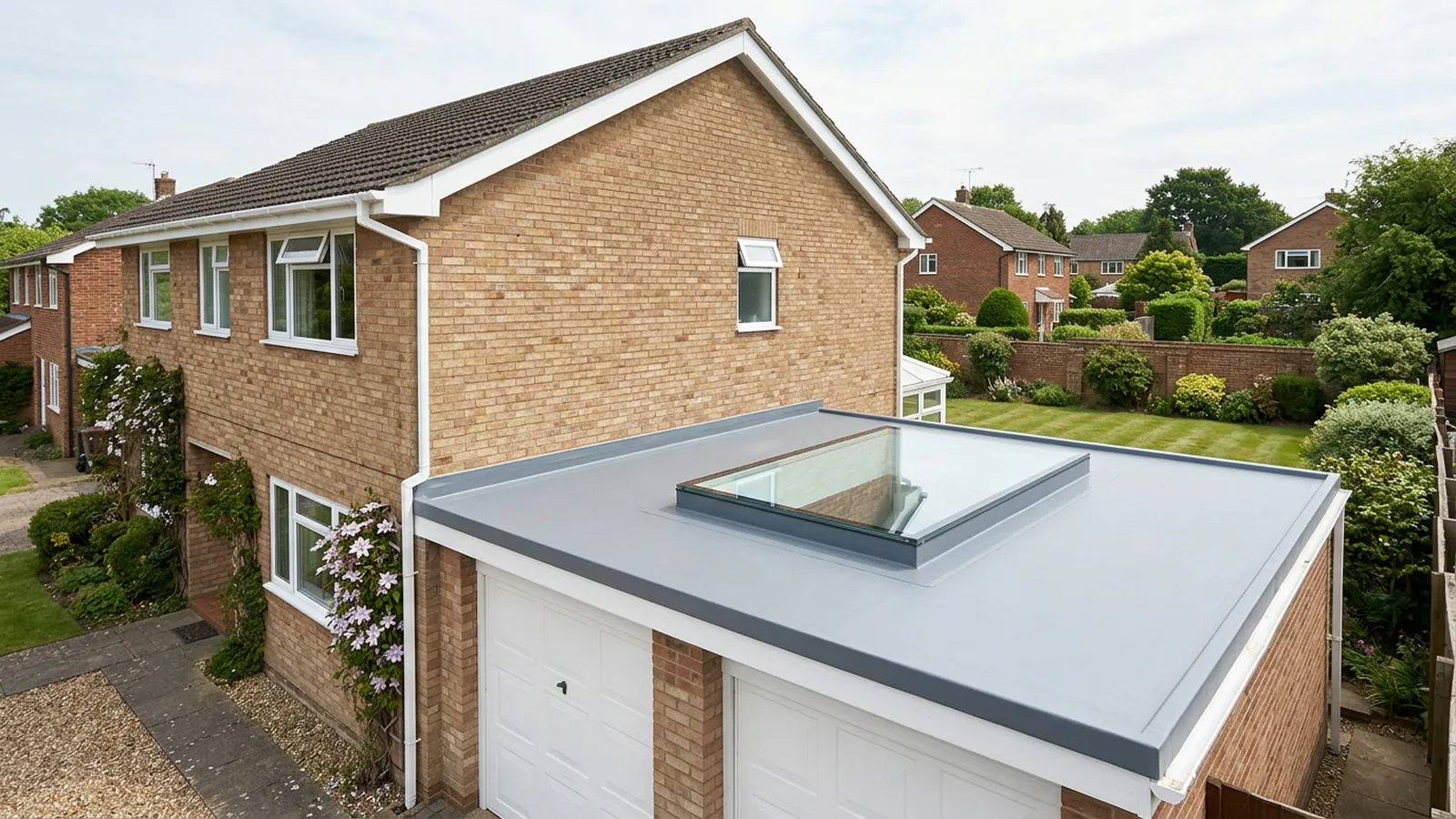
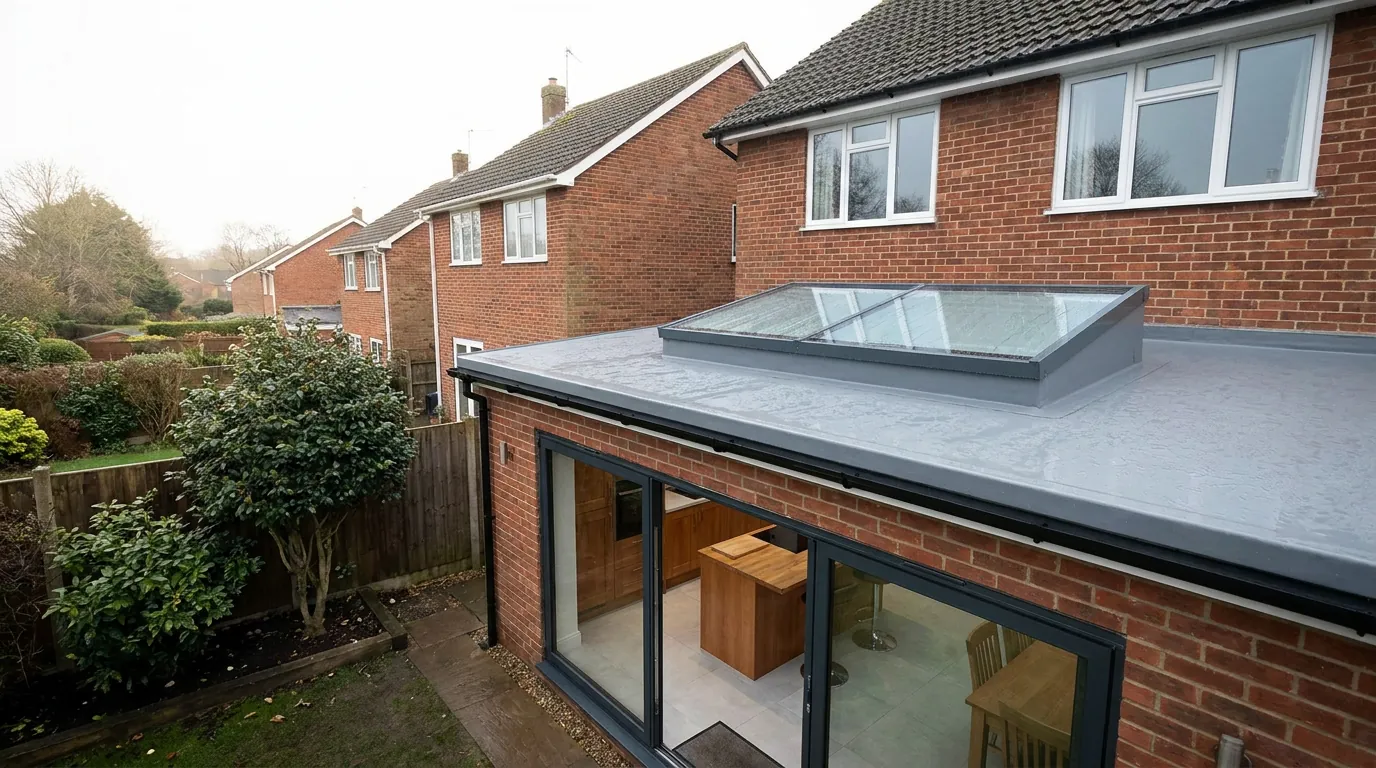
Height and reach count as well. A roof window over a stairwell or at the top of a three storey townhouse may need a tower or scaffold for the outside work, and that is a genuine cost rather than an extra. A window in a single storey extension roof is often reached from a ladder with care.
What the paperwork and guarantee add
Changing the glass alone is generally not notifiable. Changing a whole roof window can be, because the new unit has to meet current thermal standards, and where it is we deal with the Building Control notification as part of the job, so it sits inside the quote rather than landing on you afterwards. Our answer on whether replacing a failed rooflight needs Building Regulations goes through where the line falls. Our fitting is covered by a 10-year workmanship guarantee (it is not insurance backed), and that guarantee costs nothing extra.
Getting a figure you can rely on
The route to a firm number is short, and each step removes a guess from the quote.
- Photos and the data plate. Send a picture of the misted pane from inside, one of the window from outside if you can see it safely, and the size code.
- Survey. We look at the sash, frame, flashing and linings, confirm whether the misting is between the panes or on the surface, and check access.
- Route agreed. Glazing only or whole window, explained with the reasons, plus any blind or electric option you want.
- Written quote. Every item from access to making good listed, so you can compare it fairly with any other quote.
If you want to know how much of a day each route takes before you decide, see how long replacing a misted rooflight takes. When you are ready to see which route your own skylight needs, arrange a survey of the window and the quote will follow from what we find on it.