So the first job is to find out which side of the glass the mist is on, because the two cases have nothing in common. Our misted and failed rooflight replacement page covers the whole service; this answer deals with one narrow question: whether the cloud inside a double glazed skylight can be cleared, and what you get if you try.
Start with a finger test
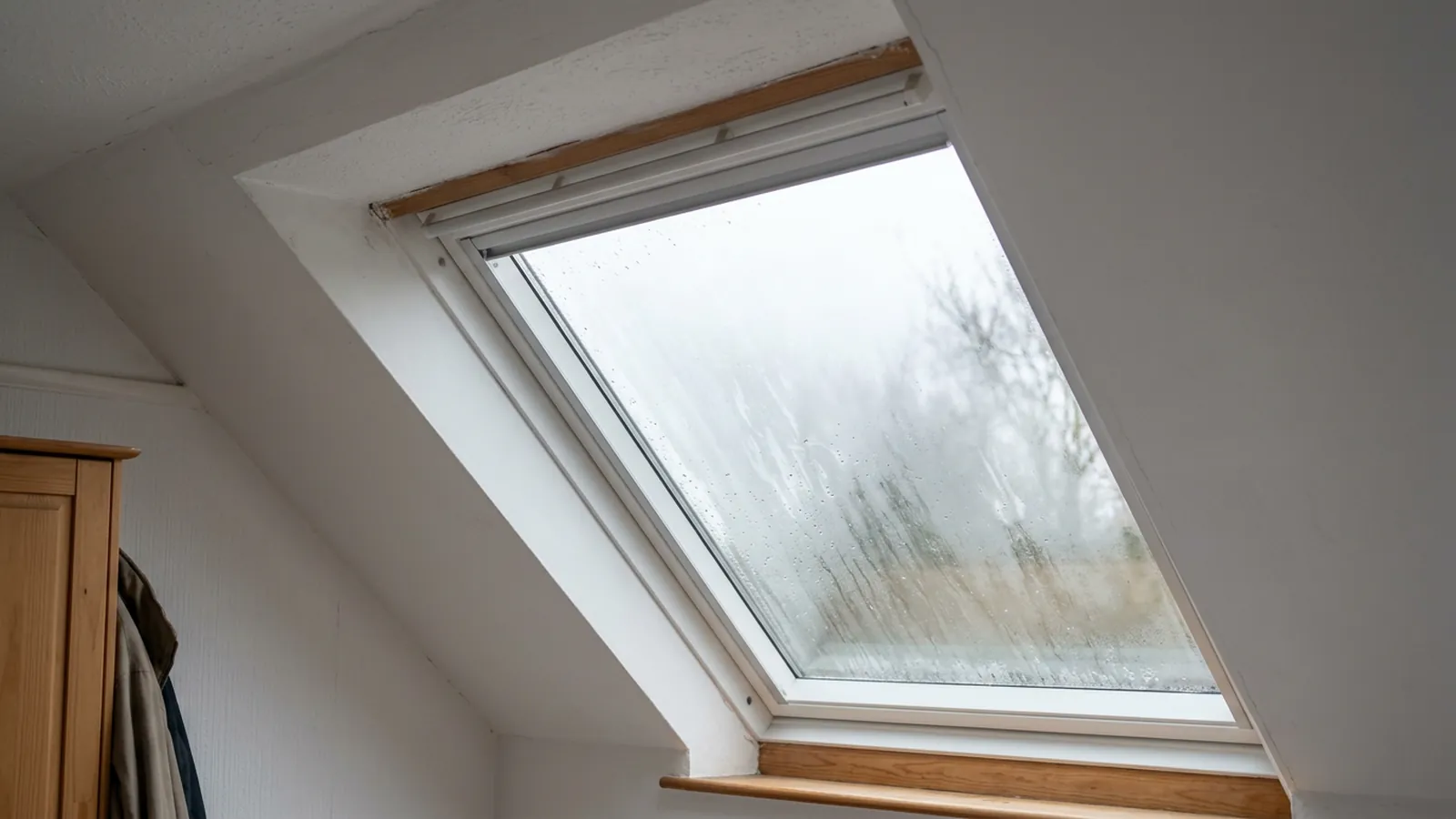
On a cool morning, run a dry fingertip across the inside face of the glass. If it leaves a clear streak, the moisture is on your side, coming from the room. That is condensation, and the answer lies in ventilation, the trickle vent on the frame and how warm the room is kept, not in the glass itself. Our guide on telling condensation apart from a failed unit walks through the other checks.
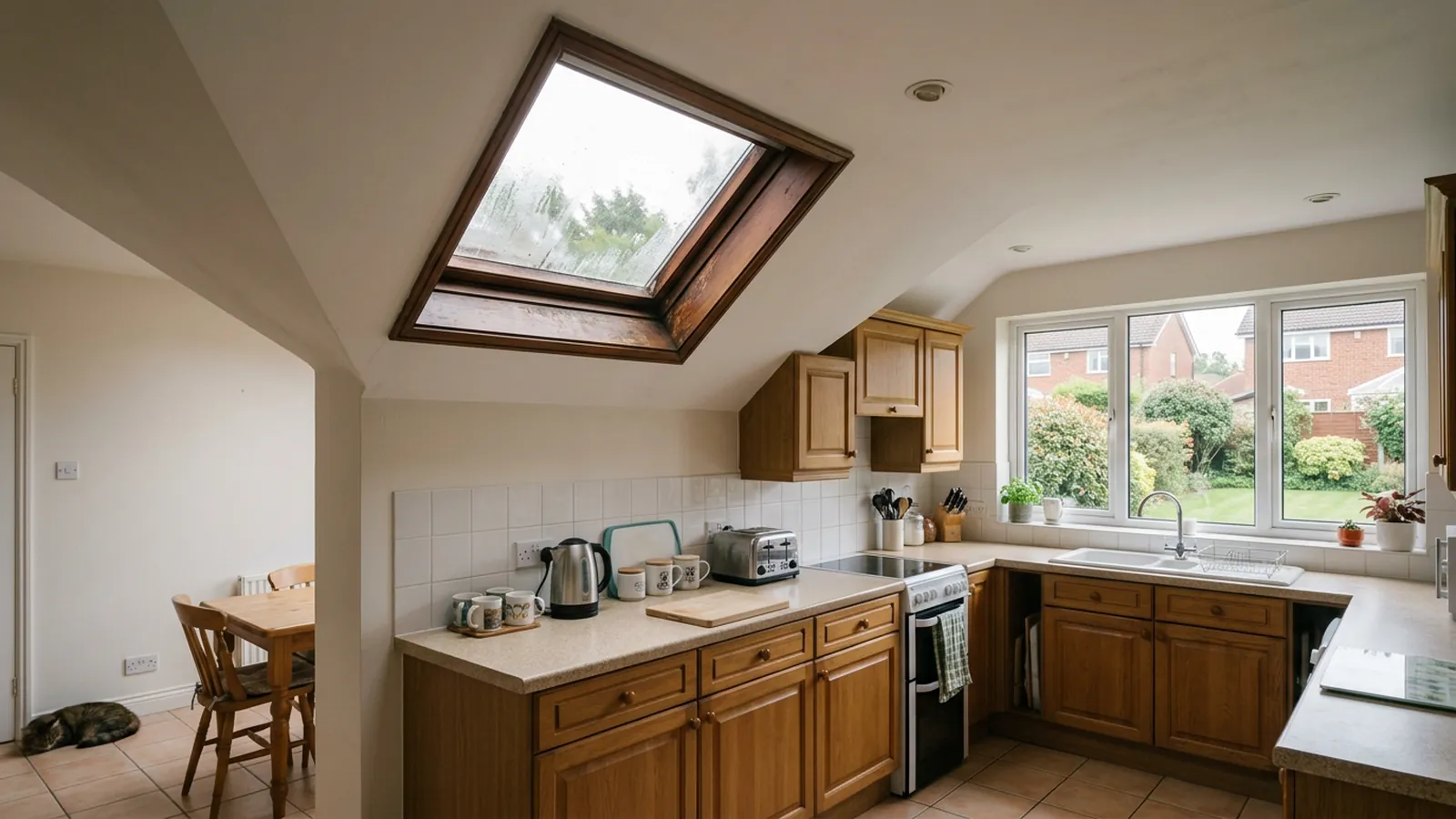
If the streak does not appear and the haze still sits there, it is inside the unit. Look closely on a sunny afternoon too: a failed unit often shows a faint white bloom or a tide mark along the spacer bar at the edge, left behind as trapped moisture comes and goes with the weather.
The rule: mist you can touch is a room problem; mist you cannot touch is a unit problem. The exception is a roof window where both are happening at once, which can happen in a steamy bathroom under a unit that has also failed, so the finger test is best done in a dry, settled spell.
How a sealed rooflight unit works and fails
- Outer and inner glass panes, with the outer pane facing the weather
- Low-emissivity coating on one inner face, reflecting heat back into the room
- Warm-edge spacer bar holding the panes apart, filled with desiccant to soak up trace moisture
- Primary seal against each pane, backed by the secondary seal around the edge
- Dry sealed cavity, the insulating layer between the panes
- Broken edge seal: moist air gets in and the desiccant becomes saturated
- Mist and droplets trapped between the panes; they cannot be wiped off and the sealed unit needs replacing
- Inset: condensation on the room-side face of the glass is a ventilation or humidity issue, not a failed unit
What demisting services actually do
Some firms offer to clear misted double glazing without replacing it. The usual method is to drill small holes in one pane, flush or dry out the cavity, fit tiny plugs or vents, and sometimes wash the inner faces. On a ground floor window, where a technician can stand comfortably, it can make the glass look clearer for a while.
What it cannot do is return the unit to its original state. The factory edge seal has already broken down, the insulating gas that filled the cavity has gone, and any soft coating on the inner face may have been marked by moisture. A vented cavity lets outside air in and out by design, so the glass is no longer a sealed unit in the sense its thermal figures were measured.
Why a rooflight is a poor candidate
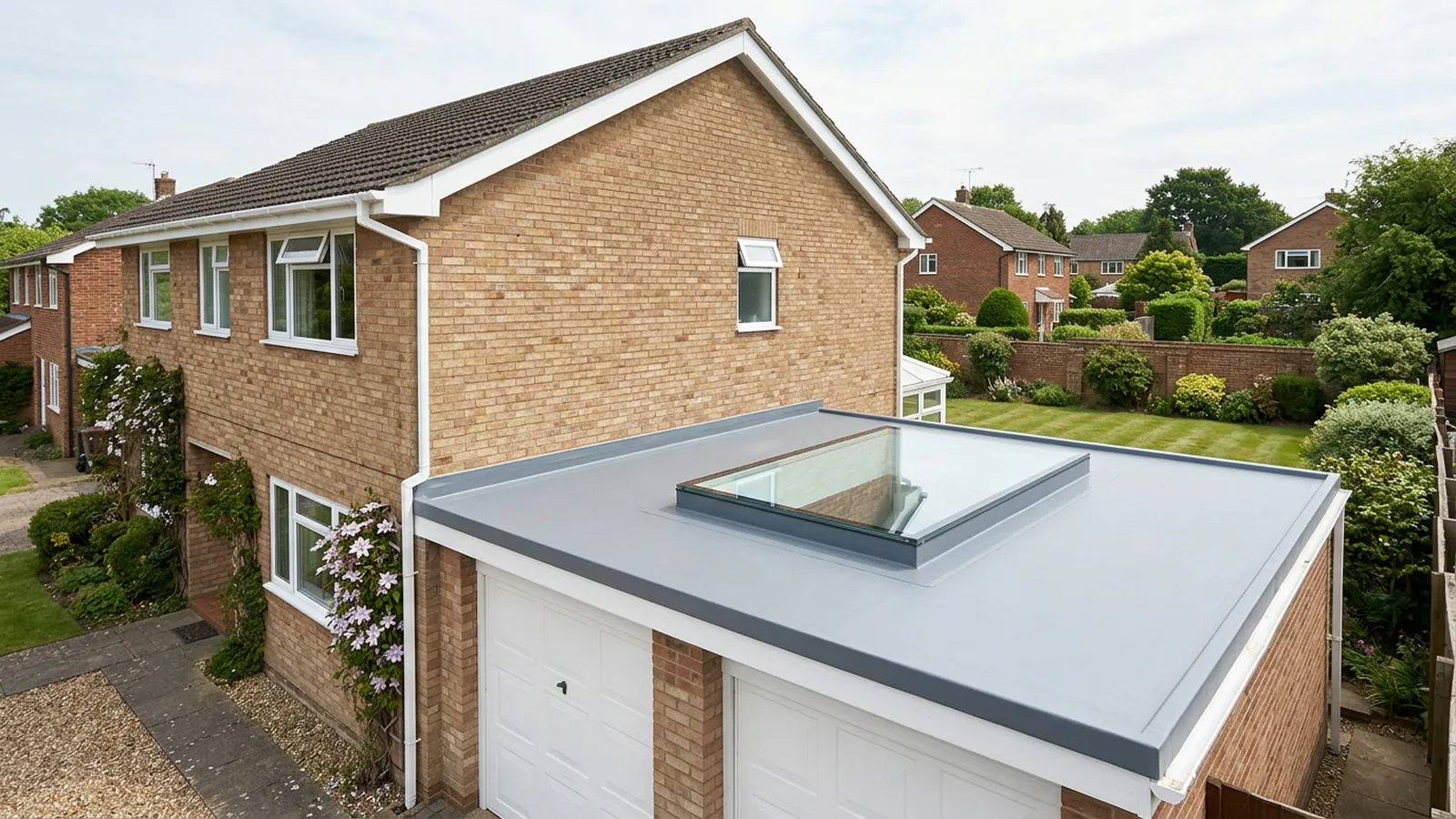
A rooflight faces the sky at a pitch or lies nearly flat, so it takes more sun, more rain and wider swings in temperature than a wall window of the same age. Those daily swings are what pump moist air through a weakened seal in the first place, as our guide on why a rooflight mists between the panes explains. Drilling holes in the outer pane of glazing that sits under rain for most of the year adds a new route for water rather than removing one.
Access matters too. A skylight in a loft room or over a flat roof extension is worked on from the roof or from a platform, and many modern roof window panes are toughened or laminated for safety. Toughened glass cannot be drilled after it is made, so the drilling route is closed on those units from the start.
| Question | Drying and venting the cavity | New sealed unit or rooflight |
|---|---|---|
| Is the edge seal restored? | No, the cavity is left open to outside air | Yes, a factory sealed unit |
| Is the gas fill back? | No | Yes, where the specification includes it |
| Can toughened glass be treated? | No, it cannot be drilled after toughening | Not relevant, the whole unit is new |
| Will the haze stay away? | It can return as the vents let damp air cycle through | The new seal keeps the cavity dry |
What a lasting clear view looks like
There are two routes. On many roof windows, including most VELUX windows, the glazed sash or the sealed unit can be exchanged while the frame and flashing stay on the roof; our answer on whether just the glass can be replaced in a VELUX covers that in detail. On older timber windows, early domes and flat units where the frame itself has aged, a whole new rooflight in the same opening is usually the better buy. Which suits your roof is set out in the guide to replacing the sealed unit or the whole rooflight.
One misted pane is not proof that everything around it has failed, and the answer to does a misted pane mean the whole rooflight has failed? explains how to judge the frame, hinges and flashing separately from the glass.
Is it worth living with the mist?
There is no safety deadline on a unit that has simply misted. The glass is still whole and the roof is still weathertight around it. What you live with is a cloudier view of the sky, some lost daylight on dull days and a pane that no longer insulates the way it did. Over a rarely used loft store that may be acceptable for a while. In a bedroom or a kitchen extension where the skylight is the main source of daylight, the haze is there every time you look up.
If you do wait, keep an eye on the inside of the frame and the reveal. Staining, soft timber or a drip is a separate matter from a misted pane, and our answer on why a rooflight goes misty between the panes sets out which signs point beyond the glass.
What we check when you ask about misted glass
We look at the roof before quoting anything. For a misted rooflight that means confirming the mist is inside the unit, reading the maker and model from the frame where there is a label, checking whether the frame, flashing and seals around the sash are still sound, and noting how the window is reached. From that you get a written answer: a replacement sealed unit or sash, or a new rooflight in the existing opening, with the reasons for each. Work we fit carries a 10-year workmanship guarantee, which is not insurance backed.
If the haze on your roof glass will not wipe away, arrange a survey of the rooflight and you will know which of the two routes it needs before you commit to either.