That is the calm version. The useful version is knowing which kind of misting you are looking at, what it actually costs you in daily life, and which signs alongside it would move the job up your list. Our page on misted and failed rooflight replacement covers the whole job; this answer stays with the narrower question of whether the fog in your glass matters.
First, is it really inside the unit?
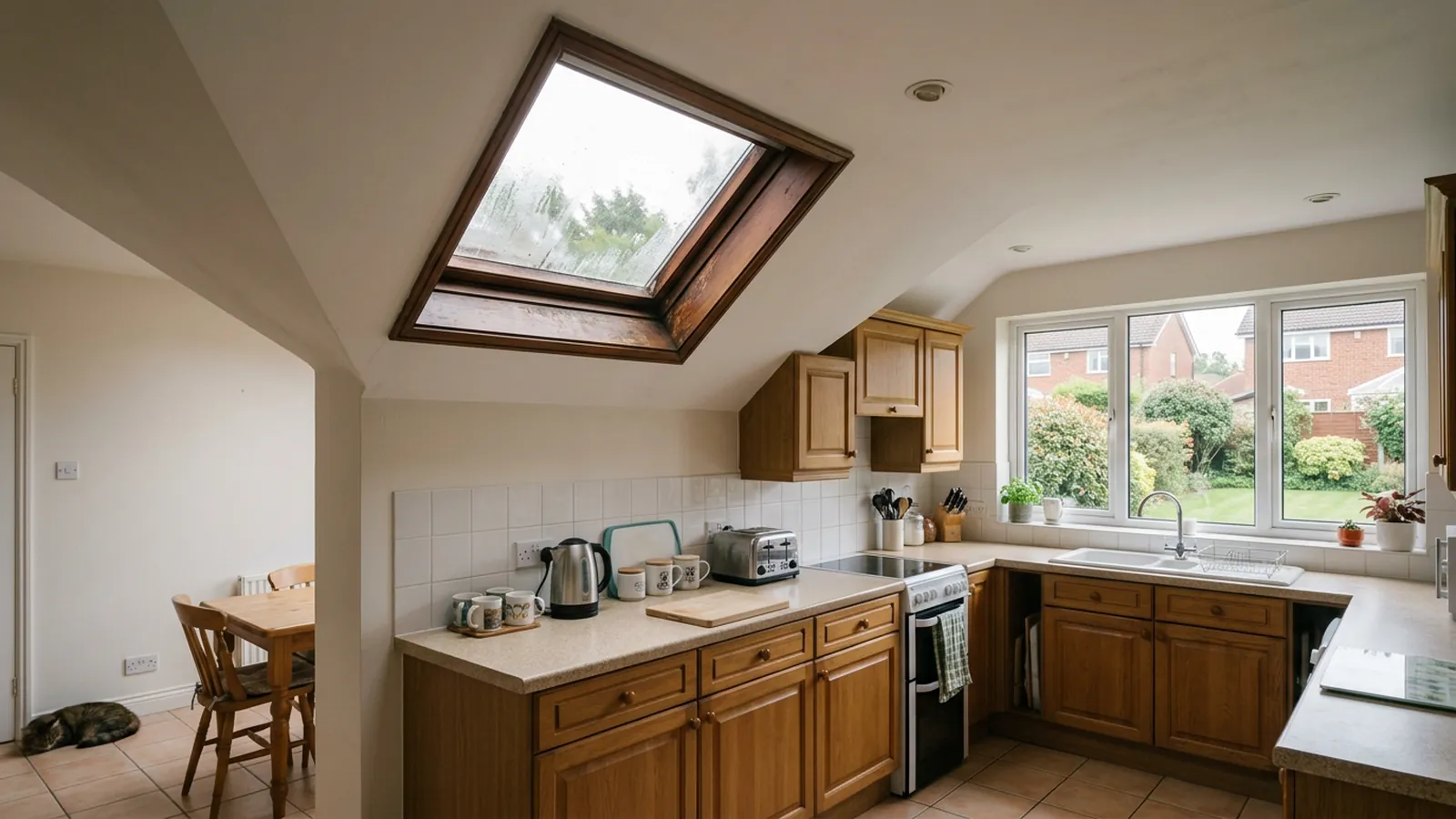
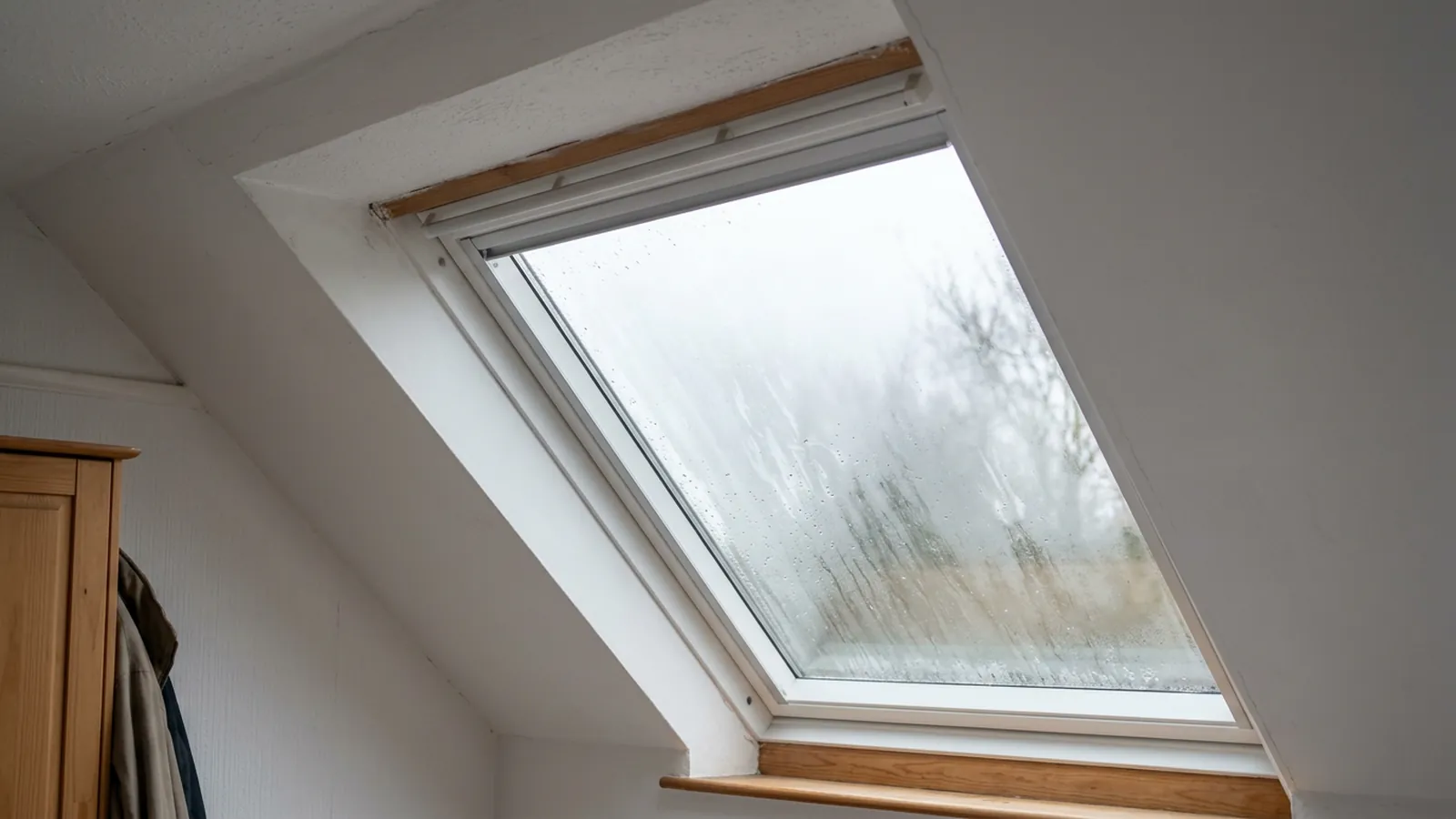
Before deciding anything, rule out ordinary condensation. Moisture on the room side of the glass forms on cold mornings, in bathrooms and above a kettle, and it wipes away with a cloth. It says something about ventilation in the room, not about the skylight itself. Misting that sits between the two panes cannot be touched from either side, and it tends to leave a faint grey bloom or a tidemark line even on a dry day.
A quick test: wipe the inside face, then look at the glass from outside if you can reach it safely from a window. If the haze survives both, it is inside the unit. Our guide to telling condensation apart from a failed unit walks through the signs in more detail, including the in-between cases on double-glazed roof windows in steamy rooms.
How a sealed rooflight unit works and fails
- Outer and inner glass panes, with the outer pane facing the weather
- Low-emissivity coating on one inner face, reflecting heat back into the room
- Warm-edge spacer bar holding the panes apart, filled with desiccant to soak up trace moisture
- Primary seal against each pane, backed by the secondary seal around the edge
- Dry sealed cavity, the insulating layer between the panes
- Broken edge seal: moist air gets in and the desiccant becomes saturated
- Mist and droplets trapped between the panes; they cannot be wiped off and the sealed unit needs replacing
- Inset: condensation on the room-side face of the glass is a ventilation or humidity issue, not a failed unit
What misting between the panes actually means
A sealed unit is two or three sheets of glass held apart by a spacer bar, with the gap filled with dry air or an inert gas and closed by a perimeter seal. A desiccant inside the spacer soaks up the small amount of moisture that creeps in over the years. Once the seal gives way, or the desiccant is saturated, damp air reaches the cavity and condenses on the cold inner face of the outer pane.
So the misting is the visible end of a process that has already finished. The unit has lost the thing that made it a sealed unit. There is no stage at which it recovers on its own, and it usually looks worse through the colder months, when the temperature difference across the glass is greatest. Why the seal fails in the first place (age, heat cycling, water sitting on the edge seal of a shallow-pitched unit) is explained in our guide on why a rooflight mists between the panes.
What it costs you day to day
The honest answer is: comfort and clarity, rather than safety. Here is how a misted pane plays out in the rooms where rooflights usually sit.
| Effect | What you notice | Why it happens |
|---|---|---|
| View and daylight | Sky looks milky; sharp shadows soften; the loft room feels duller on grey days | Droplets and mineral residue in the cavity scatter the light passing through |
| Warmth | A cold zone under the glass and a slight downdraught in winter | Damp air in the gap carries heat across more readily than the dry fill it replaced |
| Room-side condensation | More droplets on the inside face, sometimes running onto the lining | A colder inner pane reaches dew point sooner in a warm, humid room |
| Appearance | Streaks or a white bloom that no cleaning shifts | Repeated wetting and drying inside the cavity leaves deposits on the glass |
If the heat question is the one on your mind, our separate answer on whether a misted rooflight loses more heat deals with it directly.
When misting is part of something bigger
Misting on its own is a slow, predictable decline. It becomes more pressing when it arrives with other signs, because then the question is no longer only the glass.
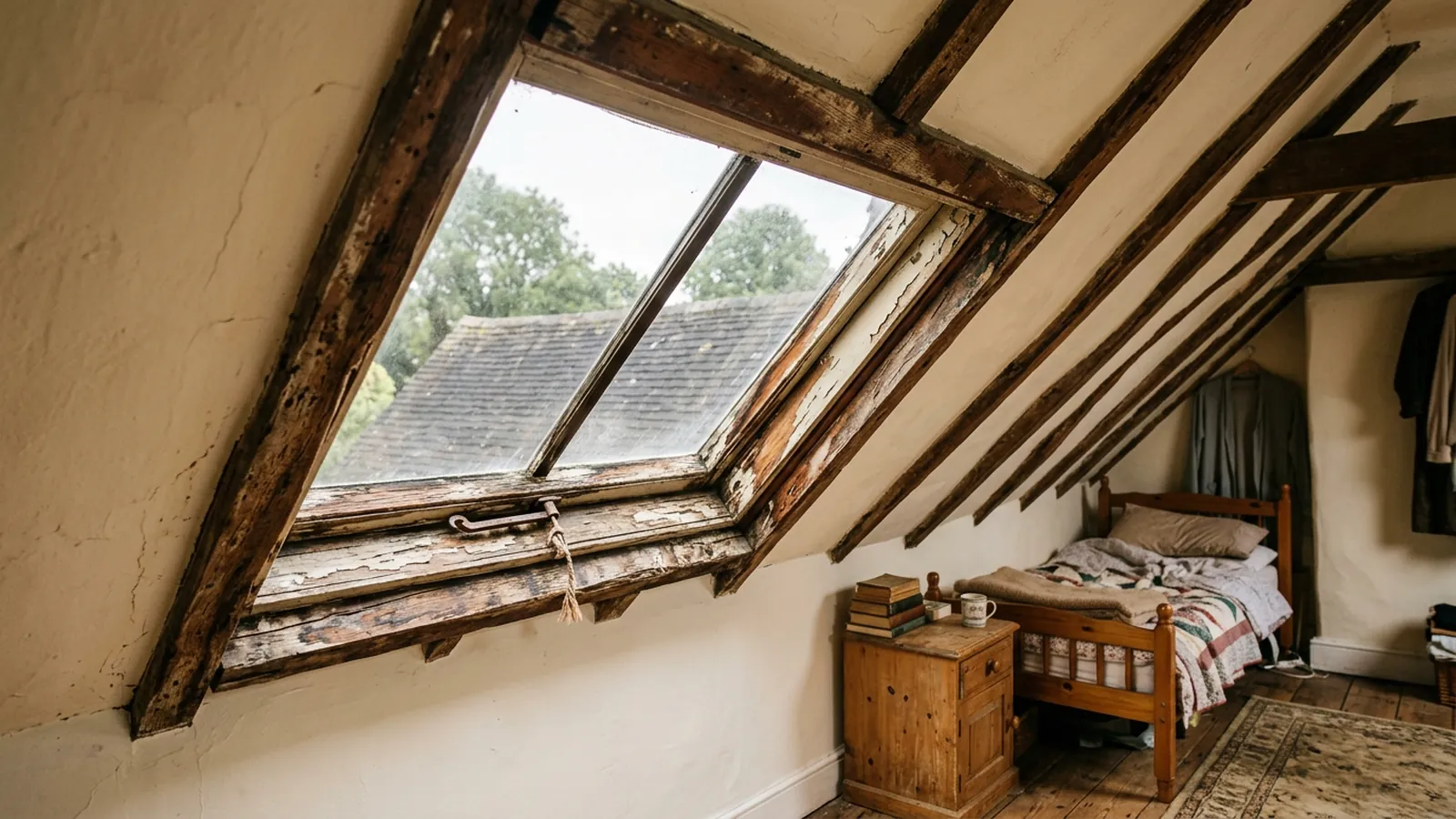
Look further if you see: brown staining on the ceiling or reveal around the opening, water dripping onto the sill or floor, soft or dark timber at the lining, a cracked pane, or a frame that has warped so the sash no longer closes square. Any of those points to the flashing, the frame or the glass itself, not just a tired seal, and deserves a look sooner rather than later.
Dripping water in particular has more than one cause, and it is easy to blame the sealed unit for something the flashing or room humidity is doing. Our answer on whether water dripping from a rooflight is always a failed unit sets out the difference.
Does a misted pane mean the whole rooflight has to go?
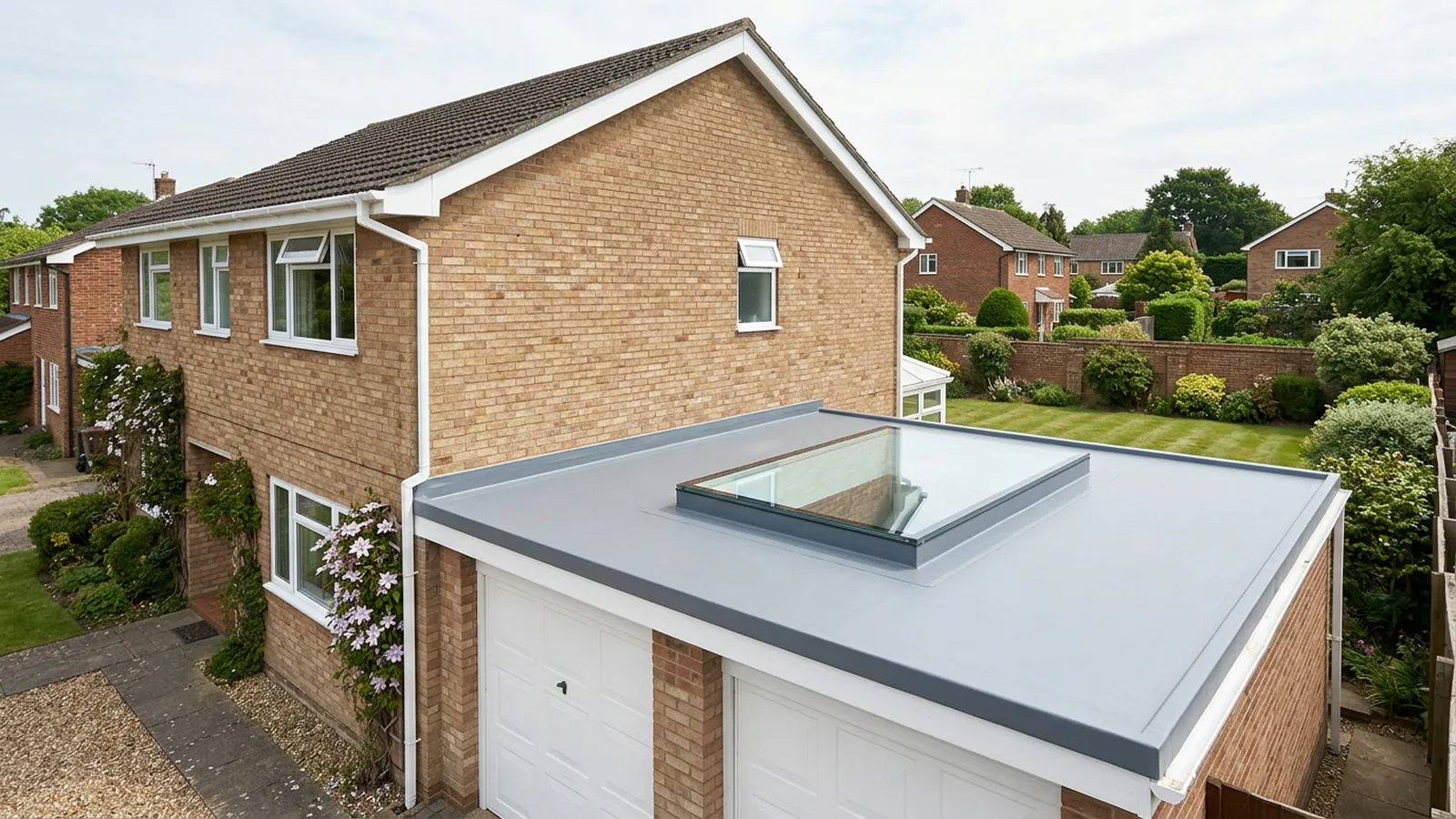
Not always. On many branded roof windows the glazing is a replaceable pane, and a new unit can go into the existing frame if the frame, flashing and linings are still sound. On older plastic domes, some early timber roof windows and many flat-roof units, the glazing and frame are one product, and the practical answer is a full replacement in the same opening. Which route suits yours depends on the model, its age and the state of the frame around the glass, and our answer on whether a misted pane means the whole rooflight has failed goes through that decision.
On the 1970s and 1980s estates around Basingstoke, where many loft rooms still carry their first roof windows, the frame is often part of the conversation as well as the glass. That is worth knowing before you settle on a new pane alone.
So how soon should you act?
Treat it as planned work, not a rush. A misted unit with a dry reveal, a sound frame and a sash that closes properly can be scheduled for a convenient week, and fair weather makes the day easier. Moving it up the list makes sense when the room is used daily and the chill bothers you, when misting is spreading across the pane, or when any of the warning signs above appear with it.
When you are ready, the first step is a look at the real roof: we survey before we quote, confirm whether it is the unit or the whole window, and write down what the job involves. The work carries a 10-year workmanship guarantee (not insurance backed). If you would like the wider picture first, our main page on rooflight and skylight replacement in Basingstoke is a good starting point. Otherwise, arrange a survey of the misted rooflight and we will tell you plainly which route your window needs.