Nobody can honestly put one number on it. Manufacturers publish their own product guarantees, and those tell you what the maker stands behind, not how long the unit will stay useful on your roof. What decides the real answer is the type of unit, the materials it was made from, how well it was fitted, and what the weather and the room below have done to it since. If you are weighing up a new unit or a change of type, our rooflight and skylight fitting across Basingstoke starts from the roof you have and works out what will serve it longest.
Which parts wear, and in what order
Think of a roof window or rooflight as a set of parts with different working lives. Some are made to outlast the roof covering around them; others are consumables that were always going to need attention at some point.
| Part | What ages it | The sign it is ending |
|---|---|---|
| Sealed glazing unit | The edge seal slowly lets moisture into the gap between the panes | Misting or droplets trapped between the panes that no wiping reaches |
| Gaskets and weather seals | Sunlight, frost and years of opening and closing | Draughts, whistling in wind, damp marks at the frame |
| Hinges, handles and motors | Use, and damp air rising from kitchens and bathrooms | A sash that sticks, drops or will not close tight |
| Timber frame | Condensation running down onto untreated or unpainted wood | Soft, dark or swollen timber at the bottom rail |
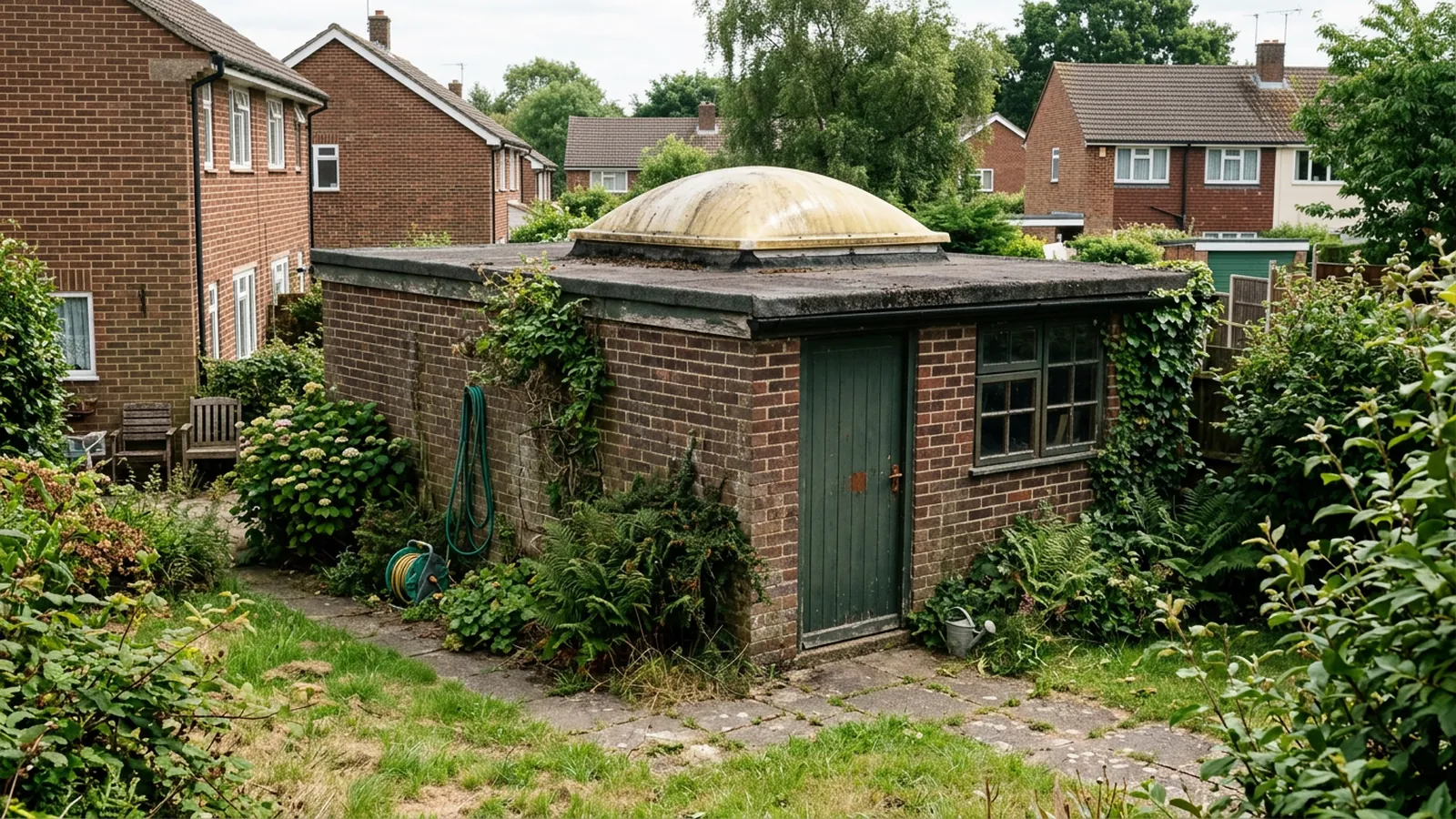
| Plastic dome | Ultraviolet light breaking down the plastic over time | Yellowing, cloudiness, crazing or a brittle surface |
| Flashing | Roof movement and the covering around it being disturbed | Staining on the ceiling lining around the opening |
The pattern matters because it changes what you are deciding. When only the glazing unit has gone, some makes allow a new pane in the existing frame. When the frame itself is soft or the dome has turned brittle, the sensible move is a whole new unit.
Sizing a roof window to the truss bays
- Fink trussed rafter, factory made and designed to work as one whole frame
- W-shaped webs, joined at every node by pressed metal nail plates
- Tile covering on battens over the underlay
- Roof window set in the slope, fitted between trusses so the frame is untouched
- Narrow roof window sitting in the bay between two trusses
- Trusses at even 600mm centres along the roof
- No truss cut: the trusses either side of the window stay whole
- A wider window crosses a truss, so the cut needs designed trimming from an engineer or the truss maker
Glass roof windows, flat rooflights and domes compared
A pitched roof window with double or triple glazing in a timber or PVC frame is built for a long working life, and its glazing unit and seals are the parts that set the pace. A flat roof rooflight with a glass unit behaves in a similar way, with the upstand and its seal to the roof membrane carrying much of the weather. A moulded plastic dome is the shortest lived of the three: the plastic itself degrades in sunlight, and older single skin domes also lose heat and drip with condensation long before they crack.
That is why the same house can hold a roof window that still works well and a flat roof dome over the kitchen that is plainly finished. Our guide to replacing the plastic domes on 1970s and 1980s flat roofs covers what goes back in their place.
What the build era of your house tells you
Around Basingstoke, the age of the skylight usually tracks the age of the estate. A townhouse in Oakridge or a semi in Brighton Hill may still carry the timber roof window or plastic dome it was built with, which means the unit is as old as the house. On newer estates such as Hatch Warren or Beggarwood, the original windows have had less time on the roof and their sealed units are often the first thing to show age. In the older village houses the rooflight has usually been added later, so its age tells you more about the last conversion than about the house.
Knowing roughly when a unit went in helps you judge what it was made from and how it was glazed. Our guide to old roof windows by era sets out what went into 1970s, 1980s and 1990s roofs and how to recognise each one from inside.
How fitting affects how long it lasts
A unit is only as durable as the way it meets the roof. The right flashing kit for the covering, whether concrete tile, clay tile or slate, a correctly set pitch, and an insulated, lined reveal all protect the frame from water and from the condensation that rots timber from the inside. A good window set badly into the roof will age faster than a modest one fitted properly.
The rule: a skylight fitted within the maker's pitch range, with the matching flashing and a properly insulated lining, gets its full working life. The exception is any unit forced onto a pitch it was not made for, or dressed in with improvised flashing: that one starts losing ground on the first wet winter.
When a replacement goes in, the fitting is where our 10-year workmanship guarantee applies; it covers the installation work and is not insurance backed.
What helps a skylight reach the end of its life, not fall short of it
Very little, done regularly. Keep the glass and the gutter below clear of leaves and moss, clean the ventilation filter where there is one, and run a vacuum along the frame so debris does not hold water against it. Keep kitchen and bathroom steam moving out through extraction, since damp air is what wears seals and softens timber. If the frame is painted timber, refresh the paint before the finish breaks down. Our answer on whether skylights need maintenance gives the simple routine in more detail.
Infographic
How a rooflight job runs, from survey to guarantee
Roof survey
We look at the structure, the covering and the room below before anything is priced.
Specification
A size, type and position that fits your roof, and whether the work is notifiable.
Paperwork
Building Control notified where the work needs it, and planning checked where it applies.
Installation
Opening formed, frame fixed, flashed or dressed in, then lined and finished inside.
Sign-off and guarantee
Completion paperwork where needed and a 10-year workmanship guarantee.
When age becomes a reason to replace
Age alone is not a reason. A decades old roof window that opens cleanly, keeps the weather out and has clear glass is still doing its job. The time to act is when the parts that cannot be renewed start going: a soft frame, a crazed dome, or a glazing unit that has misted in a model no longer made. Our answer on when a rooflight should be replaced lists the signs, and whether it is worth replacing old skylights weighs up the gain from a modern unit.
If you are unsure which of these describes yours, we survey the roof before any quote, so you will know whether you are looking at a new glazing unit, a new window in the same opening, or something better suited to the room. Ask us to look at your skylight and you will have a plain answer on how much life it has left.