Nobody needs to change a rooflight on a date in the calendar. The decision rests on what the unit is telling you and on what else is happening to the roof. If you are still getting a feel for how the whole job is approached on local roofs, from survey to finished lining, our page on rooflight and skylight replacement around Basingstoke sets it out; this answer sticks to the timing question.
Around Basingstoke the question tends to arrive in one of two ways. On the estates built from the 1960s to the 1980s it is a flat roof dome over a kitchen or porch, or a first generation timber roof window in a loft room. In the older village houses it is an early cast or timber rooflight in a cut rafter roof. The signs below apply to both.
The signs that settle it
Some symptoms point firmly at a new unit. Others can be down to the room rather than the rooflight, and are worth ruling out first.
| Sign | What is happening | Replace? |
|---|---|---|
| Fog or droplets between the two panes | The sealed unit has lost its seal and moist air now sits inside it | Yes: the glazing cannot be dried out from outside |
| Water on the room side of the glass | Warm, damp room air meeting a cold surface | Not by itself: check ventilation and the age of the glazing first |
| Dome yellowed, cloudy or covered in fine cracks | The plastic has aged in the sun and lost its strength | Yes: an aged dome does not recover |
| Soft or blackened timber frame | The frame has taken in moisture over many winters | Yes, and the survey checks the timbers around it |
| Sash sticks, drops or will not close tight | Worn hinges, a twisted frame or a failed seal | Usually, on an older roof window |
| Stains on the lining that return after decorating | Water finding a way past the frame or the weathering round it | Often: the survey confirms whether the unit or its surround is at fault |
The second row is the one to pause on. Condensation on the inside face of the glass is about the air in the room, and a new unit will not cure a bathroom with no extractor. Our answer on why skylights get condensation helps you tell the two kinds apart.
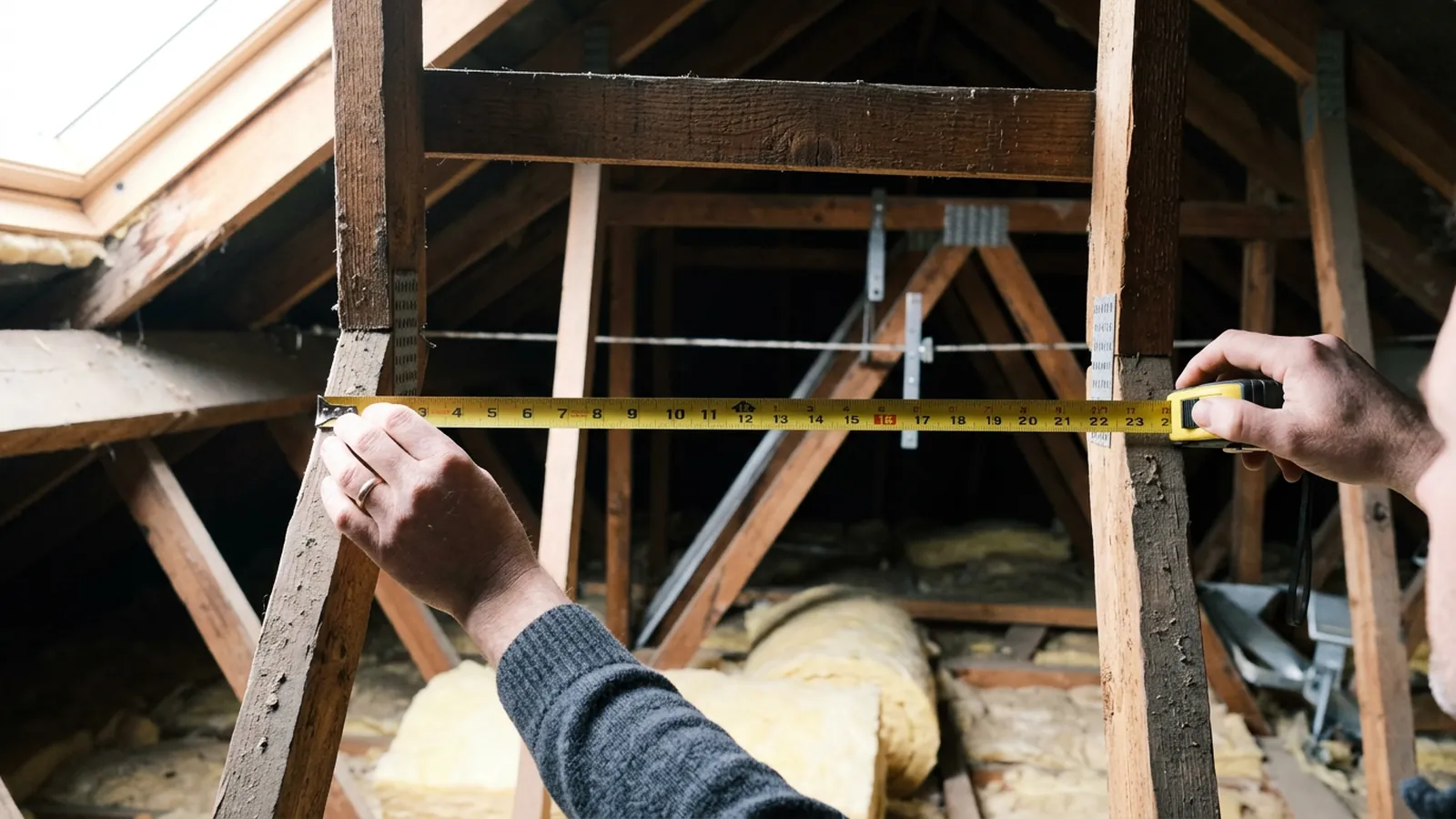
Sizing a roof window to the truss bays
- Fink trussed rafter, factory made and designed to work as one whole frame
- W-shaped webs, joined at every node by pressed metal nail plates
- Tile covering on battens over the underlay
- Roof window set in the slope, fitted between trusses so the frame is untouched
- Narrow roof window sitting in the bay between two trusses
- Trusses at even 600mm centres along the roof
- No truss cut: the trusses either side of the window stay whole
- A wider window crosses a truss, so the cut needs designed trimming from an engineer or the truss maker
Misted glazing is the clearest case
Double or triple glazing in a roof window is a sealed unit. Once that seal fails, moisture gets into the gap between the panes and you see it as a milky film or beads of water that no cloth can reach. Along with the view, the unit has lost much of its insulating value, because the dry gas that did the work has been replaced by damp air. It will not come right on its own.
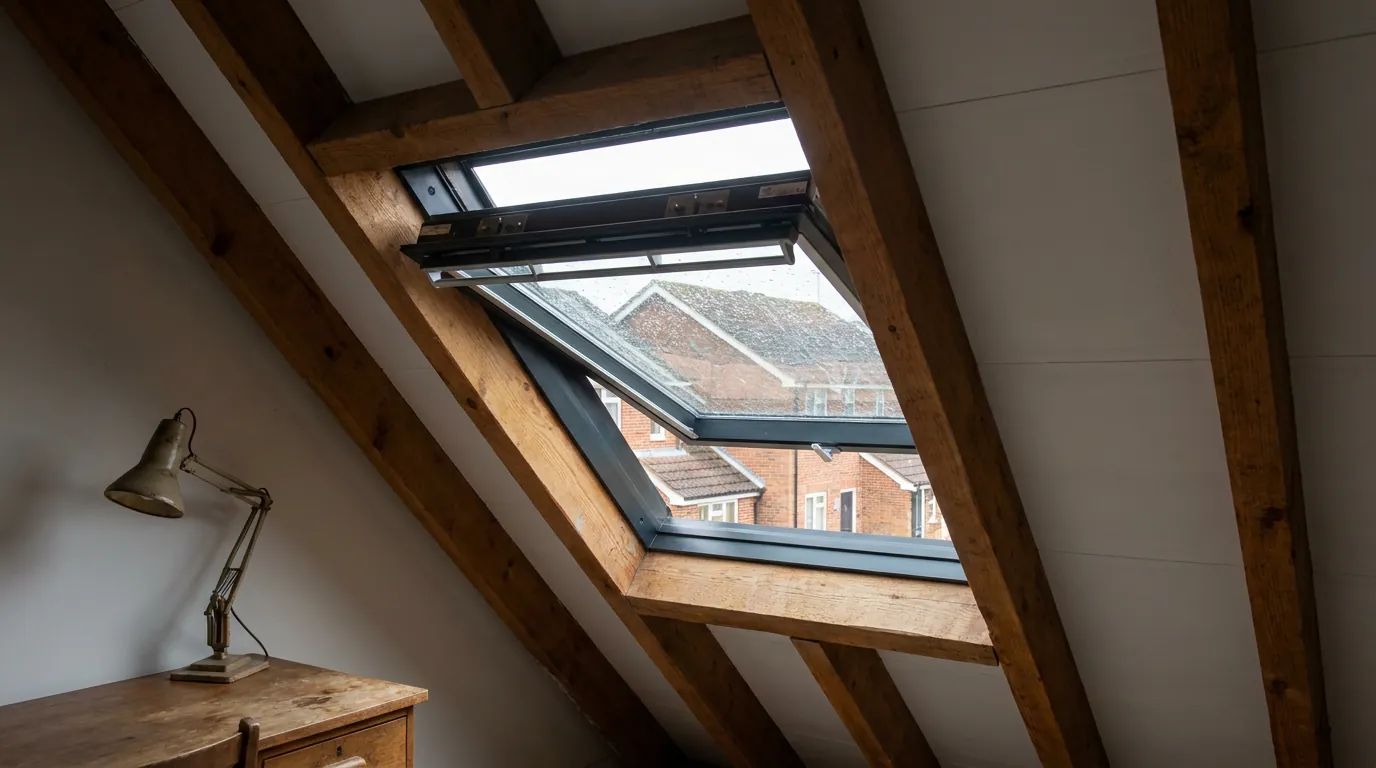
On some roof windows the glazed sash can be changed while the frame and flashing stay; on others the whole unit is the sensible choice. That depends on the make, the age and the state of the frame, which is exactly what our misted and failed rooflight replacement work starts by checking.
Plastic domes on flat roofs
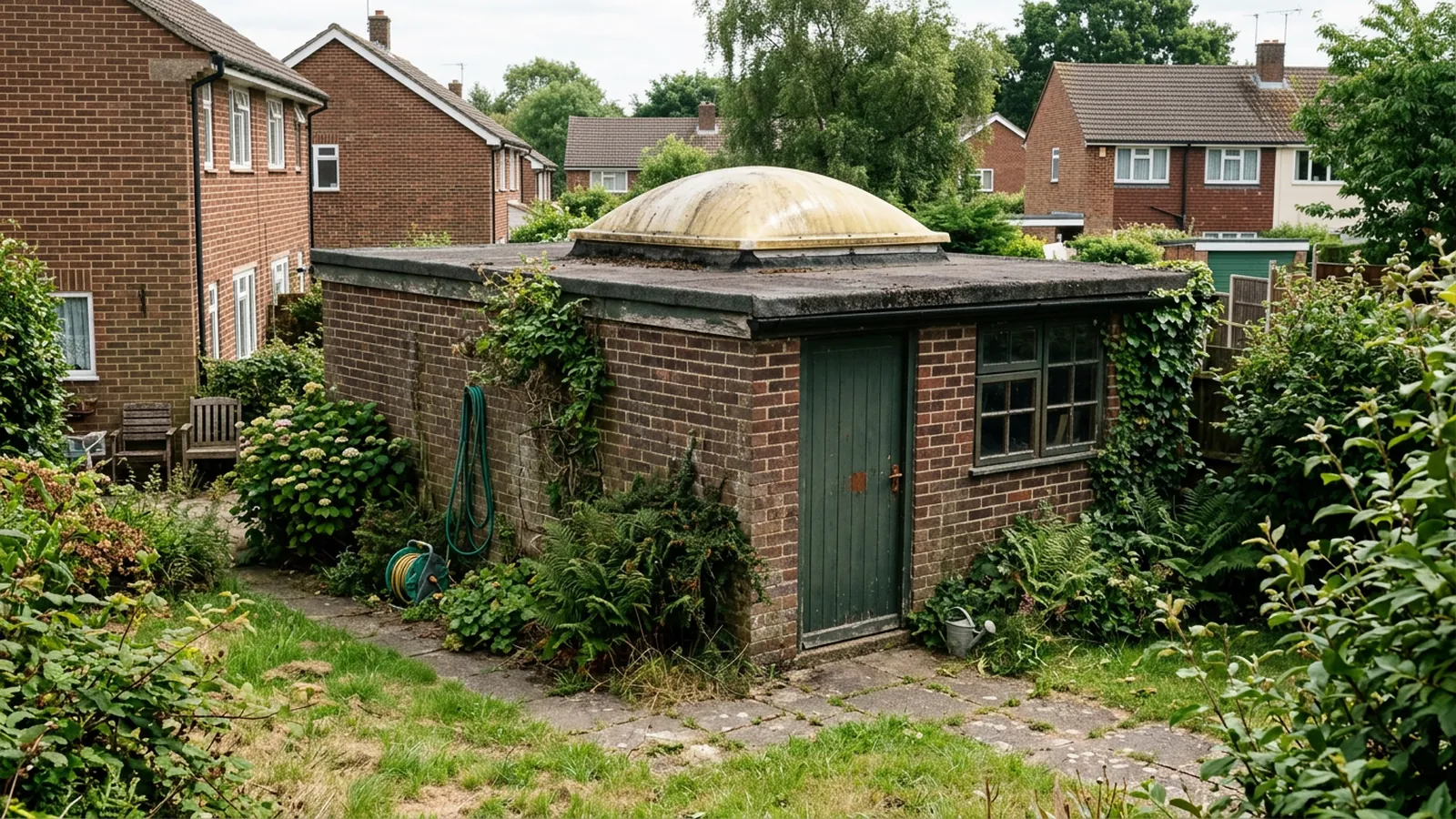
The kitchen extensions, garages and porches added to Basingstoke estate houses in the 1970s and 1980s often carry a plastic dome skylight on a timber upstand. With time and sunlight the plastic turns yellow, then brittle, then crazes; the single or twin skin also makes it cold and noisy in rain. When a dome looks like that it is due, whatever the date on it.
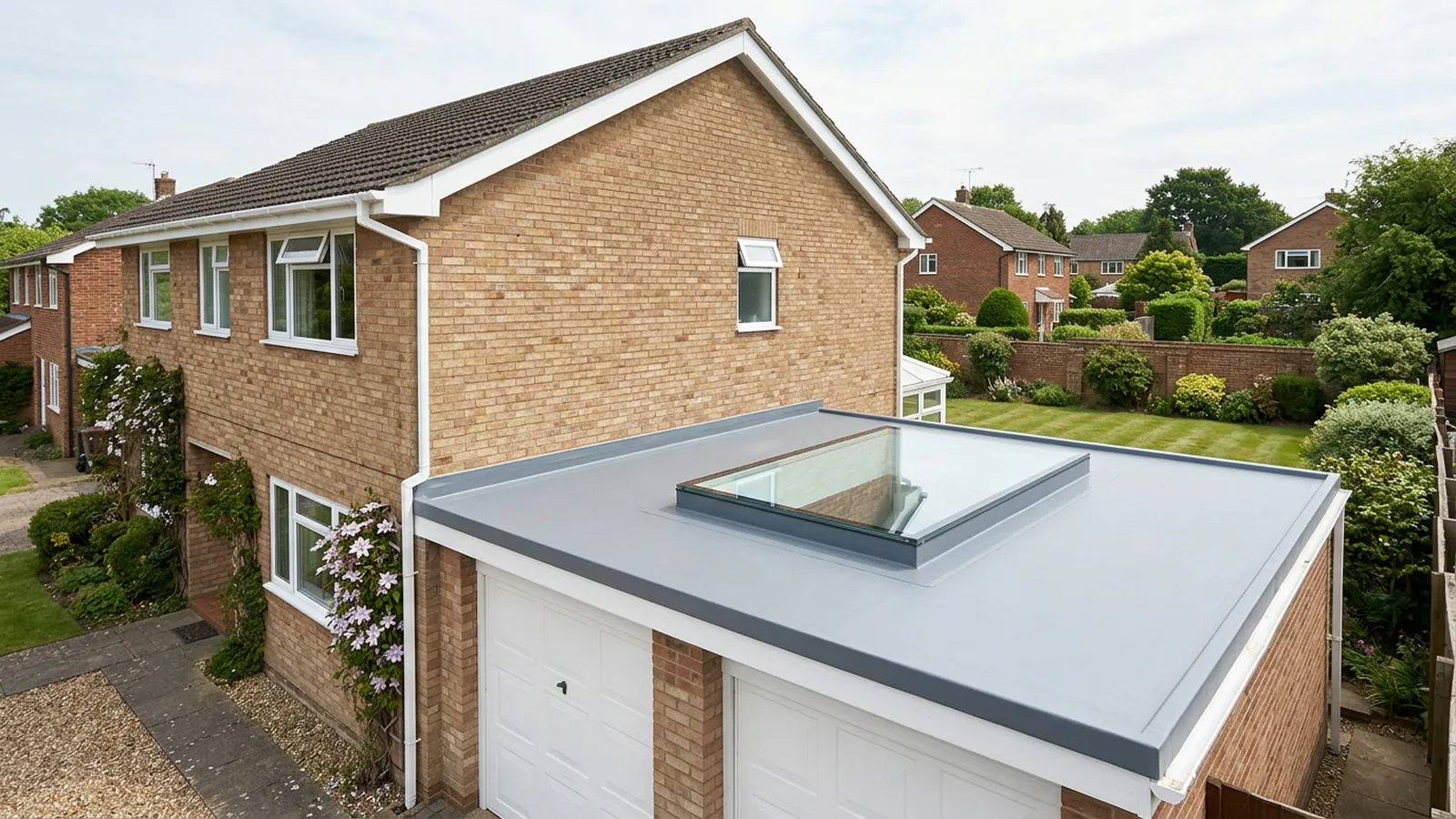
The upstand under it matters as much as the dome. A soft kerb or a tired roof covering around it usually means the flat roof detail is renewed at the same time. What comes off, what goes back and how the covering is joined to the new unit is set out in our guide to replacing the plastic domes on 1970s and 1980s flat roofs.
When the timing comes from the rest of the house
A rooflight can still open, shut and keep the weather out and yet be worth changing now, because something else is happening to the roof or the house.
The rule: if the tiles, slates or flat roof covering around a rooflight are coming off anyway, change an ageing rooflight at the same time. The exception: a unit that is fairly new, sound and the right size can be refitted with fresh flashing, and the survey tells you which you have.
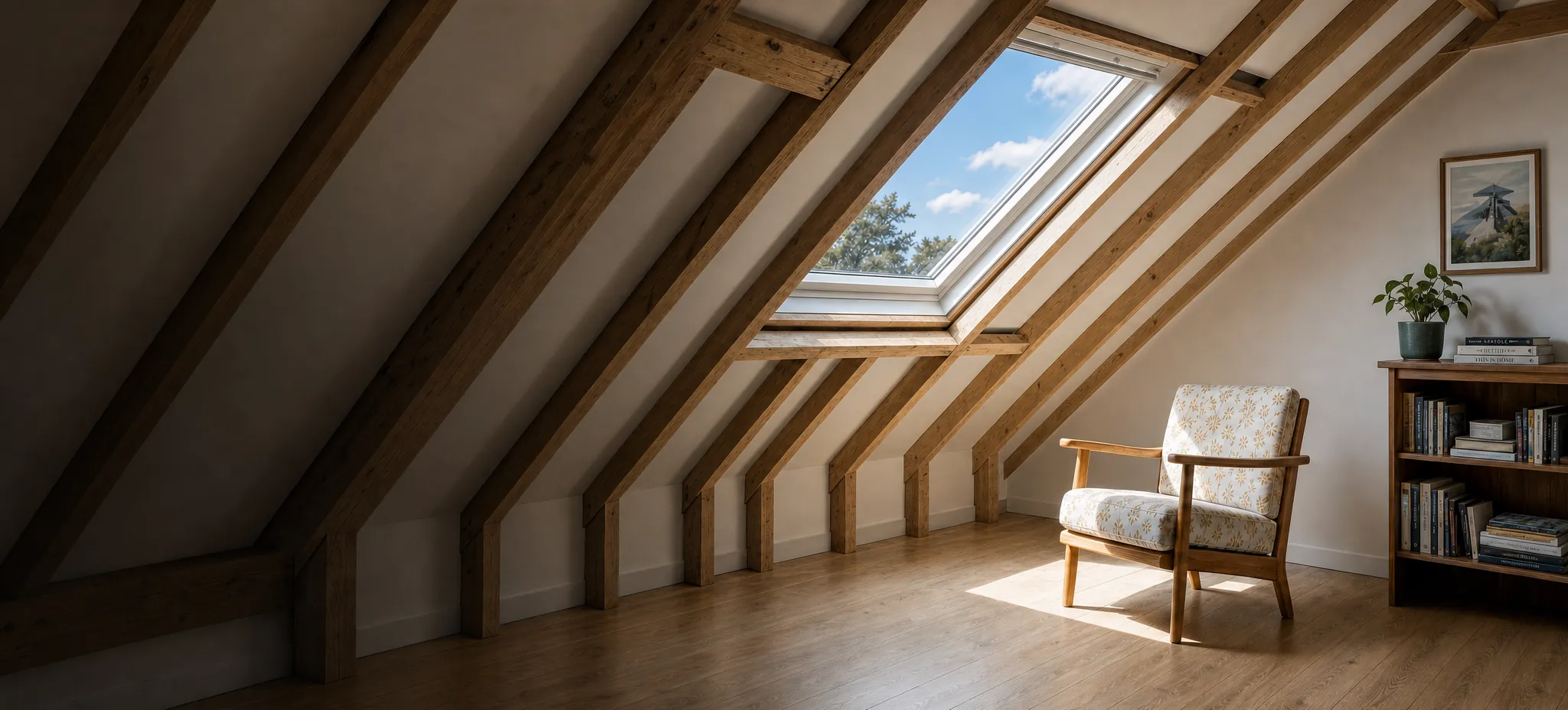
A loft conversion is the other common trigger. A single old roof window that lit a storage loft may be the wrong size or position for a bedroom, and changing it while the room is being built is simpler than doing it afterwards. A planned sale can be a reason too, since a buyer's surveyor will notice a misted pane or a crazed dome. Whether to match the old size or go for something better on the way in is its own decision, covered in our answer on whether it is worth replacing old skylights.
Age on its own is a weak reason
Rooflights do not all wear at the same rate. A well made roof window on a sheltered slope can outlast a cheaper one facing the full afternoon sun, and a dome on a north-facing garage ages differently from one over a south-facing kitchen. So the age of the unit is a prompt to take a closer look, not a verdict. What each type tends to give, and what shortens or stretches that, is covered in our answer on how long skylights last.
The practical test is simple. If the glazing is clear, the frame is firm, the sash closes tight and the lining around it stays dry and unmarked through a wet winter, there is no rush. If two or more of the signs in the table above are present, it is time to plan.
How the decision gets made
- Note what you see. Misting, cracks, stains, a sticking sash: a phone picture of each helps.
- Survey. The roof is looked at before any quote: the unit, its make and size, the flashing or upstand, the timbers around the opening and whether the roof is trussed or cut.
- Choose what goes back. Like for like in the same opening, or an upgrade in glazing, opening type or size where the structure allows it.
- Paperwork. Where the work is notifiable, the Building Control notification is made on your behalf.
- Fit and finish. The new rooflight goes in with the right flashing or kerb detail, the lining is made good, and the work carries a 10-year workmanship guarantee, which is not insurance backed.
If you are weighing a same-size swap against something better, our guide to like for like or upgrade walks through the choice. When you can see one of the signs above and want a straight view on whether yours is due, arrange a survey of the roof and the answer comes from the unit itself rather than a guess.