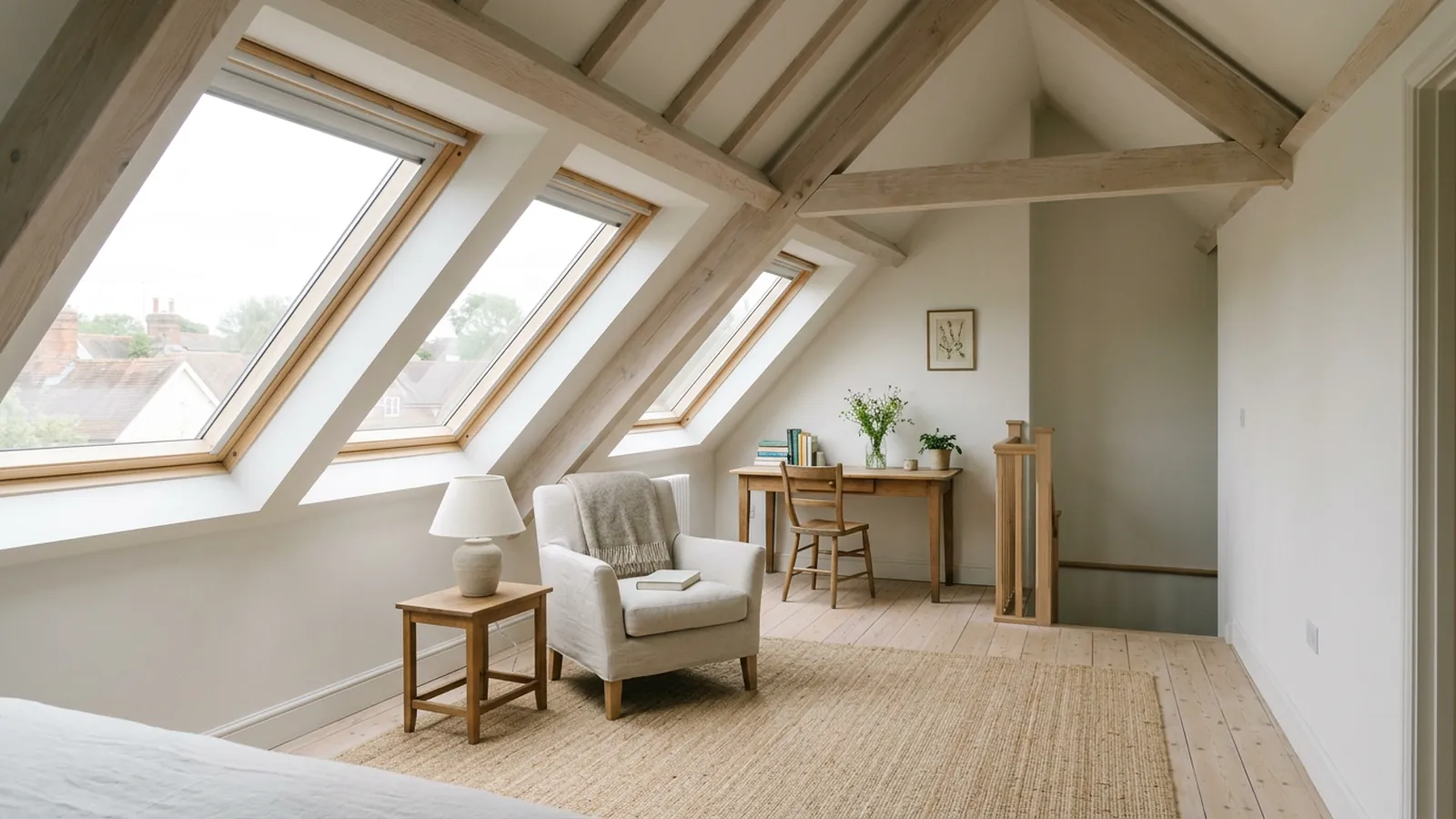
Streaming glass above a landing or a loft bedroom looks alarming, and owners often read it as the roof letting water through. Usually it is the room's own moisture meeting a cold surface. Telling the two apart is part of how we look at any unit on skylight and rooflight replacement around Basingstoke, and it decides whether the answer is a change of habit, better ventilation or a new unit.
The physics in one paragraph
Air holds more water vapour when it is warm. Cool that air against a surface and, at a certain temperature, it can no longer carry all its vapour, so the surplus settles as droplets. A heated bedroom full of breath, drying laundry or shower steam carries plenty of vapour. The inner pane of a roof window faces the open sky, which on a clear winter night is far colder than a wall facing a neighbour's house. Warm air also rises, so the damp air of the whole room drifts up to the one surface best placed to chill it. That combination is why the glass overhead mists before any vertical window in the house.
How a sealed rooflight unit works and fails
- Outer and inner glass panes, with the outer pane facing the weather
- Low-emissivity coating on one inner face, reflecting heat back into the room
- Warm-edge spacer bar holding the panes apart, filled with desiccant to soak up trace moisture
- Primary seal against each pane, backed by the secondary seal around the edge
- Dry sealed cavity, the insulating layer between the panes
- Broken edge seal: moist air gets in and the desiccant becomes saturated
- Mist and droplets trapped between the panes; they cannot be wiped off and the sealed unit needs replacing
- Inset: condensation on the room-side face of the glass is a ventilation or humidity issue, not a failed unit
Five common causes, and what each one looks like
The pattern of the moisture tells you most of what you need to know. Look at where it forms, when it appears and whether it wipes away.
| What you see | Likely cause | Usual remedy |
|---|---|---|
| Droplets on the room side that wipe off, worst on cold mornings | High indoor humidity meeting cold glass | Ventilation, extraction and steady heating |
| Fog or water between the two panes that no cloth reaches | The sealed glazing unit has lost its seal | A new sealed unit or a whole new roof window |
| Damp areas on the lining or plaster around the frame | A cold bridge where insulation stops short of the frame | Insulated linings made good at replacement |
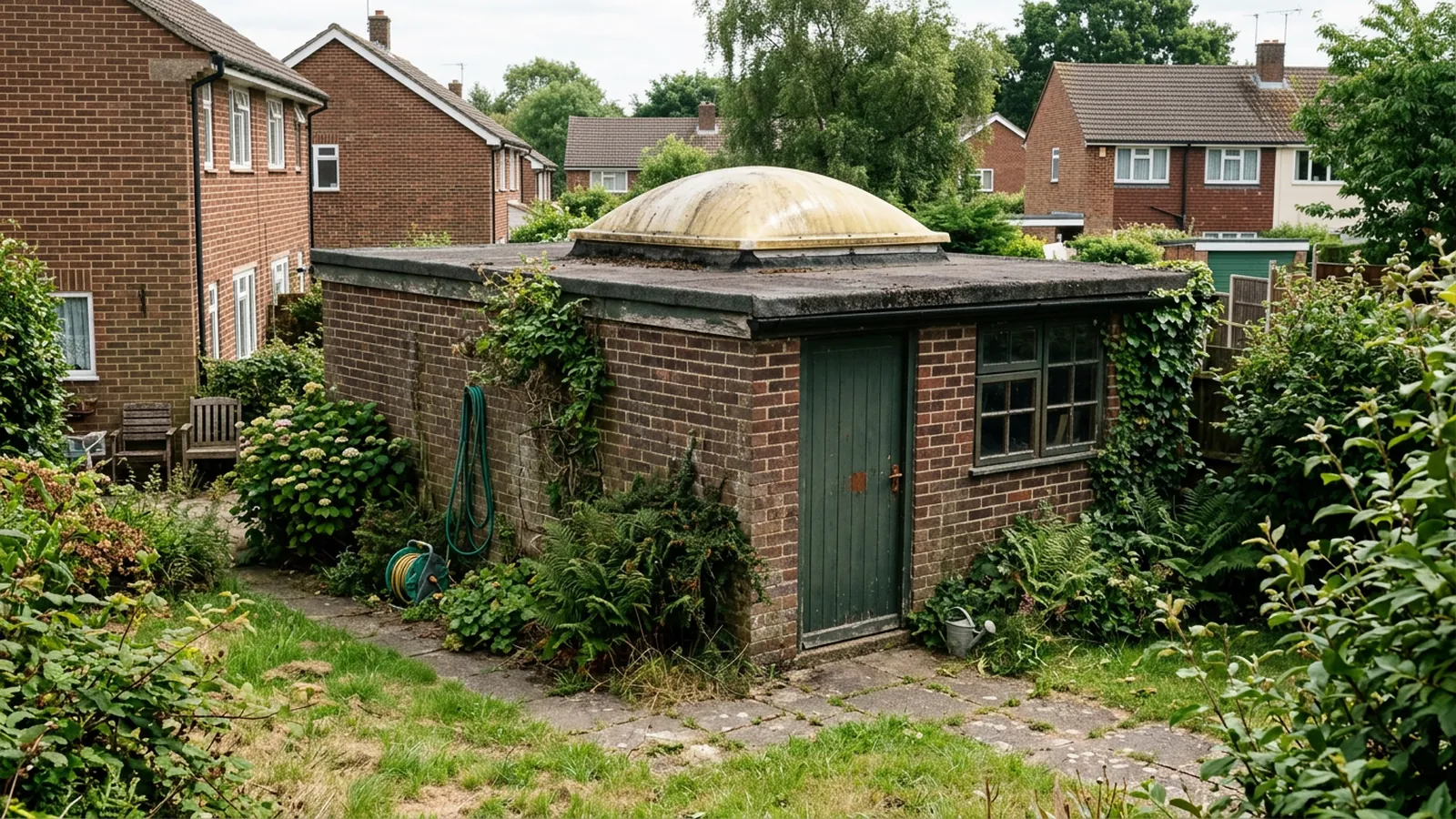
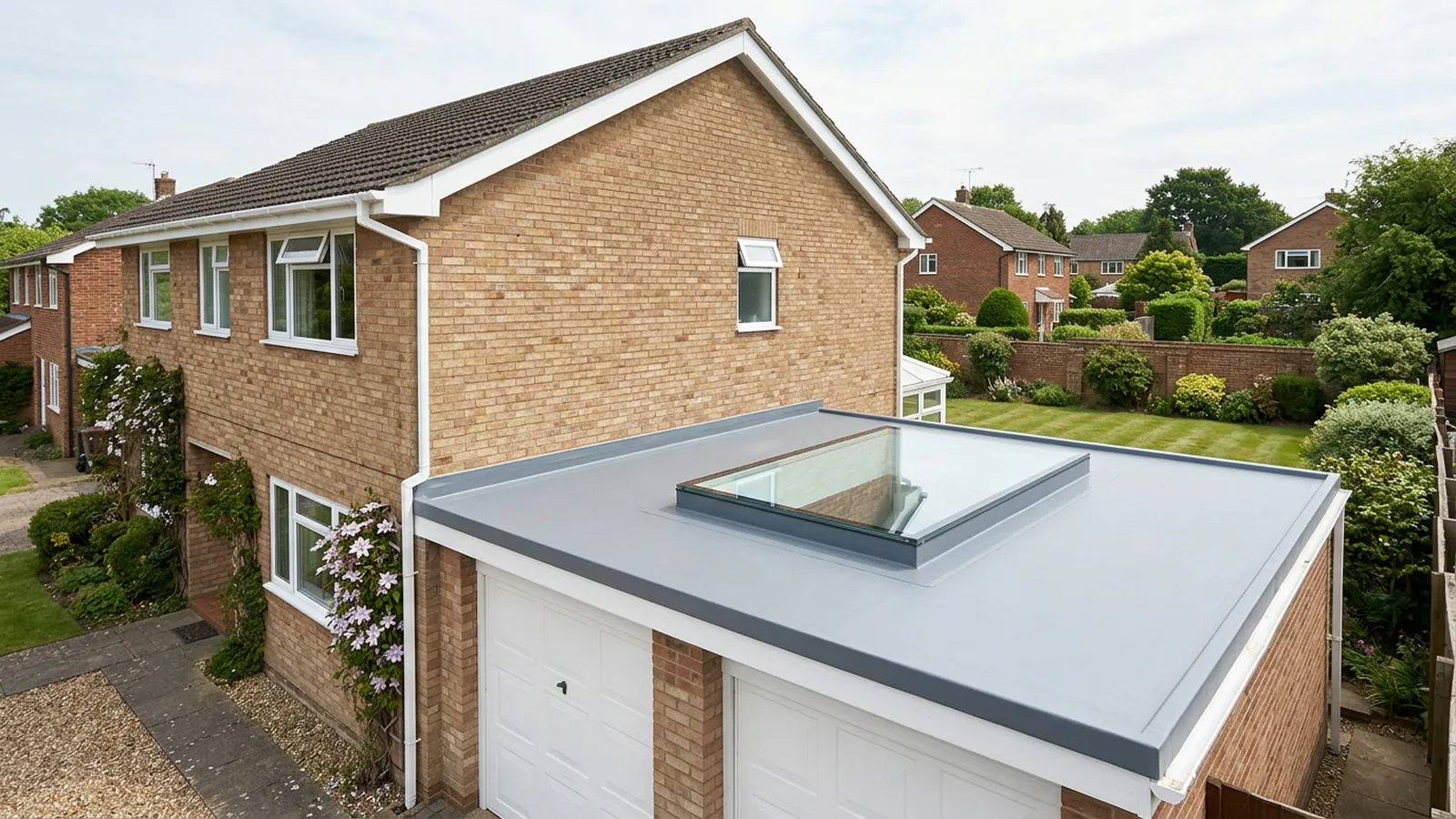
| Heavy drips from an old plastic dome on a flat roof | Single or twin skin plastic with little insulating value | A modern double or triple glazed rooflight |
| Mist on the outside of the glass early in the day | Well insulated glass staying cold on a clear night | None: it clears as the sun comes up |
The last row surprises people. Outside mist on new glazing is a sign the glass is keeping the heat in, so the outer pane stays at sky temperature and dew settles on it, just as it does on a car windscreen.
Why older skylights suffer most
A lot of the rooflights in Basingstoke homes went in when the estates were built or when lofts were first converted. The flat roof extensions of the 1970s and 1980s often carry plastic domes, and many pitched roofs from the same decades have early timber roof windows with double glazing that performed modestly even when new. Those units run colder on the room side than current glazing, so they reach dew point sooner and more often. Our guide to old roof windows by era sets out what went into roofs of each decade, and replacing plastic rooflight domes covers the flat roof version in detail.
The rule: moisture you can wipe away is a room problem first and a window problem second. The exception is an old dome or early roof window whose glass is so cold that even a well ventilated room will wet it; there the unit itself is the cause.
Fogging between the panes is a different fault
When the mist sits inside the glazing, the seal around the edge of the sealed unit has broken down and damp air has got into the cavity. No amount of ventilation in the room will clear it, and it tends to get worse, leaving a milky film or streaks on the inner faces of the glass. The insulating value of the unit falls too, so the room side runs colder and picks up surface condensation as well. Whether a new sealed unit is available for that frame, or the frame itself is tired enough to change, is weighed on our misted and failed rooflight replacement page, and when a rooflight should be replaced covers the wider signs.
What helps inside the room
- Use the vent. Most roof windows have a ventilation flap in the handle or top bar. Leaving it open lets damp air escape without an open sash.
- Extract at the source. A bathroom or kitchen with a rooflight needs its extractor fan running during and after showers or cooking.
- Keep the heat steady. A room heated in short bursts cools the glass and then floods it with warm, damp air; gentle background heat keeps the surface temperature up.
- Keep the blind off the glass at night. A blind drawn tight traps a pocket of cold air against the pane and can make the wetting worse.
- Dry washing elsewhere. Clothes drying on a landing under a skylight send their water straight to the coldest surface above them.
When a new rooflight is the better answer
If the moisture keeps coming back after ventilation and heating are sorted, or the lining around the frame stays damp, the unit is the weak point. A current double or triple glazed rooflight with a warm edge spacer holds a warmer inner surface, and a properly insulated lining removes the cold strip where plaster meets frame. That also bears on comfort, which our answer on whether skylights make a room cold takes further. If you are unsure whether the water is coming from the room or from outside, do skylights let water in over time? explains how to tell.
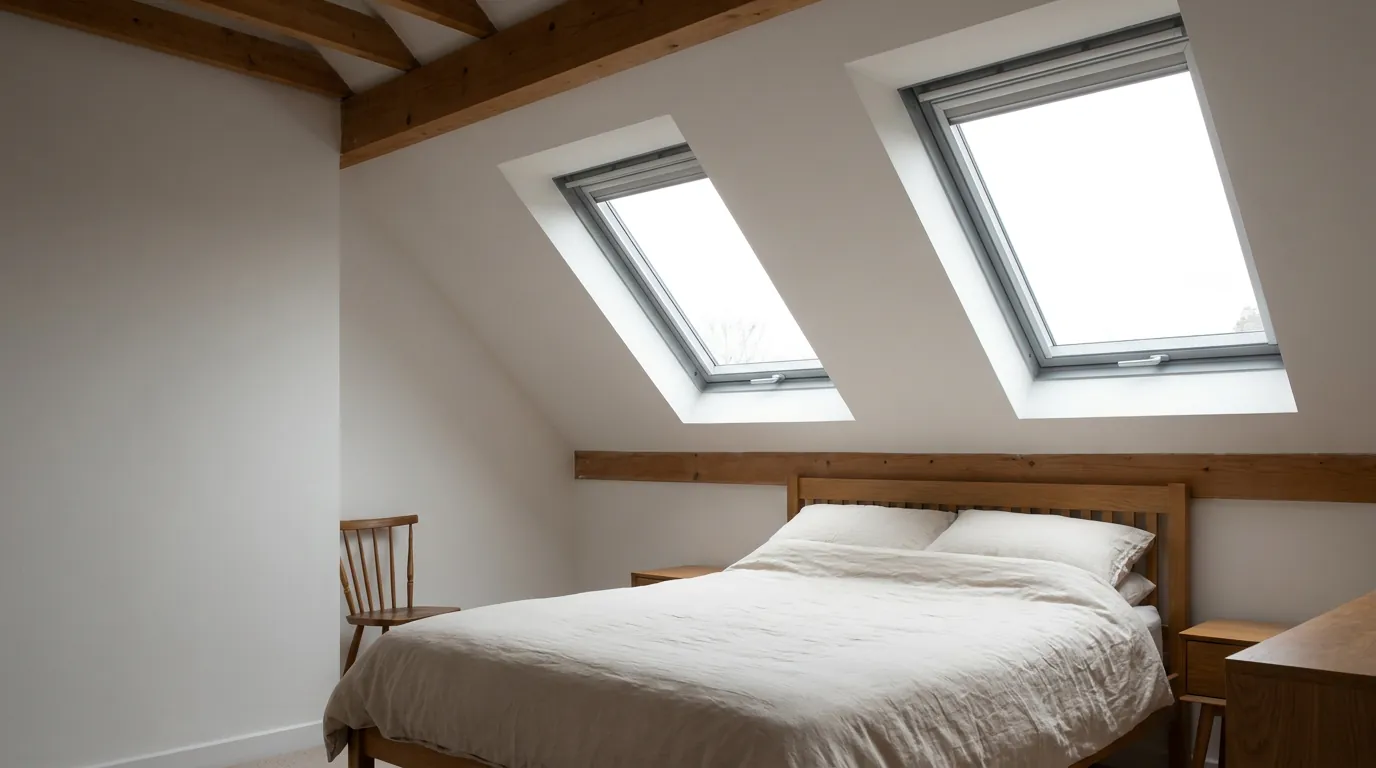
Any change of unit starts with us looking at the roof, the glazing and the lining together before a quote is written, so the fix matches the cause. If the droplets have become a daily chore, ask us to survey the rooflight and we will tell you which of these patterns you are seeing.