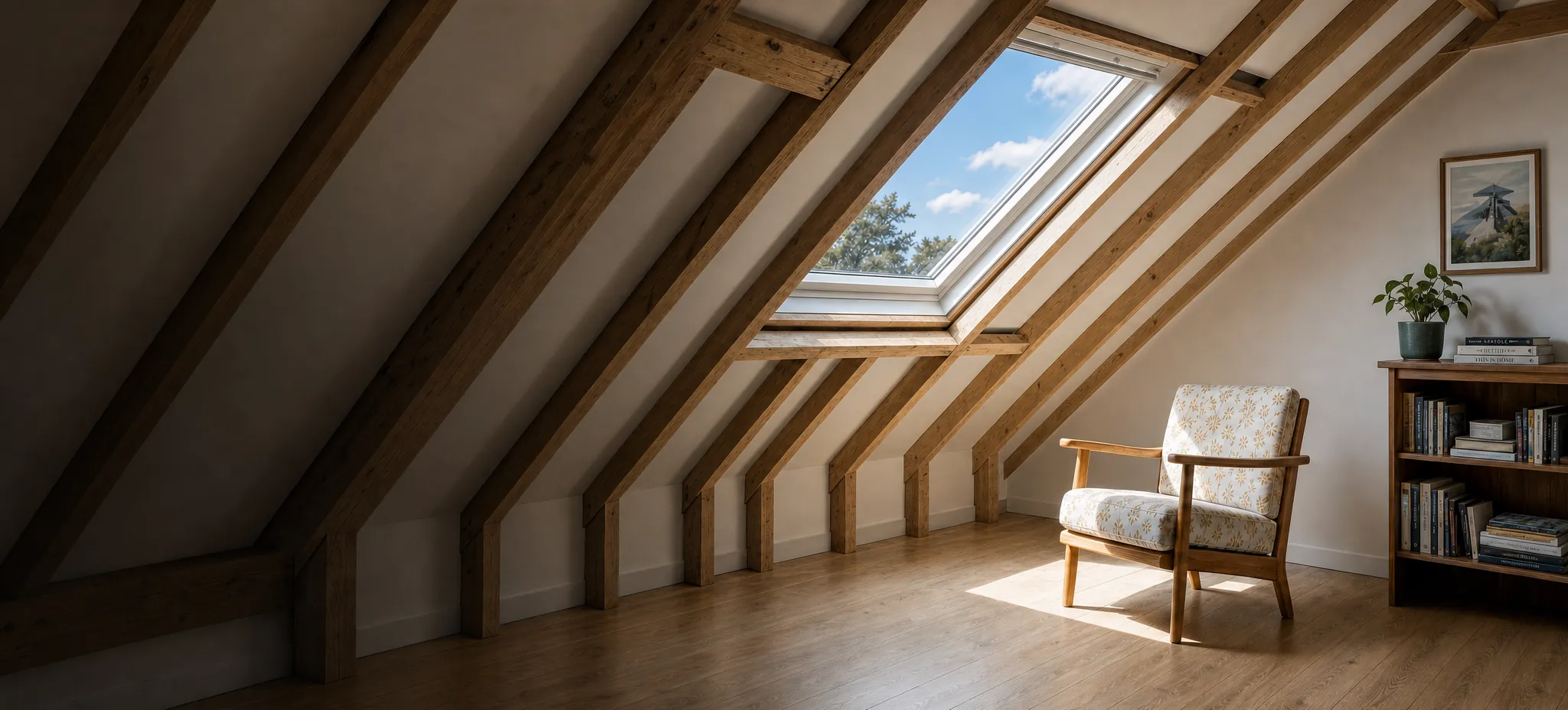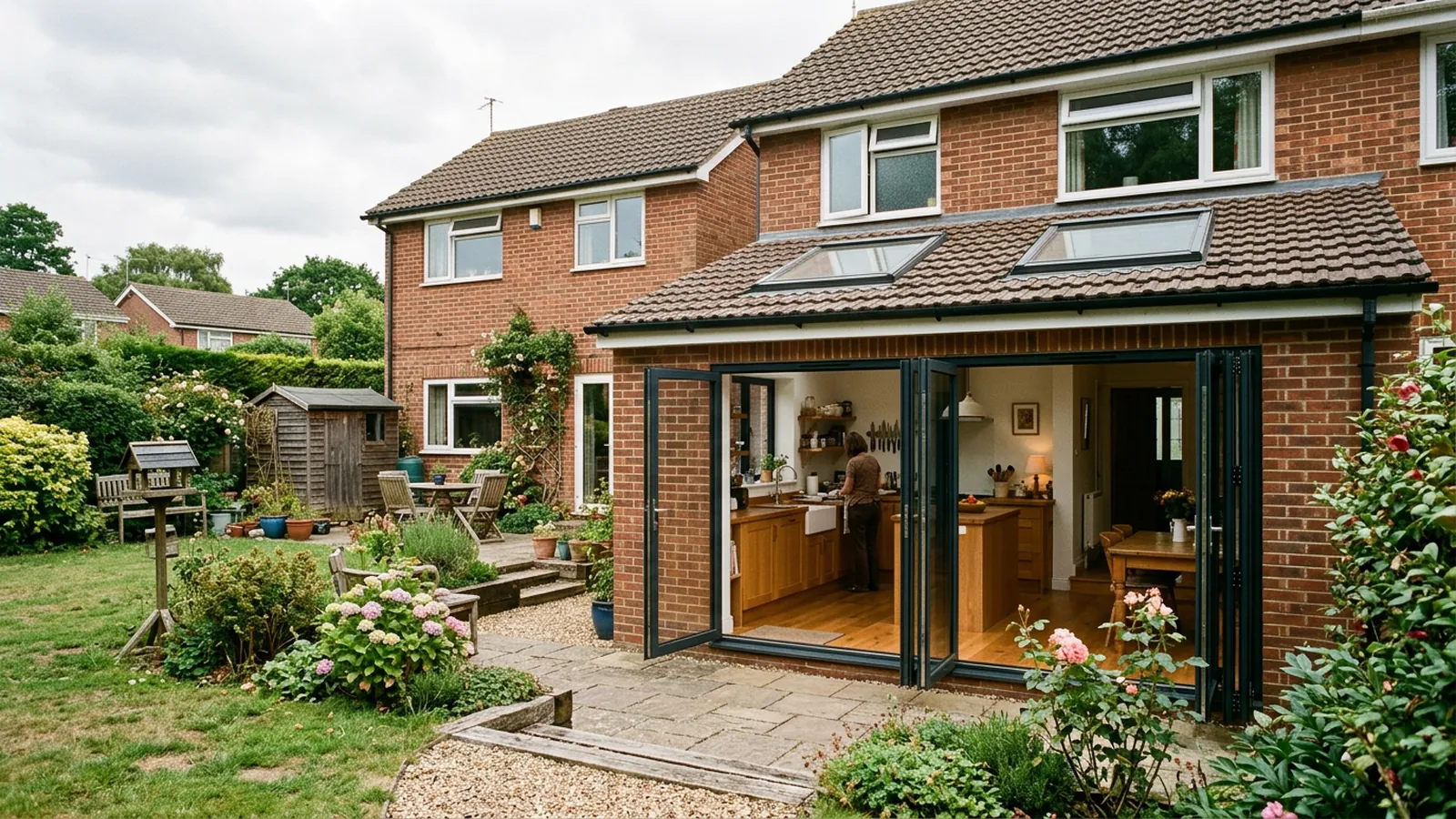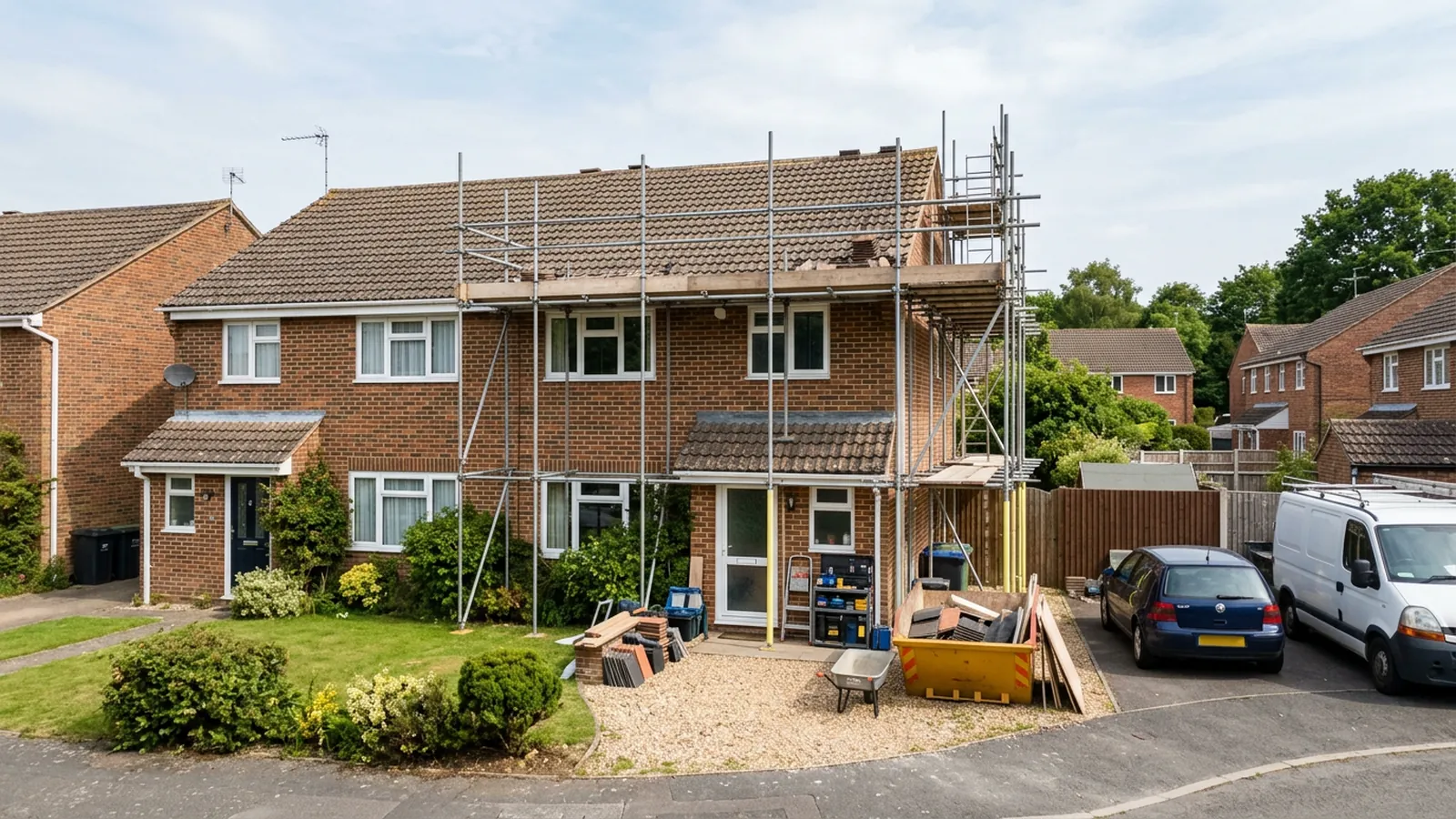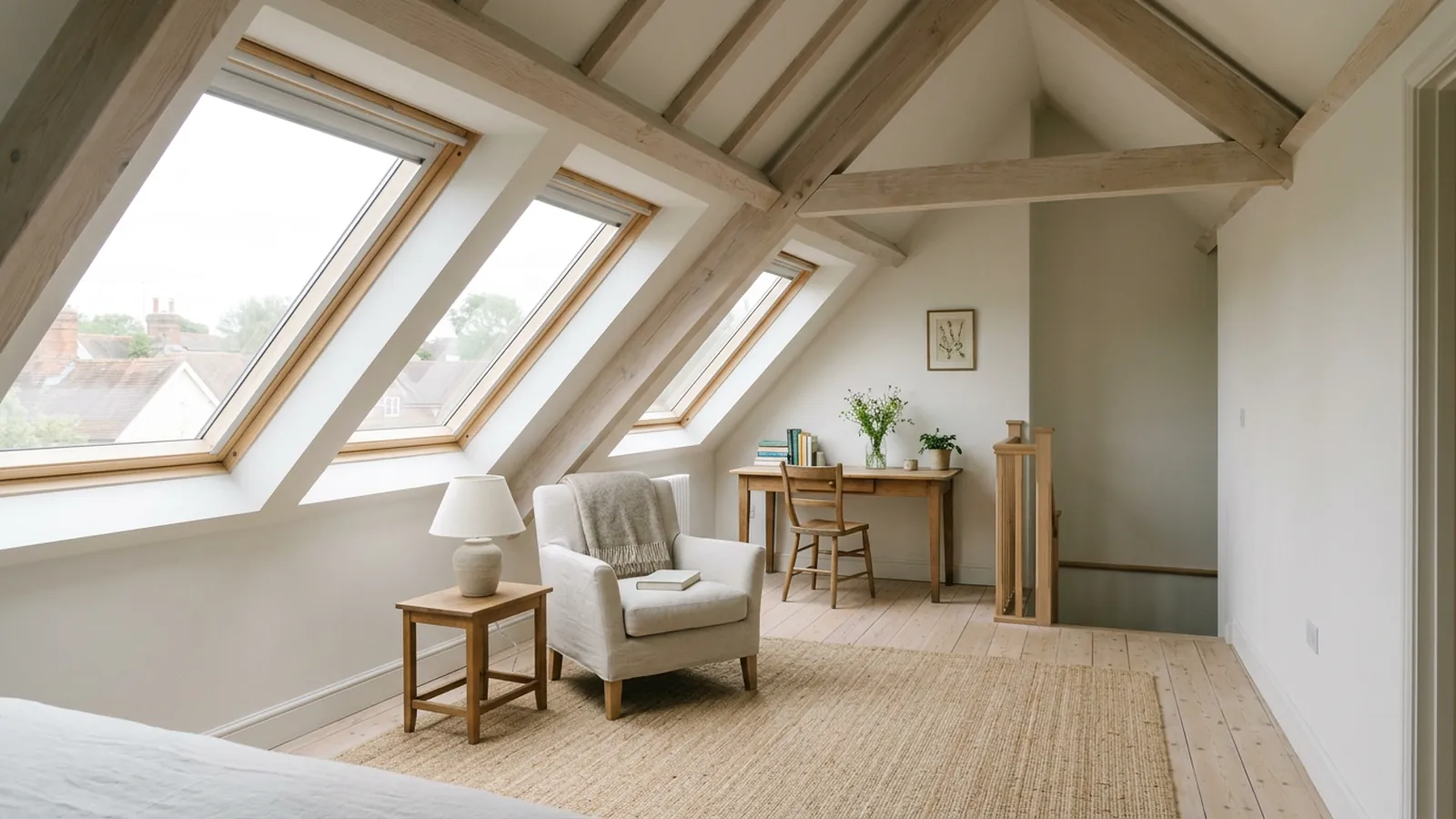
The decision is less about age than about condition and about what the room needs from here. A tired window in a loft bedroom you use every night is a different case from one over a stairwell you rarely look up at. Our skylight and rooflight replacement around Basingstoke starts with that distinction: we look at the unit, the roof around it and the room below, then say plainly whether a swap is worthwhile.
What follows sets out the signs that settle it, the cases where holding on makes sense, and what a replacement actually changes on the kind of roofs found across the borough.
Signs that settle the question
Some faults are a matter of taste. Others mean the unit has stopped doing its job, and no amount of care will bring it back. These are the ones that make replacement the sensible answer.
| What you notice | What it means | Worth replacing? |
|---|---|---|
| Fog or droplets between the panes | The seal on the double glazed unit has gone and the gas fill has escaped | Yes: the glazing has lost its insulating value and will not clear |
| A cloudy, yellow or crazed plastic dome | The plastic has aged in sunlight and is turning brittle | Yes: light is lost and the dome weakens further each summer |
| Dark, soft or flaking timber at the frame | Moisture has been getting into the wood over many seasons | Usually: the frame holds the glass and the flashing |
| A sash that sticks, drops or will not lock | Worn hinges or a twisted frame | Often: a window you cannot open or secure is doing half a job |
| Clear glass, sound frame, dated look | The unit still works; the complaint is appearance or draughts | Optional: weigh it against the room and your plans |
How long each type tends to keep going is covered in how long do skylights last?, and the wider list of warning signs sits in when should a rooflight be replaced?
Sizing a roof window to the truss bays
- Fink trussed rafter, factory made and designed to work as one whole frame
- W-shaped webs, joined at every node by pressed metal nail plates
- Tile covering on battens over the underlay
- Roof window set in the slope, fitted between trusses so the frame is untouched
- Narrow roof window sitting in the bay between two trusses
- Trusses at even 600mm centres along the roof
- No truss cut: the trusses either side of the window stay whole
- A wider window crosses a truss, so the cut needs designed trimming from an engineer or the truss maker
When keeping the old one makes sense
Replacement is not automatically the right call. If the sealed unit is clear, the frame is firm when you press it, the window opens and shuts cleanly and there is no staining on the lining below, the rooflight is still earning its place. A dated finish on its own is a weak reason to open up a roof.
Timing matters too. When the whole roof is due to be re-covered in the next few years, it can be better to wait and change the window while the tiles are off anyway, so the new flashing sits in fresh covering rather than old. And where a loft conversion or extension is being planned, the right window may be a different size or in a different place, so replacing like for like today could mean doing it twice.
A fair test: if you would not notice the window was there unless someone pointed at it, and the ceiling around it is clean and dry, leave it be for now. The exception is misting between the panes, which only ever gets worse.
What a new unit actually changes
The gain from swapping an old skylight is practical rather than cosmetic. A current double or triple glazed roof window holds heat in the room far better than a failed unit or a single skin dome, so the space under it stops feeling chilly in winter and stuffy in summer. The glass is clear again, so the light you are paying for in the roof actually reaches the room.
The weathering is renewed as well. A proper replacement comes with a new flashing kit matched to the covering, whether that is concrete tile, clay tile or slate, rather than a fresh window sitting in tired leadwork; why that matters is set out in does a replacement skylight need new flashing? On flat roofs, a modern double glazed rooflight on a proper insulated upstand replaces the thin domes that were common on garage and extension roofs.
Why the build era of the house matters
On the estates that make up most of the borough, the roof is built from trussed rafters, usually at 600mm centres. An old timber roof window from that period was chosen to sit between two trusses, and in most cases a current window of a similar width drops into the same opening with the trusses left whole. That is the simplest kind of replacement, and it is often a day's work.
Going wider in a trussed roof is a separate conversation: it means designed trimming rather than just a new frame. The makes and sizes that went into roofs from each decade, and how their replacements line up, are covered in our guide to replacing old timber roof windows from the 1970s and 1980s. In the older villages, with cut rafters and handmade tile, the choice may lean towards a conservation style unit instead, and that is settled at survey.
Cost, disruption and paperwork
What a replacement costs depends on the size and type of the new unit, the roof covering, how easily the roof can be reached, whether the linings inside need rebuilding, and extras such as blinds or electric opening. We give a written quote after the survey, so the figure reflects your roof rather than a guess.
Disruption is modest for a like-for-like swap: dust sheets in the room, the old unit out, the new one in and the linings made good. Replacing a roof window with a new one is normally notifiable under the Building Regulations because the thermal standard applies to the new glazing; we see to that notification as part of the job. The work is covered by our 10-year workmanship guarantee, which is not insurance backed.
The short verdict
- Look between the panes. Misting there means the unit has failed, and replacement is the answer.
- Press the frame and check the ceiling. Soft timber or staining below points the same way.
- Think about the next few years. A re-roof or a conversion on the horizon may change what should go back in.
- Get the roof looked at. Size, truss spacing and covering decide what fits the existing opening.
If the glass has gone cloudy or the frame is past its best, a swap usually pays its way in comfort and daylight. To find out which camp your window falls into, arrange a survey of the roof and we will give you a straight answer on the real unit.