A house going on the market gets looked at harder in a few weeks than it has been in years. Estate agents photograph every room, buyers stand on the landing and look up, and a buyer's surveyor walks the loft with a torch and a moisture meter. A rooflight that has quietly aged in the background, a cloudy double glazed unit here, a yellowed plastic dome on the garage there, suddenly becomes a line in somebody else's report.
This guide is for owners around Basingstoke weighing up whether to replace a tired skylight before selling, leave it and let the price absorb it, or simply get it looked at so they know where they stand. It deals with what a buyer's survey tends to pick out, which kinds of wear are worth acting on, the paperwork a solicitor will ask about, and how to fit the work into a sale timetable without it holding anything up.
Why the rooflight becomes a question at sale time
Day to day, an older rooflight is easy to live with. You stop noticing the fog between the panes or the faint tide mark on the plaster beside the frame. Somebody seeing the house for the first time has no such habit. To them a stain under a window in the roof reads as a possible water problem, and a milky unit reads as something that needs money spending on it, even when the roof around it is sound.
That is the real issue with selling: uncertainty costs more than the item itself. A buyer who cannot tell whether a mark is old and dry or current and active will either ask for a further inspection, ask for a reduction, or ask the seller to deal with it before exchange. Each of those slows a sale down at the point where everyone wants it to speed up. Knowing the actual condition of the roof window, and having something in writing about it, takes the guesswork out of that conversation.
A buyer does not price the rooflight you have; they price the doubt about it.
Sizing a roof window to the truss bays
- Fink trussed rafter, factory made and designed to work as one whole frame
- W-shaped webs, joined at every node by pressed metal nail plates
- Tile covering on battens over the underlay
- Roof window set in the slope, fitted between trusses so the frame is untouched
- Narrow roof window sitting in the bay between two trusses
- Trusses at even 600mm centres along the roof
- No truss cut: the trusses either side of the window stay whole
- A wider window crosses a truss, so the cut needs designed trimming from an engineer or the truss maker
What a buyer's surveyor looks at around a roof window
A pre-purchase survey is a visual inspection. The surveyor will not take a rooflight apart, so they report what they can see from the room, from the loft and, where it is safe, from the ground or a window. Around a roof window that usually means the points below.
- The glass. Condensation trapped between the panes means the seal of the sealed unit has gone. It is visible from the room and easy to photograph.
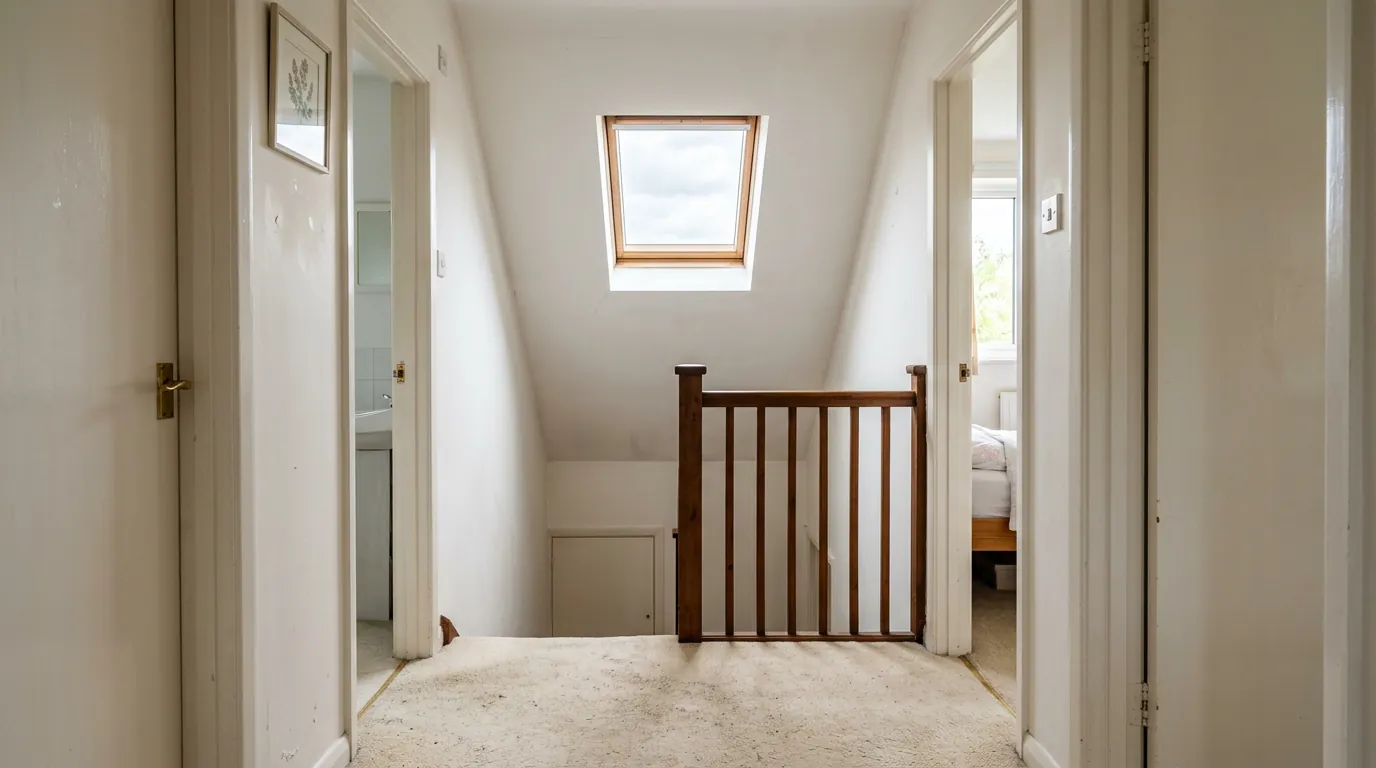
- The frame and sash. Timber that has greyed, split or lost its finish on the inside face, a sash that sticks, or a handle and hinge that no longer close the window firmly.
- The lining and ceiling. Brown rings, flaking paint or bubbled plaster on the reveal or the ceiling next to it. These are noted even if they are years old.
- The outside. Flashing that looks lifted, tiles or slates disturbed around the frame, or moss built up on the upper side.
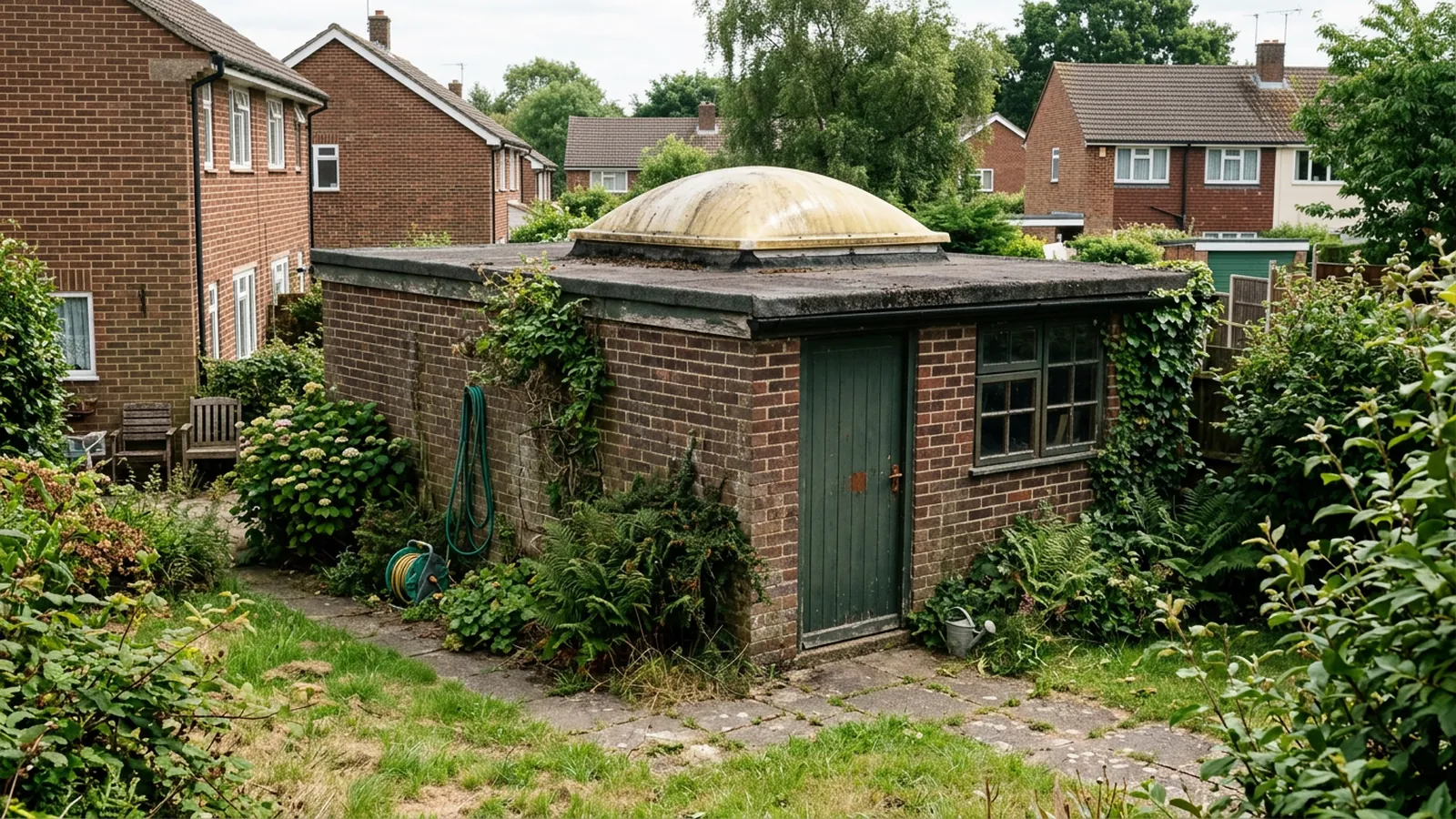
- Flat roof domes. Plastic that has turned brittle, cloudy or yellow on an extension, garage or porch roof.
None of these is a verdict on the house. They are prompts, and the surveyor's usual advice for each one is to get a specialist to look and to obtain a quote. If you have already done that, you are answering the question before it is asked.
Replace, leave it, or get it assessed: matching the choice to the condition
Not every tired rooflight needs to come out before a sale. Some wear is cosmetic and a buyer will accept it; some wear is exactly the kind that stalls a transaction. The table sets the common conditions against a sensible move before listing. It is a way of thinking about it, not a substitute for somebody seeing the roof.
| What you can see | How it reads to a buyer | Sensible step before listing |
|---|---|---|
| Misted glass, frame sound | Failed unit, money to spend | Get a survey and a written quote; replacing the window is worth weighing if the frame is also old |
| Old stain on the ceiling, dry to the touch | Possible water coming in | Have the flashing and frame checked so you can say what caused it and that it is settled |
| Brittle or yellowed plastic dome | An old part near the end of its life | Replace with a modern rooflight on the existing kerb or a new one, depending on the kerb |
| Sash sticks, handle loose, finish worn | Wear and age | Assess the window as a whole; an ageing timber window is often a replacement rather than a refresh |
| Clear glass, clean ceiling, opens properly | Nothing to note | Leave it and gather whatever paperwork exists for it |
If you want the longer argument about whether an ageing unit justifies the cost, the answer page on whether it is worth replacing old skylights covers it, and when a rooflight should be replaced sets out the signs that point that way.
The paperwork a solicitor will ask for
The property information form a seller completes asks about building works and about windows and rooflights that have been fitted, together with the approval or certificate that goes with them. A replacement roof window is building work covered by the Building Regulations, so the buyer's solicitor wants to see that it was dealt with properly. For a rooflight put in some years ago, that can be the moment an owner discovers there is no certificate in the drawer at all.
The rule: for a new or replaced rooflight, the evidence a buyer's solicitor looks for is the completion certificate that follows a Building Control notification. The exception is a window put in long ago with nothing on file: the gap is dealt with by the solicitors between them, and a seller should take their own solicitor's advice on it rather than try to settle it by a fresh installation alone.
When we replace a rooflight, the Building Control notification is part of our job, so the certificate for the new window arrives without you chasing it. The detail of how that process works, and what the certificate says, is on the guide to Building Control notification for rooflights. Our own 10-year workmanship guarantee comes in writing too. It is a workmanship guarantee from us and is not insurance backed, and it belongs with the house papers you pass on.
Fitting the work around a sale timetable
The best time to decide is before the agent's photographs, not after a buyer's report lands. Replacing a rooflight is a short piece of work on the day, but the survey, the order for the window and the certificate all need to fall into place first. Working backwards from the date you want to list, the order runs like this.
- Look before you list. Walk round with the checklist above and note every roof window, dome and lantern in the house, including the garage and any extension.
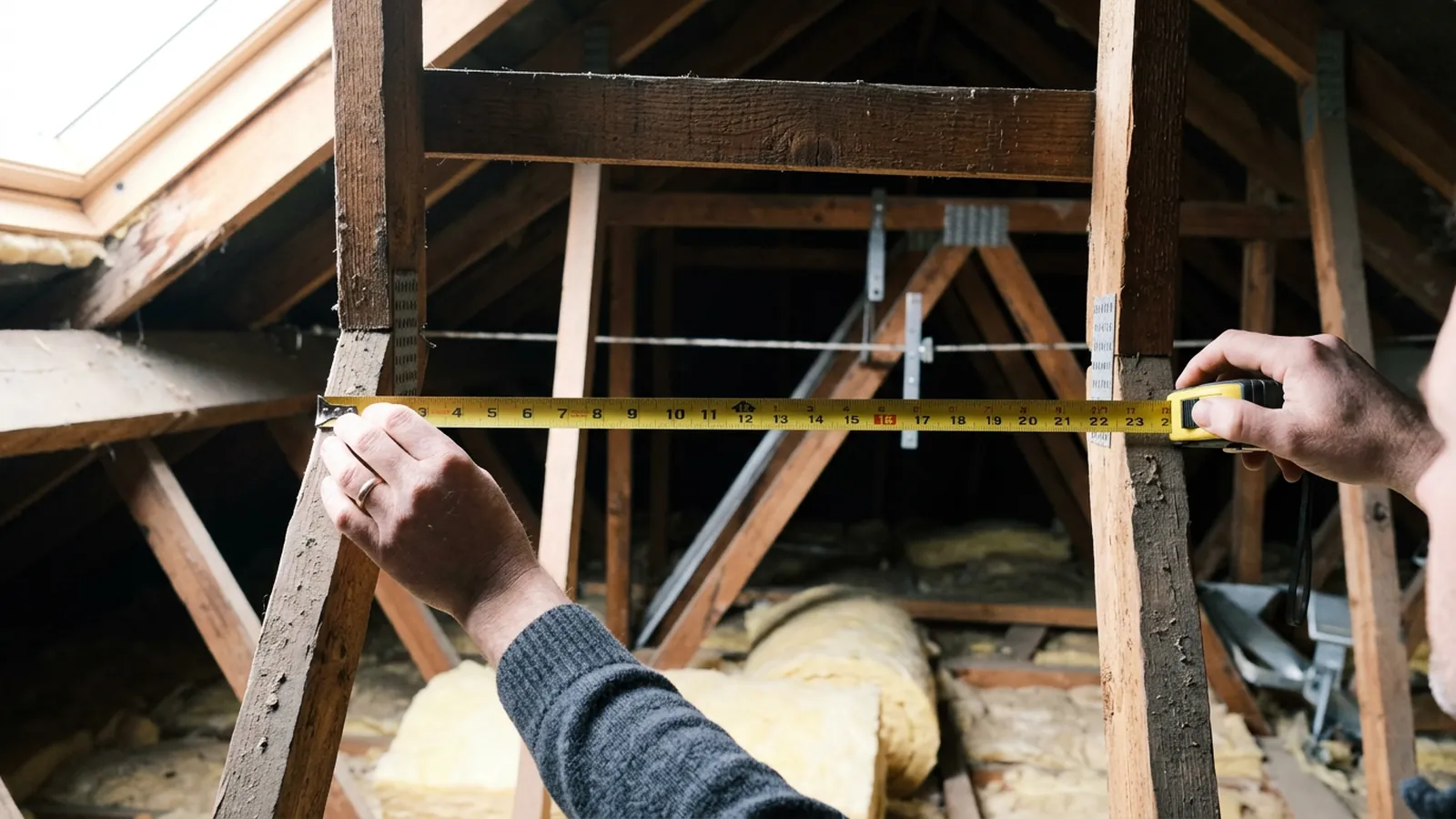
- Book the survey. Someone measures the opening, checks the structure in the loft and looks at the flashing and roof covering around it. We survey before we give any quote, so the price you receive belongs to your roof.
- Decide and order. Choose between a like-for-like swap and anything different, and let the window be ordered to size.
- Fit and make good. The installation day itself, with the inside lining finished so the room is ready to photograph. The page on how a replacement day runs goes through it hour by hour.
- File the papers. Keep the completion certificate, the guarantee and the product details together for the sale pack.
For a sense of how much of your week the fitting takes, see how long a skylight replacement takes. If the house is already under offer, tell your solicitor what you are doing so the buyer's side hears about it from you, not from a surprise on a second viewing.
Like for like is usually the sale-friendly choice
A sale is not the moment to redesign the roof for somebody else. Swapping a tired window for a new one of the same size in the same opening keeps the job quick, avoids new structural work and leaves the buyer with something they can understand at a glance: a modern window where an old one was. The guide on like for like or upgrade compares the two routes in full.
There is one situation where a change of size makes sense even with a sale in view: when the old opening no longer matches any current window and the closest modern size is a little different. On a trussed estate roof the answer then stays within the gap between the trusses, because a wider opening would mean designed trimming, and that is a structural decision a new owner may not thank you for. Where the roof was built with cut rafters, the survey measures the spacing and the replacement follows it.
Estate houses, village cottages and the roof you are selling
Around Basingstoke the build era of the house does a lot of the deciding. The two broad cases look quite different at sale time.
Postwar and newer estate homes
On a Popley townhouse, a Brighton Hill semi or a newer home in Chineham or Hatch Warren, the roof is almost always trussed. The tired item is typically a timber roof window of the era the house was built or a plastic dome on a flat roofed extension. A replacement that keeps the existing width is the neat, quick answer, and the paperwork is straightforward. If the home is new enough to be under a housebuilder warranty, check its terms before any work to the roof; that is your warranty provider's question to answer, not ours.
Conservation villages and older town centres
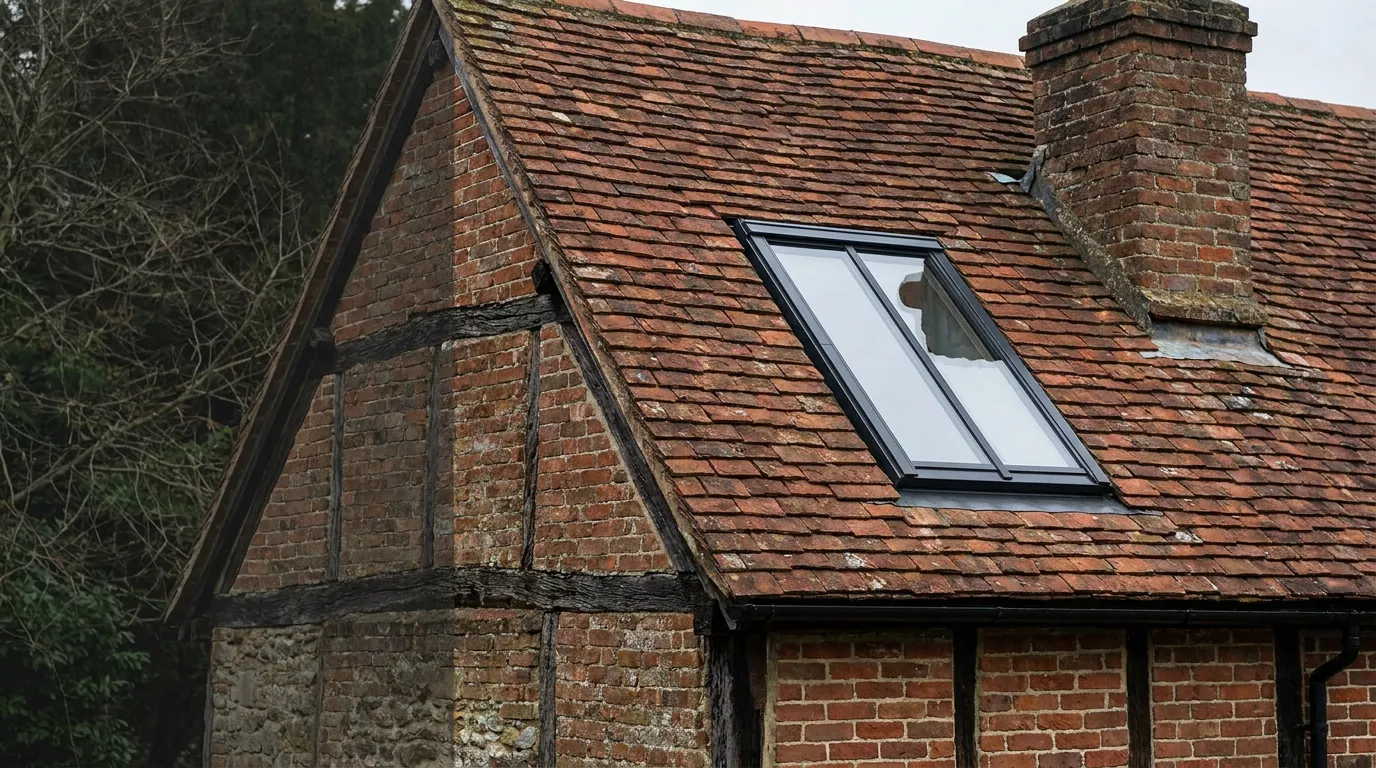
In Old Basing, Overton, Odiham or Hartley Wintney, the house may sit within a conservation area, and a buyer's solicitor may ask about consents as well as Building Regulations. Replacing an old roof window with a slim conservation rooflight that lies close to the slope is the kind of change that suits these roofs, but the planning position has to be checked with the local authority first, and nobody can promise its answer. Our conservation rooflight service starts with that conversation.
Flat roof domes on extensions and garages
A single storey kitchen extension or an integral garage from the 1970s or 1980s may still carry its original plastic dome. By the time a house is sold these are the rooflights most likely to look their age: clouded, discoloured and sometimes cracked at the edge. Buyers notice them from the garden and the room below.
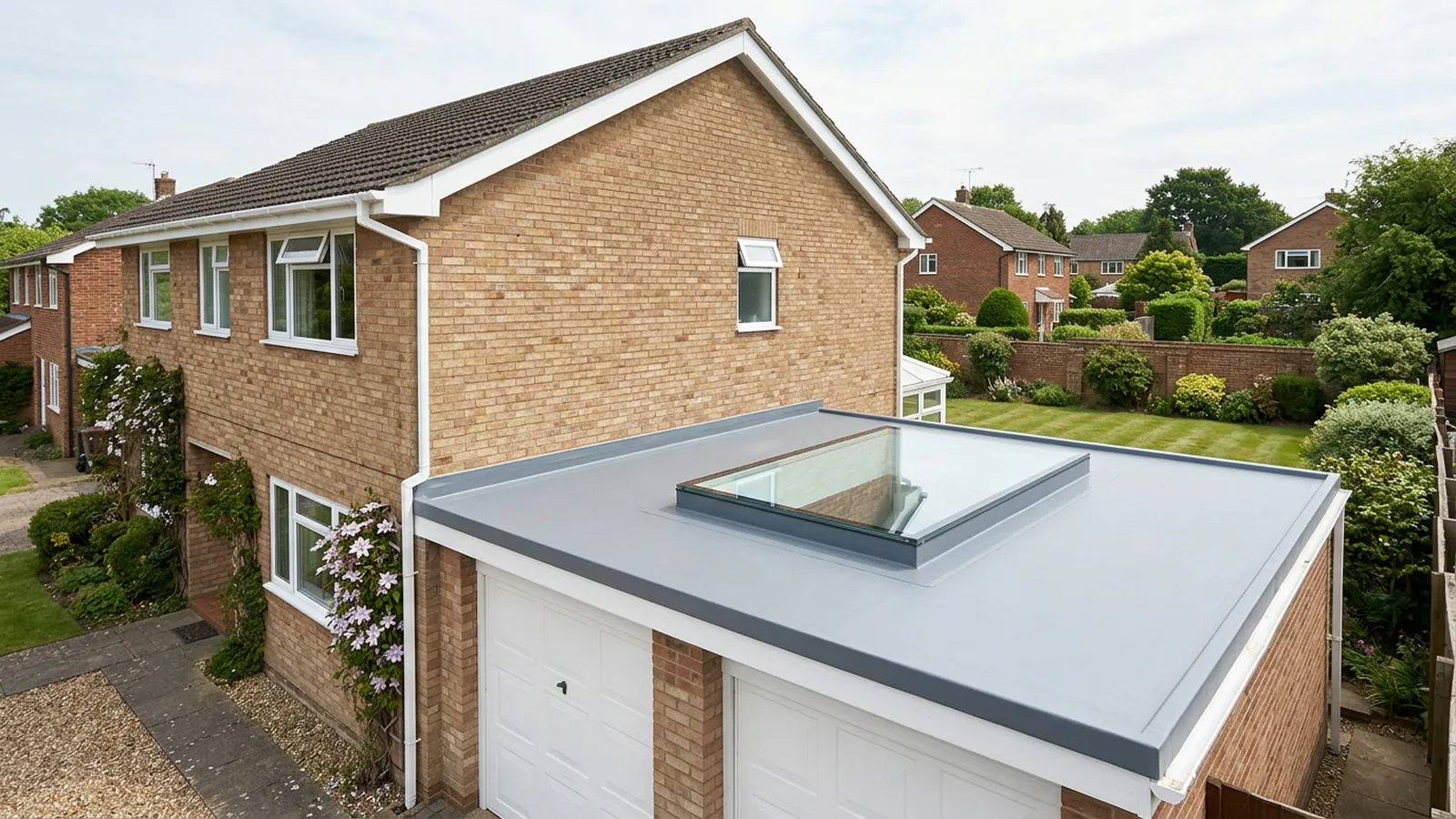
Replacement usually means a modern flat roof rooflight, either on the existing kerb where that kerb is sound and square, or on a new upstand where it is not. Whether the flat roof covering needs attention at the same time is something the survey decides, not an assumption. The guide to replacing plastic rooflight domes goes into the choices, including double glazed units and opening versions.
Will a new rooflight add value to the sale?
Nobody can honestly put a figure on it, and we will not. What a replacement does is remove an objection. A buyer who sees a clean ceiling, clear glass and a window that opens and closes smoothly has one fewer thing to raise, and a seller who can hand over a certificate and a guarantee has one fewer thing to explain. Whether that shows up in the price depends on the house, the market and the buyer.
The wider question of how daylight from above affects the way a house is valued is on the answer page do skylights add value to a house. For a seller, the practical test is simpler: would you rather deal with the window on your own timetable, or on the buyer's?
What to leave in the sale pack
Whatever you decide, gather what exists before the forms arrive. For each rooflight in the house, the useful items are:
- the Building Control completion certificate, if one was issued;
- the written workmanship guarantee from whoever fitted it, with its terms;
- the product name and size, which is usually on a label on the frame;
- any receipts or quotes, including a recent survey note if you had one done;
- instructions for any electric or remote controlled window and its blind.
If a misted or failed unit is the only problem and you would prefer to deal with just that, our misted and failed rooflight replacement page explains how that work is approached.
Getting it looked at before the photographs
If you are selling in the next few months and one or more of your rooflights looks tired, the useful first step is simply knowing its condition. We will come out, look at the window from inside and out, check the roof structure around it and tell you plainly whether it is a replacement, a like-for-like swap or something to leave alone. Everlight works across Basingstoke and the towns and villages around it, and our rooflight installation and replacement around Basingstoke covers every kind of window mentioned here.
To arrange a visit before the agent books the photographer, ask for a roof survey or call 01256 213206. If you want to see first how we look after the rest of the house on the day, the Everlight homepage sets out how each job runs.