That is the honest starting point for any owner around Basingstoke weighing this up, and it is why the rooflight and skylight work we do across the town is always framed around the room first and the resale second. A roof window that makes a gloomy landing bright is worth having for the years you live there. Any lift at sale is a bonus you cannot bank in advance.
What follows separates the parts of the value question you can influence from the parts you cannot, so you can decide on sensible grounds rather than a guessed return.
Where the value actually comes from
Buyers walk round a house and react to how it feels. A dark hallway, an inner kitchen with no outside wall, or a top floor lit by one small gable window all read as compromises, even when the floor area is generous. Daylight from above changes that reaction, because light from a roof reaches further into a room than light through a wall.
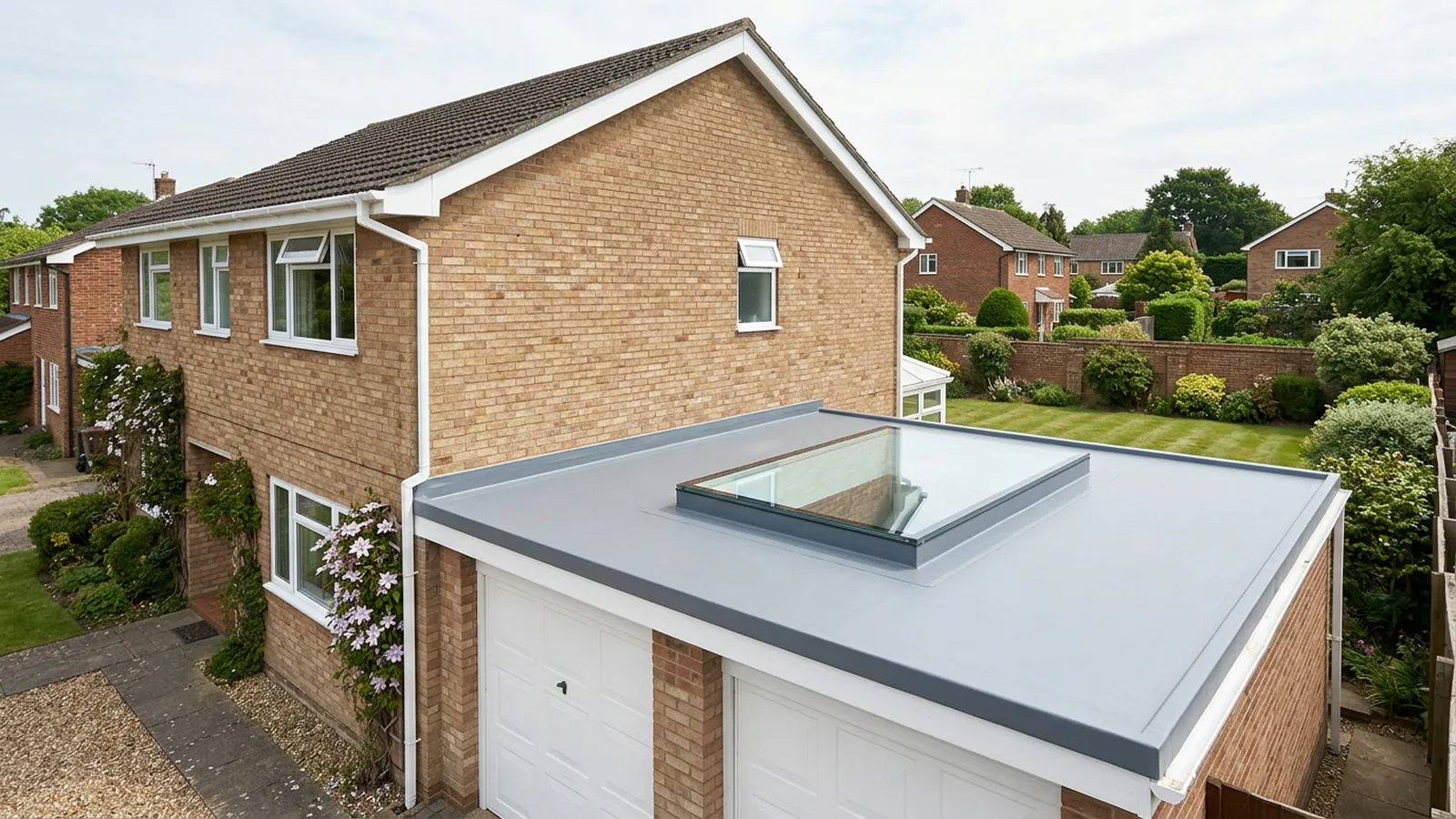
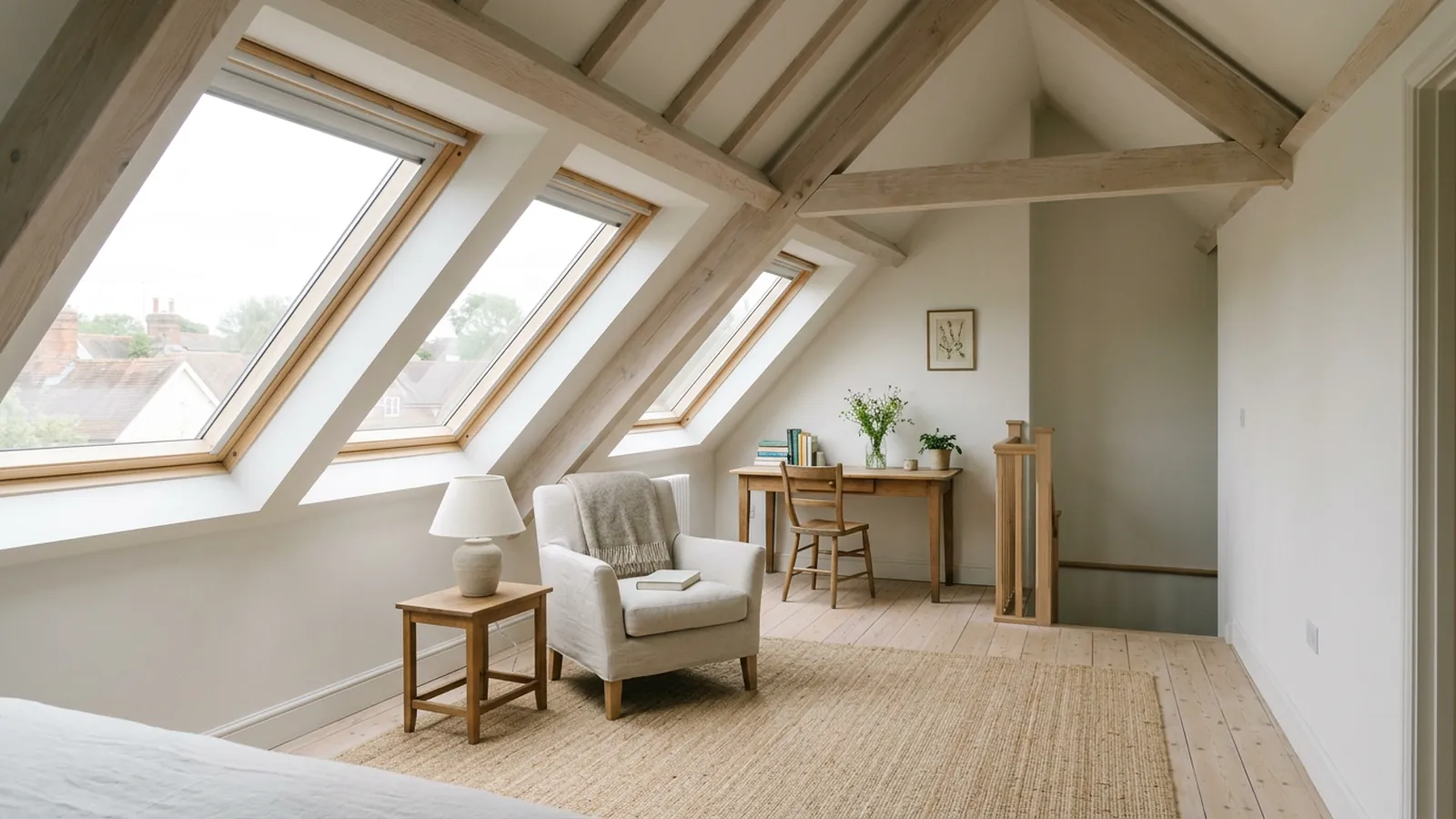
The bigger lever is space. A loft that becomes a proper bedroom with roof windows, or an extension that gains a flat rooflight over the kitchen table, changes what the house is. Estate agents and valuers describe houses by bedrooms and living space, so the rooflight matters most when it is part of making a room count, rather than an extra pane on a room that was already bright.
A skylight earns its keep when it turns a room you avoid into one you use.
Sizing a roof window to the truss bays
- Fink trussed rafter, factory made and designed to work as one whole frame
- W-shaped webs, joined at every node by pressed metal nail plates
- Tile covering on battens over the underlay
- Roof window set in the slope, fitted between trusses so the frame is untouched
- Narrow roof window sitting in the bay between two trusses
- Trusses at even 600mm centres along the roof
- No truss cut: the trusses either side of the window stay whole
- A wider window crosses a truss, so the cut needs designed trimming from an engineer or the truss maker
What buyers and valuers look at
Value is judged by people you will never meet, so it helps to think about what each of them checks. The table sets out the usual points of view on a house with rooflights.
| Who | What they notice | What helps |
|---|---|---|
| Buyers viewing | How bright and open the rooms feel, and whether the glazing looks clean and clear | Clear glass, tidy linings, a blind that works, a window placed where the light is wanted |
| Buyer's surveyor | Condition of the frame, glazing and flashing, and any staining on the ceiling around the opening | A sound unit with a properly fitted flashing kit and no marks on the plaster |
| Conveyancer | Whether notifiable work has Building Control sign-off, and whether planning was needed | A completion certificate on file and a clear note of when the work was done |
| Valuer | Bedrooms, usable floor area and how the house compares with similar ones nearby | Rooflights that form part of a finished, signed-off room |
None of these people rewards a rooflight for existing. They reward it for being in good order and properly recorded.
The paperwork is part of the value
A new roof window or rooflight that changes the roof structure or the thermal envelope is usually notifiable. When the house is sold, the buyer's conveyancer will ask for evidence that the work was signed off, and a missing certificate can slow a sale or lead to awkward questions late in the process. Our answer on whether skylights need Building Regulations approval sets out when that applies.
On our installations the notification to Building Control is arranged as part of the job, so the certificate arrives with the finished work rather than being chased years later. Keep it with the house deeds along with the 10-year workmanship guarantee paperwork (a guarantee that is not insurance backed), and a buyer's solicitor has what they need in one place.
The rule: sign-off matters more than the glass when a house changes hands. The exception is a direct like-for-like swap in the same opening, where the requirements can differ, so check before assuming either way.
When a skylight adds little, or works against you
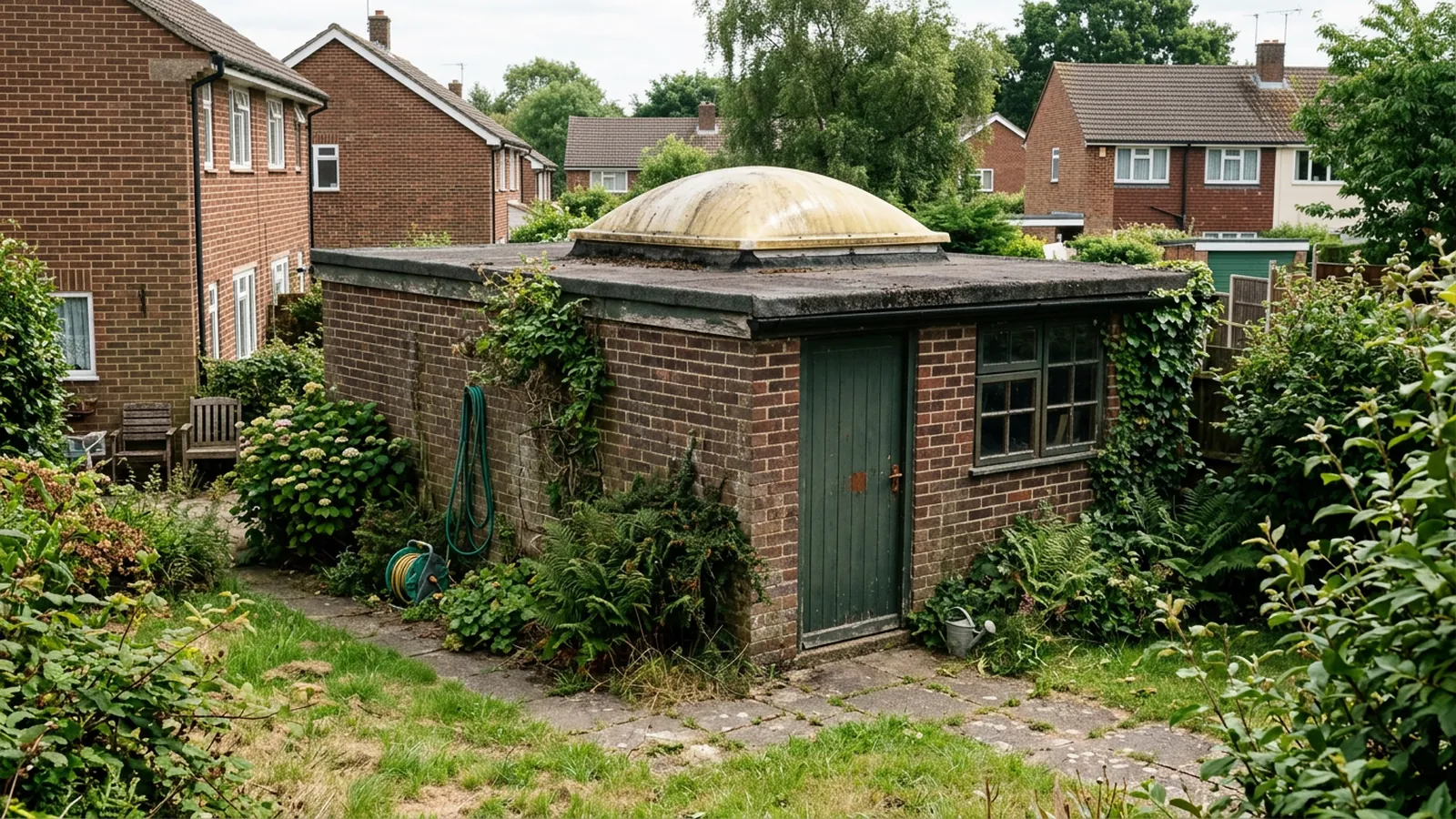
A rooflight in the wrong place does not help. One over a bedroom bed with no blind, one that lets in hard summer sun over a desk, or one so small it looks like an afterthought can make a buyer think about cost rather than light. A tired rooflight is worse than none in the eyes of some buyers: misted glazing, a yellowed plastic dome on a 1970s flat roof, or a timber frame that has greyed and split all suggest work to be done after completion.
That is why placement is worth thinking through before you fit anything. Our answer on the best place to put a skylight covers the room-by-room choices, and the question of whether a dated unit should come out is weighed up in is it worth replacing old skylights?
What this means for a Basingstoke estate house
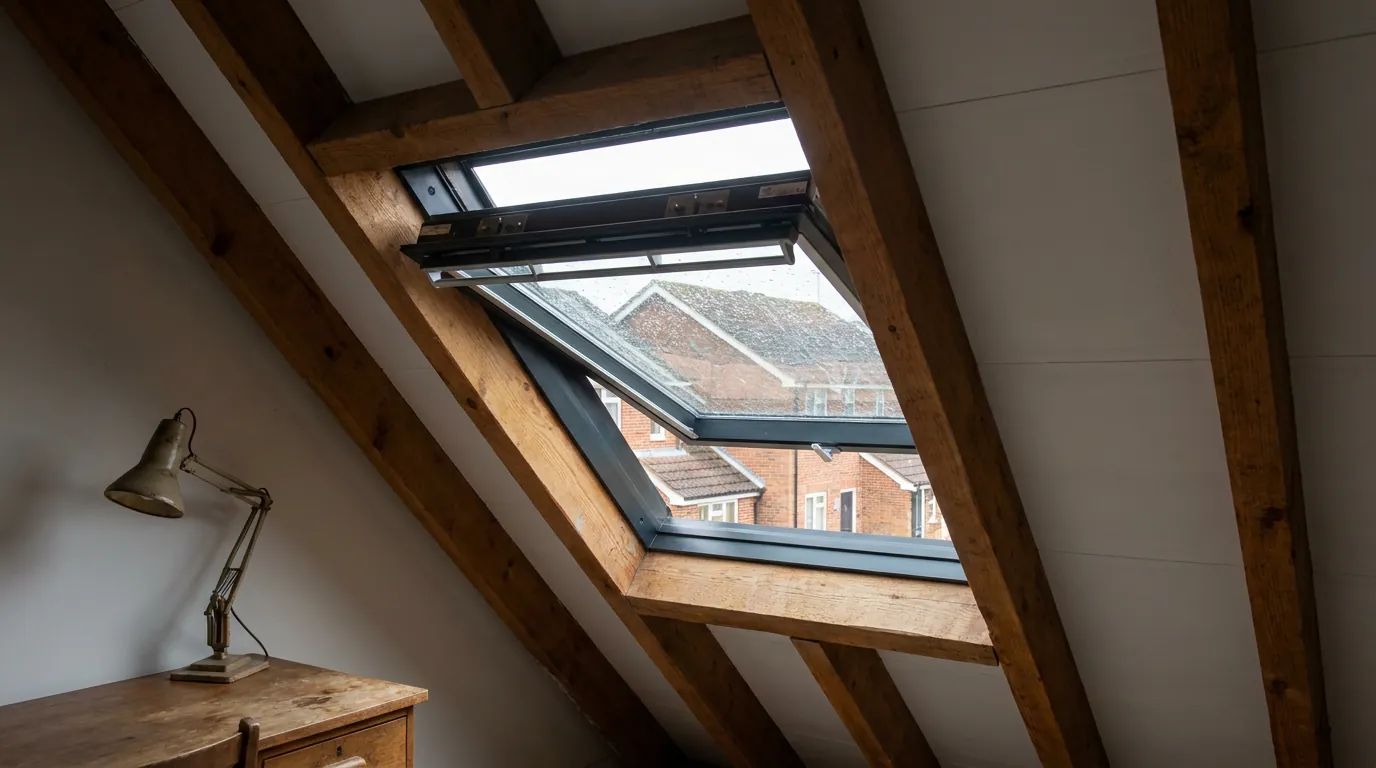
Much of the town and its surrounding estates, from Popley and Oakridge to Chineham and Hatch Warren, sits under trussed rafter roofs at 600mm centres. On those roofs the choice that protects value is a window sized to sit between the trusses, or two narrow ones side by side, so the structure is left whole. An opening that was cut on instinct is exactly the kind of thing a buyer's surveyor may query, while a designed and certified one raises no eyebrows.
Older cottages in Old Basing, Overton or Odiham are a different case. There a conservation style rooflight, sitting low in the tile or slate, keeps the character that gives those houses their appeal, and a planning conversation may come first. Our guide to which skylight suits which house walks through the options for semis, townhouses, bungalows and cottages.
Fitting or replacing with a sale in mind
If you are planning to move within a year or two, the priority shifts from adding new light to presenting what is already there. Clear glazing, a clean ceiling around the opening and a certificate in the file usually matter more than a bigger unit. The timing, what to replace and what to leave are covered in our guide to replacing tired rooflights before selling a house.
If you are staying put, fit for the way you live. Choose the size and position that make the room better every morning, and let any effect on the eventual sale follow from that. To find out what your own roof will take, and how it would look in the room you have in mind, arrange a survey of the roof and we will measure it before quoting anything.