Flashing is the part of a skylight that nobody looks at, yet it decides whether rain runs past the window or finds a way under it. When the glass mists or the timber frame gives up, it is tempting to think only the visible part is the problem. The homepage covers replacing a skylight or rooflight around Basingstoke from start to finish; this page answers the narrower point of what happens to the metal and the seals around the frame.
The short reason is fit. A flashing kit is not a generic strip of aluminium. It is a set of pressed pieces sized to one frame, and it only works properly with the window it was designed for.
Why the old kit rarely goes back
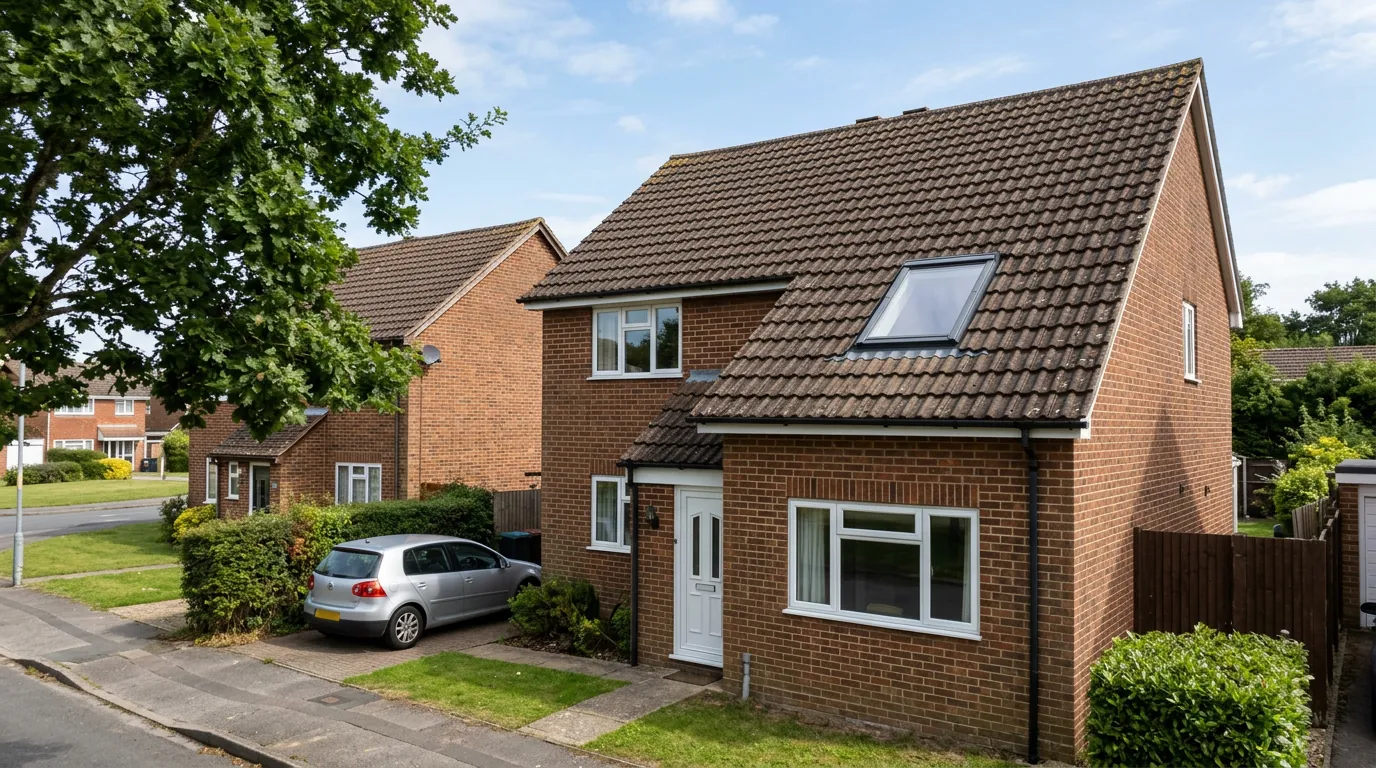
A pitched roof window sits in the tiles with four flashing parts around it: a bottom apron that lies over the tiles below, side pieces that run up each edge, and a top piece that tucks under the course above. On most modern windows these clip or screw to the frame itself. Take the frame out and those pieces come out with it, often bent in the process, because they were folded to shape on the day of the original fitting.
There are other reasons too. A replacement window, even from the same maker, may have a different frame profile from a model made decades earlier, so the old pieces will not line up with the new fixings. The soft metal apron at the bottom was dressed into the tile profile once and has tired since. And the foam and gasket strips behind the flashing have aged alongside the window. Fitting a new rooflight and then dressing old metal round it saves very little and puts the least reliable part of the job exactly where the water arrives.
The rule: a new roof window gets its own matched flashing kit. The exception is a sash-only change, where the frame stays in the roof and its flashing stays with it; that works only when the frame and the flashing are both sound, which the survey confirms.
How a roof window is weathered into a tiled roof
- Sash: the opening glazed unit, fitted last and clipped into the frame
- Flashing kit: head, side and bottom pieces, profiled for tiles or a lower profile for slate, with the bottom apron dressed over the tiles below
- Tiles cut and refitted around the opening so the flashing can lap over them
- Roof window frame, fixed with brackets to the battens and rafters
- Battens cut around the opening, with a trimming batten at the head, fixed across the rafters
- Underlay collar dressed to the frame and lapped into the roof underlay, with a drainage gutter over the head
- Insulation collar packed around the frame to close the gap to the roof structure
- Internal lining: plasterboard reveals taken back to the frame and finished inside
Matching the flashing to the roof covering
The kit is chosen for what is on the roof as well as for the window. Houses around Basingstoke carry three common coverings, and each takes a different kind of flashing.
| Roof covering | Typical houses | Flashing on the new window |
|---|---|---|
| Profiled concrete tile | Estate homes from the 1960s onward, in places like Popley, Brighton Hill or Chineham | A kit for profiled tiles, with a pleated or soft metal apron that is dressed down into the tile shape below the window |
| Plain clay tile | Older cottages and village houses, and some later homes built to look traditional | A kit for flat tiles, often with individual soakers stepped up the sides between the tile courses |
| Natural slate | Victorian terraces and villas in Reading or Aldershot, and some village properties | A low profile kit for slate, which sits flatter to the roof; conservation windows can be set lower still |
Where the old window went in with the wrong kit for the covering, which happens on roofs that were re-covered after the window was fitted, the replacement is the moment to put that right. That situation, and the chance to plan the window around a new covering, is explained in our guide to replacing rooflights while the roof is being re-covered.
What else is renewed around the frame
The metal is only the outer layer. Behind it sit a few less visible parts that a good replacement treats as new too.
- Underfelt collar. The breathable membrane under the tiles is cut back to the opening and joined to the new window with a collar made for it, so any water that gets past the tiles is led round the frame.
- Insulation collar. A fitted strip of insulation wraps the frame where it meets the roof timbers, which cuts the cold line that causes condensation on the inside lining.
- Drainage gutter. Many current windows have a small gutter above the frame that sends water to either side, and it goes in with the new kit.
- Battens and tiles. Any batten or tile that cracks as the old flashing comes out is replaced so the new apron lies on a true surface.
How much of the roof has to be lifted to do all this varies. The question of whether the job can stay within the tiles closest to the window is answered in can a skylight be replaced without disturbing the roof tiles?
Flat roof rooflights: the kerb takes the place of flashing
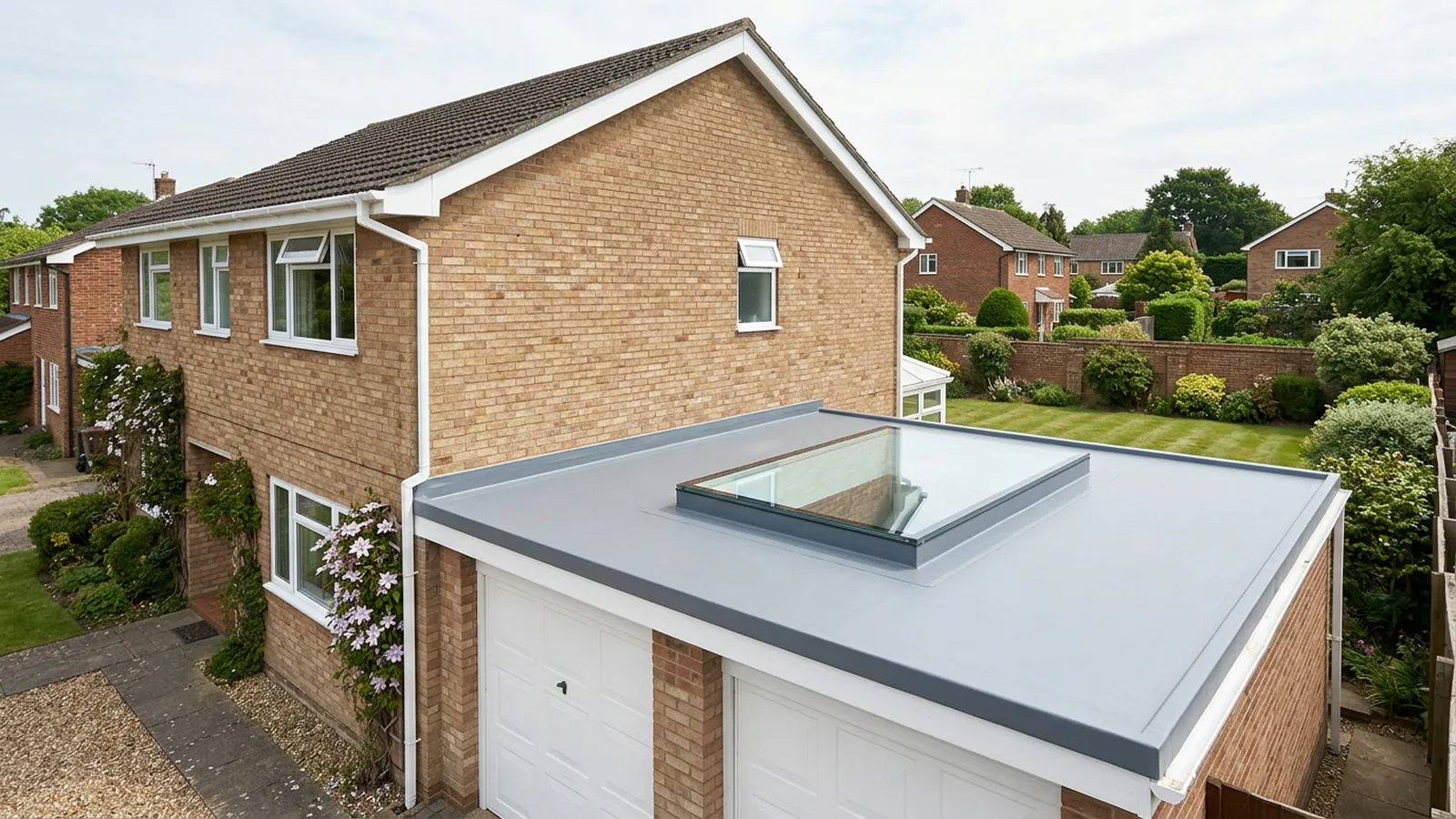
A dome or a fixed flat rooflight on an extension works differently. It sits on an upstand, and the weathering comes from the roof membrane turned up the side of that upstand, with the rooflight clamped or screwed over the top. There is no pressed kit as such.
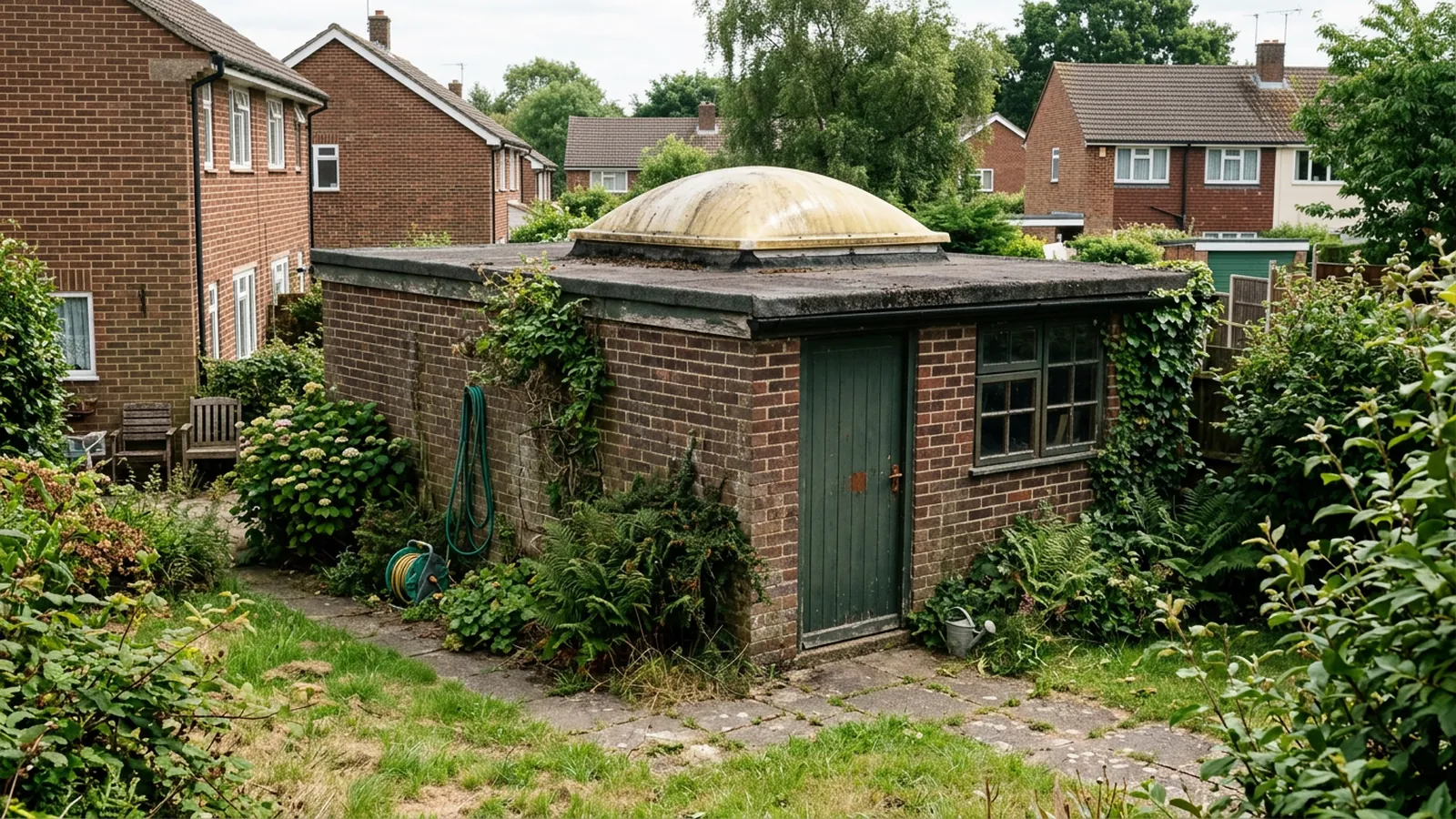
So on a flat roof, the replacement question becomes whether the upstand and the membrane around it are fit to take the new unit. A timber kerb in good condition, with felt or single ply dressed neatly up its sides, can often stay, with only the top edge made good for the new frame. A softened kerb, or felt that has lifted and cracked where it turns up, is renewed along with the rooflight. The upgrade from an old plastic dome, including new upstands, is covered in replacing the plastic domes on 1970s and 1980s flat roofs.
Signs your current flashing has had its day
If the worry behind the question is water getting past the current window, the signs worth noting before a survey are staining on the lining below the window, especially at the bottom corners, damp marks that appear after driving rain rather than on cold mornings, and metal on the roof that has lifted, split or pulled away from the tiles. Damp on a cold morning is more often condensation than rain, and the difference matters; our answer on whether skylights let water in over time goes through how to tell them apart.
None of these signs has to be diagnosed by you. They are simply useful to mention, because they point the survey to the right corner of the roof.
What decides the job on your roof
We look at the roof before we quote, and for flashing that means checking the covering, the pitch, the tile or slate profile at the bottom of the window, and whether the new frame will sit at the same size and position as the old one. If you are thinking of going larger, or changing to a different style of rooflight, the kit follows the new window, and the choice itself is explained in like for like or upgrade. The new flashing, collars and any tiles disturbed are all written into the quote, so what goes back on the roof is clear before work starts.
If your skylight is due for changing and you would like to know exactly what will go around it, arrange a survey of the roof and we will show you the covering, the kit and the finish that suit it.